
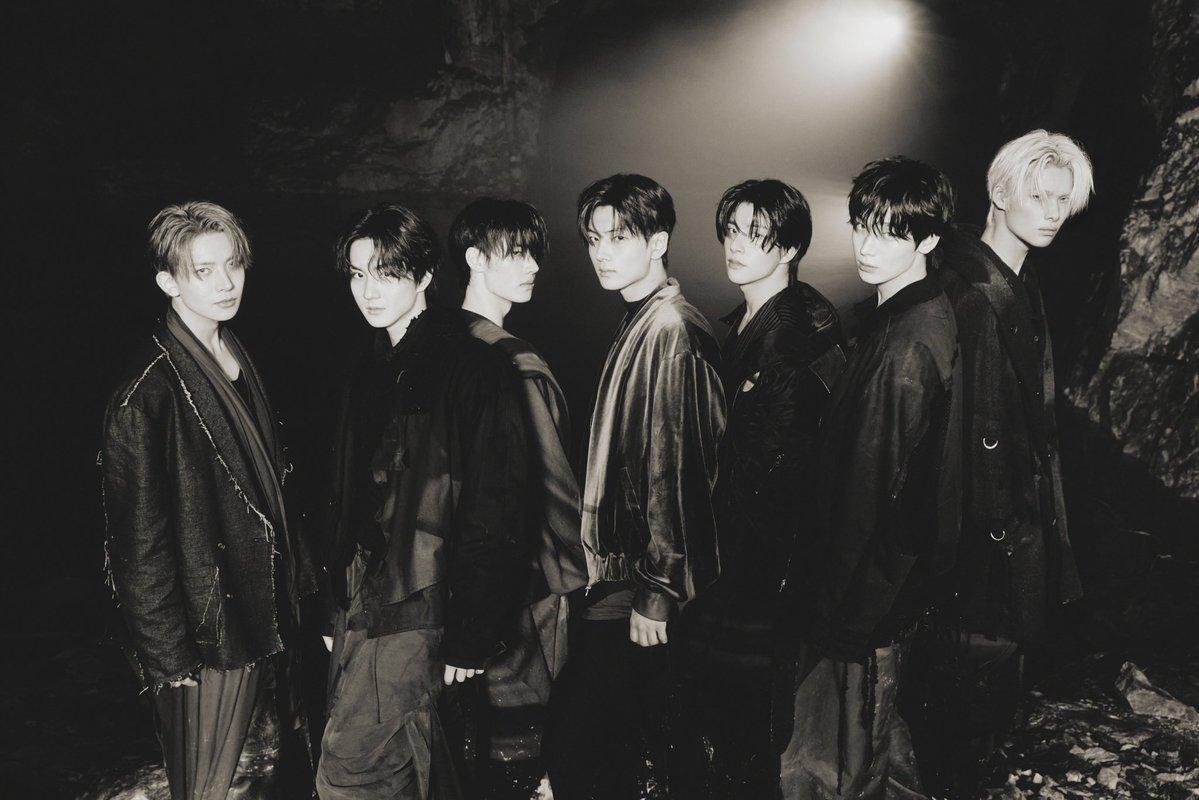
ENHYPEN was recently reorganized into a six-member group following member Heeseung’s departure. Courtesy of Belift Lab
In the K-pop scene, a seven-member group suddenly becoming a six-member group is no longer uncommon. In fact, repeated cases of a member leaving groups that debuted with seven members have led to the coining of an industry term: the “curse of the seven-member team.”
NMIXX, Weeekly and ONF all debuted with seven members but later saw one member depart. Going further back, Apink, 2PM, BTOB, Infinite and MONSTA X are also examples of teams that were reorganized into six-member groups.
Earlier this month, Seo Young-eun exited Kep1er, marking another recent lineup change among seven-member K-pop groups.
But perhaps the most high-profile case, at least recently, is ENHYPEN. On March 10, the group’s agency announced that Heeseung would leave the group and ENHYPEN would continue its activities as a six-member act.
His sudden departure came as a major shock to fans. ENHYPEN has enjoyed strong popularity both in South Korea and overseas, and some fans staged protests near HYBE’s headquarters and the members’ dormitory, calling for the decision to be reversed. Others took to social media, organizing hashtag campaigns demanding Heeseung’s return.
Observers, meanwhile, raised concerns about ENHYPEN’s future after the departure of a key member through a unilateral announcement, just as it heads into its seventh year.
These concerns are not unique to ENHYPEN. Other groups that underwent similar reorganizations also entered a new chapter while dealing with fans’ disappointment and surprise when the changes were announced.
To be sure, these are not the only K-pop groups to have undergone member reshuffles. But among K-pop fans, lineup changes have seemed particularly common among idol groups that debuted with seven members — so much so that phrases such as the “curse of the seven-member group” and the “troubled history of seven-member groups” have entered the conversation.
Seven-member lineups have long been a favored format for K-pop idol groups. The odd number allows for balance and symmetry on stage, making it easier to choreograph dance routines and deliver performances that are visually striking without appearing chaotic.
Industry observers also note that seven is a suitable number for distributing the various roles required within a group, including vocals, rap, dance and visuals. Neither too small nor too large, a seven-member lineup allows individual personalities to stand out while also making it easier to build group chemistry and a shared team narrative.
What once worked in its favor, however, can also become its undoing when the lineup is disrupted. In a seven-member group, dance formations, musical roles and onstage positions are arranged with such deliberation that the loss of even one piece can force the entire team to be rebuilt from the ground up.
If that missing piece happens to be the group’s main vocalist or a key member, the impact can shake not only its stage performances but also the team’s very identity.
In that sense, the seven-member structure carries clear risks when the wind swifts. Divisions within the fandom, rising brand repositioning costs and breaks in narrative continuity are among the most immediate.
The group’s existing universe and content structure often have to be reworked, and the team narrative built on the members’ relationships must also be reconstructed.
Industry insiders see this as a structural risk.
“Seven members is the ideal number for stage completeness, but it is also a structure in which the absence of even one member stands out the most,” a music agency official said.
“In particular, if the member who leaves is the center or a main position, changes significant enough to redefine the group’s identity become unavoidable.”
This article from the Hankook Ilbo, the sister publication of The Korea Times, is translated by a generative AI system and edited by The Korea Times.