
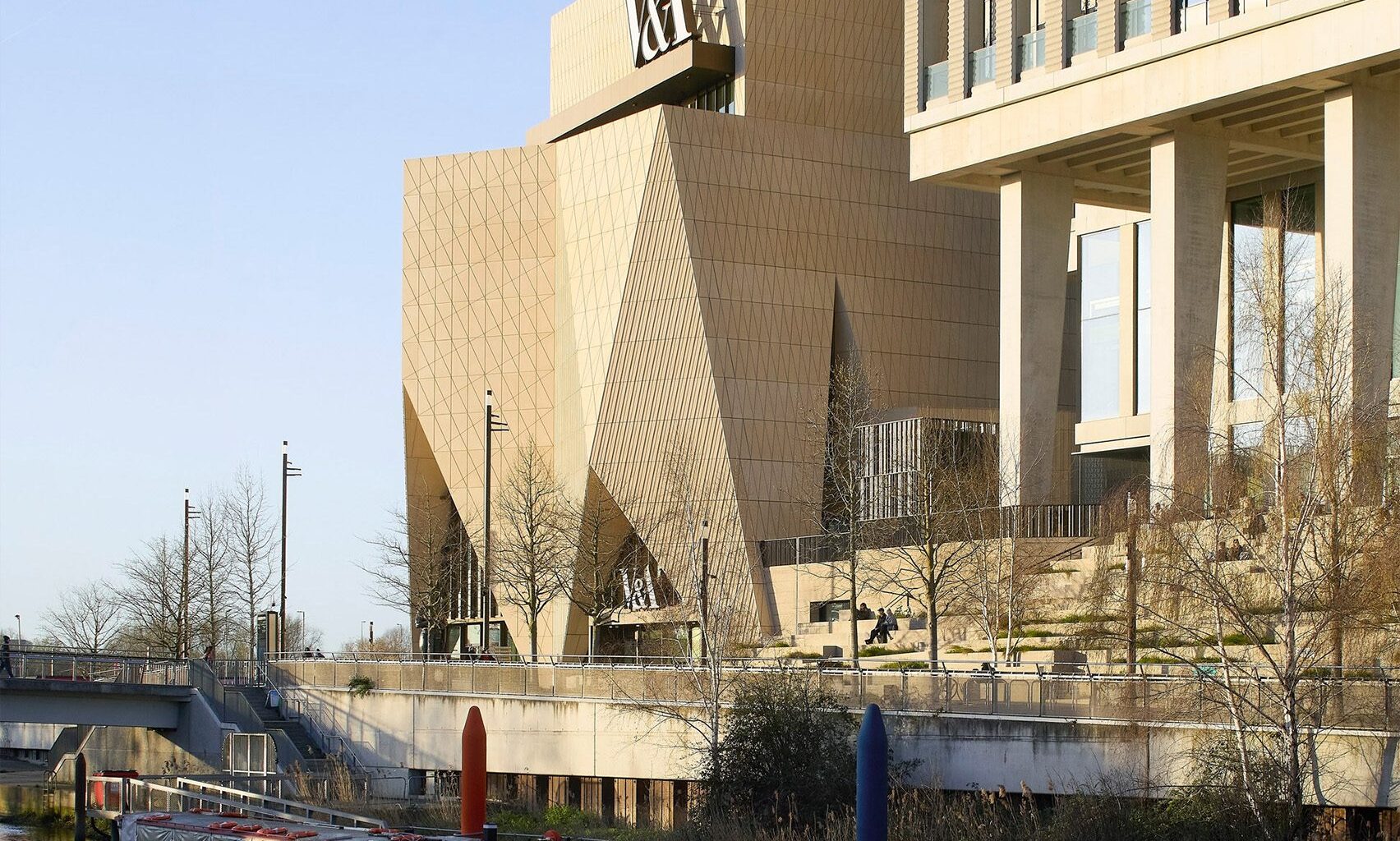
Irish studio O’Donnell + Tuomey has exclusively revealed the exterior of the V&A East Museum in London ahead of its official public opening later this month.
Set to open on April 18, the distinctive building sits alongside the Allies and Morrison-designed London College of Fashion and directly opposite the Populous-designed Olympic stadium as the latest structure on the Olympic Park.
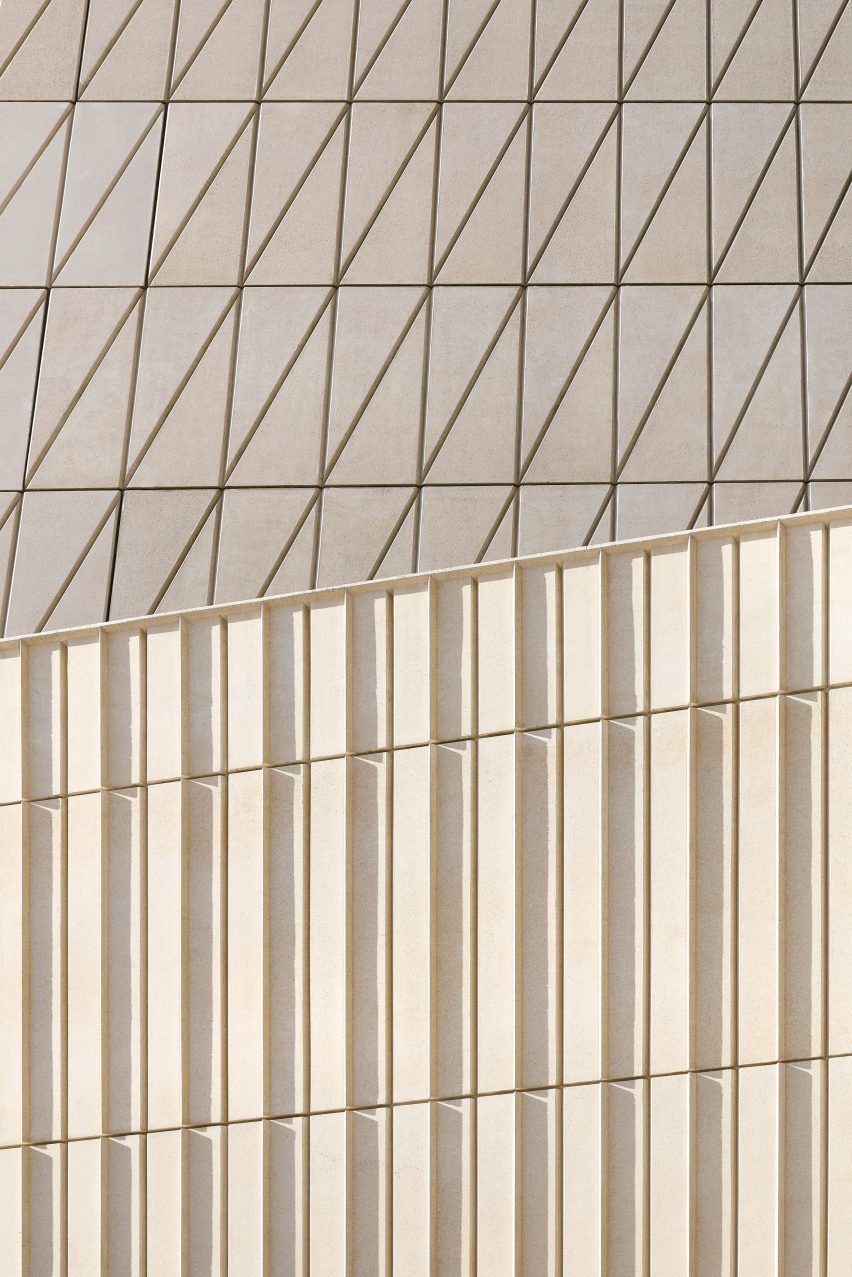
The angular, pyramidal building is cloaked in a facade made of concrete panels that are covered in lines that evoke the Vs and As of the V&A logo.
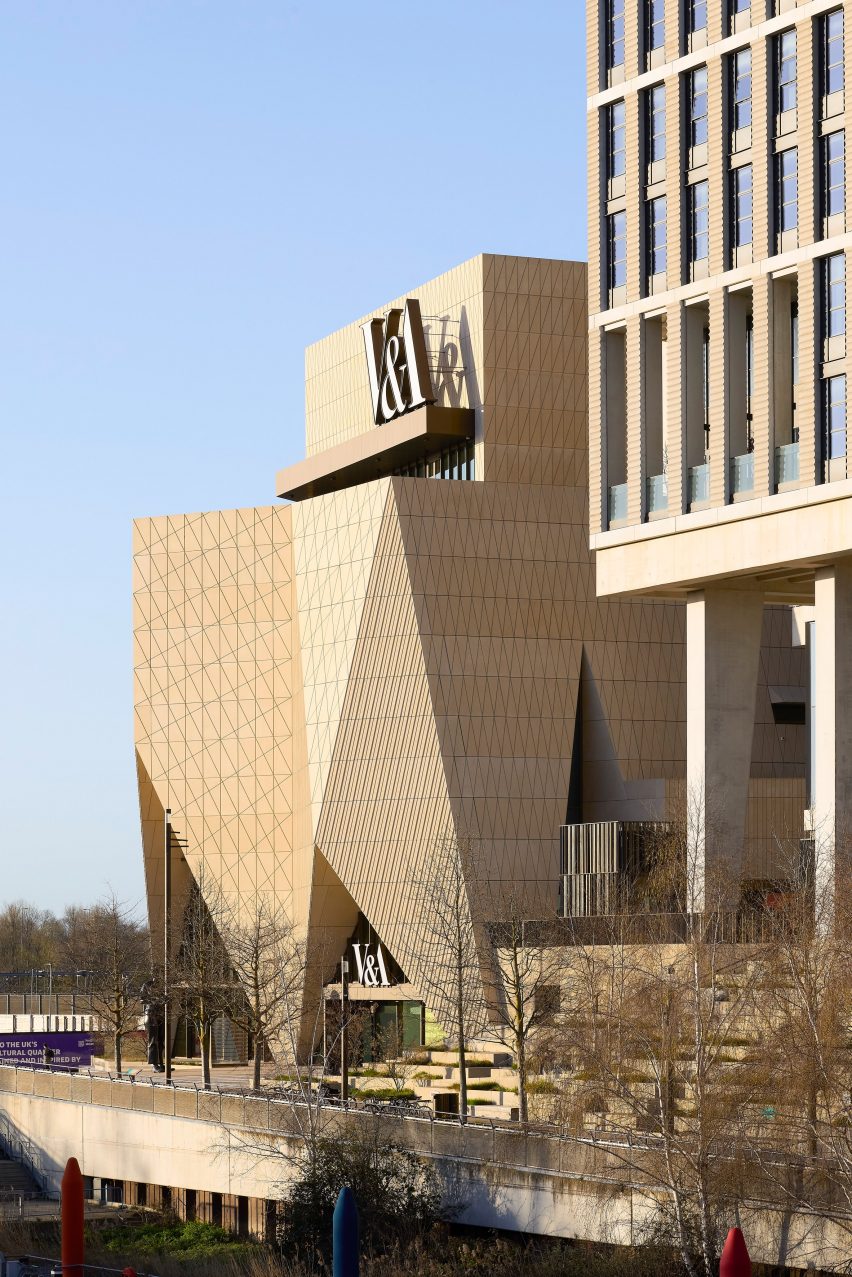 V&A East is set to open later this month
As the V&A East Museum was planned as the cultural centrepiece of the wider development, O’Donnell + Tuomey aimed to design a building that had a clear aesthetic and identity.
“It’s different from a more everyday building,” O’Donnell + Tuomey co-founder John Tuomey told Dezeen. “It has to be a special one – jewel-like, or certainly casket-like as it should look like things are safe in there.”
“The museum has a need to have its identity expressed,” he continued. “It is not an office block, it’s not a school, it has hardly any windows, so what form will you recognise from across the park?”
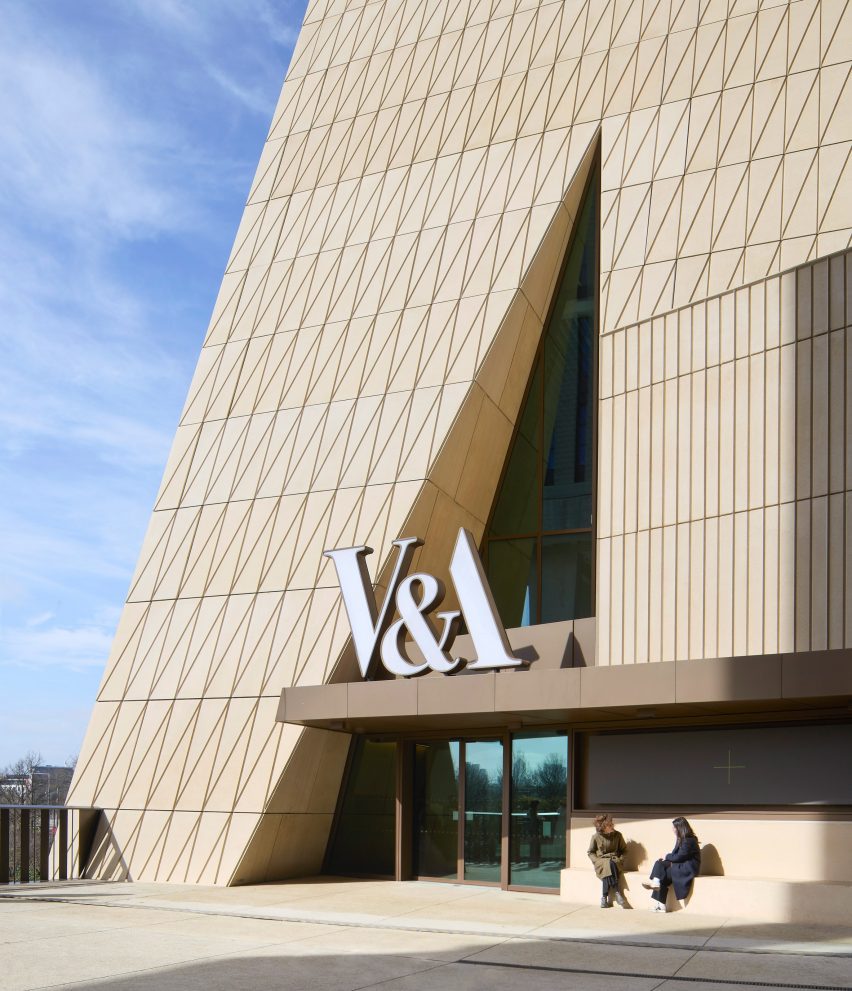 It was designed by O’Donnell Tuomey
The museum’s multi-faceted facade is described by Tuomey as a “jacket” that protects the museum, but also can be inviting for visitors, with the facades facing the newly created square angled outwards.
“The museum by its nature needs all its contents protected and so the design brief is to create a sheltered space for everything that’s in the museum,” said Tuomey. “And the second part of the brief is to open the museum out and bring everybody in.”
Diller Scofidio + Renfro transforms London hangar into V&A East Storehouse
“We wanted to lift the jacket of the building up so that people could be drawn in from the square into the entry space and cafe on the ground floor,” he continued.
“So in a way, the way the building stands on the ground on its toes, is very important to this idea.”
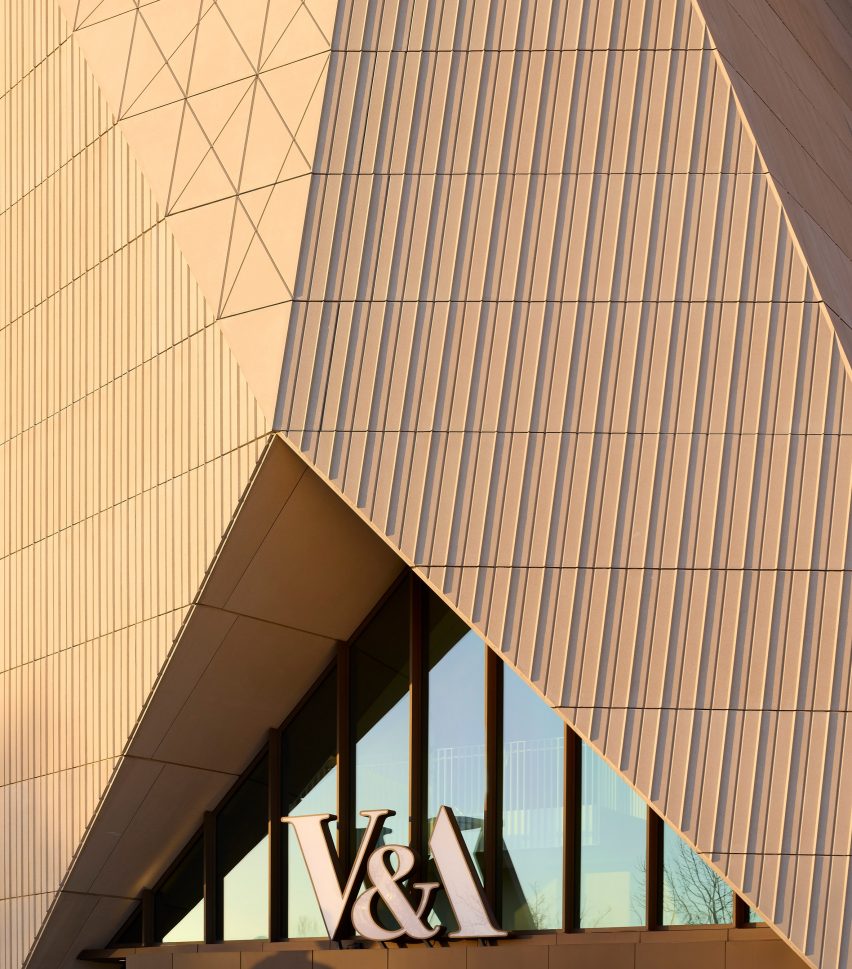 The facade encloses the museum like a jacket
Tuomey describes the five-storey museum as “a dead simple building” wrapped in the jacket-like facade.
All of the galleries are broadly regular-shaped boxes stacked around its core, with the entrance spaces and staircases placed in the space between the two.
“It’s a rationally planned building with this piece of tailored clothing on it and you move in the thickness, and then everything is simple in plan,” he explained.
“I got interested in the space in between the jacket and the body – what the Japanese call Ma– that feeling of being inside on the outside,” he continued.
“I hope that people feel that when they’re here – that they come from the thickness of the being held in the wall [and go] to the adventure of exhibitions, lose yourself in the exhibition and then come back out.”
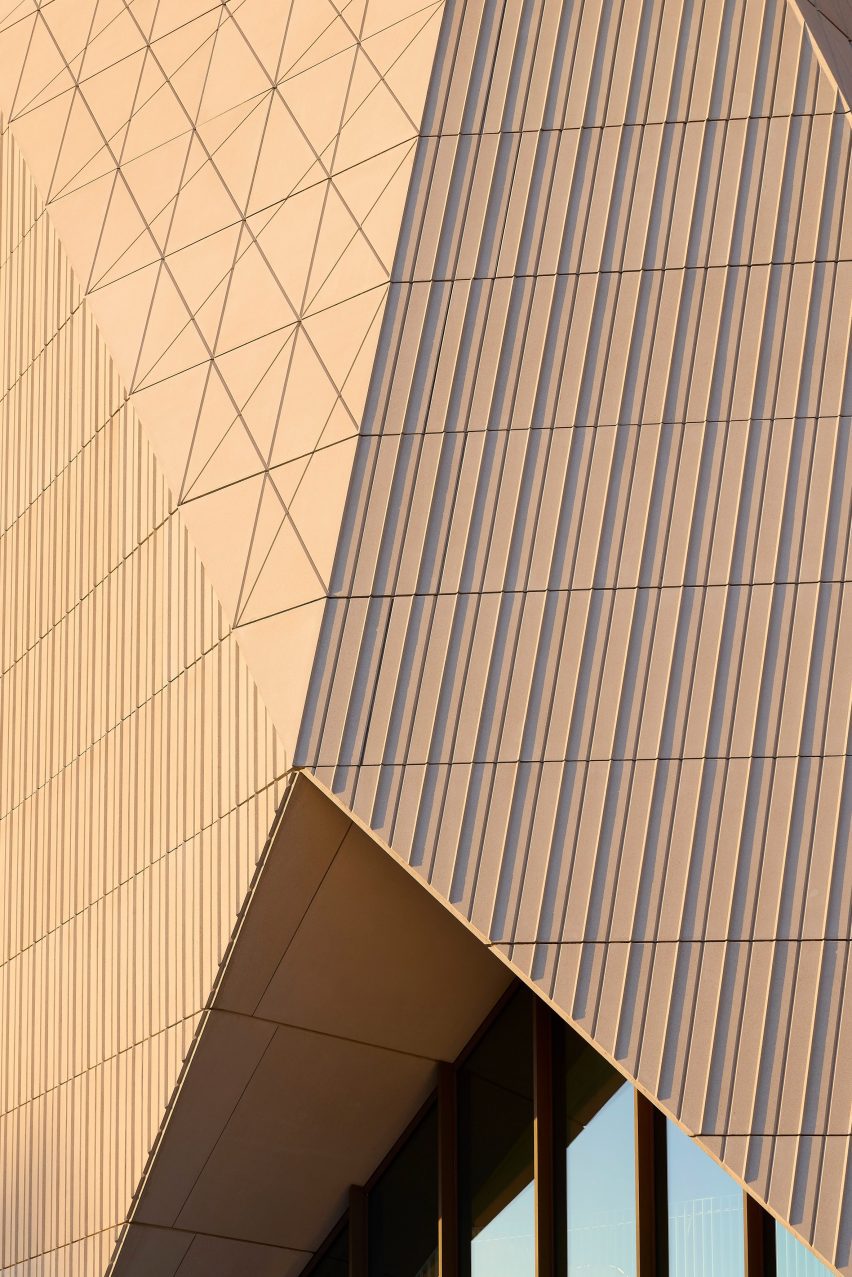 Each of the precast concrete panels was “drawn” on
The museum’s facade is covered in 479 unique, precast concrete panels that are each around two metres high and stretch to as long as 14 metres.
In keeping with the wider development, the facade is a cast material. However, O’Donnell + Tuomey wanted the building to appear solid, so the studio aimed to make it appear to be stone.
“This is the V&A,” said Tuomey. “We want it to be like a solid object. So this is as close to stone sandstone as we could get.”
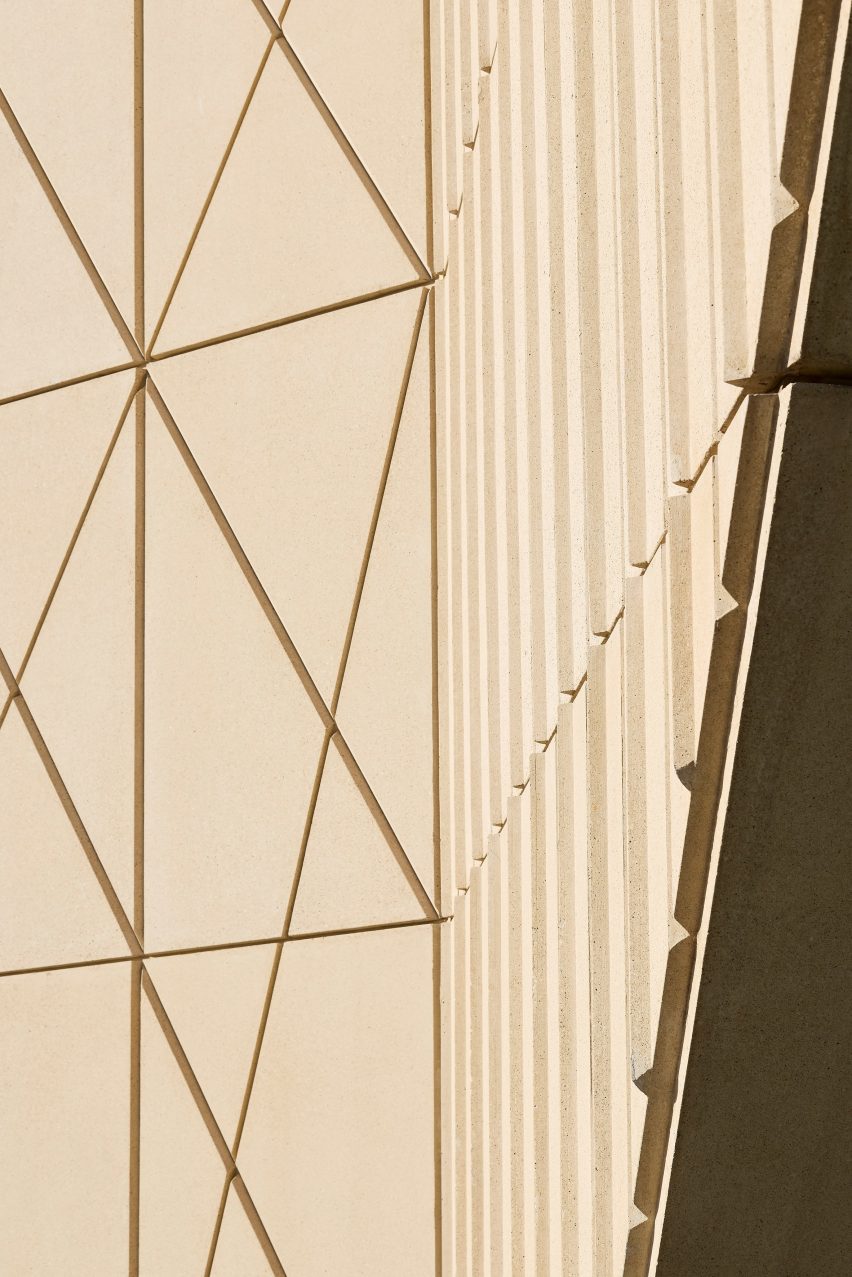 Some panels are covered in linear patterns, while others have a relief pattern
Each of the angled cast-concrete facades was given linear decoration as Tuomey liked the idea of drawing on the exterior of the building.
“It’s a design museum – so we thought, why can’t we draw the surface?” said Tuomey. “So it started with me just drawing lines. Just sitting down and drawing lines, which was very enjoyable.”
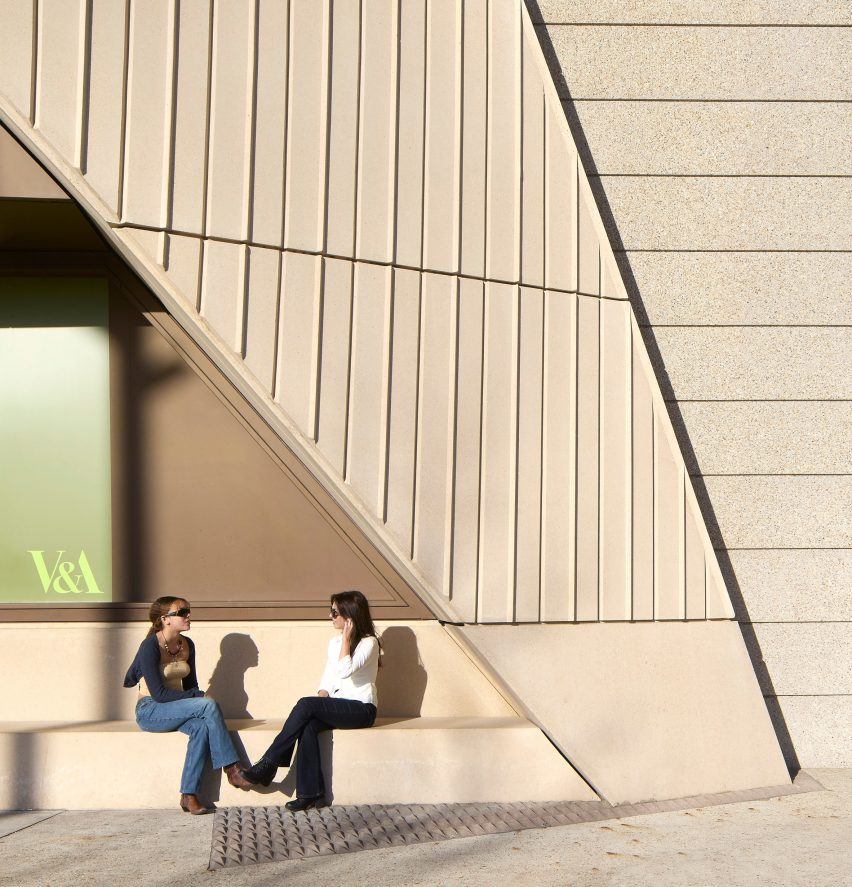 The patterns were designed to evoke the V&A logo
According to Tuomey these angular lines were derived from the V&A logo, which he learned was a pretty well-known motif.
“My son is a graphic designer and I rang him and asked if you looked at this V&A logo? – you know, this Pentagram logo?” recalled Tuomey. “And he said, ‘Dad, that’s like one of the most famous pieces of graphic design.”
“So I used all the geometry and tried to transcribe it on the building,” he continued.
While many of the facades contain this angled, linear decoration evoking the institution’s logo, other facades contain panels where the logo was translated into a relief.
These panels contain a series of V-shaped indents and A-shaped peaks.
 In total, the building is clad with 491 panels
Within the museum, the gallery spaces are currently being prepared ahead of the opening later this month with the Why We Make galleries designed by UK studio JA Projects.
The museum is the sister site to the V&A East Storehouse by American studio Diller Scofidio + Renfro, which opened last year.
The photography is by Hufton + Crow.