
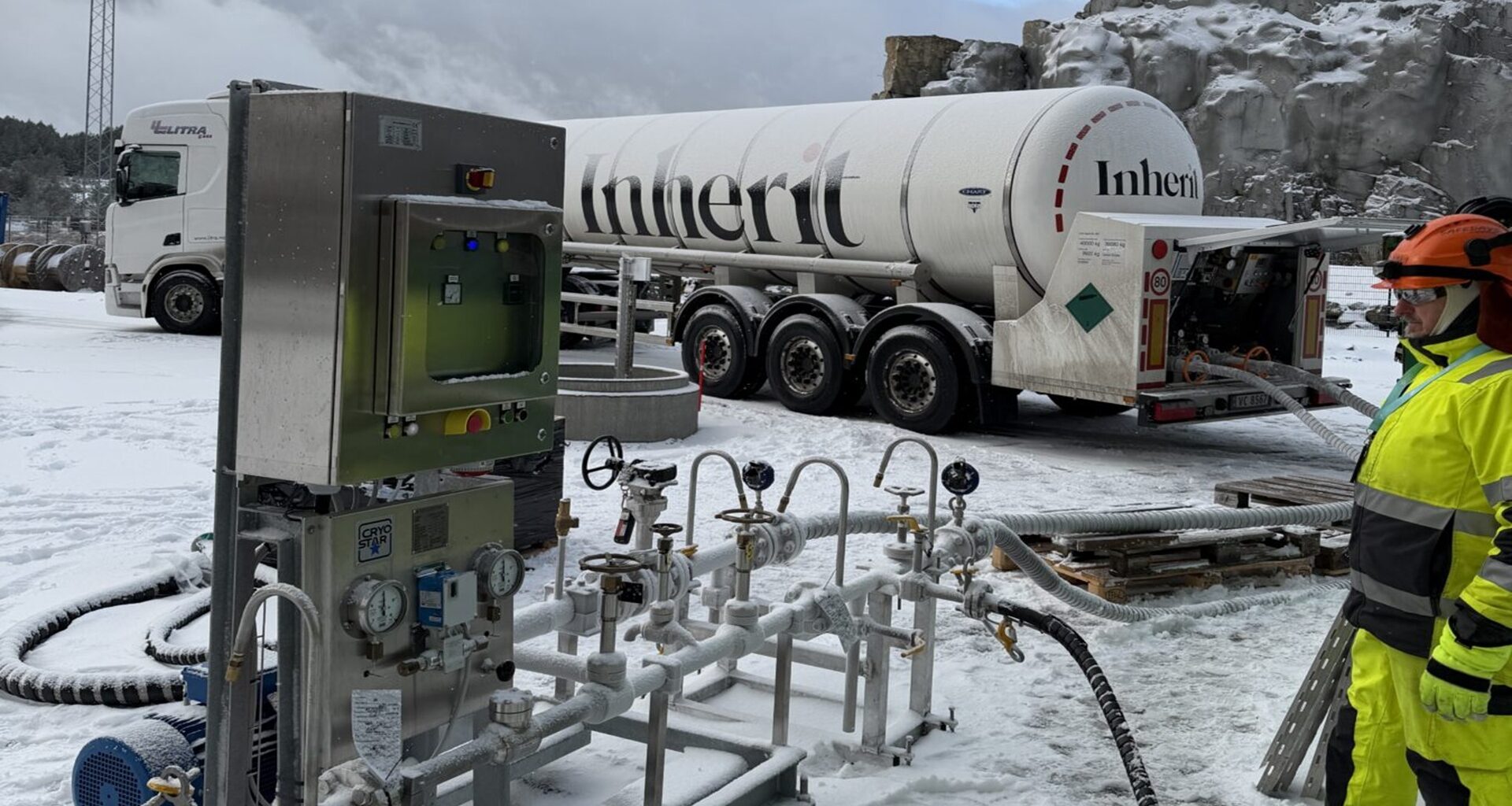
Norway’s Northern Lights project has started injecting carbon dioxide captured from wastewater, marking a new step in expanding carbon capture beyond heavy industry.
The project confirmed that it has begun storing biogenic CO2 sourced from wastewater treatment, with the first volumes delivered to its receiving terminal in Øygarden before being transported offshore for permanent storage.
“Northern Lights has started to inject the first biogenic CO2 from wastewater treatment delivered to our receiving terminal in Øygarden.”
The CO2 originates from the Veas wastewater treatment plant near Oslo, where emissions generated during biogas production are captured, liquefied, and transported by truck to the storage site.
Wastewater enters carbon pipeline
The Veas facility serves more than 800,000 people in the Oslo region, making it Norway’s largest wastewater treatment plant. Instead of releasing emissions into the atmosphere, the plant captures biogenic CO2 produced during waste processing.
Since February, the carbon removal company Inherit has been delivering CO2 cargoes from the facility to Northern Lights as part of a pilot project.
“Since February the carbon removal company Inherit has delivered CO2 cargos to Northern Lights from the Veas wastewater treatment plant in Slemmestad near Oslo.”
The captured CO2 is liquefied and transported by truck to Øygarden, where it is offloaded into a tank system before being sent offshore via pipeline.
“In Øygarden Inherit offloads the CO2 trucks to the tank farm from where Northern Lights transports the CO2 offshore via pipeline and will safely store it 2,600 metres below the seabed.”
This marks a shift in how carbon capture systems are being used, expanding beyond industrial emitters to include emissions from municipal infrastructure.
Storage system scales up
The Northern Lights system is designed as an open-access carbon storage network, allowing companies across Europe to transport and store captured emissions in a shared infrastructure.
In its first phase, the project can store up to 1.5 million tonnes of carbon dioxide annually, with plans to expand capacity to at least 5 million tonnes per year in the coming years.
The setup includes ships and onshore tanks to receive liquefied carbon dioxide before it is sent through a roughly 100-kilometer pipeline to offshore injection wells.
“In August 2025 the Northern Lights started storage operations as the first CO2 volumes were transported from the terminal via the 100-kilometre pipeline and injected into the Aurora reservoir.”
The wastewater-based CO2 project is currently a pilot, with the system designed to handle up to 7,000 tonnes of CO2 per year under its agreement with Inherit.
The broader Northern Lights initiative is part of Norway’s Longship project, which aims to build a full-scale carbon capture and storage value chain. The system allows CO2 captured at differen sites to be transported and stored underground, reducing emissions across sectors.
Northern Lights is operated as a joint venture between Equinor, Shell, and TotalEnergies, and has already signed agreements with multiple European companies to store captured emissions.
By integrating wastewater-derived emissions into its pipeline, the project demonstrates how urban waste streams can become part of large-scale carbon removal systems, potentially widening the scope of carbon capture technologies.