
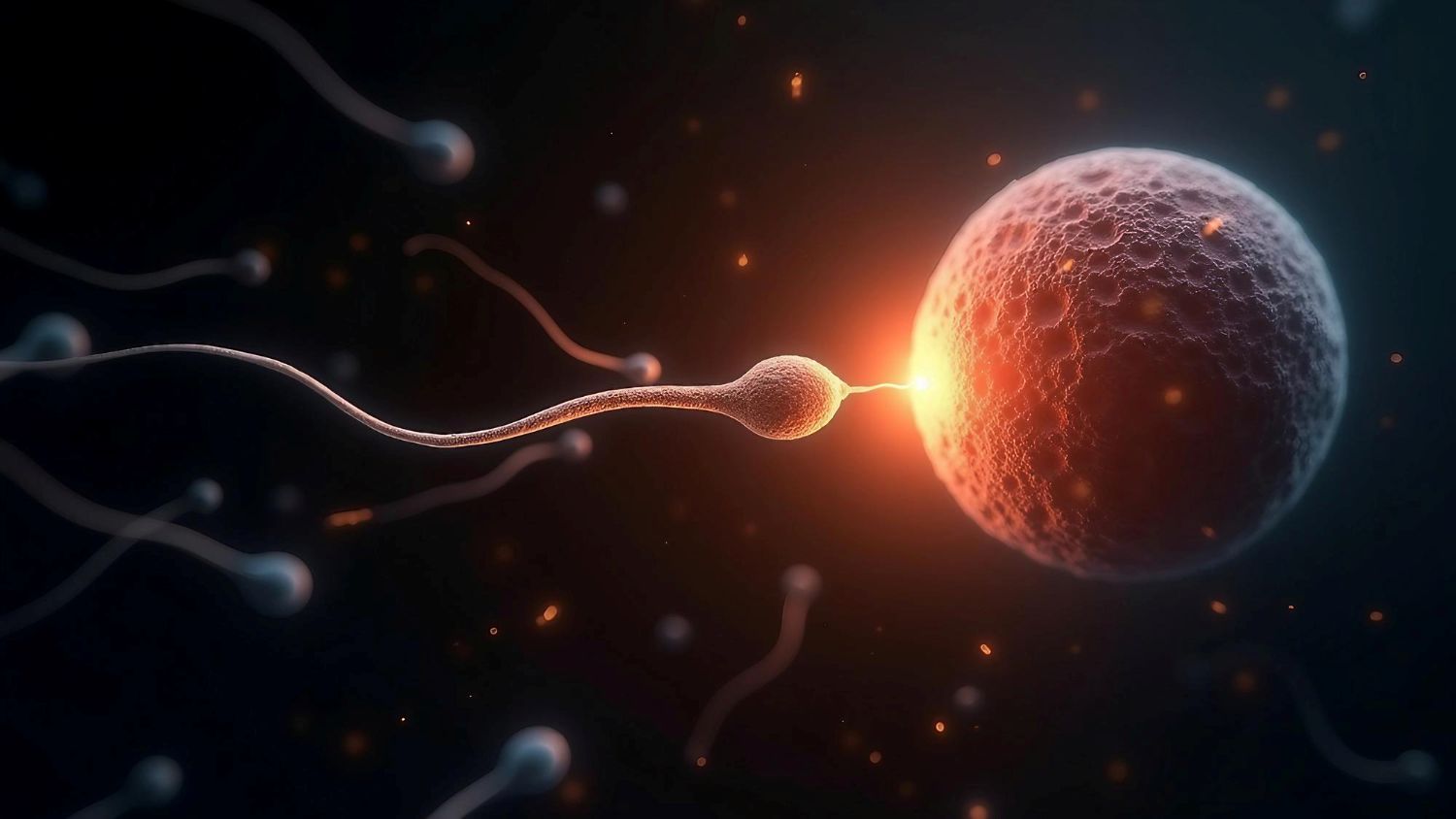
When humanity dreams of building homes on the Moon or Mars, the conversation often centers on rockets, habitats, and food supplies. Yet one of the most profound questions remains quietly unsolved: Can life itself begin and thrive beyond Earth’s gravity?
A new study from the University of Adelaide takes us one step closer to answering that. Scientists studied the effects of simulated microgravity on sperm navigation, fertilization, and subsequent stages of early embryo development in three mammals: human beings, mice, and pigs.
Their discoveries show how both resilient and fragile life can be in the absence of gravity. In low gravity, sperm lose their sense of direction, showing that gravity helps guide them toward the egg.
Sperm are natural explorers that travel through the female reproductive tract, following chemical and physical signals to reach their endpoint. But without gravity, their navigation doesn’t go so well. The team assessed sperm function via microchannels and identified time- and species-dependent defects in directional navigation and fertilization capacity in microgravity.
Why space travel weakens our immune systems?
To simulate microgravity, researchers used a 3D clinostat machine. This device continuously rotates cells to mimic the disorienting effects of zero gravity. Researchers tested sperm function by sending them through a maze that mimics the female reproductive tract.
The effect wasn’t uniform; it varied by species and exposure time. Some sperm remained fertilized, suggesting that compensatory mechanisms were operating in specific subpopulations. Significantly, in human sperm, progesterone partially restored navigation, indicating that chemical signals could compensate for the lack of gravity.
Progesterone, released naturally by the egg, can help choreograph sperm to swim toward the egg for fertilization. This makes it a promising candidate for further study as a way to counteract the challenges of low gravity.
Senior author Dr. Nicole McPherson from the University of Adelaide’s Robinson Research Institute said, “This is the first time we have been able to show that gravity is an important factor in sperm’s ability to navigate through a channel like the reproductive tract.”
Females supercharge sperm evolution, especially in animals
“We observed a significant reduction in the number of sperm that were able to successfully find their way through the chamber maze in microgravity conditions compared to normal gravity.”
“This was experienced right across all models, despite no changes to the way sperm physically move. This indicates that their loss of direction was not due to a change in motility but other elements.”
The story didn’t end at fertilization. Embryos were cultured under clinical assisted reproduction conditions, with time-lapse monitoring to track their growth.
Short exposure to microgravity during fertilization (4–6 hours) disrupted embryo development in pigs and elevated inner cell mass and epiblast counts in both pig and mouse embryos. Longer exposure (24 hours after fertilization) slowed development in mice and reduced the number of cells in their blastocysts.
These results highlight a paradox: reproduction can still occur in microgravity, but the quality and trajectory of embryo development are altered.
Sperm’s hidden talent: Using heat to unlock fertility
For long-duration missions, whether to Mars or deep-space stations, reproduction isn’t just a biological curiosity. It’s a survival requirement. If humans are ever to create lunar or Martian colonies that last, we have to be confident that volume conception, fertilization, and embryo growth will take place safely there without Earth’s gravitational pull.
Associate Professor John Culton, Director of the Andy Thomas Center for Space Resources, said, “As we progress toward becoming a spacefaring or multi-planetary species, understanding how microgravity affects the earliest stages of reproduction is critical.”
This study highlights the urgent necessity to optimize peri-conception environments, the delicate time frame around fertilization and early development. It also paves the way for investigating how chemical cues, assisted reproductive technologies, and habitat design could help ensure life continues in space.
The next phase of research will investigate the impact of various gravity conditions, including those on the Moon, Mars, and in artificial-gravity systems, on sperm motility and early embryonic development. An important question is whether these effects vary gradually as gravity diminishes, or suddenly at some cutoff.
Answering this will be important for planning human reproduction in future Moon and Mars settlements and for designing artificial gravity systems that support healthy development.
Journal Reference:
Hannah E. Lyons, Victoria Nikitaras, Bridget M. Arman, Stephen M. McIlfatrick, Mark B. Nottle, Macarena B. Gonzalez, Nicole O. McPherson. Simulated microgravity alters sperm navigation, fertilization, and embryo development in mammals. Communications Biology, 2026; 9 (1) DOI: 10.1038/s42003-026-09734-4