
Researchers said by focusing narrowly on volume and export markets, fisheries policies are overlooking a central reality: food and nutritional security depends on access, equity and nutrition, not simply the amount of fish landed.
In this case, food insecurity can worsen even when total fish production appears stable.
Women who dominate the fish processing, drying, trading, and retailing industry in many Global South and Indigenous contexts, are also acutely affected by this problem.
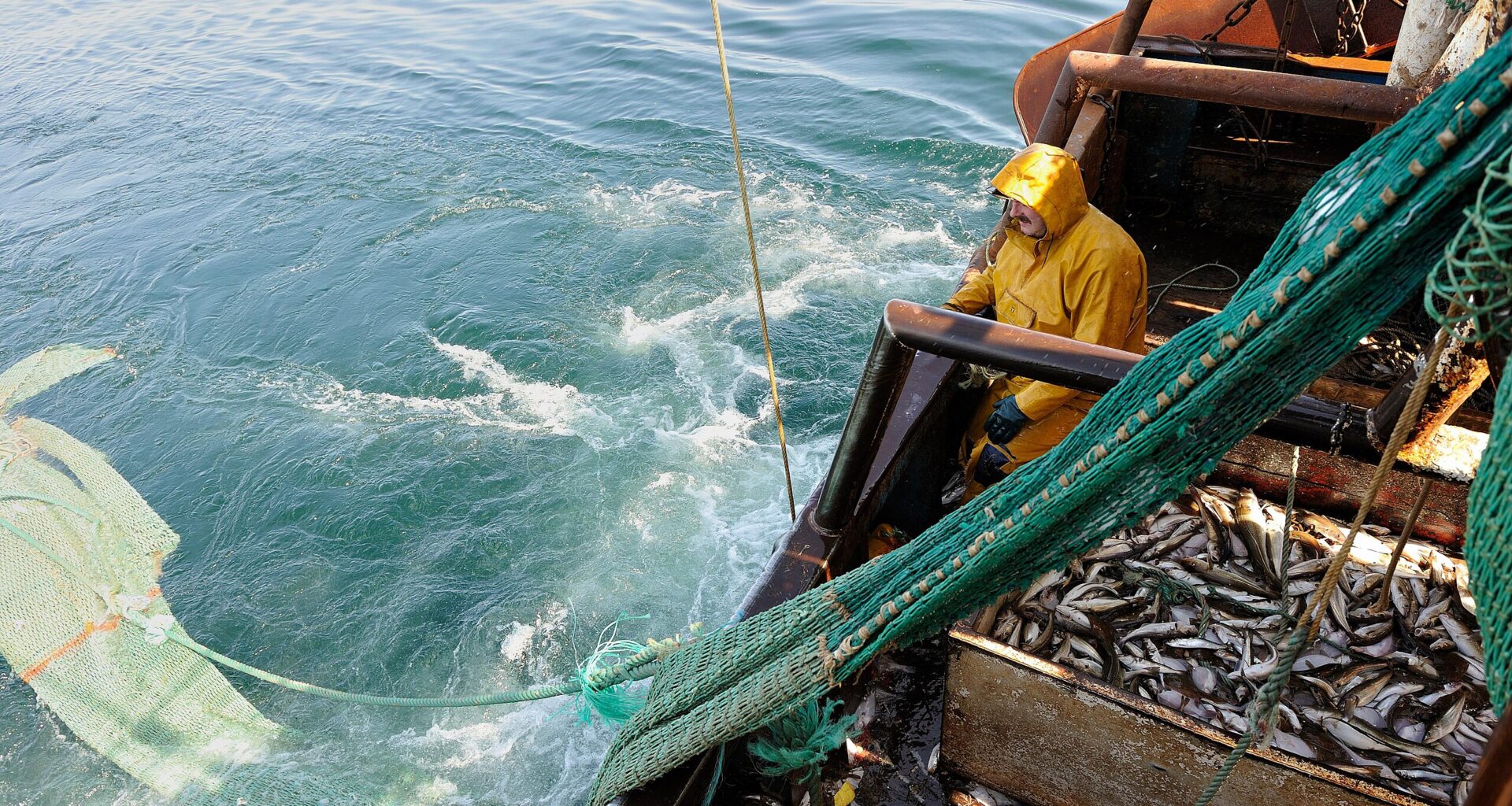
The expansion of industrial bottom trawling frequently shifts landings away from local beaches and small ports toward industrial landing sites, export-oriented processing facilities, or transhipment hubs.
Women in Ghana, India and Indonesia, who depend on nearshore landings for processing and trade, are losing access to raw fish, experiencing loss of income and facing financial greater financial precarity, meaning reduced household food security.
However, enforcement can be effective in combatting this problem.
For instance, one of the report’s clearest findings comes from southern Brazil, where enforcement of a 12-nautical-mile trawling exclusion zone, rather than narrower 3–5 nm limits, has meant demersal fish stocks have dramatically rebounded. In turn, this has improved access to affordable local protein, and reduced conflict between industrial and small-scale fleets.
Protecting food security, the report finds, requires moving beyond just production-focused fisheries management to policies that prioritise nutritional equity, livelihoods and food sovereignty.
Their findings recommend integrating food security into fisheries policies, with decision-making that includes small-scale fishers and recognises the gendered impacts of bottom trawling on coastal communities.
The report also calls for restricting the expansion of bottom trawling, enforcing exclusion zones, and redirecting subsidies to support small-scale fishers.
Professor Sumaila said: “The key question is not how much fish is caught globally, but who actually benefits from it. Bottom trawling may deliver high headline catch figures, but it often does so at the expense of access to affordable, nutritious fish for coastal communities, particularly in regions where fish is a dietary cornerstone.”