
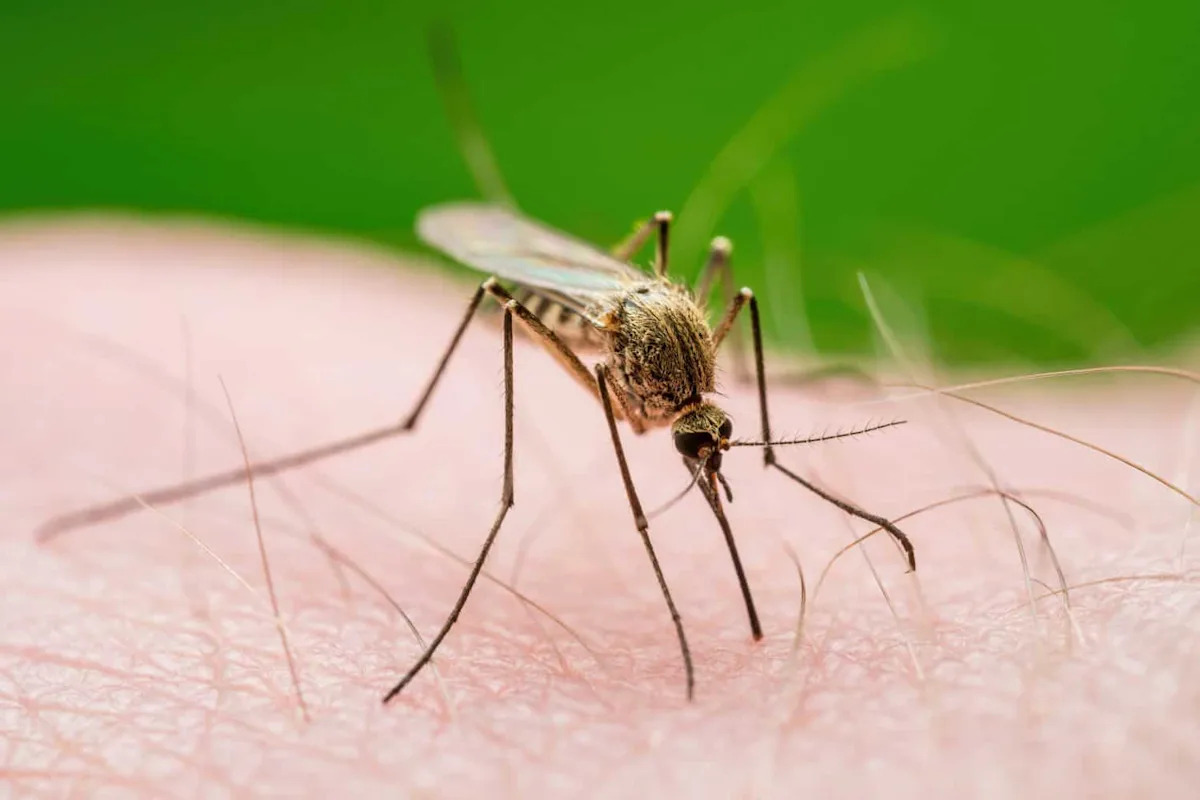
The post How Mosquitoes Find You and Decide to Attack appeared first on A-Z Animals.
Quick Take
Swarms of mosquitoes function like people at a “crowded bar” rather than as a team.
Clothing color is a significant factor in whether a mosquito remains interested.
When a host emits more CO2, they’re more likely to be swarmed.
Evidence from the study may help shape future mosquito deterrents.
Mosquito season is almost upon us, which means soon, calamine lotion and bug spray will be part of everyone’s summer routine. And though there’s no way to 100% repel mosquitoes, a new study sheds light on what draws them to humans. This knowledge could inform better deterrence strategies, since science shows that it’s not only the scent of humans that entices these blood-sucking buggers. It’s also what we wear, our activity level, and how much we sweat. The perfect combination of these things is what makes one person stand out over another as a potential meal. The good news is this: Researchers have also learned more about what attracts mosquitoes, and it might just save your skin.
Hundreds of Mosquitoes and One Human Subject
To glean information about the habits of mosquitoes, Georgia Institute of Technology researchers pulled out all the stops. Their testing was done in two parts using infrared cameras to track the movements of hundreds of mosquitoes (Aedes aegypti). These cameras tracked the movements of mosquitoes around inanimate objects of different colors. When a white object was placed near the mosquitoes, they struggled to locate it. Scientists determined that lighter colors are harder for mosquitoes to detect. When a black object replaced the white one, mosquitoes located it more easily, but still did not swarm it.

Mosquitoes seek out dark, shaded places for rest, hydration, and breeding.
©Hussain Warraich/Shutterstock.com
(Hussain Warraich/Shutterstock.com)
The game-changer was the introduction of CO2. Carbon dioxide acts as a beacon for mosquitoes. When CO2 is present, mosquitoes can locate a host more easily, especially when combined with visual cues. When CO2 was released from both objects, the mosquitoes showed a piqued interest. However, the black object and CO2 emissions are what caused hundreds of insects to swarm the target.
In a news release about the study, David Hu, a professor in Georgia Tech’s George W. Woodruff School of Mechanical Engineering and the School of Biological Sciences, compared it to a “crowded bar.” Rather than working in tandem, the mosquitoes are more akin to robots. Their instincts take over, leading them to the host emitting the most biological signals.
“Customers aren’t there because they followed each other into the bar. They’re attracted by the same cues: drinks, music, and the atmosphere. The same is true of mosquitoes. Rather than following the leader, the insect follows the signals and happens to arrive at the same spot as the others. They’re good copies of each other,” Hu said in the release.
Directly in the Line of (Mosquito) Fire
To further test these results, Christopher Zuo, a Georgia Tech master’s student, used himself as the test subject. He wore outfits in different colors (white, black, and mixed colors) and stood in the chamber with the mosquitoes. The tests were conducted in the same way as with the non-human objects, and cameras recorded all the mosquitoes’ movements. During testing, Zuo was bitten, but his efforts were not in vain, as the data was sent to MIT for analysis.
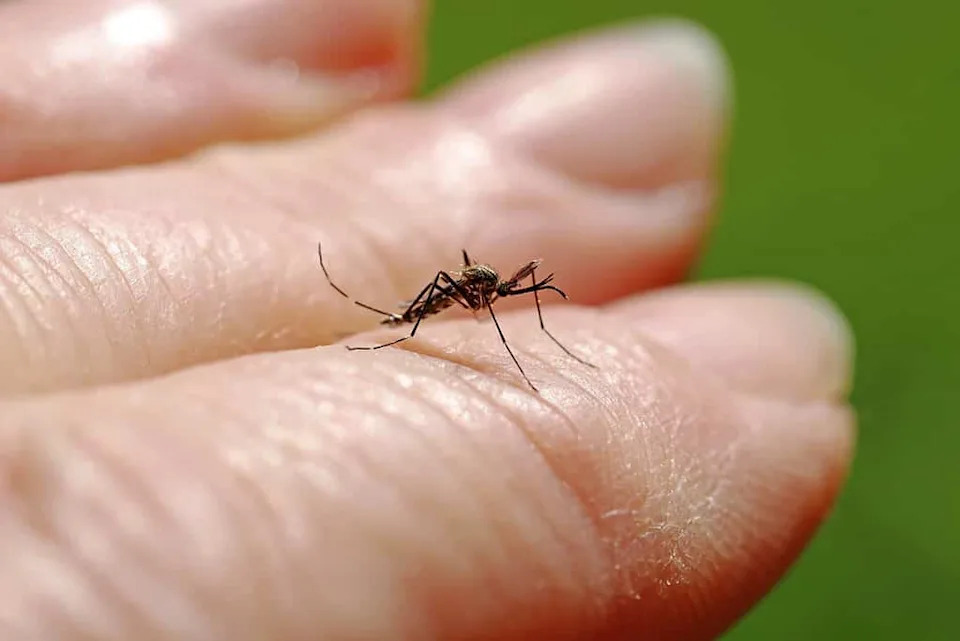
One mosquito can carry a potentially deadly virus, and all it takes is one bite to infect a human.
©Astrid860/ via Getty Images
(Astrid860/ via Getty Images)
The results were enlightening. As predicted, the mosquitoes behaved similarly to how they did around inanimate objects. The main difference was that they now focused on circling Zuo’s head and shoulders. According to ScienceDaily, these are the most common targets for mosquitoes. It should be noted that Zuo also wore long sleeves, pants, and a head covering, which protected him from most bites.
What We Can Learn From the Study
The Georgia Institute of Technology study confirms several previously theorized aspects of mosquito behavior. The first is their ability to detect color. Mosquitoes are more attracted to darker, contrasting colors, such as black, navy, and dark green. These colors mimic the dark, cool environments they often seek out to rest and rehydrate. They may also be attracted to reds and oranges, which resemble human skin shades. More recent evidence indicates that cyan may also be attractive, according to a University of Washington study.
However, color alone is not enough to attract a swarm of mosquitoes. Dark colors become much more attractive when combined with CO2. This is enhanced when a person has just been working out or is sweating. In the summer, people typically notice they have more mosquito bites than usual. Lactic acid also lures mosquitoes, which is why athletes or highly active people may be more “attractive” to certain pests. As people sweat, lactic acid builds up on their skin, providing another signal that attracts mosquitoes.

Along with common deterrents, another trick may be to lure mosquitoes away rather than repel them altogether.
©encierro/Shutterstock.com
(encierro/Shutterstock.com)
While the results are still being studied, researchers suggest that light sources or CO2 emitters could be used to attract mosquitoes to traps, reducing bites. Instead of simply trying to repel mosquitoes, attracting them to a non-human source could be an effective strategy. Data shows that mosquitoes often inspect what they’re drawn to, and if there’s no food source, they fly off. Therefore, luring mosquitoes to spend time in a specific area away from humans may help prevent mosquito bites.
The post How Mosquitoes Find You and Decide to Attack appeared first on A-Z Animals.