
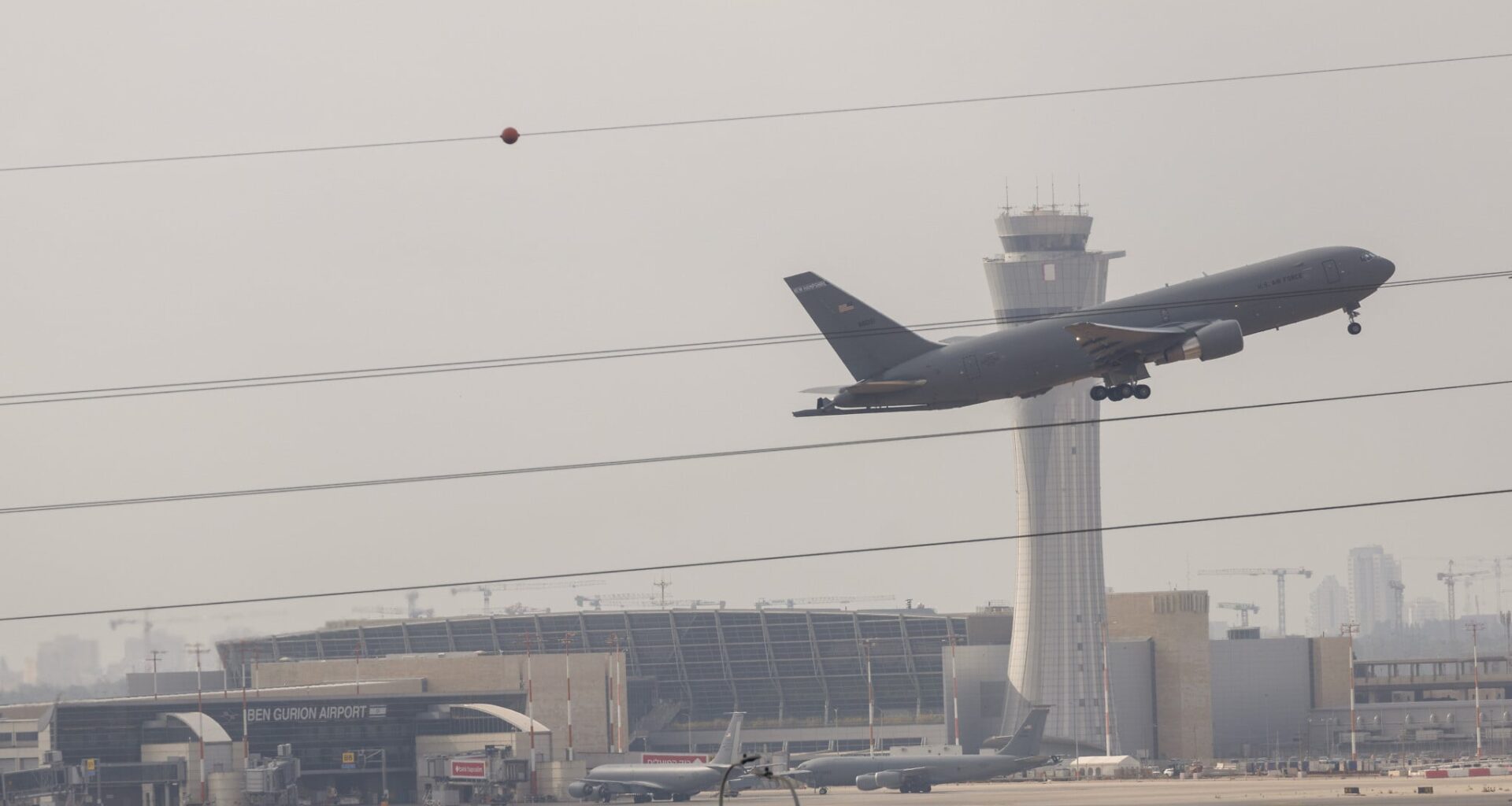
The Transportation Ministry plans to increase the number of passengers allowed on departing flights from Tel Aviv’s Ben Gurion Airport starting as early as Sunday.
According to the eased framework, an additional 20 passengers will be allowed on departing flights, currently limited to 50 per flight.
Another 20 seats will be allocated for humanitarian cases, bringing the maximum to 90 passengers per flight.
The emerging framework is not final and may be updated based on security assessments and decisions by the relevant government authorities.
The Transportation Ministry on March 23 cut the number of passengers permitted on a flight departing Ben Gurion Airport to 50 from 120 previously, after Iranian ballistic missiles targeted central and southern Israel, with multiple impacts and people injured. There are no restrictions on passenger numbers for arriving flights.
Get The Times of Israel’s Daily Edition
by email and never miss our top stories
By signing up, you agree to the terms
The number of takeoffs and landings at Ben Gurion Airport are restricted to one per hour as the country’s airspace remains virtually closed to regular commercial air traffic amid the ongoing war with Iran.
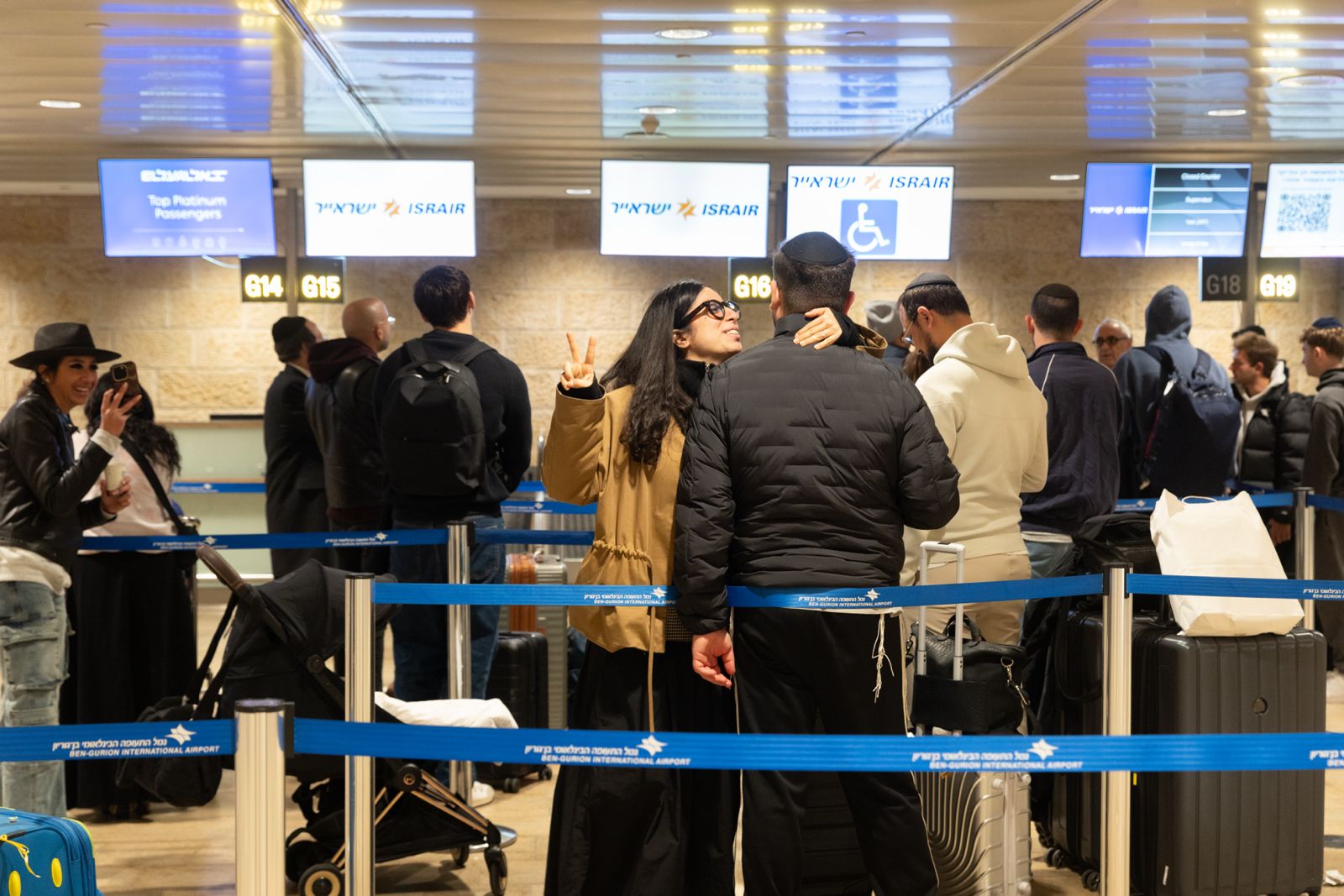
Passengers check-in for the first outbound flights since the closure of Israel’s airspace on February 28, at Ben Gurion Airport on March 8, 2026. (Courtesy of Israel Airports Authority)
Israel’s airspace has been shut to most commercial traffic since February 28, when Israel launched joint attacks with the US on the Iranian regime.
Earlier this month, Ben Gurion Airport gradually reopened for limited inbound and outbound flights, operated solely by Israeli airlines El Al, Arkia, Israir and Air Haifa.
Israel started to tighten passenger quota restrictions on outbound flights last month after three private jets parked at Ben Gurion Airport were damaged by debris following the interception of an Iranian ballistic missile.
The restrictions have been criticized by some, given that airports are operating under fewer restrictions in other countries in the region that have also been targeted by Iran, including the United Arab Emirates.
As a result of the restrictions, many of those trying to leave Israel have had to use land border crossings into Egypt or Jordan before continuing with their journeys.
You appreciate our wartime journalism

You clearly find our careful reporting of the Iran war valuable, at a time when facts are often distorted and news coverage often lacks context.
Your support is essential to continue our work. We want to continue delivering the professional journalism you value, even as the demands on our newsroom have grown dramatically during this ongoing conflict.
So today, please consider joining our reader support group, The Times of Israel Community. For as little as $6 a month you’ll become our partners while enjoying The Times of Israel AD-FREE, as well as accessing exclusive content available only to Times of Israel Community members.
Thank you,
David Horovitz, Founding Editor of The Times of Israel