
Blue Shield of California this week accused Community Medical Centers of denying Blue Shield members’ out-of-network benefits two months after an ongoing insurance network dispute revoked in-network access for thousands of Fresno-area residents.
The accusations from Blue Shield, which Community Medical Centers called misleading, came in a public statement Wednesday in which the health insurer urged local officials to ask Community Medical Centers to “stop turning away members.”
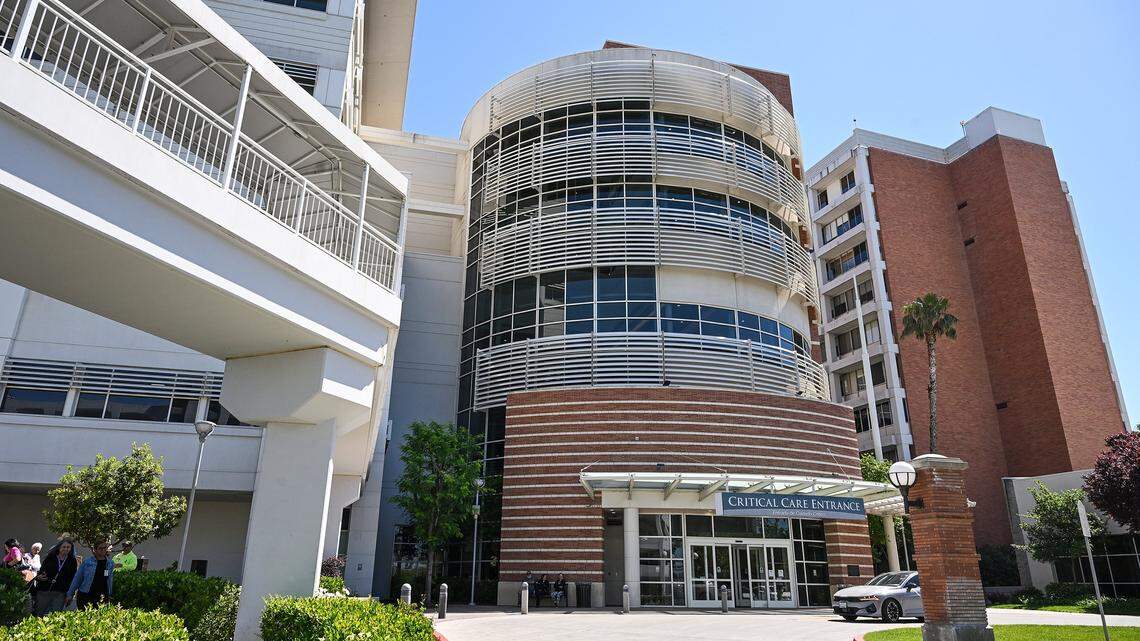
The two sides failed to agree on terms of a new contract by a Jan. 31 deadline, leaving thousands of Blue Shield policyholders without in-network access to doctors and care at CMC facilities, which include Community Regional Medical Center, Clovis Community Medical Center and Fresno Heart & Surgical Hospital.
The change impacted city of Fresno employees as well as Valley Children Hospital’s medical staff and their families, who are insured by Blue Shield and get their own care through at these Community Health System-owned facilities.
In its statement, Blue Shield accused Community Medical Centers of turning away Blue Shield members after sending the insurer a notice of termination. Blue Shield said Community has rejected members who are supposed to have out-of-network benefits even as the old contract expired.
“However, Community Medical Centers has chosen to deny these benefits and turn away Blue Shield members, a decision that directly harms the patients Community Medical Centers is entrusted to serve, many who have been existing patients for years,” Blue Shield said in a statement.
Aldo De La Torre, division president of insurance services and managed care for Community Health System, said Blue Shield’s claims were misleading.
“Community Health System has not ‘turned away patients.’ We remain open and committed to caring for our community,” De La Torre said in a statement to The Bee. “The current out-of-network status is the direct result of Blue Shield’s decision to terminate negotiations and decline a reasonable extension.”
Both sides have accused the other party of making unreasonable demands in negotiations that have led to the months-long impasse.
Blue Shield said in its statement Community Health System is demanding “unreasonable” rate increases that “prioritize financial demands over patient care, at the expense of the people who rely on it the most.”
“If Blue Shield were to accept the demands, the nonprofit health plan members enrolled through Covered California, CalPERS, small businesses and larger employers would need to absorb significant premium increases in the years ahead — an outcome Blue Shield sees as unfair to both our members and customers,” the health insurer said in its statement.
Community Medical Centers said it is seeking “modest” rate increases that are in line with accepted terms in other health plans.
“In contrast, Blue Shield has requested premium increases from its customers that are in the double digits, in many cases exceeding 20%. This discrepancy underscores a lack of alignment between what is being offered to providers and what is being retained by Blue Shield to increase profits,” De La torre said.
“Claims that our requests would materially drive premium increases are not credible. Healthcare costs are influenced by many factors beyond hospitals’ control. Meanwhile, health plans — including Blue Shield — have reported millions of dollars in profits while continuing to shift financial pressure onto providers and patients.”
De La Torre urged Blue Shield to return to negotiation table and “prioritize patients over positioning.”
It’s unclear how many San Joaquin Valley residents are insured with Blue Shield, but in Fresno, 1,500 city workers have been affected, Fresno City Manager Georgeanne White told the media in early February. In Medera, approximately 3,200 Valley Children’s Hospital employees and physicians have also been hit by the stalled negotiations, according to Zara Arboleda, spokesperson for Valley Children’s Hospital.
Dvera Saxton, a Fresno State professor and Blue Shield policyholder, said she is seeing a specialist at Fresno Regional Medical Center because her condition requires routine monitoring and regular procedures under anesthesia.
Saxton’s care has not been disrupted yet because she was able to file paperwork applying for the “Continuity of Care” for up to one year and maintain her 10% co-insurance rate for the treatments. But if the dispute cannot be settled after the one-year transition period expires, Saxton will have to find another specialist within the insurance network. Otherwise, she will have to pay the 40% of the co-insurance to continue receiving the same treatment from the specialist at Fresno Regional Medical Center.
“I am single, I live alone, I don’t have a secondary insurance to fall back on to cover the costs that Blue Shield won’t pick up when ‘Continuity of Care’ expires,’” Saxton said. “My most recent procedure cost about $700 for everything with a 10% co-insurance. With a 40% co-insurance, it would be closer to $3,000 to $4,000, which is most of my monthly take-home income.”
Saxton said that she and many state employees who enrolled in the CalPERS system have opted for Blue Shield or other high-end health insurance plans, despite monthly premiums as high as nearly $500, because they were expecting “extra reassurance” to access good care at Community Health Centers.
“When navigating complex and life-altering diagnoses, the last thing patients need is to have to deal with more hurdles to accessing the care and treatments they need,” Saxton said. “Especially when the costs of premiums are already high and going up every year.”
The Fresno City Council passed a resolution on Feb. 12 to urge Blue Shield and Community Medical Centers to return to the table, negotiate in good faith, and restore healthcare access for city employees and retirees.
Melissa Montalvo contributed to this report.
Related Stories from Fresno Bee

The Fresno Bee
Leqi Zhong is the Clovis accountability/enterprise reporter for The Bee. She is a graduate of UC Berkeley with a Master’s degree in journalism. She joined The Bee in 2023 as an education reporter. Leqi grew up in China and is native in Cantonese and Mandarin.