
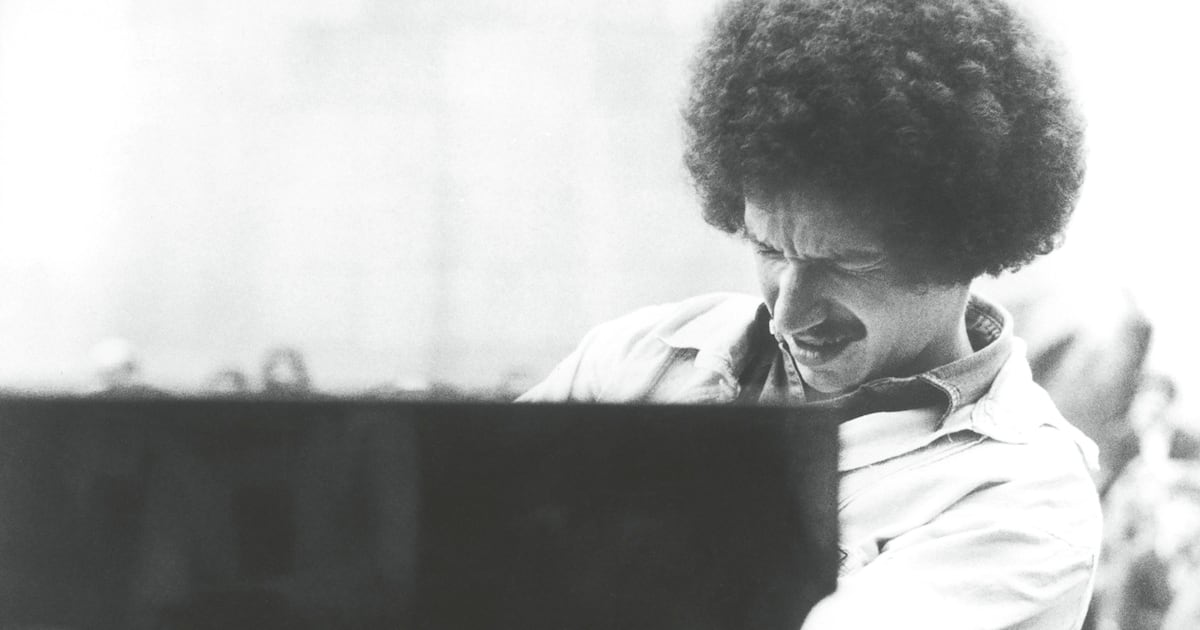
On the wet and chilly afternoon of Friday, January 24th, 1975, the American pianist Keith Jarrett arrived in Cologne to play a concert. It was to be no ordinary performance, however, either by design or by execution.
For one thing, it was the first jazz concert to be staged at the German city’s most prestigious music venue, the imposingly modernist 1,432-seat Opera House; the event was scheduled for 11pm, following the evening’s main performance, of Alban Berg’s opera Lulu. Second, the sold-out concert was organised by a spirited local promoter, Vera Brandes, who, remarkably, was just 18.
Third, Jarrett soon discovered, much to his irritation, that he had been given the wrong piano. Instead of the Bösendorfer Imperial concert grand he had been promised, the exacting pianist was being asked to perform one of his supremely challenging, fully improvised solo concerts on a smaller, substandard (though hastily tuned and repaired) rehearsal piano. At first, he flatly refused to play.
To make matters worse, Jarrett had not slept in several nights; he had travelled almost 700km overnight by car from Switzerland, and he had severe backache, taking painkillers and wearing a back brace on stage. Even the preconcert meal at a local Italian restaurant arrived late; he barely ate a few mouthfuls before having to leave. Jarrett was exhausted, hungry and in pain.
What happened over the hour or so after the pianist walked on stage at 11.30pm is, therefore, all the more astonishing. Beginning with a simple five-note motif mimicking the opera-house bell that called the audience to take their seats, Jarrett played two extended spontaneous improvisations and an encore that are entire musical worlds unto themselves.
Using rolling ostinatos, rhythmic two-chord vamps and percussive grooves in his left hand, while conjuring gorgeous melodies, rich harmonies and long lyrical extemporisations in his right, Jarrett created, as one of his biographers, Ian Carr, has written, “the poetry of composition-in-motion”.
Not only did the concert seem like a universal and uncategorisable music containing elements of jazz, blues, classical, gospel, pop, boogie-woogie, minimalism, romanticism and more, but over the course of the performance the music also built a hypnotic intensity and mysterious power.
Aided by Jarrett’s famous grunts, moans and vocalisations, and by passages that move almost imperceptibly from the reflective to the ecstatic, the concert was akin to an altered state of consciousness. Jarrett has called his expansive solo improvisations “epic journeys into the unknown”. It was almost as if he were transmitting his discoveries along the way; the music was playing him.
At the same time Jarrett skilfully maintained a compelling sense of structure and logic: he was like a novelist writing a short story from scratch and in one go, without the benefit of edits or revisions, yet maintaining strong characterisation, narrative drive and a coherent plot. It is part of the reason why the recording of his performance, titled The Köln Concert and released later that year as a live double LP by the much-admired German label ECM, has become both mythical and canonical.
“The form is perfect, the timing is perfect and the proportion of the sections to each other is perfect,” says the Japanese pianist Maki Namekawa, who is performing parts of The Köln Concert at the National Concert Hall, in Dublin, later this month. “It’s both a big mystery and an absolute miracle.”
 Japanese pianist Maki Namekawa. Photograph: Zoe Goldstein
It’s true that Jarrett, who was then 29, already had a significant standing in jazz and beyond at the time. He had been a member of Charles Lloyd’s popular quartet, sometimes known as “the first psychedelic jazz group”, and of Miles Davis’s groundbreaking electric bands, and he had released a number of highly regarded albums on ECM, including the pioneering solo piano recordings Facing You and Bremen/Lausanne.
The release of The Köln Concert, however, significantly changed the fortunes of both Jarrett and Manfred Eicher, ECM’s founder and creative force. (It was Eicher who had driven the pianist to Cologne and arranged the recording.)
The concert helped to re-establish both the solo piano in jazz – a tradition that stretches back to Scott Joplin’s ragtime compositions at the turn of the 20th century – and the value of acoustic jazz in the heavily fusion-leaning 1970s. It also created a cult and mystique around an immensely gifted, intelligent and courageous artist who could seemingly magic transcendently moving music out of thin air.
“For the listener, it is like being in dialogue with rapture,” Andrew Solomon wrote in the New York Times in 1997. Others found something deeply spiritual and liberating in the music, as if it communes with some higher force. Jeremy Strong, who played Kendall Roy in Succession, explained his acting process in 2021 by quoting Jarrett: “I connect every music-making experience I have with a great power, and if I do not surrender to it nothing happens.”
As well as Jarrett becoming the first musician to perform improvised music at several of the world’s largest and most prestigious venues, including La Scala, in Milan, and the Metropolitan Opera, in New York, The Köln Concert is now, ECM claims, the bestselling solo jazz album and the bestselling piano album, of any genre, with sales estimated at 4 million. The label released a new special-edition LP at the end of 2025 to mark its 50th anniversary.
The Köln Concert has forever secured Jarrett’s superstar fame and legacy, though often to the point of excessive reverence – the English author Geoff Dyer once wrote that Jarrett is “not just the world’s greatest piano player but our greatest living musician”.
Jarrett himself has also not always helped. Once declaring that he is “proud to be difficult”, Jarrett not only considers The Köln Concert to be an inferior performance compared with his later solo piano works – “if I did it again, there’d be so much less ornamentation … there are too many extra notes”, he once said – but he also has a reputation for being vain, prickly and intolerant.
There are countless examples of Jarrett lecturing and even raging against audiences, and walking off stage if he hears any noise – coughing, sneezing, whispering or even the rustle of sweet wrappers; he once performed in the dark to prevent photographs being taken.
In the early 1980s, Jarrett flew to Brazil and then refused to play, because the organisers had ignored his specifications for the piano. They clearly did not have the persuasive powers of Vera Brandes, whose experiences in Cologne have recently been made into a film, Köln 75, which tells more of the background story and high drama of that day.
The film was made without the co-operation of Jarrett – who suffered two severe strokes in 2018, which have left him partially paralysed and unable to play with his left hand – and features none of the music from the concert itself.
On April 13th, Maki Namekawa and the French virtuoso Thomas Enhco, another internationally renowned pianist, will step boldly into this complex musical matrix with their own interpretations of The Köln Concert.
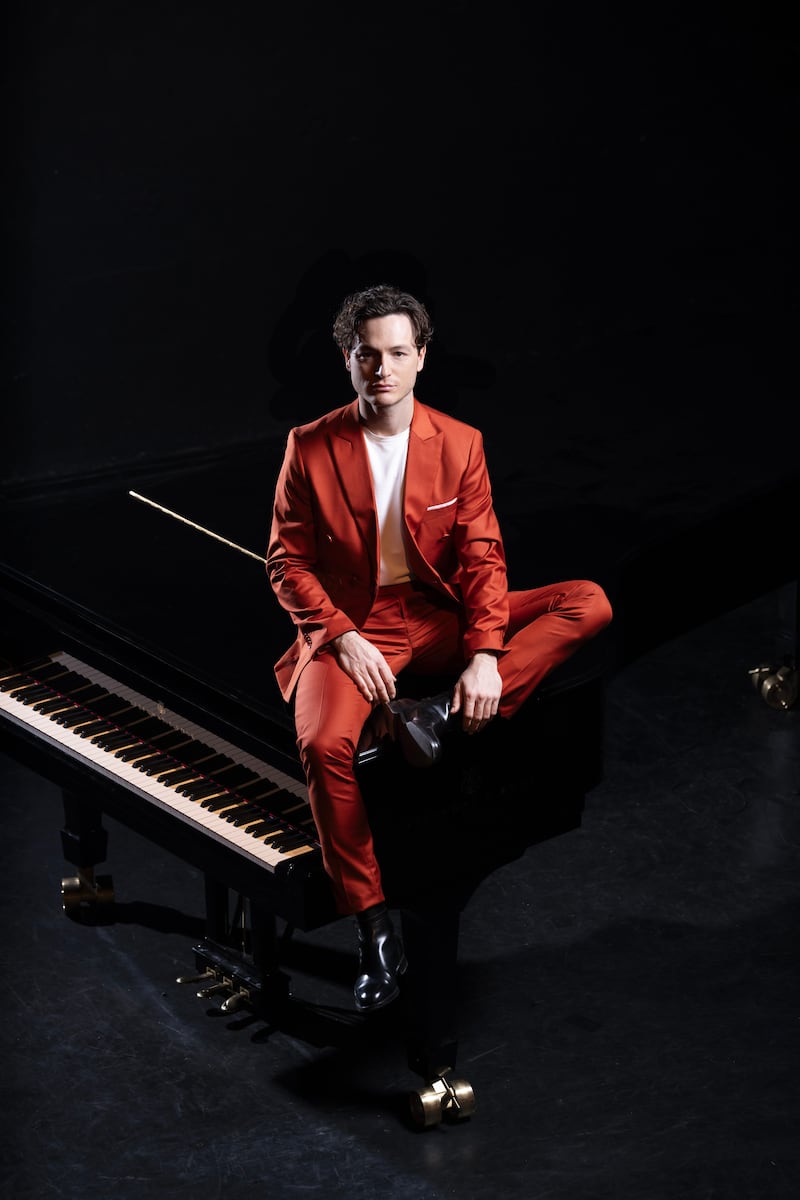 French pianist Thomas Enhco. Photograph: Julien Benhamou
Namekawa who is 55, is one of the leading classical concert pianists of her generation, known principally as a performer of often demanding contemporary and minimalist music, especially the works of Philip Glass. She presented a selection of Glass’s solo piano compositions at the National Concert Hall last October.
Working with a basic score – The Köln Concert was first transcribed by two Japanese musicians and published, eventually with Jarrett’s authorisation, in 1991 – Namekawa will play the music’s improvised, 26-minute Part 1 and its seven-minute encore, which is based on Jarrett’s tune Memories of Tomorrow. She explains, however, that the recording remains her primary source.
“Working on this music is completely different to normal classical performances – and the highest challenge for me,” she says from her home in Linz, in Austria. “The published score is only a start, and it only helps to a certain extent. The main score for me is a process of listening, listening, listening to Keith Jarrett’s original recording.”
While Namekawa has some jazz-adjacent credentials – she has released an album of Chick Corea’s composed miniatures, Children’s Songs, and played Jarrett’s contemporary classical piece Ritual – she is aware of the contention that The Köln Concert can be played successfully only by a pianist with a background in jazz, blues and improvisation.
“Yes, I was hesitant at first, because many people have a very special connection to this music; it’s like a sacred object,” she says. “But then I went to see Keith with my husband” – the American conductor and pianist Dennis Russell Davies – “and I told Keith that I’m not a jazz pianist, and he replied, very calmly, ‘The Köln Concert is not jazz.’” (Indeed, Jarrett once described the recording as “universal folk music”.)
“This helped me find my way, because I’m still trying to discover what this music is, and how I can play it. I know I cannot play like Keith. And I’m not trying to copy his performance. Nobody is waiting for this. Nobody needs this. You could just stay at home and listen to the album. I’m just trying to interpret the music as best I can, with my own thoughts and feelings, and always with one important thing: integrity.”
[ Another nail in the coughin’ – An Irishman’s Diary about Keith JarrettOpens in new window ]
Enhco, making his Irish debut, will play the 33-minute second part of The Köln Concert. A pianist and composer who, highly unusually, is equally at home playing modern jazz and the classical canon, he has performed as a soloist and with various groups, ensembles and orchestras, both in the club and concert hall. Enhco also writes film music.
His approach to the performance is different from Namekawa’s, however. Much like the Belfast-born pianist Scott Flanigan’s recent “revisits” to the concert at various Irish venues, the 37-year-old Frenchman will improvise around certain themes, harmonies, grooves and modulations inherent in the recording; he is in dialogue with the original.
“I respect these elements of the music as sort of checkpoints or landmarks,” Enhco says from Madrid. “But I’m also trying to be both an interpreter and improviser, to put myself in the shoes and hands of Keith Jarrett, knowing that it’s impossible, because he’s such a genius. My take is to extract and make new, to make it different every time, so that it stays an improvised experience.”
It’s clear that both musicians have a deep relationship with The Köln Concert. When Namekawa first heard the recording, after leaving Japan to study music in Germany in the mid-1990s, she felt that somehow the music understood her situation. “I was very far from home, and very lonely, but listening to the concert was like a huge hug. I could feel its warmth, and it said ‘Never give up.’”
For Enhco, Jarrett and The Köln Concert are primary models and inspirations. “Jarrett is the only musician I know in the last century who embraces the whole history and tradition of jazz and the avant-garde, and who has also been a very, very good classical pianist, recording music by Mozart, Bach and Shostakovich.
“The Köln Concert is like a Mozart sonata; there’s a level of myth around the recording for many people, and not just for lovers or connoisseurs of jazz. Making it come alive again is a big responsibility. This concert is absolutely a cultural landmark in the history of 20th-century music.”
Perspectives: The Köln Concert is at the National Concert Hall, in Dublin, on Monday, April 13th. Köln 75 is released on Friday, May 1st