
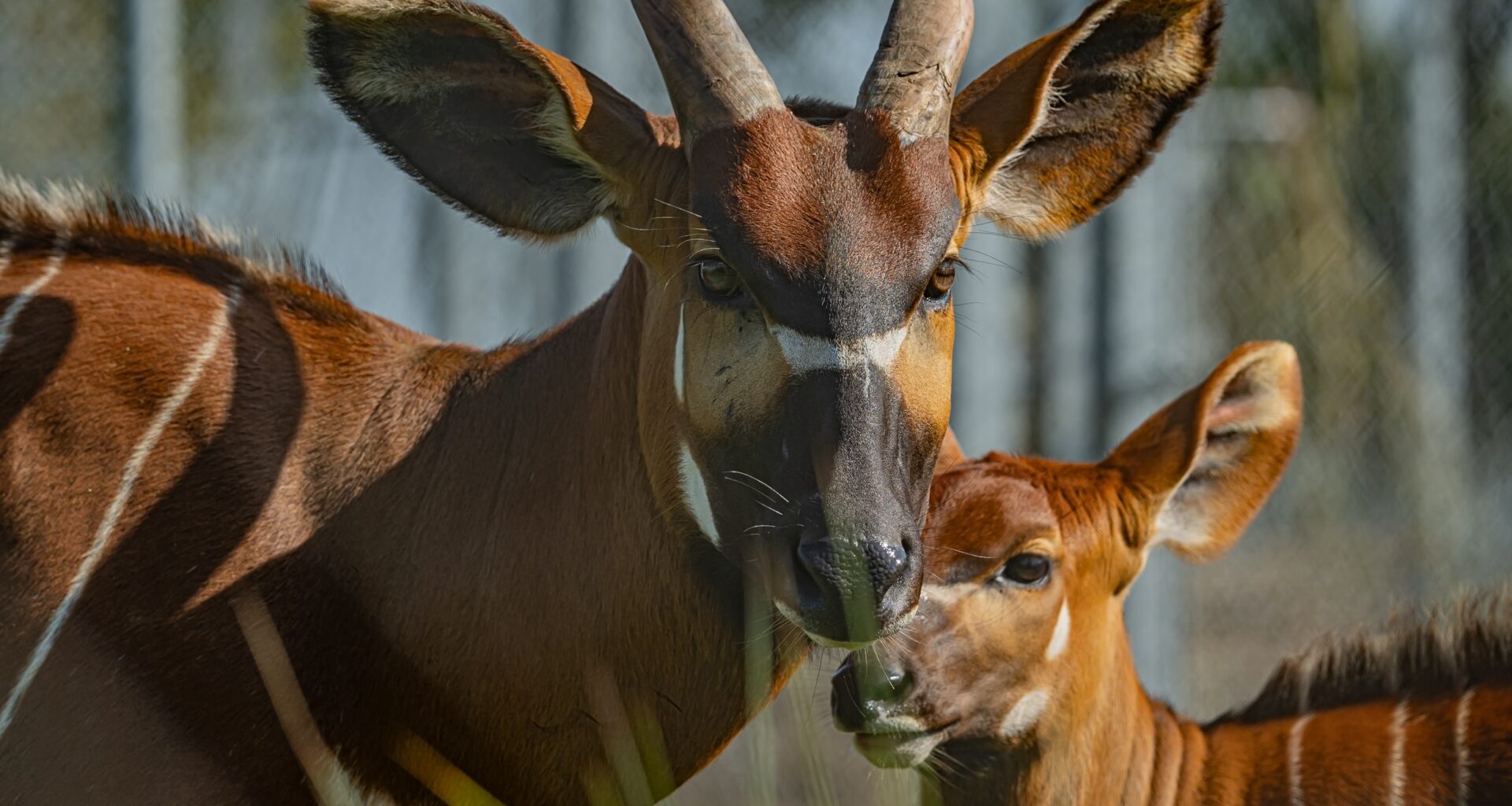
The Mount Kenya Wildlife Conservancy (MKWC) is on track to receive four male mountain bongos from European zoos, a move aimed at helping boost the population of one of Africa’s most endangered antelope.
The transfer was led by experts from Chester Zoo, in England, in collaboration with Kenya Wildlife Service (KWS) and the European Association of Zoos and Aquariums.
In a statement sent to Mongabay, the Chester Zoo said its experts spent more than 11 years coordinating a breeding program across European conservation zoos. “The four males now selected – chosen on the basis of age, health and genetics – will be the first to ever be transferred from European zoos to Kenya as part of a rewilding effort.”
“Collaborations like this are absolutely essential if we are to prevent this magnificent species disappearing altogether,” Nick Davis, mammals general manager at Chester Zoo and coordinator of the European breeding program, said in a statement. “They demonstrate how modern, science-led zoos play an important role in bringing species back from the brink.”
The most recent IUCN assessment in 2016 found the forest-dwelling antelope were critically endangered with just 70-80 adults remaining in the wild at the time, all of them in Kenya.
In the last decade, mountain bongos (Tragelaphus eurycerus ssp. isaaci) briefly experienced a surge in the wild population. The Kenyan national wildlife census report states that in 2021, there were roughly 150 wild mountain bongos, but by 2025, there were just 66.
Kenyan experts attribute the species’ decline to a combination of habitat loss and poaching.
While wild populations have crashed, captive bongos are on the rise, “from 54 in 2021 to 93 by 2025,” according to the wildlife census. Another 17 individuals were repatriated from the United States.
According to Chester Zoo, once four male bongos clear “rigorous health checks and quarantine” they can be flown to Kenya where they will be closely monitored before being introduced to the breeding program.
“These males are a critical component of our rewilding program,” Robert Aruho, MKWC head of conservancy, said in a statement. Now that MKWC has more than 100 animals in the captive breeding program their “focus is on sustained growth, with a long-term national target of establishing at least 750 individuals by 2050,” Aruho said in a statement sent to Mongabay.
Technology is also supporting conservation. Chester Zoo said in a statement that it worked with partners, including Liverpool John Moores University, “to develop the world’s first AI-powered detection system for mountain bongos – cameras that provide real-time data on the animals’ behavior, movement and health without disturbing them.”
Such advances in conservation technology, successful captive breeding programs and international reintroduction efforts “will change the tide for mountain bongos,” Stuart Nixon, the Chester Zoo’s regional field program senior manager for Africa, said in a statement sent to Mongabay.
Banner image: Critically endangered mountain bongo at Chester Zoo in Cheshire, England. Photo courtesy of Chester Zoo.
