
By VNA  April 3, 2026 | 06:09 pm PT
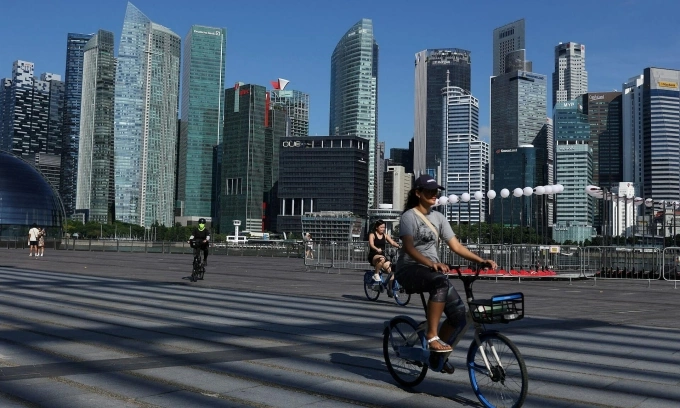
People ride bikes past the skyline of the central business district in Singapore, June 13, 2025. Photo by Reuters
Singapore, ranked the world’s second-richest country in 2025 by gross domestic product (GDP) per capita, will enhance support measures announced in the 2026 fiscal budget and bring some of them forward to alleviate hardship for citizens and sectors under pressure as the Middle East conflict strains energy supply.
In a video message on April 2, Prime Minister Lawrence Wong, who is also Finance Minister, said the government will provide targeted support for sectors more severely affected, as well as rebates to offset rising electricity bills.
Details will be released when the parliament convenes next week.
According to Wong, the conflict is entering a more unstable and uncertain phase, with far-reaching impacts on regional security and global energy flows. The impact could persist even if a ceasefire is reached soon as damage to energy production and distribution infrastructure may take several months to restore full capacity.
However, he noted, Singapore is able to manage immediate disruptions, with refineries and chemical companies scaling back production and sourcing crude oil and feedstock beyond the Middle East.
Liquefied natural gas (LNG) importers are securing alternative supplies from global producers. Singapore will strengthen cooperation with Australia, which accounts for more than one-third of its LNG supply, and work with New Zealand to ensure supply lines for essential goods and food, he added.
With a GDP per capita of US$90,700, Singapore was ranked second richest country in 2025 only to Switzerland at $100,000. In the third place was Norway with a GDP per capital of $86,800, according to British publication The Economist.