
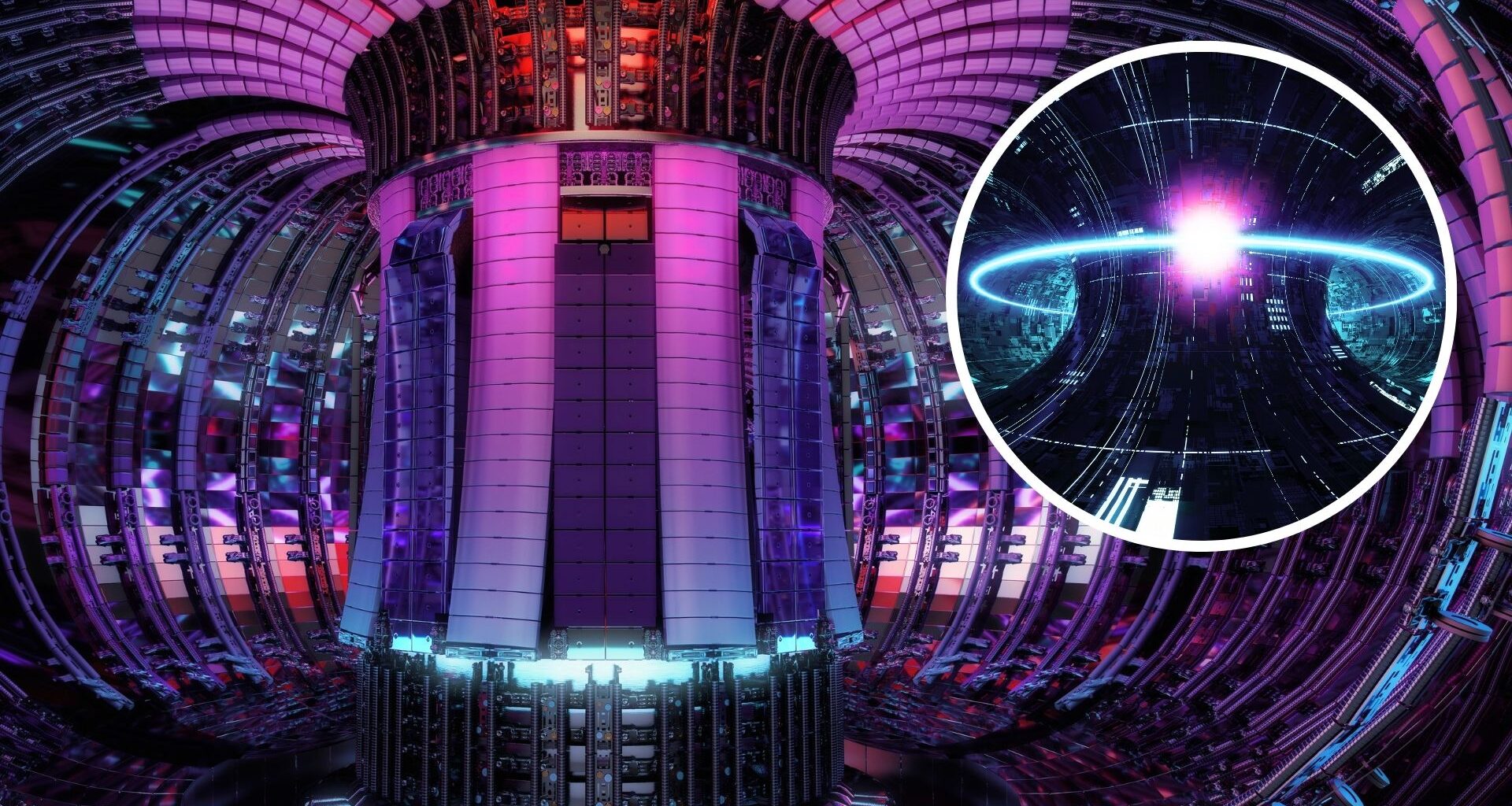
Researchers in Germany are developing a new electrochemical method to coat fusion reactors with pure tungsten. The research team also revealed that the plan is to protect the inner walls of future fusion reactors—the so-called first wall—with tungsten layers.
The research consortium consists of researchers from the Max Planck Institute for Plasma Physics (IPP) and specialty electrolyte manufacturer IoLiTec.
They are developing a globally novel technology for the electrochemical deposition of pure tungsten layers.
Fusion reactor coating
The team also pointed out that due to its heat resistance and robustness, tungsten is the material of choice for plasma-exposed surfaces that must withstand loads of up to 10 megawatts per square meter.
As a refractory metal with a melting point above 3000 degrees Celsius, tungsten resists even extreme thermal stresses. However, the material is rare: comprising only one millionth of the Earth’s crust, it is considered a conflict mineral and is extremely difficult to process mechanically. Manufacturing entire components from tungsten is therefore neither economical nor practical. The solution: a thin tungsten layer on a more easily handled substrate, according to a press release.
Breaking new scientific ground
Researchers also pointed out that tungsten has a very low hydrogen over potential. Therefore, no metal is deposited in aqueous electrolytes; only hydrogen is produced. The research consortium is thus breaking new scientific ground with anhydrous electrolytes based on ionic liquids and organic solvents.
“There is no existing method worldwide for the electrochemical deposition of pure tungsten – neither industrially nor in the laboratory,” said project manager Andreas Waibel from the Fraunhofer IPA.
Instead of constructing entire components from tungsten, researchers are focusing on applying thin tungsten layers onto more manageable base materials. This approach combines the superior surface properties of tungsten with the structural and economic advantages of other materials.
The newly developed method relies on an electrochemical process to deposit tungsten coatings. This technique enables precise control over the coating thickness and uniformity, potentially improving performance while reducing material usage and production costs.
As global interest in sustainable energy intensifies, innovations like electrochemically deposited tungsten coatings bring fusion power closer to reality. By addressing both material limitations and economic constraints, this breakthrough represents an important step toward making fusion a viable and scalable energy solution for the future.
As the global demand for clean and sustainable energy continues to grow, nuclear fusion is widely regarded as one of the most promising long-term solutions. Unlike conventional nuclear power, fusion produces minimal radioactive waste and carries a much lower risk of catastrophic failure. However, turning fusion into a practical energy source requires overcoming major engineering challenges—especially when it comes to materials that can survive the extreme environment inside a reactor.
In a fusion reactor, superheated plasma—reaching temperatures hotter than the core of the sun—is confined within a chamber using powerful magnetic fields. Although the plasma does not directly touch the reactor walls under ideal conditions, intense heat and high-energy particles still impact the inner surfaces.