
 3 min read
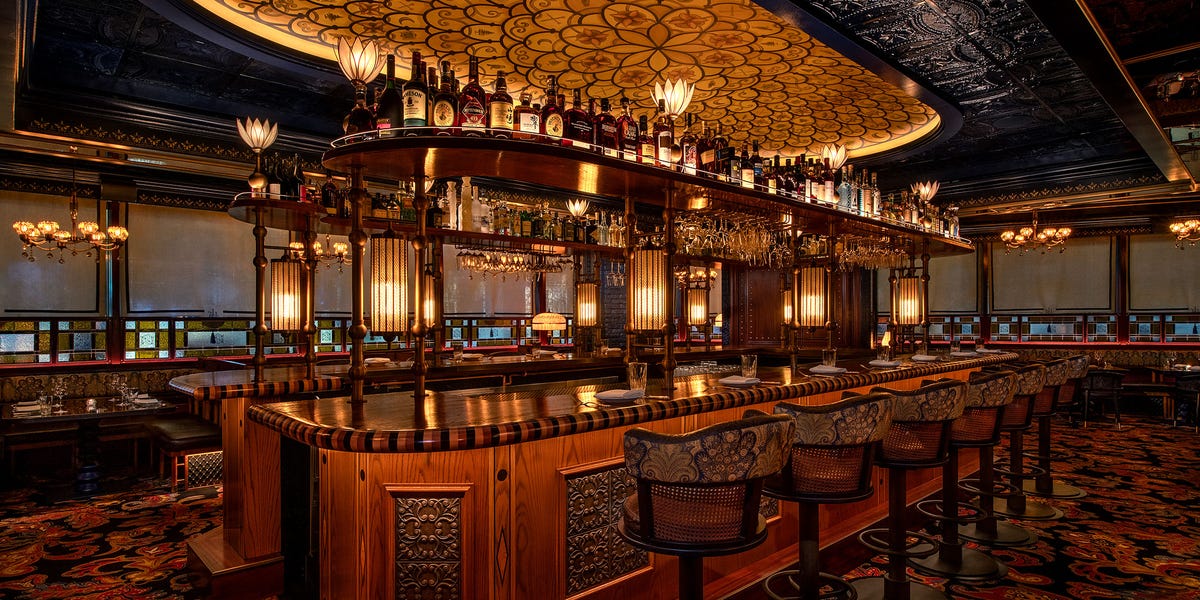
Above: The ground-floor bar, edged in marquetry, sits beneath a hand-painted ceiling mural inspired by the scalloped vaults of the Taj Falaknuma Palace.
When diners step inside Ambassadors Clubhouse New York, the new Indian restaurant from London’s JKS Restaurants (Gymkhana, Berenjak, Brigadiers), they’ll be struck by the space’s maximalism. But this is not maximalism for spectacle’s sake. Every surface is layered, every detail considered. It is maximalism with lineage—an interior built from history, culture, craft, and a deeply personal family archive. “I can’t do a blank wall anymore,” says Karam Sethi, co-owner of JKS. “Every surface has something to do.”
Since opening, Ambassadors Clubhouse has become one of those rare restaurants where the room and the menu arrive with equal ambition. The kitchen draws from the royal courts and street eateries of North India’s Punjab, while the interior, designed by London’s North End Design, takes inspiration from equally rich references.
 AVABLU
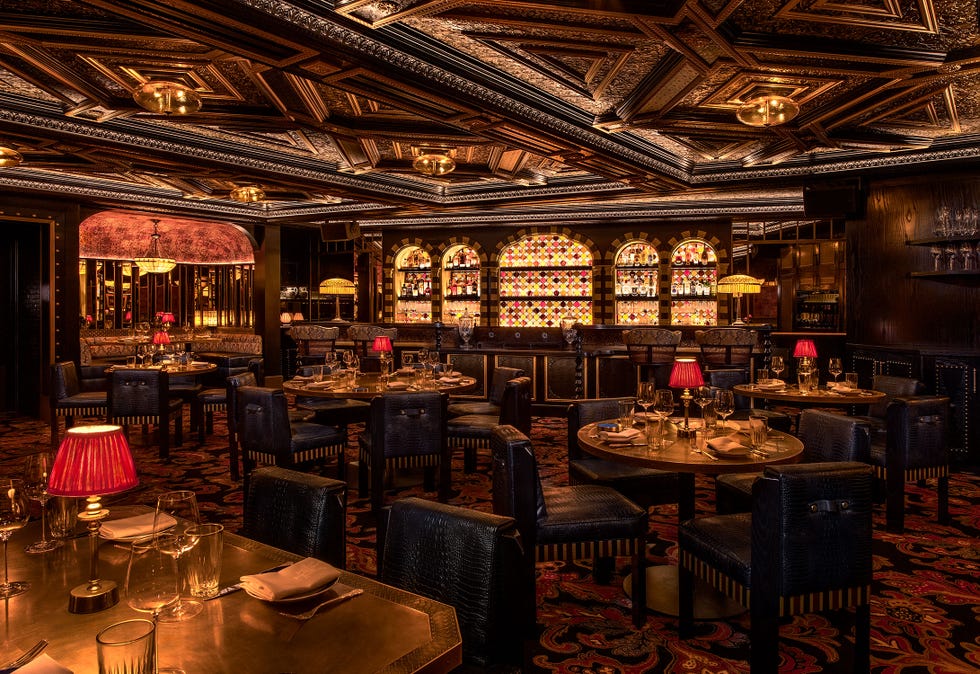
Bathed in warm light, the downstairs dining room unfolds as a glowing jewel box of pattern, texture, and intimacy.
JKS stands for siblings Jyotin, Karam, and Sunaina Sethi, and Ambassadors Clubhouse is, in many ways, their most personal project. The restaurant draws from their childhood summers spent in the homes of their grandfather, an Indian ambassador whose postings took the family from Delhi to Amsterdam, Nairobi, Ireland, and Dalhousie. “For the first 16 years of our lives, every summer was spent in those homes,” Karam says.
Those residences were shaped as much by domesticity as they were diplomacy, and by their grandmother, who curated the interiors with a collector’s instinct. “She ran the house,” Karam adds. “She designed everything and collected pieces from all over the world.” The restaurant, in turn, is reminiscent of those spaces—less a recreation than a continuation.
 AVABLU
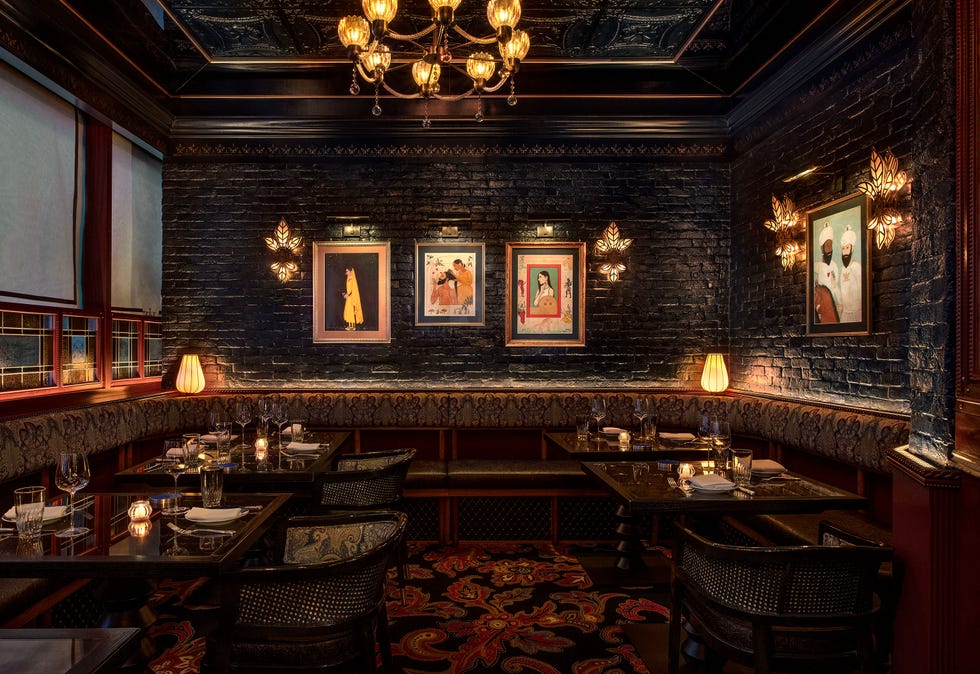
Paintings by Punjabi artists from across the diaspora bring a personal, contemporary layer to the restaurant’s richly detailed rooms.
On the ground floor, the central bar, edged in intricate marquetry, takes its cues from furniture in the family’s Delhi and Dalhousie homes. Surrounding that anchor, silver-leaf–inlaid tables catch the light; leather wallcoverings, some subtly embossed with animal patterns, nod to the traditions of Indian clubs and hunting lodges; custom carpeting draws on Indian rug traditions.
The ceiling is inspired by the scalloped vault of the Taj Falaknuma Palace in Hyderabad, reimagined as a hand-painted mural by scenic artist Mike Langley, with motifs from the Ambassadors Clubhouse crest set within each scallop. Stripes and columns on the walls reference the facade of the Uch Sharif tomb in Punjab. The overall effect comes together to create what Karam calls a “forgotten party mansion”—a space that feels less designed than accumulated.
 AVABLU
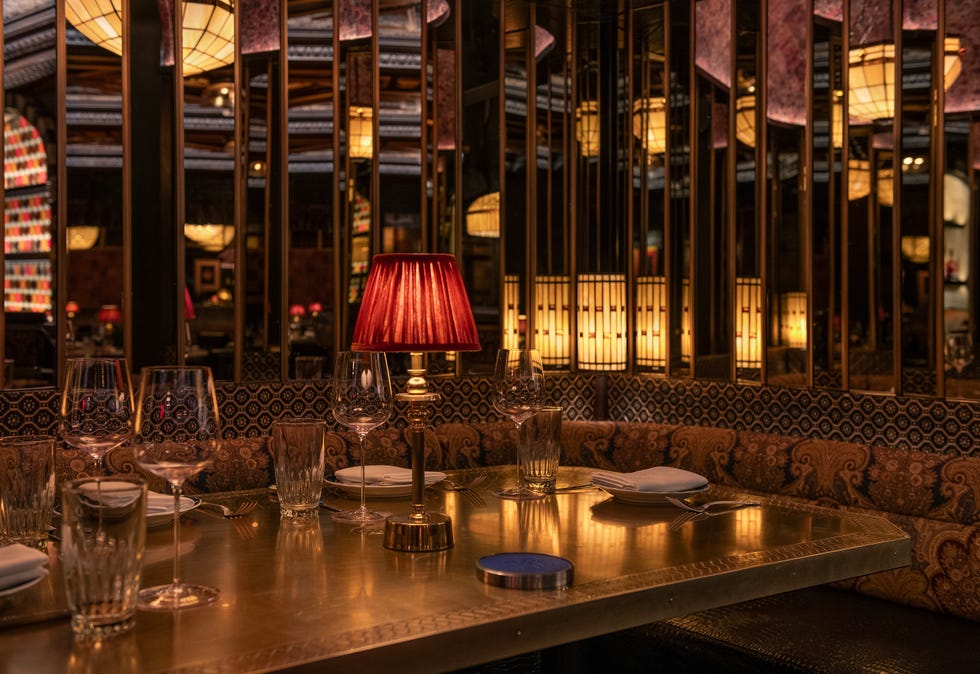
Mirrored panels multiply light and detail across the richly set tables.
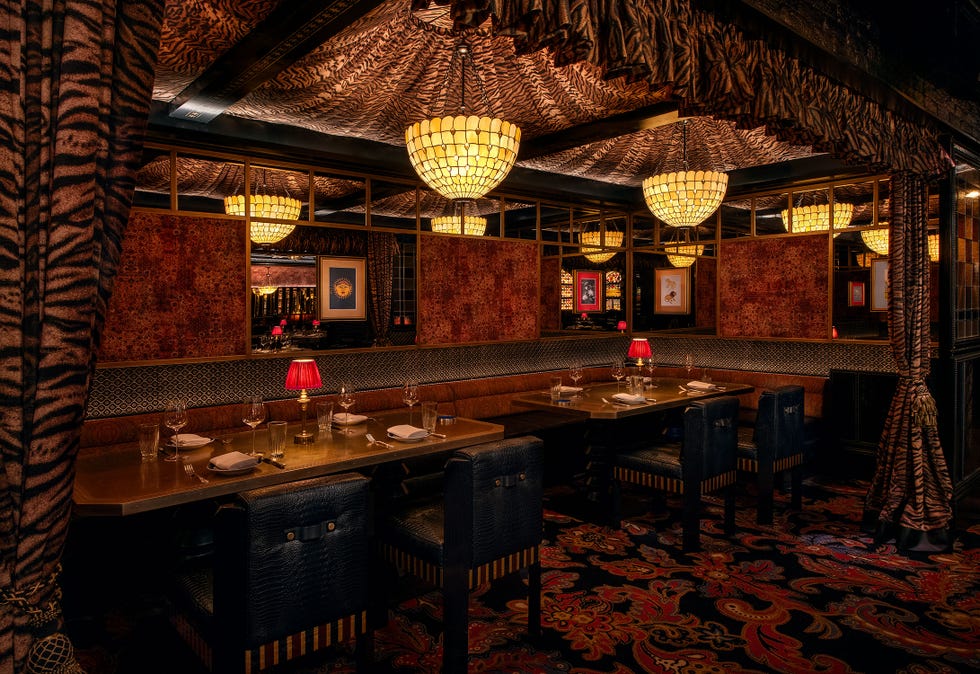
Downstairs, the mood shifts. The Jungli Room—named after a Hindi and Punjabi word meaning “wild”—introduces a more playful, textural sensibility, with animal-inspired fabrics and alabaster lighting. The Raja Rani Room, a private dining space named for the owners’ grandparents, offers a more intimate setting, though it doesn’t skimp on the grandeur with its green tones, upholstered ceiling, Indian-made tiles, and gold-leaf mirrors. Throughout the lower level, coffered ceilings wrapped in classic Victorian wallcoverings like Lincrusta and Anaglypta were painted, beaded, and hand-finished by scenic artists. Fabrics sourced and produced in India line walls and ceilings alike, complemented by custom Art Deco crystal fixtures.
 AVABLU
The Jungli Room layers animal-inspired textures to create an intimate, cocooned dining space.
Throughout the restaurant, the walls feature Punjabi art—British, Canadian, and French Punjabi—reinforcing the project’s cultural specificity. “Punjabi culture is hyper-regional,” Karam notes. “Even recipes change house to house.”
Ambassadors Clubhouse, maximalism is immersive but never overwhelming, theatrical without feeling staged. It is about how objects, materials, and memory accumulate over time–creating spaces that feel distinctly residential than overtly commercial. Says Karam, “It should feel like a house.”

Special Projects Editor William Li is the founder of art consultancy Armature Projects and the Emmy-nominated co-host of Lucky Chow, a series about Asian food and culture on PBS.