
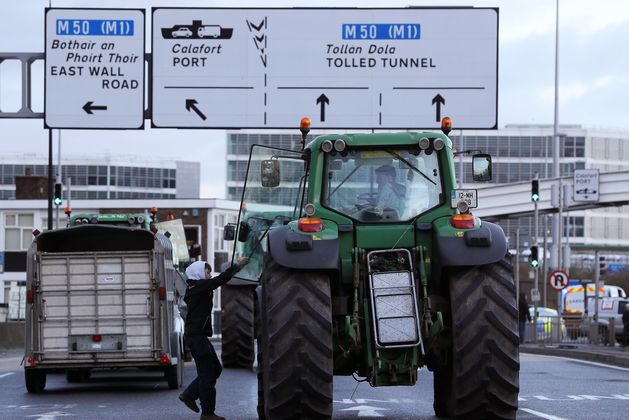
“The only certainty here, is the uncertainty,” Cllr Damien Ryan said, referring to the escalating situation in Iran and the continued closure of the Strait of Hormuz, as he appealed for immediate Government intervention to curb the spike in prices.
While welcoming measures that have already been introduced, including cuts to home heating oil, a four-week extension of the fuel allowance, and reductions in excise duty on diesel and petrol, Cllr Ryan said agricultural diesel had been overlooked.
He warned that, although the country is not currently facing fuel rationing, there is still “huge cause for concern” about how the energy crisis could impact the agricultural sector, wider industry, and the economy at large.
“While we are dealing with a massive issue, we cannot leave this industry behind,” he said. “The week before military action in Iran [began], agricultural diesel was 98c [per litre]. It is somewhere between €1.65 and €1.75 now.”
He highlighted the impact on vehicles operating in quarries and on construction sites across the country, warning that increased fuel costs would ultimately drive up prices for consumers and also have a knock-on effect on the councils’ ability to deliver key projects.
“There needs to be an intervention from the government to deal with the massive spike in agricultural diesel,” he said.
Outlining the scale of the increases, he noted that while white diesel had risen from approximately €1.70 per litre to around €2.30, agricultural diesel had jumped from 98c to between €1.65 and €1.75 per litre.
“The percentage increase is huge. There is only one person paying for that, and that is the customers and the consumers,” he added.
He called for similar supports to those introduced for regular diesel and petrol to be extended to agricultural diesel, “while we deal with what is a magnanimous issue”.
His motion calling on the Government to intervene and provide certainty for the industry over the coming months was seconded by Cllr Michael Burke.
Cllr Burke called for changes to be made to the Budget to help support individuals and businesses that are most affected by rising energy costs.
“There was €670m given away to the hospitality industry in the budget, which I felt was unnecessary,” he said.
As part of Budget 2026, the Government announced a reduction in the Hospitality VAT rate, affecting food, catering and hairdressing, from 13.5pc to 9pc. The measure is due to come into effect in July 2026 and is estimated to cost €232m for the remainder of the year, rising to approximately €681m over a full year.
Cllr Burke said this allocation should be reviewed, with some of the funding redirected to support those most affected by rising diesel and energy costs.
He highlighted that many daily commuters have seen their fuel bill increase by around 10pc.
He said it would be “appropriate” for the Government to revise the Budget, which he described as having been done “wrongfully”, calling it a “bad political and financial decision” to fund large hospitality businesses that make “millions upon millions every year”.
“There are people on the breadline fighting for survival, and small businesses, [that] don’t have that benefit coming to them at all,” he said.
Cllr Burke added that the near €700m wouldn’t solve all the challenges posed by the energy crisis, but said it would help to “ease the problems for a lot of people”.
This article has been funded by the Local Democracy Reporting Scheme.