
Not in my wildest nightmare could I ever imagine the reality that we are witnessing today at the heart of Israel, in Jerusalem, where the Kotel plaza is virtually empty for days prior to Pesach and during the holiday due to the security concerns and following regulations.
It does not look surreal to me. It looks as if time has stopped at the place where it feels so incredibly tangible and multidimensional always.
I tried to remember when it had happened the last time after 1967, and I failed.
I tried to check, but my checking came out fruitless, with regard to the post-1967 period.
I know that many of us are going back and forth in our heads to our own Kotel moments, so many of them, so different ones, so memorable all of them.
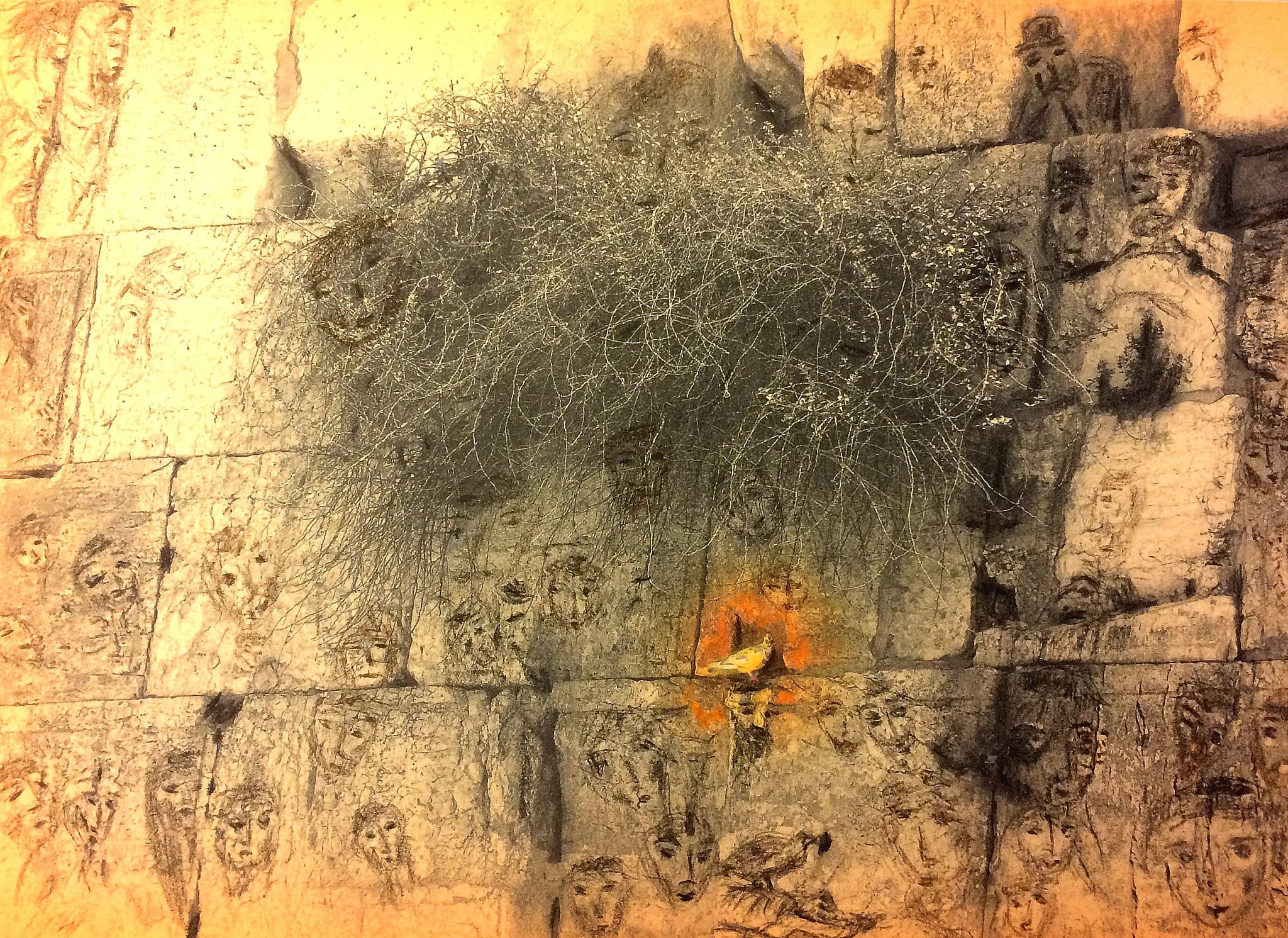
Inna Rogatchi (C). The Dove of Israel II. 2020. Private collection, London, the UK.
One of the ever-present sensations there is that on the way to the Kotel, one has an extra-speed, and this walk towards the Kotel is always uplifting, under any weather and circumstances. There is always the presence of that extra-dimension there.
And on the way back from the Kotel, it is always slow, as if the Kotel keeps you still.
And our Kotel birds, those eternal doves, are such an integral part of it. I can be wrong and I would like to be wrong in this case, but I cannot see any of them at this frozen empty Kotel plaza these days. Not in the photos that I have been seeing, at least.
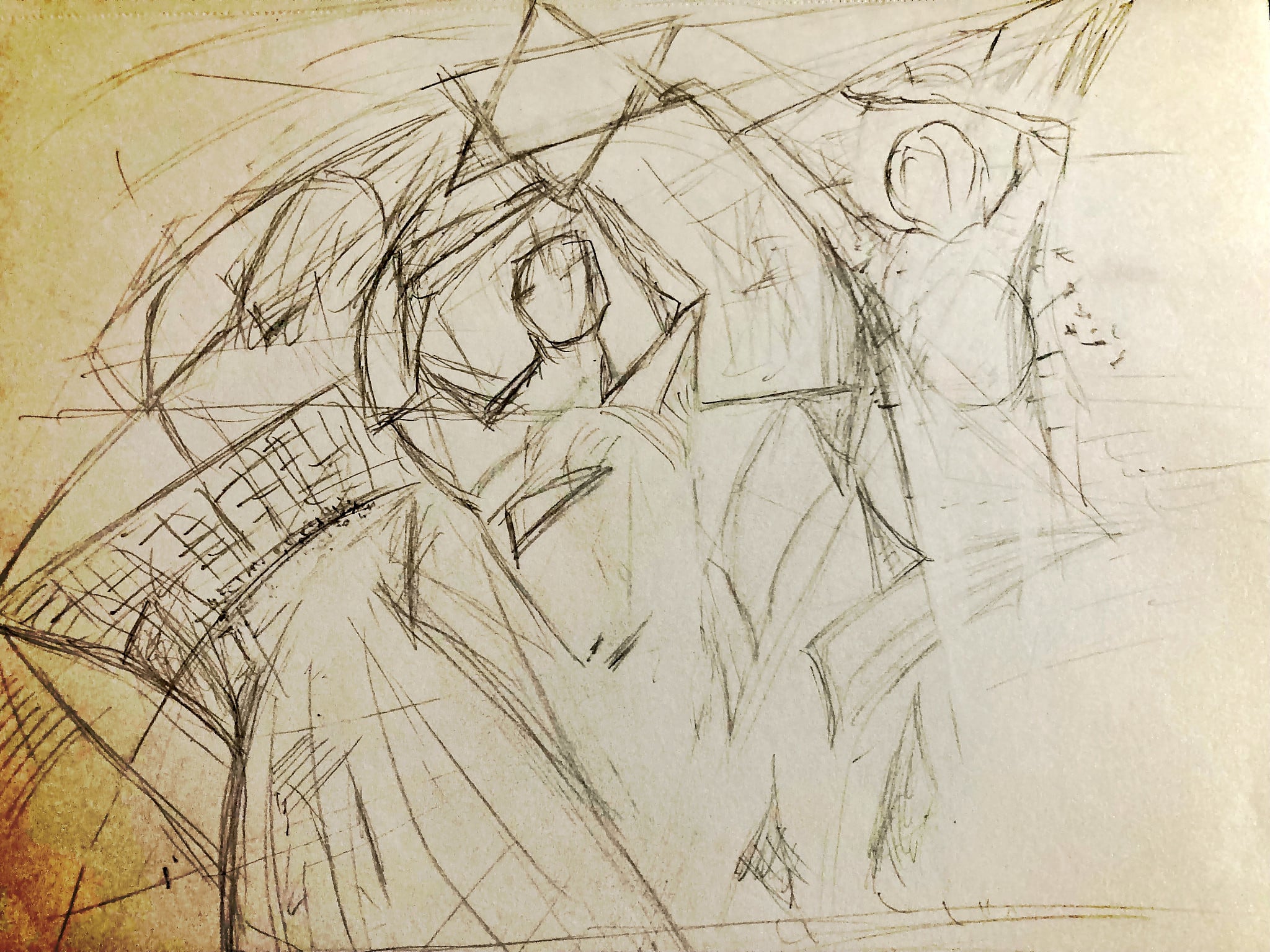
Michael Rogatchi (C). Dreaming Home. Post-Harmony. 2024.
In my travels back in thought to our many Kotel moments, I also thought about how it was reflected in both of our artworks, Michael’s and mine.
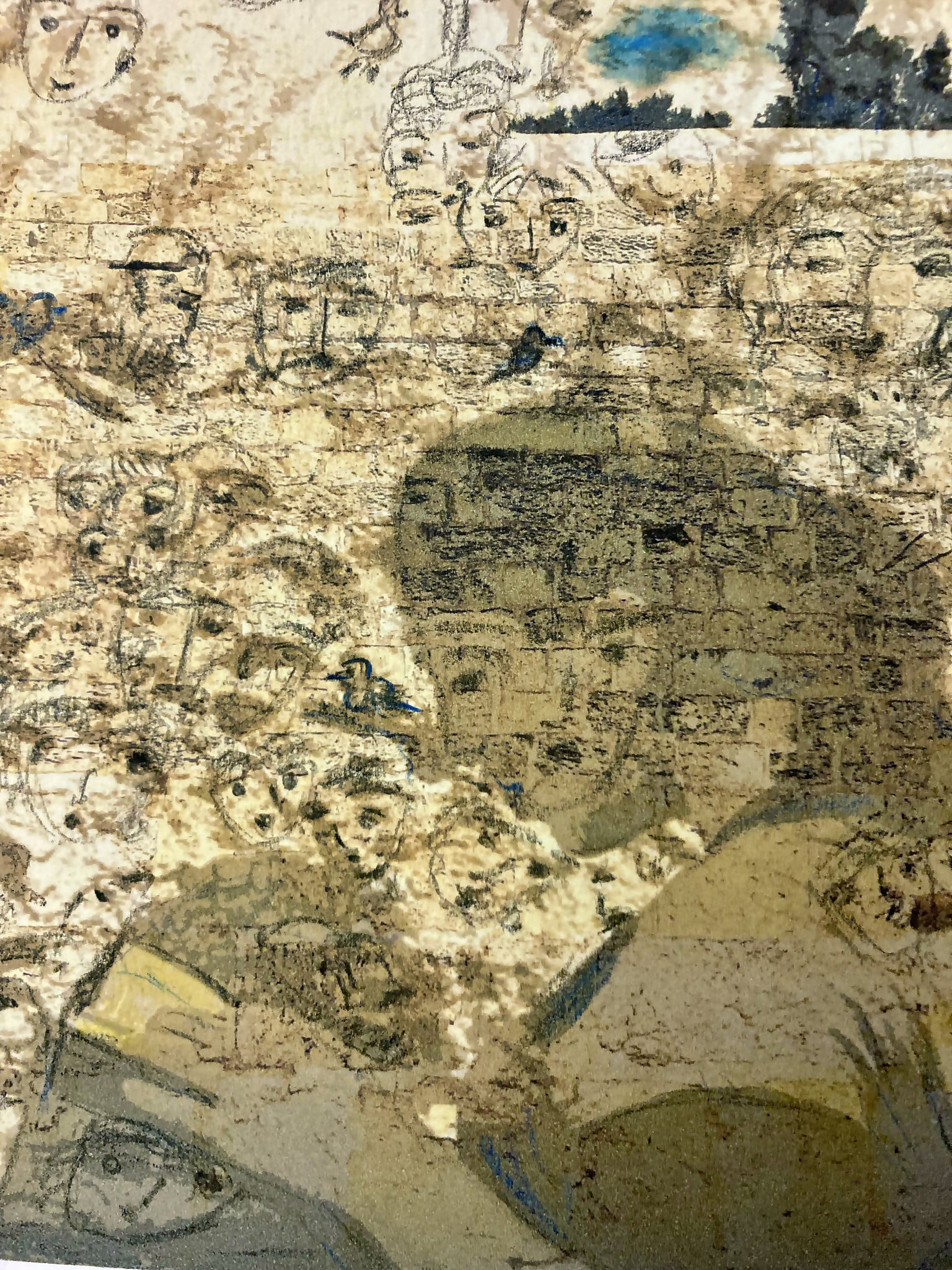
I have a special story with regard to my works portraying the Kotel. All those images which are drawn in the Kotel works, I did not draw them out of my mind. I had no idea or thought about it and I would not dare. I was just enhancing the main images there, without adding anything – until all those faces and birds suddenly started to appear, as if on their own.
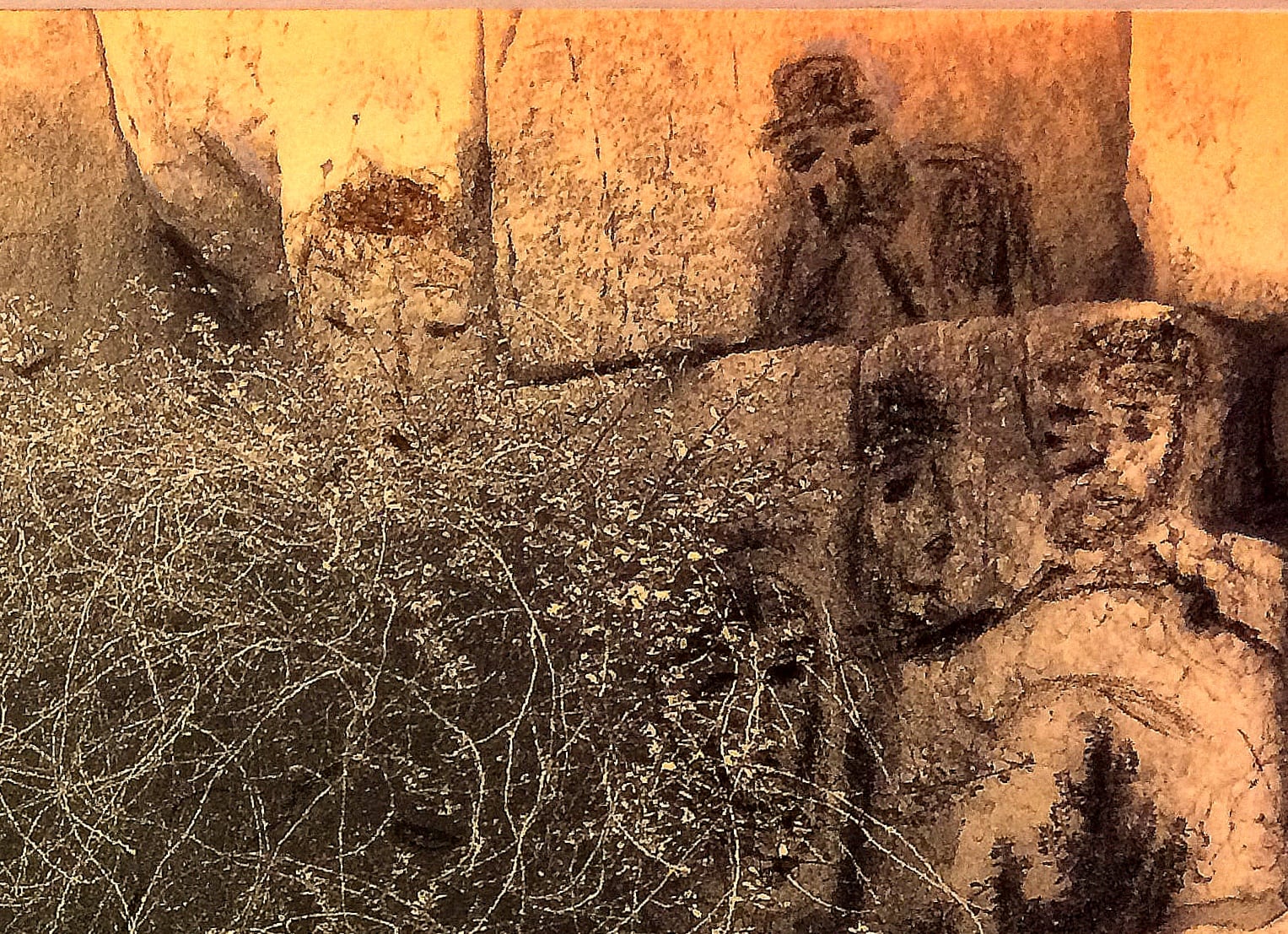
Inna Rogatchi (C). The Kotel. Fragment. 2020. Private collection, London, the UK.
They did not appear momentarily, but gradually. It was an amazing and very gratifying process of experiencing that incredible dialogue. Given the place which was pictured, the Kotel, it was also incredibly meaningful.
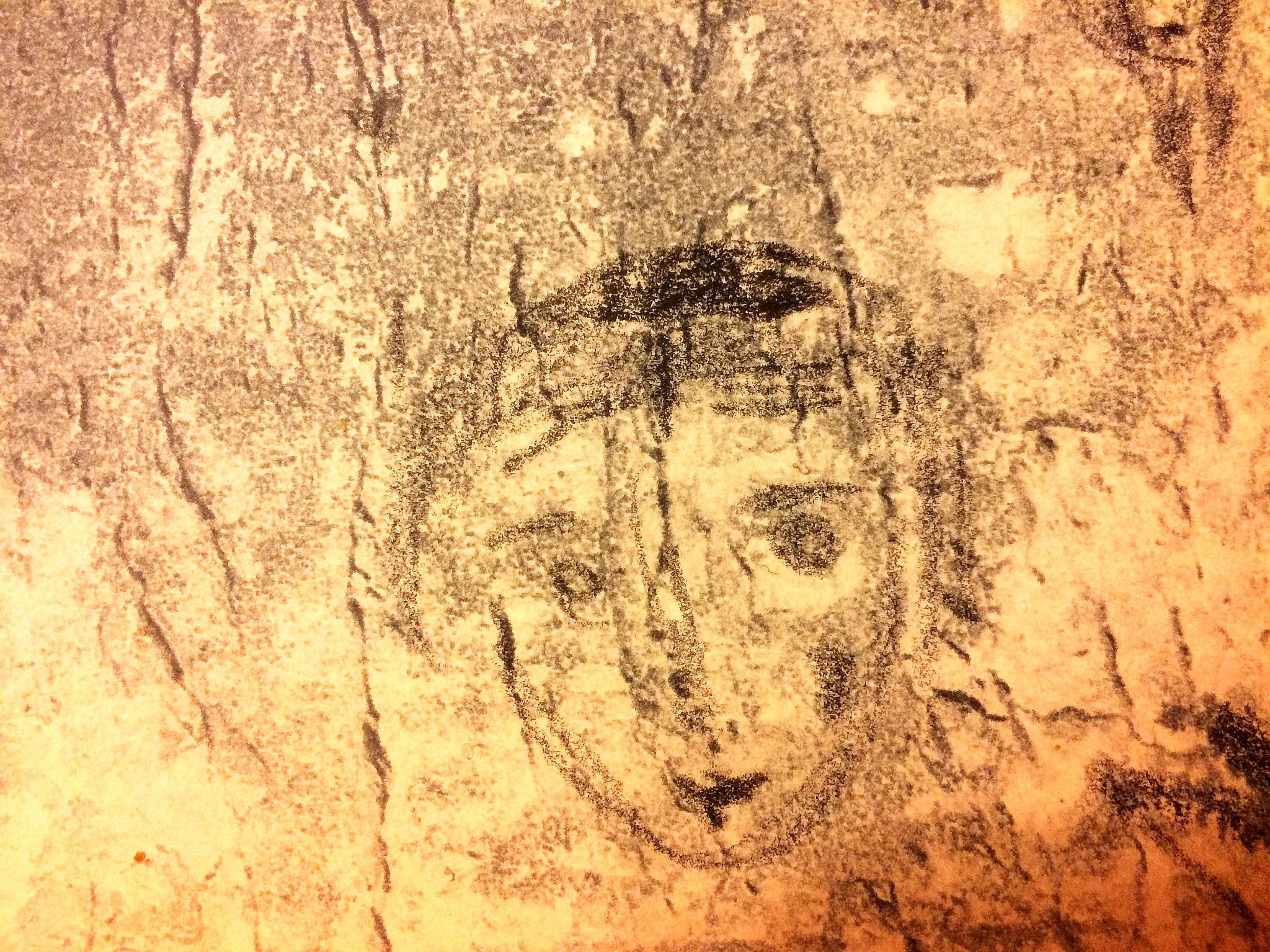
Inna Rogatchi (C). The Kotel. Fragment. 2020. Private collection, London, the UK.
The boy, who appeared as one of the central images, I connected in my mind with Elie Wiesel. As a separate work, it is part of my special Night – Day – Night Elie Wiesel Collection that I have created in commemoration of the 10th anniversary of the passing of Elie. It happened in early July 2016. For the same purpose, Michael has created his own My Train, the Elie Wiesel Special Collection of his works.
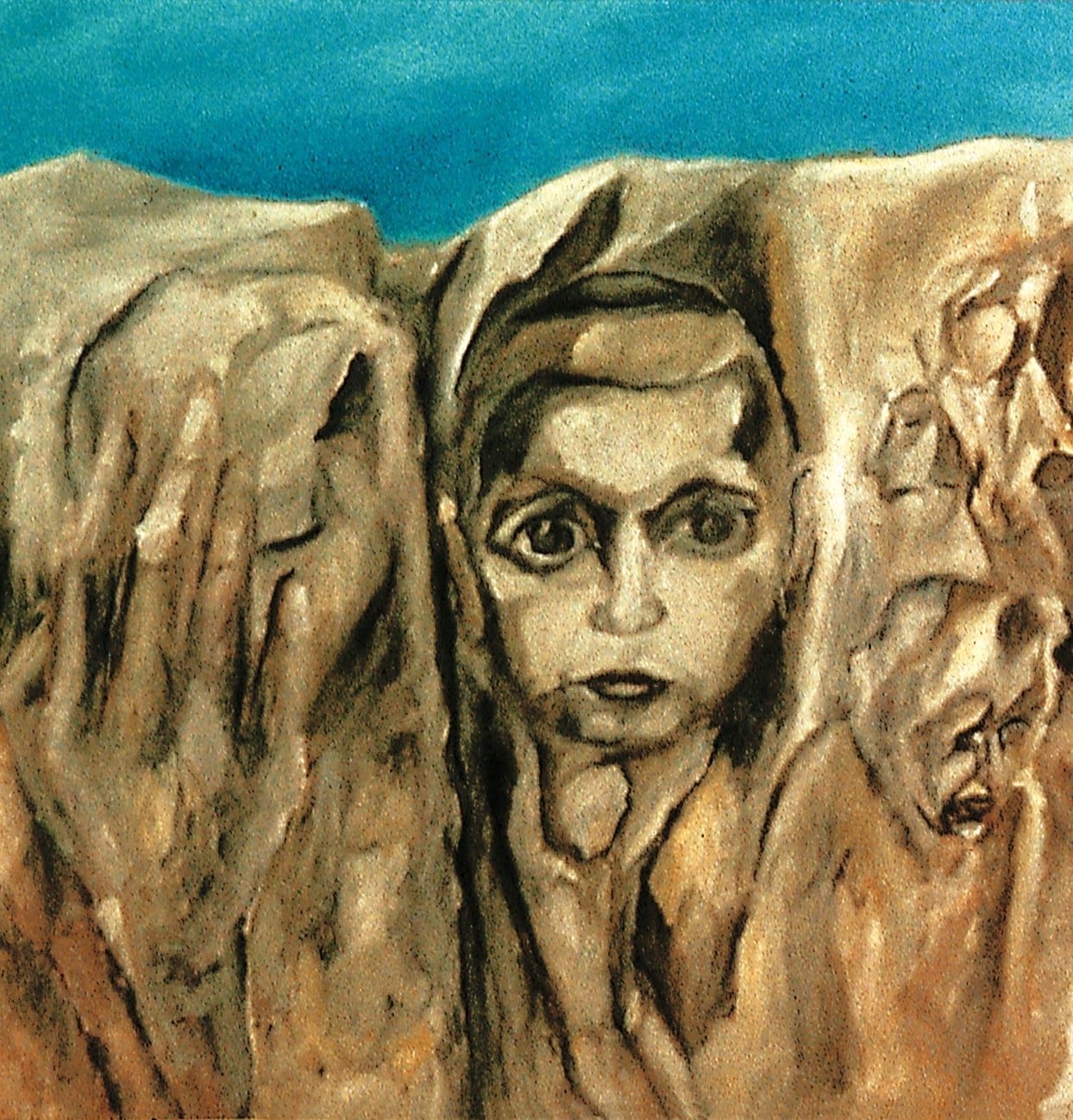
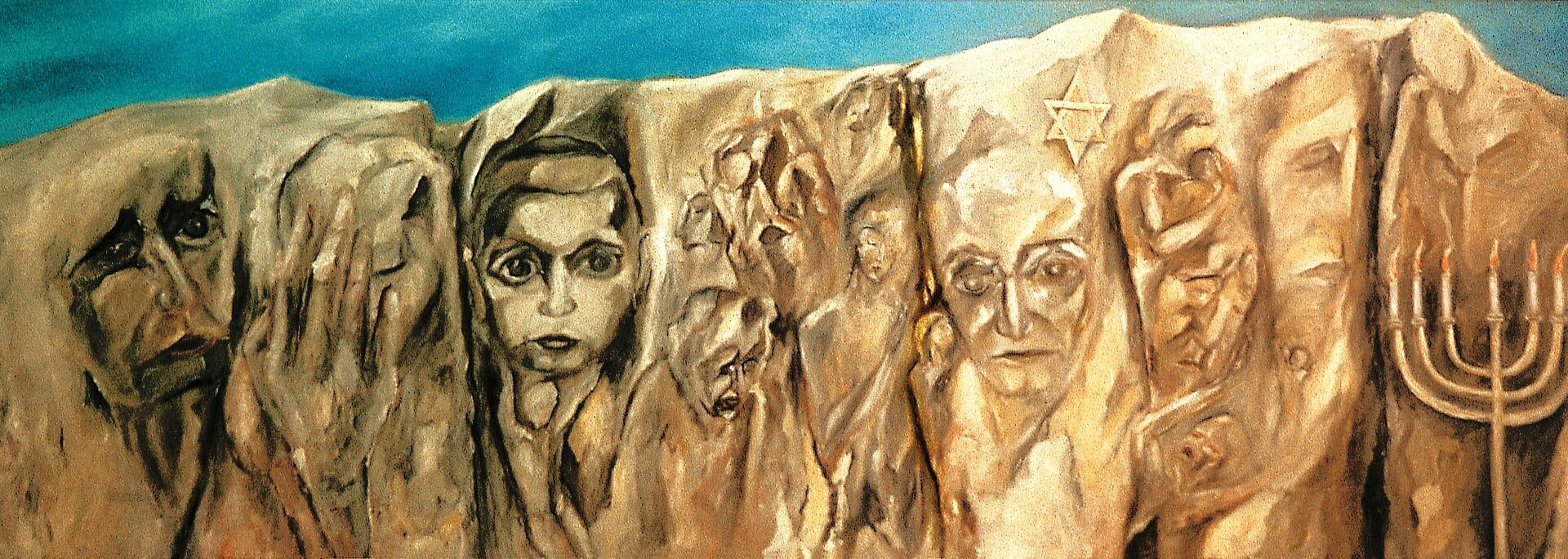
Michael Rogatchi (C). The Kotel. Oil on canvas. 1999. Fragment.
We were blessed to know Elie well and to maintain a cordial and very meaningful relationship and dialogue with him during the years. And we know first-hand how extremely sensitive he was towards Jerusalem and the Kotel, how tremulous, and how loving. I am terrified to think what Elie might have thought and felt seeing this empty Kotel plaza today. Once again, so many times after October 7th, we are thinking and saying “it is good that our parents, grandparents, or elder friends have not seen what is going on in our new, post- October 7th reality.” It is from the same category.
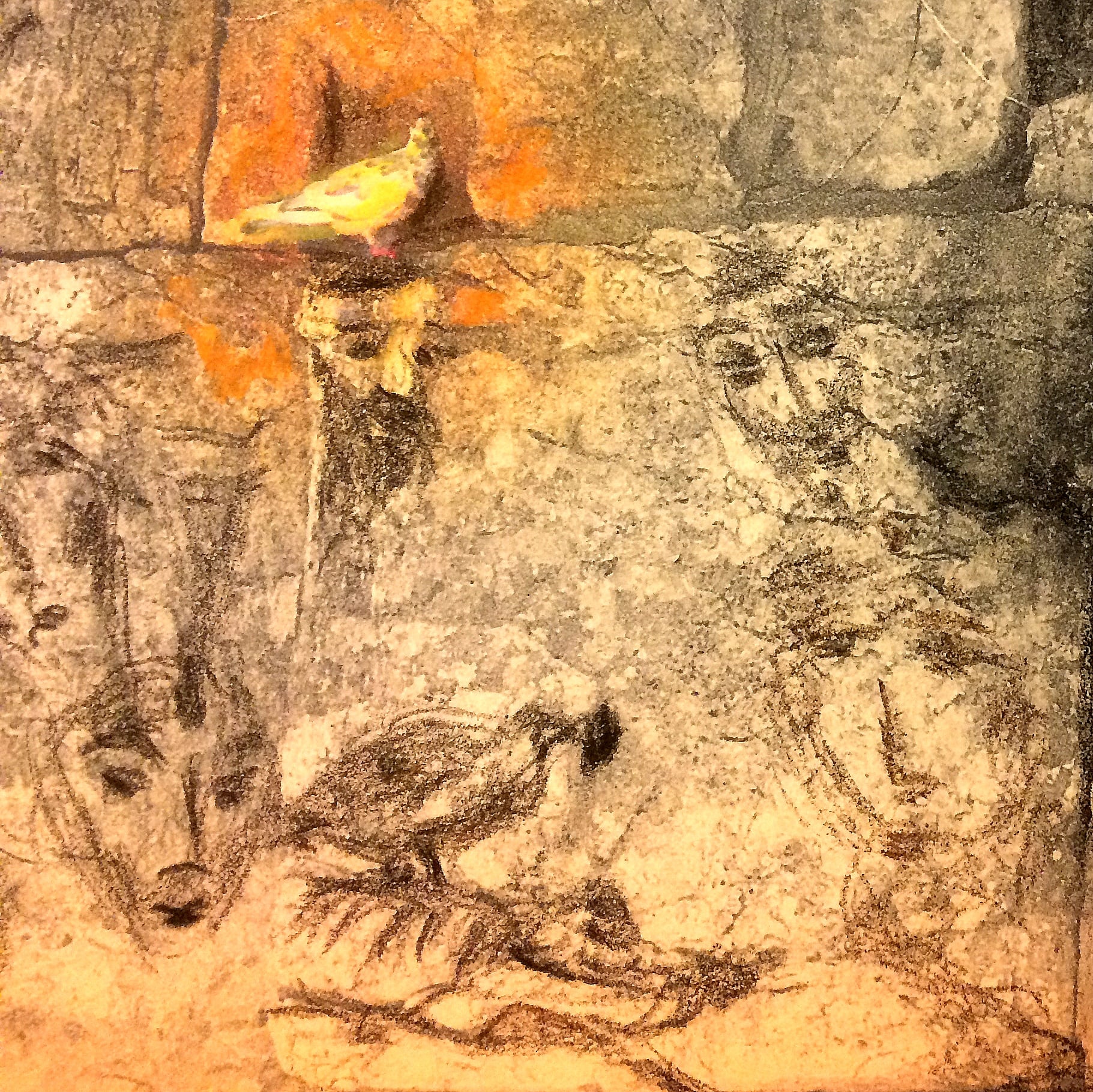
Inna Rogatchi (C). The Kotel. Fragment. 2020. Private collection, London, the UK.
When looking at our both artistic thoughts regarding the Kotel, and some elements of them, one could see the clear dialogue between the personages and the characters: Michael’s boy in his incredible The Kotel, the work which gets into the heart directly and powerfully, and my Elie Wiesel-like boy, the birds which are of a central importance in Michael’s works on Jewish heritage and are present in his rendition of the Kotel practically always.
The bird from Michael’s Consolation work (2024 ) from his important POST-HARMONY series on the post-October 7th Jewish inner emotional world and its status, is one of my favourite works ever. It is a flying hope. And it flies over the Kotel. Of course.
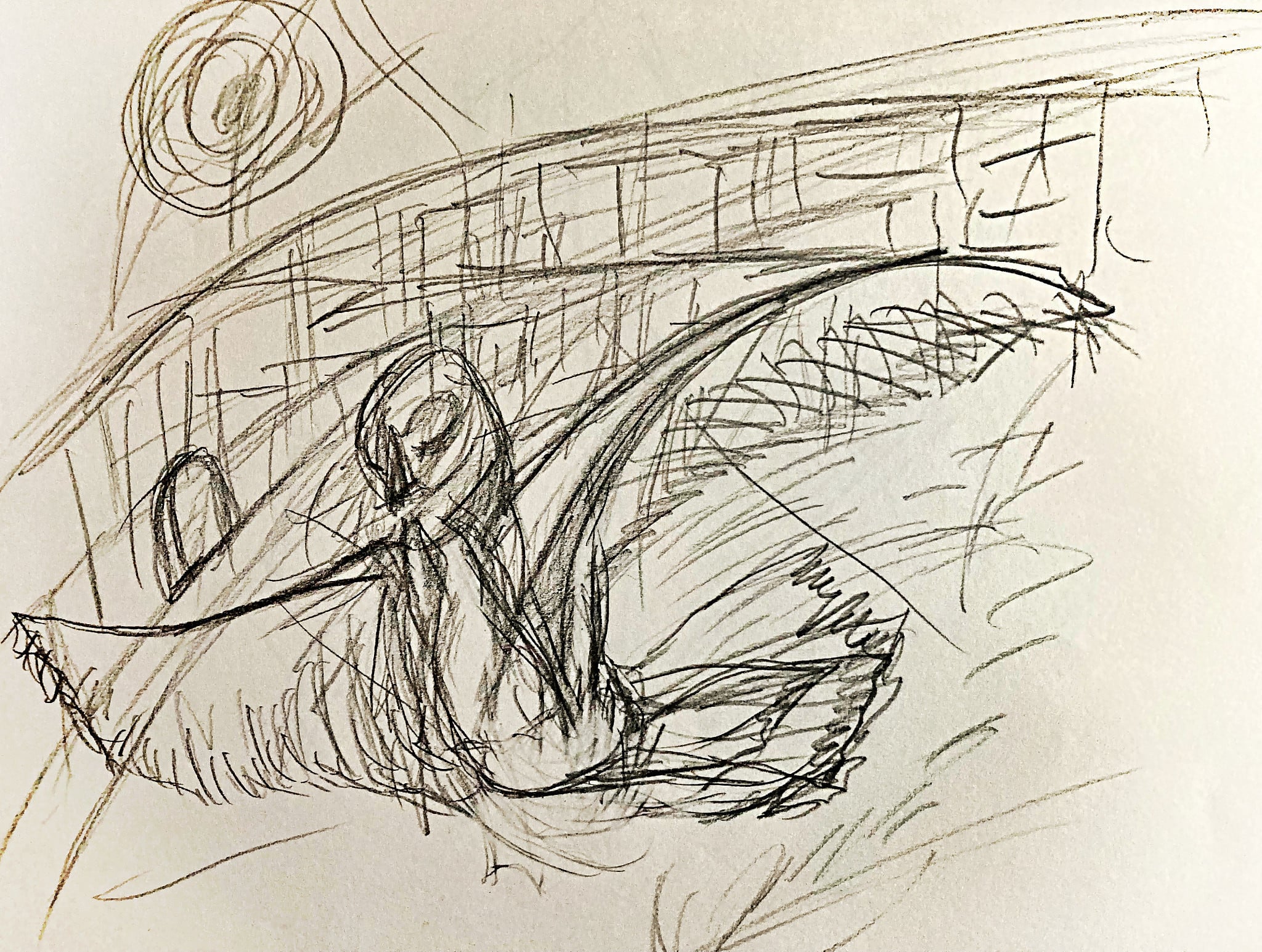
Michael Rogatchi (C). Consolation. Post-Harmony. 2024.
The Kotel plaza’s emptiness this year and this Pesach is a necessity, we know that. That’s why I am cautious not to dramatise it. When one needs a medical operation to save life or to continue to live normally, it is a necessity. We need to keep our people safe, and such is the price for that. It is all quite rational, actually. It just feels as if the heart-beat is stopped.
I cannot stop to think about the Birkat Kohanim service this Pesach, in this utterly restricted way that it is expected to be. We are facing a new reality, indeed, and it is not a cheerful one.
We all know – those who are – that the Kotel possesses and projects a unique magnetism. Was this magnetism diminished in any way due to this empty Kotel plaza? No, it was not.
Inna Rogatchi (C). The Prayer II. 2024. Private collection, Finland.
In a paradoxical way, because so many of us get into our own memories about our personal Kotel moments throughout the years, this special feeling, this complex of feelings, memories, contemplations, hopes, and that connection, so very individual for each of us, and so very unifying at the same time, has been strengthened. I hope so. This is the way I feel, at least. And I know that some of our friends do feel similarly.
Michael’s artistic renderings of the Kotel are several, and they are quite different ones. The point in his artistic thinking of the Kotel is that so very often, it is present in many of his works on our Jewish heritage and legacy, as part of his own mindset and vision, but also as an organic part of the Jewish mental landscape, as well.
Among many of Michael’s works with the presence of the Kotel there, and here are just a few of them, one work stays apart. It always did, and it will be. His The Kotel (1999) is not only an artistic imprint of our historic memory, and not only a statement of our devotion to our values and its humanity. It is also a dialogue between the Kotel and us. And this dialogue shows in the best artistic way that the Kotel just cannot be ever empty. Per definition.
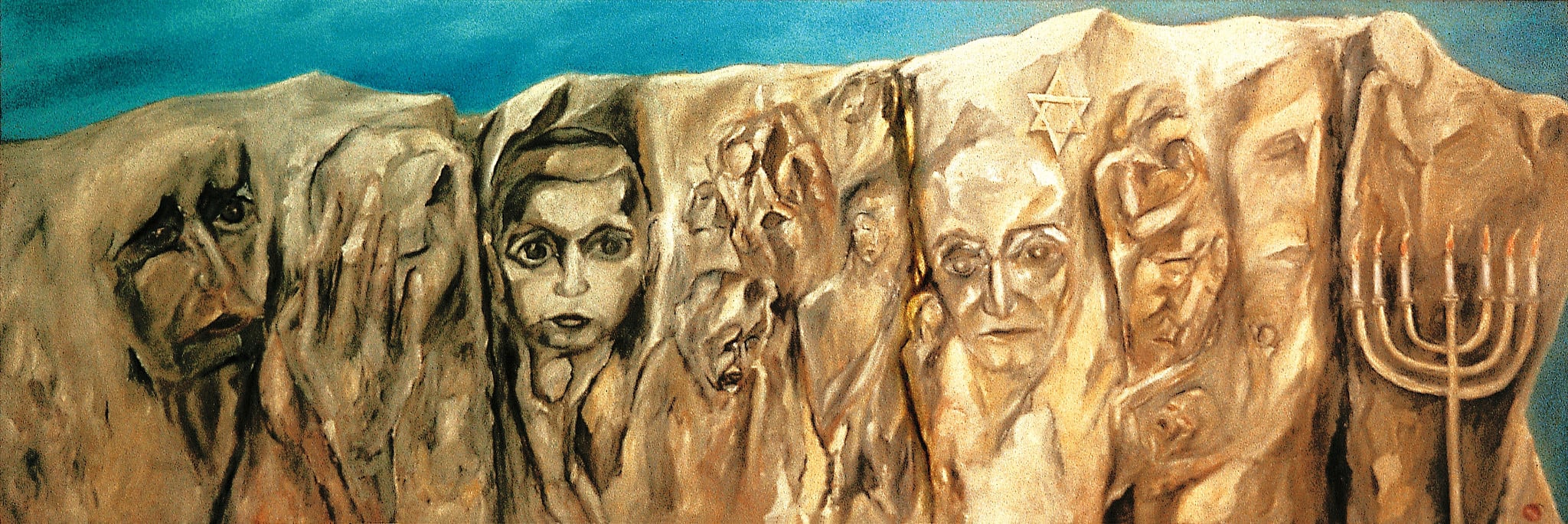
Michael Rogatchi (C). The Kotel. Oil on canvas. 1999.
In addition to the Kotel’s many amazing secrets and revelations of all sorts, there is one: it is never empty. It stays, being saturated with our prayers, hopes and thoughts in every coming generation, and keeping the bits of energy, presence and memory of and for so many human beings for two thousand and forty-five years since it was erected around the Second Temple. This energy keeps the Kotel’s unique and mighty magnetism. And it always will.
Pesach 2026
Inna is internationally acclaimed public figure, writer, scholar, artist, art historian, curator and film-maker, the author of widely prized film on Simon Wiesenthal: The Lessons of Survival and other important documentaries on modern history. Inna Rogatchi is author of War & Humanity and co-author of POST-HARMONY special projects originated in the aftermath of the October 7th, 2023 massacre in Israel. She is an expert on public diplomacy and was a long-term international affairs adviser for the Members of the European Parliament. She lectures on the topics of international politics and public diplomacy widely. Her professional trade-mark is inter-weave of history, arts, culture, psychology and human behaviour. She is the author of the concept of the Outreach to Humanity cultural and educational projects conducted internationally by The Rogatchi Foundation of which Inna is the co-founder and President. She is also the author of Culture for Humanity concept of The Rogatchi Foundation global initiative that aims to provide psychological comfort to people by the means of high-class arts and culture in challenging times and situations. Inna is the wife of the world renowned artist Michael Rogatchi. Her family is closely related to the famous Rose-Mahler musical dynasty. Together with her husband, Inna is a founding member of Music, Art and Memory, M.A.M. international cultural educational and commemorative initiative which runs various multi-disciplinary projects in several countries. Her professional interests are focused on Jewish heritage, arts and culture, commemorative art, history, Holocaust and post-Holocaust, October 7th and post-October 7th challenges. She is author of many projects of the commemorative art, and of several projects on artistic and intellectual studies on various aspect of the Torah and Jewish spiritual heritage. She is twice laureate of the Italian Il Volo di Pegaso Italian National Art, Literature and Music Award, the Patmos Solidarity Award, the New York Jewish Children’s Museum Award for Outstanding Contribution into the Arts and Culture (together with her husband), and the other recognitions. Inna Rogatchi was a member of the Board of Trustees of the Jewish Community of Helsinki and Finland. Previously, she was the member of the Board of the Finnish National Holocaust Remembrance Association, and is member of the International Advisory Board of The Rumbula Memorial Project ( USA). Her art can be seen at Silver Strings: Inna Rogatchi Art site – www.innarogatchiart.com