
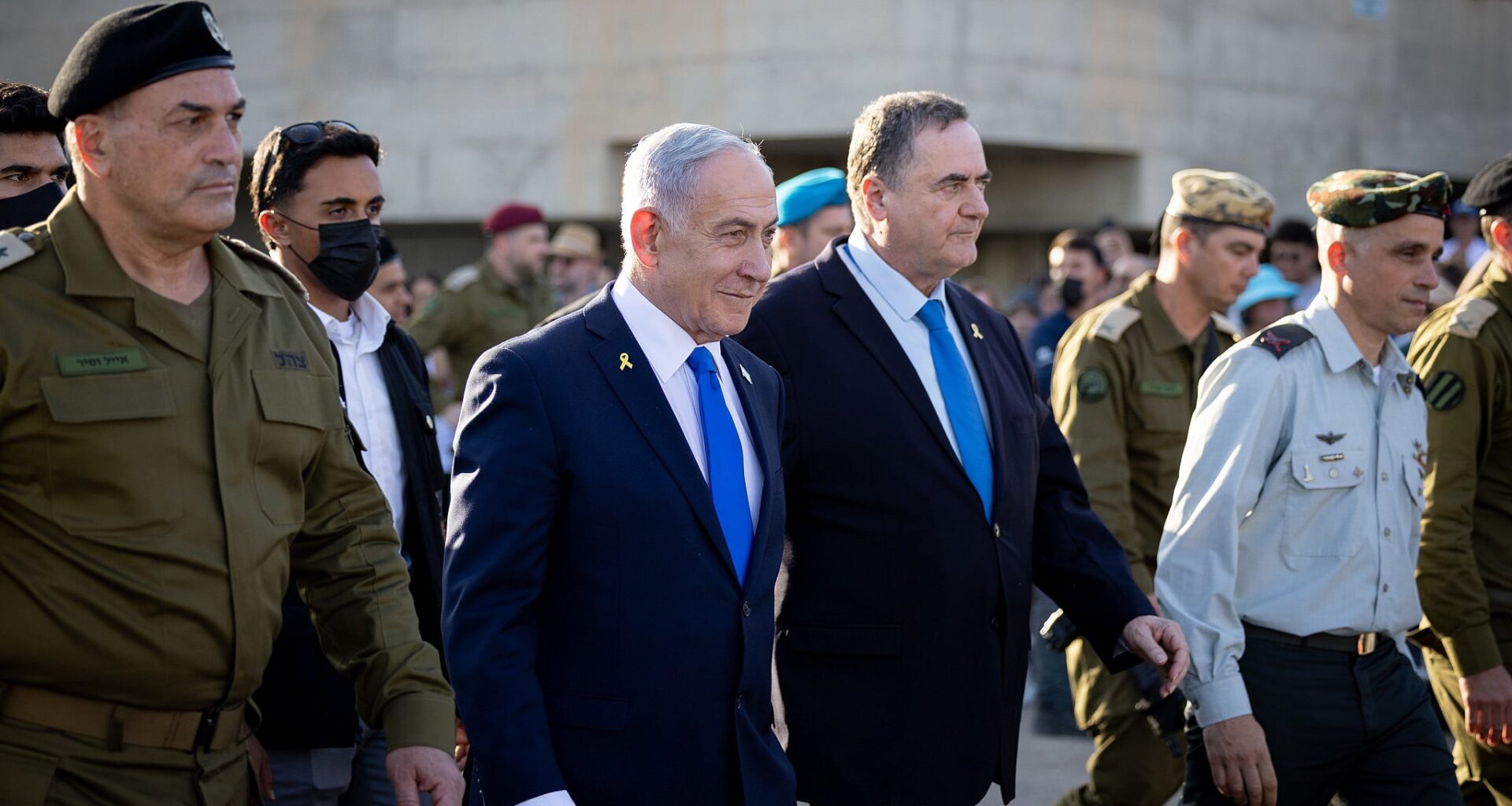
The horrific events of October 7 and the strategic consequences for Israel continued when the Netanyahu government steadfastly ignored the need to investigate the major policy and security mistakes that led to the outbreak of war in the first place. This was not the hallmark of leadership but rather characteristic of Netanyahu’s maneuvers to evade any State Commission of Inquiry for Israel’s greatest national security failure, and the impending judgment of his criminal trial before the Israeli elections scheduled for autumn 2026.
This tragedy was compounded by Netanyahu’s failure to adopt a comprehensive policy that would diplomatically consolidate some of the impressive military gains in the ensuing multifront war. Instead of ending the war in January 2025 (or earlier) when Hamas and Hezbollah had been severely weakened, the Houthis contained, two major Iranian missile attacks disrupted, and the Assad regime brought down in Syria, he continued the hostilities until October 2025, eroding most of the previous military achievements and delaying the release of the hostages.
Ultimately, the ceasefire in Gaza only took effect after Netanyahu ordered an airstrike against Doha, and President Trump forced him to publicly apologize to the Qataris. The American resolve to end that war and ensure the return of all the hostages, both living and deceased, was decisive. The 10-month delay cost the deaths of more than 80 soldiers (according to official governmental records) and increased the trauma and suffering of the remaining hostages.
‘Historic victory?’
As the war continued in Gaza during 2025, Netanyahu decided on June 13 to preemptively strike Iran citing intelligence reports that Iran was close to assembling a nuclear weapon and building intercontinental ballistic missiles After that operation Netanyahu claimed that Israel had “achieved an historic victory that would stand for generations” and had “removed two immediate existential threats – the threat of being destroyed by nuclear bombs and the threat of being destroyed by twenty thousand ballistic missiles.”
While there is little doubt that Iran was rapidly becoming a threshold nuclear state, Netanyahu’s June 2025 declaration of a “historic victory” raises an unavoidable question: if existential threats had been removed, why was another major war against Iran necessary just eight months later?
After the latest attack against Iran on February 28, there is still no cessation of Iranian missile attacks and no clear and verified assessment of Iran’s stockpile of about 460 kilos of uranium enriched to 60%, as well as significant amounts of uranium enriched to lower levels. It is unclear if this stockpile can be destroyed or removed from Iran through military means. Iran’s enriched uranium stockpile has, in fact, expanded dramatically since 2018, when the previous Trump Administration withdrew from the Iran nuclear agreement with Netanyahu’s encouragement, with the present stockpile sufficient for around 11 devices.
In addition, Netanyahu’s previous claim that the regime was on the verge of collapse was similarly unfounded, given a continued Iranian ability to target Israel with missiles, including with cluster warheads and its ability to manipulate the freedom of navigation in the Hormuz Straits. If anything, the regime has become even more extreme under the IRGC and Mojtaba Khamenei. The impact of the war has yet to achieve essential national security interests for Israel and has also significantly impacted the Gulf states, energy and vital commodity supplies through Hormuz and the global economy.
The Lebanon front
If this major international crisis was not sufficient, Netanyahu decided to open another front in Lebanon and once again embark on Hezbollah’s destruction. Some military experts have stated that it would have been wiser to concentrate on dealing with Iran, a far more complex and important theater, rather than going back into Lebanon under the illusion that military action would succeed where it had failed in previous operations seeking to destroy Hezbollah.
In March, the Lebanese government, led by President Joseph Aoun and Prime Minister Nawaf Salam, floated in the media a plan to end the escalating conflict with Israel, curb Hezbollah’s influence, and secure international assistance for the Lebanese Army. Lebanon proposed direct negotiations with Israel – coordinated through the United States – aiming to reach a permanent security and stability arrangement on the borders and sought to expel the IRGC presence and the Iranian Ambassador from Beirut.
Netanyahu’s answer was to avoid any visible diplomatic engagement and intensify Israel’s military operations in Southern Lebanon and deepen Israel’s airstrikes beyond the Litani river. Once again, Israeli soldiers are falling in battle, and fatalities and displaced civilians are rising on both sides of the border.
Currently, the Israeli government has not only altered its deployment on the Lebanese border, it has also redeployed on the Syrian border and taken control of half of the Gaza enclave. The situation in the West Bank is intolerable and unstable, given the numerous extremist settler attacks against the Palestinian population, the extension of new settler outposts, and intentions to build on E1 between Jerusalem and Jericho that would be seen as undermining any contiguity for any Palestinian statehood.
Israel’s image and diplomatic legitimacy regionally and internationally have never been worse, and the potential for further deterioration exists. While war can create a space for neutralizing threats, only courageous policies and creative diplomacy can create a stable political environment in which threats and bloodshed cease to be the prime pillars of Israel’s national security.
Regional opportunity
Waking up to sirens for incoming ballistic missiles from Iran, learning that four more Israeli soldiers have died in Lebanon, and receiving a robocall from Itamar Ben Gvir boasting that the Knesset passed the law mandating the death penalty for terrorists, was hardly the new dawn and ‘historic victory’ Netanyahu promised to Israelis. The prevention of a State Commission of Inquiry for October 7, and the evasion from judgment in Netanyahu’s criminal trial before the general elections in autumn 2026, cannot continue to be the guiding principles of our national security.
This is not the brand of visionary leadership that Israel needs after two and a half years of war that could have enabled Israel to broaden its integration and normalization in the region. The substantial weakening of Iran and its proxies could be crucial for Israel in consolidating its peace treaties and accords with Egypt, Jordan, the United Arab Emirates, Bahrain and Morocco, to reach new political and security understandings with Lebanon and Syria and eventually normalize relations with Saudi Arabia.
The latter would, however, require an agreed and credible joint political horizon for Palestinians and Israelis, something that could also dramatically revive and strengthen Israel’s standing and legitimacy in the international community.
As elections approach, Israelis must decide whether to continue down a path of perpetual conflict or demand the accountability and vision required to secure a different future.
Jeremy Issacharoff is the former ambassador of Israel to Germany and was previously the Vice Director-General of the Foreign Ministry in Jerusalem.