
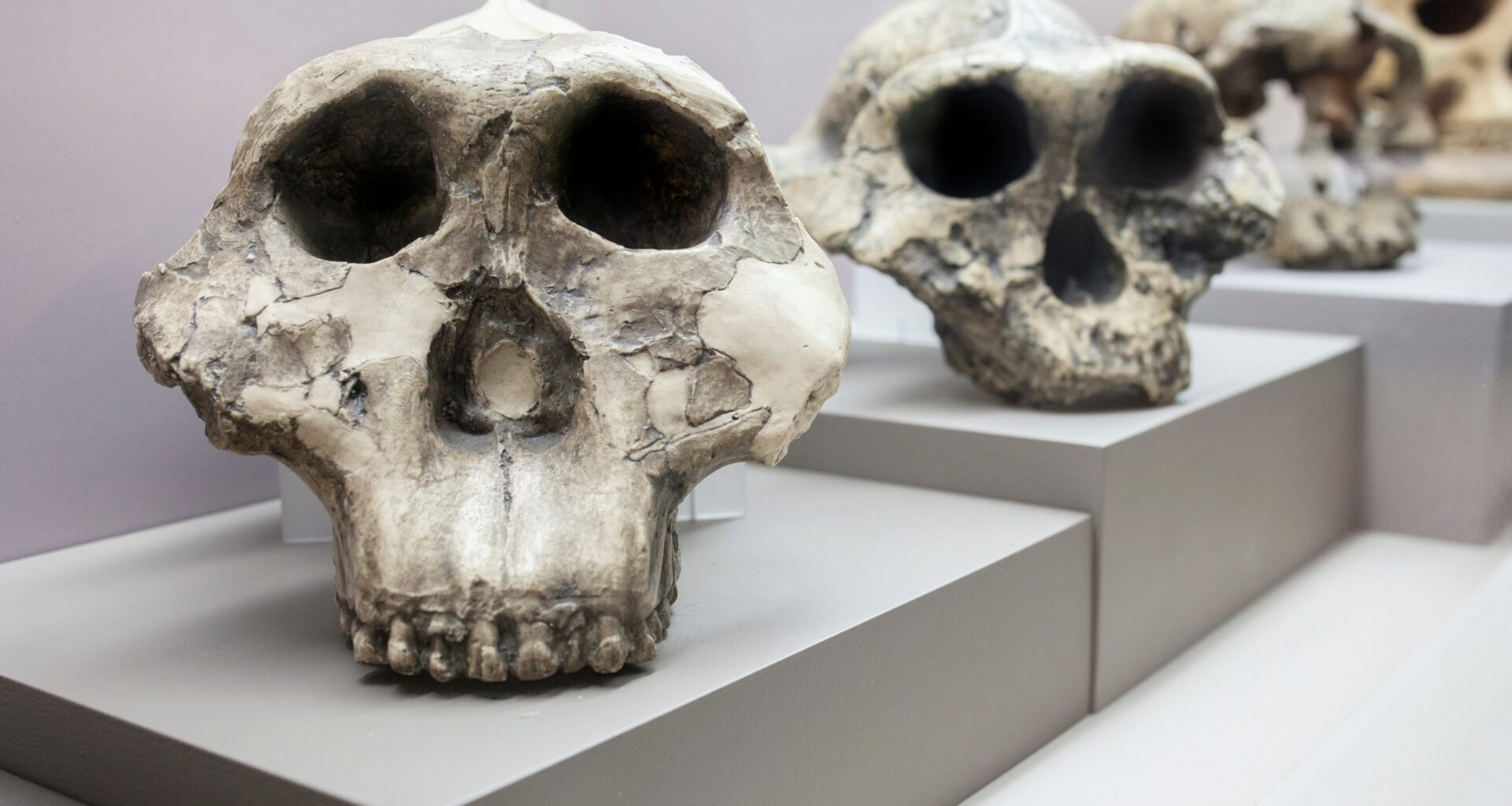
A new study has found that Australopithecus, an extinct group of early human relatives that lived in Africa millions of years ago, experienced pelvic strain during childbirth nearly as intense as that seen in modern human labor.
That finding places the physical risks of birth much earlier in human evolution than previously assumed.

Fossil pelvises from three Australopithecus species reveal a birth canal that was wide from side to side but narrow from front to back.
Pierre Frémondière at Aix-Marseille University demonstrated that a baby moving through that space would press heavily against the pelvic floor.
Stress levels in those simulations matched the same range measured during human childbirth, indicating a shared physical burden across millions of years.
That similarity links ancient anatomy to modern injury risk, while raising questions about how much more remains hidden in soft tissue that fossils cannot preserve.
Muscles under strain
Those muscles form the pelvic floor, a sling of tissue supporting pelvic organs during pregnancy and birth.
During labor, a baby pushes downward, stretching that support system until tissue can tear or weaken.
In the new simulations, the pressure on those muscles reached levels very close to what happens during human childbirth.
Modern damage can linger for years, and pelvic floor disorders affect about one in four U.S. women.
Why shape mattered
Australopithecus did not have the wide, front-to-back birth canal seen in chimpanzees, and it also lacked the more rounded shape found in humans today.
That left the baby’s head entering a side-to-side oval, then confronting a tight front-to-back squeeze deeper down.
Because pressure rose where space narrowed, tissue near the birth opening probably faced the greatest danger of tearing.
Anatomy did not guarantee injury, but it still stacked the odds against an easy delivery.
Walking changed pelvises
Long before our genus appeared, upright walking had already remodeled the pelvis in ways that narrowed some birth space.
A body built for steady steps brings the hips closer under the trunk, changing the angles around the canal.
Australopithecus also carried small brains by later human standards, yet that advantage did not erase the squeeze.
Childbirth difficulty seems to have deep roots, not just the recent rise of very large human newborn heads.
Rotation stayed elusive
Birth in our species usually includes fetal rotation, the baby’s turning inside the canal, which helps the head match changing pelvic dimensions.
Yet none of the four runs based on ancient pelvises produced the full internal turn seen in most human births.
One of the two human test runs also failed, suggesting the model still misses part of the birth process.
Muscle shape alone cannot explain rotation, and other forces inside labor almost certainly helped guide the baby.
A lack of evidence
Researchers still have only three pelvises from different Australopithecus species to compare directly. No earlier hominin pelvis has turned up, so the evidence starts small.
Unknown muscle properties could make ancient tissue either tougher or more fragile. A clever model can widen the evidence, but it cannot replace bones that have never been found.
For living people, pelvic injuries from birth can lead to incontinence, unwanted leakage of urine or stool, or organs slipping downward.
“We show that Australopithecines are quite similar to modern humans,” said Pierre Frémondière, a midwife at Aix-Marseille University and lead author of the study.
He added that repeated births likely increased their risk of developing long-term pelvic floor problems.
Small brains still squeezed
Earlier simulations had already suggested that Australopithecus newborns were less developed at birth despite their small brains.
That meant birth difficulty could emerge before the dramatic brain expansion later seen in Homo.
Even so, the model used a small newborn size, and the fit was still tight. Pelvic design itself carried part of the burden, and later brain growth only added to an older problem.
Future research directions
Computer births can test ideas that fossils alone cannot answer, especially when soft tissue never survives.
Here, the team warped a modern pregnant anatomy onto ancient bones, then watched where pressure built.
Fresh fossils and better birth records could expose whether the missing forces came from tissue, movement, or both.
That next step matters because the current model captured pressure well, but not every twist of labor.
These ancient pelvises suggest that painful, risky birth was already part of human evolution before the genus Homo emerged.
Future fossils may soften or sharpen that view, but the new work makes ancient motherhood look physically costly.
The study is published in The Anatomical Record.
—–
Like what you read? Subscribe to our newsletter for engaging articles, exclusive content, and the latest updates.
Check us out on EarthSnap, a free app brought to you by Eric Ralls and Earth.com.
—–