
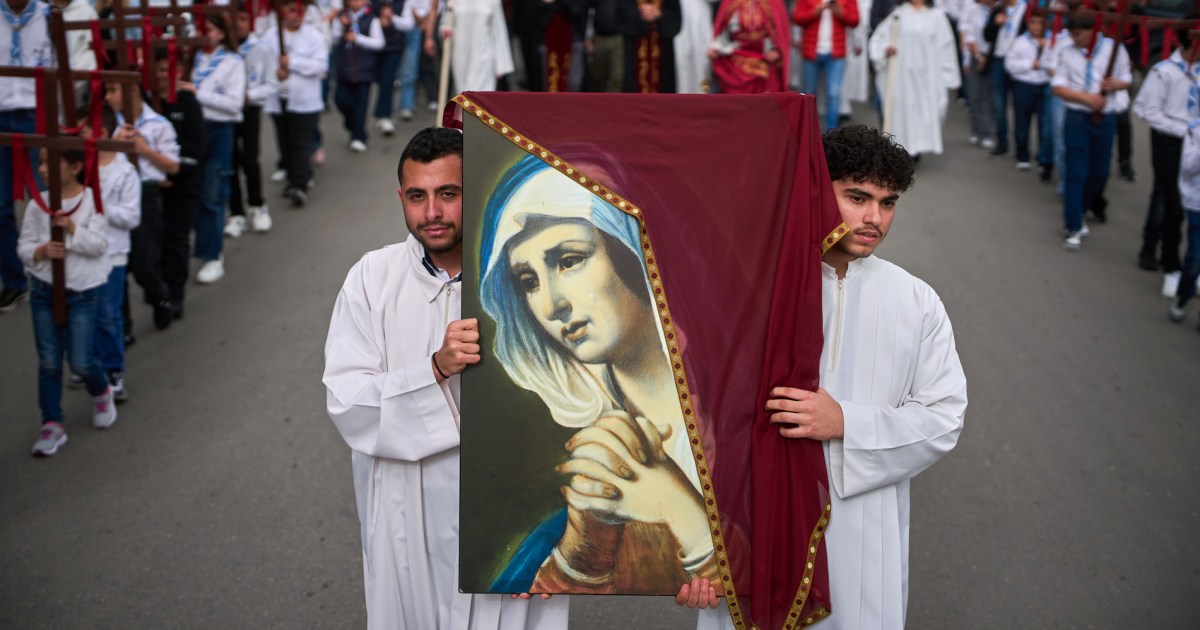
In his annual Easter homily, Patriarch Beshara al-Rai of Lebanon’s Maronite Church blamed both Hezbollah and Israel for the suffering wrought by the war.
“The country is going through a critical situation due to Iranian interference through Hezbollah and Israeli aggression,” he said. “Our hearts bleed for the victims of the conflict imposed on Lebanon.”
Ghafari’s brother, 70-year-old Sami Ghafari, was among the villagers who sought refuge at the church in Alma al-Shaab.
But he dashed out briefly on March 8 to tend to his garden, and was killed by an Israeli drone strike. His killing prompted the remaining villagers — including his brother — to pack up their belongings.
The U.N. peacekeepers in the area — a force known as UNIFIL that has monitored the region for nearly five decades — evacuated them to the northern suburbs of Beirut.
“We wanted to stay, but it was always possible that one of us could be targeted or killed at any moment,” the Rev. Maroun Ghafari told The Associated Press from St. Anthony Church in the northern Beirut suburb of Jdeideh, where the displaced from Alma al-Shaab came to worship on Saturday.
“Everyone is tired, and we see that war brings nothing but destruction, death and displacement.”
Missing the ‘smell of home’
For many Lebanese Christians, it’s a tradition on Holy Saturday — the day between Good Friday, which commemorates the crucifixion and death of Jesus, and Easter Sunday, which marks his resurrection according to the Gospels — to visit the graves of their loved ones.
This year, displaced Christians could only reflect from afar.
Nabila Farah, dressed in black for the Saturday service at St. Anthony Church, was among the last to leave Alma al-Shaab. She still feels heartbroken, a month later.
“You miss the smell of home, the lovely traditions and customs, the sounds of the bells of three churches ringing,” she said, reminiscing about her village. “As much as we experience the Easter atmosphere here, it will never be as it is over there.”