
It’s no surprise that The Boys became one of Amazon’s biggest hits. Not only is it great sci-fi in its own right, it came at a time when superhero fatigue had started to fully set in for mainstream audiences. With the MCU and DCEU/DCU holding the entertainment landscape in a vice grip, The Boys was instantly embraced as a refreshingly sharp alternative.
It didn’t just tweak the superhero formula, it tore it apart, exposing the darker implications of a world obsessed with capes. From its very first episode, The Boys made its mission clear: dismantle the superhero genre. Its characters are thinly veiled parodies of icons from Marvel Comics and DC Comics, while Vought International operates as a biting satire of the corporate machine behind modern blockbuster filmmaking.
However, while The Boys’ sense of satire is as sharp as ever in more recent seasons, the franchise itself has also ironically drifted from its roots and become more like the MCU/DCEU than ever. As Amazon builds an expanding universe of spin-offs and interconnected stories, The Boys has slowly edged closer to becoming Prime’s own version of the very franchises it set out to critique.
The Boys Has Become The Kind Of Franchise It Used To Make Fun Of
The Show That Mocked Superhero Empires Has Quietly Become One
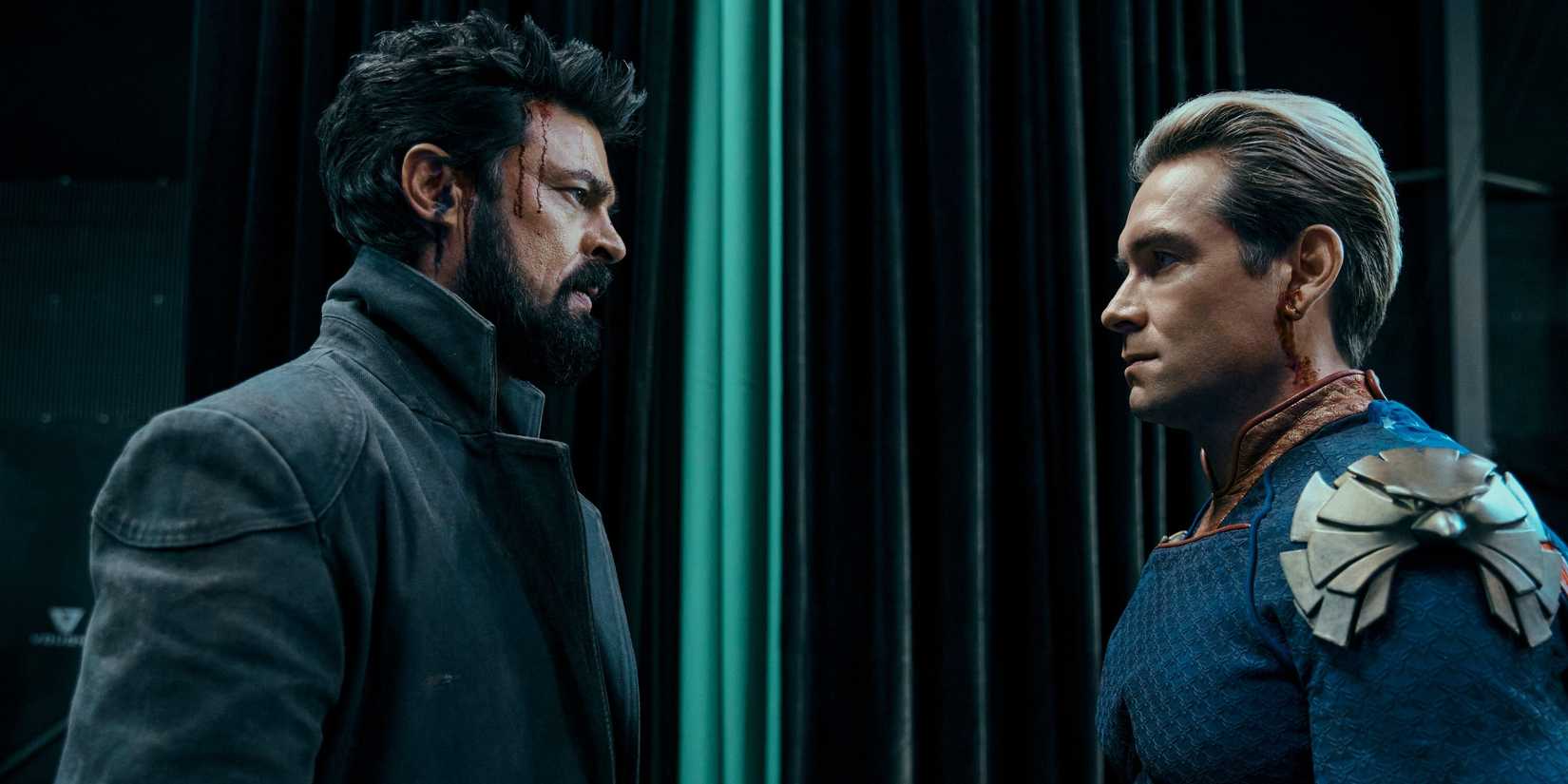
Butcher (Karl Urban) and Homelander (Anthony Starr) looking intensely at one another in The Boys
From the beginning, The Boys never held back in its criticism of sprawling cinematic universes. Vought’s empire thrives on movies, branding, and relentless cross-promotion, echoing the real-world dominance of the Marvel Cinematic Universe and the evolving DC Universe. Fictional blockbusters like Dawn of the Seven underline how commodified superhero media has become in the real world.
The satire cuts deepest through characters like Homelander (Antony Starr), whose early character arc saw him confronted by the corporate reality behind his very existence. When Stan Edgar (Giancarlo Esposito) puts Homelander in his place in season 2, he also sums up the mission statement of The Boys as a whole: “You are not worthy of my respect. You’re not a god. You’re simply bad product.”
It’s a defining moment that encapsulates the series’ critique of profit-driven heroism in a single line. However, this philosophy is also what makes the evolution of The Boys from a single show so fascinating. Since its 2019 debut, The Boys has expanded into a full-fledged franchise. The Boys Presents: Diabolical and Gen V have already broadened its world, with Vought Rising and The Boys: Mexico on the horizon.
What began as a takedown of superhero cinematic universes has become a prime example of one. The universe of The Boys now stretches across multiple shows and dozens of characters, mirroring the exact strategies it once ridiculed. Amazingly, however, this shift doesn’t feel entirely contradictory.
In many ways, it was always inevitable. Once The Boys proved itself as one of the biggest hits ever to grace the Prime Video library, expansion into a franchise became the logical next step. Audiences wanted more of its world, and Amazon responded by building it out in ways that echo the MCU playbook (albeit with a more cynical edge).
While welcomed by fans of The Boys near-universally, this transformation complicates the show’s legacy. There is always a risk that an ever-expanding universe of superhero shows could dilute the original message. Still, provided the writing of the various spinoffs don’t lose the satirical bite that defines The Boys, the danger is a pitfall that Amazon can easily avoid.
Other Franchises Should Follow The Blueprint Of The Boys
A Smarter Approach To Building A Cinematic Universe
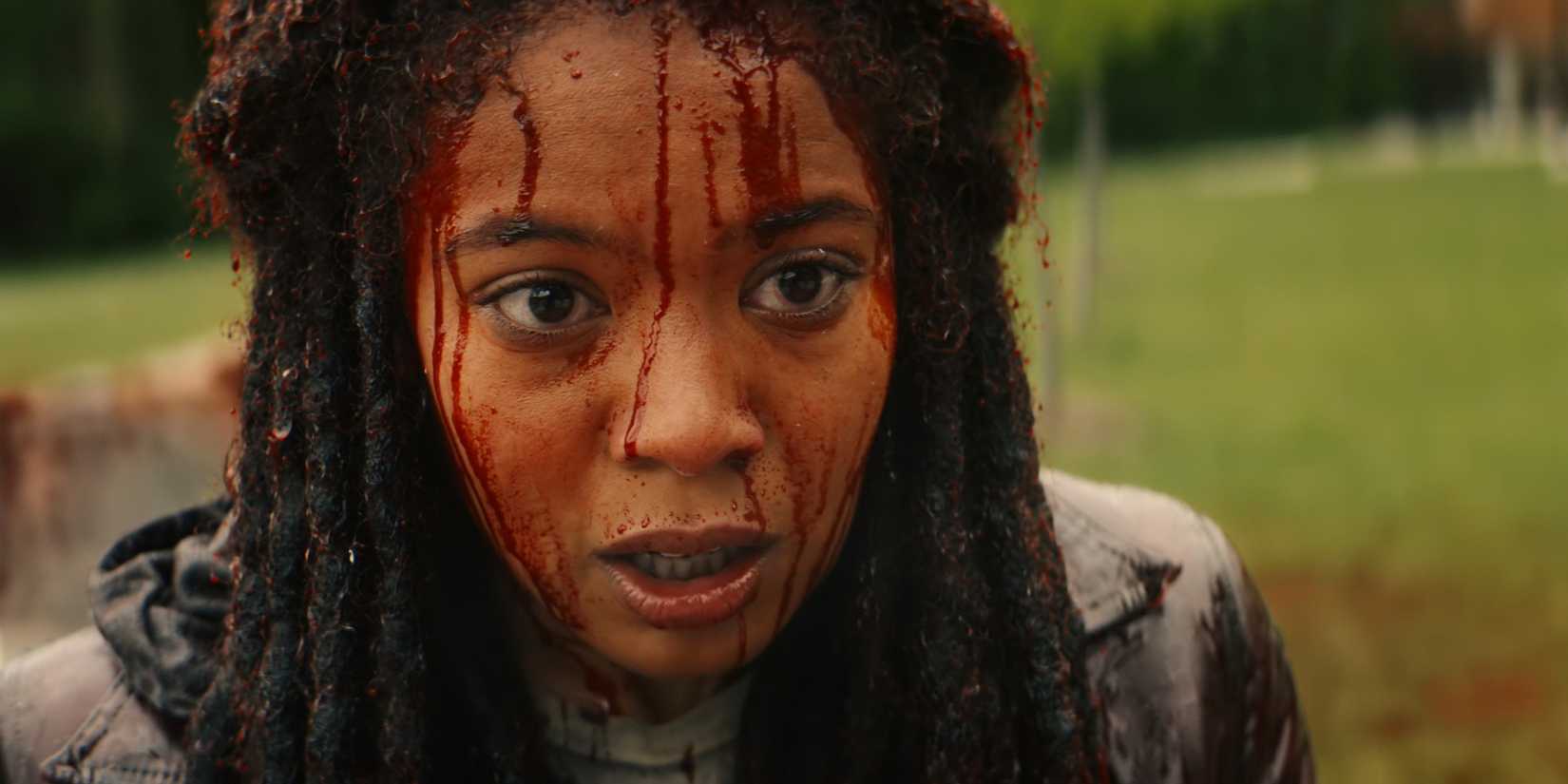
Jaz Sinclair as Marie in Gen V looking concerned while covered in blood
Despite the irony, The Boys becoming a franchise isn’t a betrayal of its core message, nor is it a failed venture. So far, the various spinoffs haven’t turned the boys into a clone of the MCU or DCU. Instead, Amazon is showing how to create a universe of superhero media successfully, and there’s a key reason their approach works.
The method behind the magic of The Boys as a franchise is that it avoids oversaturation. Where many cinematic universes overwhelm audiences with constant releases, The Boys has taken a far more measured approach. Every spinoff released so far feels necessary and earned.
By comparison, The Marvel Cinematic Universe, once praised for its cohesion, now has to actively battle audience content fatigue. Keeping up has become a commitment few casual viewers are willing to make. The idea of watching literally every MCU movie and TV show is increasingly reserved for the most dedicated fans.
By contrast, The Boys spaces its spinoffs and new releases strategically. Gen V arrived only when the main series had established enough depth to support it. Its storyline, particularly elements like the supe virus, feeds directly back into the core narrative, making it feel essential without being overwhelming.
Future projects follow the same philosophy. The prequel series Vought Rising will be released after The Boys season 5 and so won’t be competing with the main show for attention. Meanwhile, The Boys: Mexico will take place after the events of the season 5 finale and the inevitable final showdown between Homelander and Butcher. This careful pacing ensures that each addition has room to breathe.
This “less is more” approach is what sets The Boys apart from the MCU and its other competitors. Rather than flooding the market, it builds anticipation. Each new entry in the franchise feels like an event. That distinction is crucial in an era where audience burnout is a real concern.
Ironically, by becoming a cinematic universe, The Boys has demonstrated how the model can actually work. It hasn’t abandoned its critical edge or subversive approach to the superhero genre, it’s refined it. The show may have started as a parody, but in evolving, it’s become something far more influential: a blueprint for the future of franchise storytelling.
First Episode Air Date
July 26, 2019
Cast
Karl Urban, Jack Quaid, Antony Starr, Erin Moriarty, Dominique McElligott, Jessie T. Usher, Laz Alonso, Tomer Capone, Karen Fukuhara, Jensen Ackles