
(Bloomberg) — Stocks rose as investors cautiously returned to equities on signs the six-week-old Middle East conflict may be contained after a report that Iran is pushing for a ceasefire. Crude oil pared gains.
The MSCI Asia Pacific Index rose 0.3%, with advancers and decliners evenly matched in the benchmark, while technology stocks outperformed. Futures contracts for the S&P 500 Index erased earlier losses to trade 0.1% higher.
Aiding sentiment was an Axios report that the US, Iran and a group of regional mediators are discussing the terms for a potential 45-day ceasefire that may lead to a permanent end to the war. Reports that more ships passed through the Hormuz Strait also helped even as President Donald Trump issued increasingly aggressive threats to destroy Iran’s power plants starting Tuesday.
“Asian markets in particular tend to react quickly to any sign that worst-case scenarios, like a full disruption of oil flows, might be avoided,” said Tareck Horchani, head of sales trading prime brokerage at Maybank Securities. “That’s why you’re seeing a modest rebound, especially in sectors like semiconductors and cyclicals.”
Traders are seizing on any headline that may affect sentiment after the Iran war darkened the outlook and stoked inflation concerns, roiling expectations for Federal Reserve interest-rate cuts. Attention remains firmly on energy prices and the closure of the Strait of Hormuz, a key artery for Middle East oil flows.
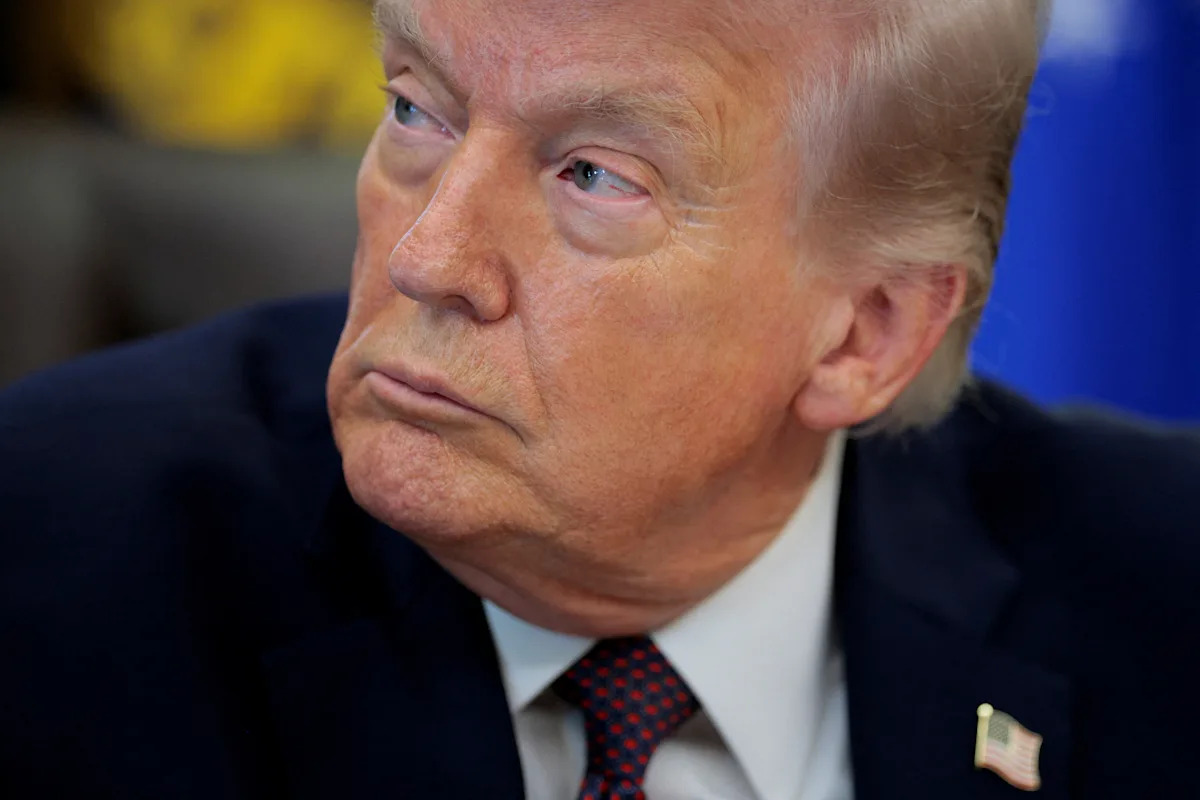
Trump, in renewing his threats to target Iran’s civilian infrastructure, told Axios that he would be “blowing up everything over there” if Iran doesn’t make a deal. Trump said he plans a news conference at 1 p.m. local time on Monday and posted about a Tuesday 8 p.m. deadline, without offering details.
“The prediction game remains quite tricky for investors,” said Homin Lee, a strategist at Lombard Odier in Singapore. “Investors’ focus will squarely be on military actions on both sides of the Persian Gulf and whether or not Hormuz vessel crossings can improve further despite these attacks.”
What Bloomberg’s Strategists Say…
“Traders are focusing on a report that US, Iran and regional mediators are discussing terms for a potential 45-day ceasefire. That shows how keen investors are to see a de-escalation in the Iran war, which is dominating a risk aversion theme across markets. Should President Trump push back against ceasefire hopes when he speaks later on Monday, this positive mood will reverse. But for now, amid thin liquidity, it is the main story for investors to get stuck into.”
— Mark Cranfield, Markets Live strategist. Click here for the full analysis.
In other corners of the market, gold fell 1% to about $4,630 an ounce and silver dropped 1.5% to around $72 an ounce. Bullion has slumped more than 12% since the conflict began in late February, as spiking energy prices have stoked fears of inflation and reduced the prospects for rate cuts that typically benefit non-yielding precious metals.
Financial markets are shut in a number of Asia-Pacific economies Monday, including China, Hong Kong and Australia. Many European markets are also closed.
Control of Hormuz — which connects the Persian Gulf to wider markets, especially across Asia — remains central to the conflict. Tehran has imposed its authority over the waterway, permitting just a small number of vessels to pass through, including in recent days a French container ship and Japanese-owned tanker, as well as vessels from Malaysia and Pakistan.
The Foreign Ministry in Oman — which sits across the strait from Iran — said in a post on X on Sunday it discussed with Iran options to ensure “smooth flow” through the waterway. Both sides presented proposals for study, it said.
A total of 16 ships have crossed the strait since Saturday morning, with 11 exiting the Gulf and five entering from the open seas, vessel-tracking data show. That’s still a fraction of the usual traffic.
Traders will now turn their attention to the Monday press conference of Trump.
The president has previously dialed back his escalation threats, including two weeks ago before markets reopened for the week.
“Markets may be running ahead of diplomacy again,” said Charu Chanana, strategist at Saxo Capital Markets in Singapore. “Trump’s language over the weekend had suggested diplomacy was being pushed out the door, so there is still a real risk that markets are pricing the hope of de-escalation faster than the political reality can deliver it.”
Some of the main moves in markets:
Stocks
Currencies
The Bloomberg Dollar Spot Index was little changed
The euro was little changed at $1.1520
The Japanese yen was little changed at 159.59 per dollar
The offshore yuan was little changed at 6.8858 per dollar
Cryptocurrencies
Bitcoin rose 2% to $69,020.63
Ether rose 2.9% to $2,127.43
Bonds
The yield on 10-year Treasuries advanced one basis point to 4.35%
Japan’s 10-year yield advanced three basis points to 2.410%
Australia’s 10-year yield was unchanged at 5.04%
Commodities
West Texas Intermediate crude fell 0.4% to $111.11 a barrel
Spot gold fell 0.7% to $4,644.39 an ounce
This story was produced with the assistance of Bloomberg Automation.
–With assistance from Alice French, Kentaro Tsutsumi and Ruth Carson.
More stories like this are available on bloomberg.com
©2026 Bloomberg L.P.