
Last Updated:April 06, 2026, 15:05 IST
As metro life grows costlier and more stressful, why are smaller cities suddenly attracting both investors and retirees? What’s driving this quiet shift away from big cities?




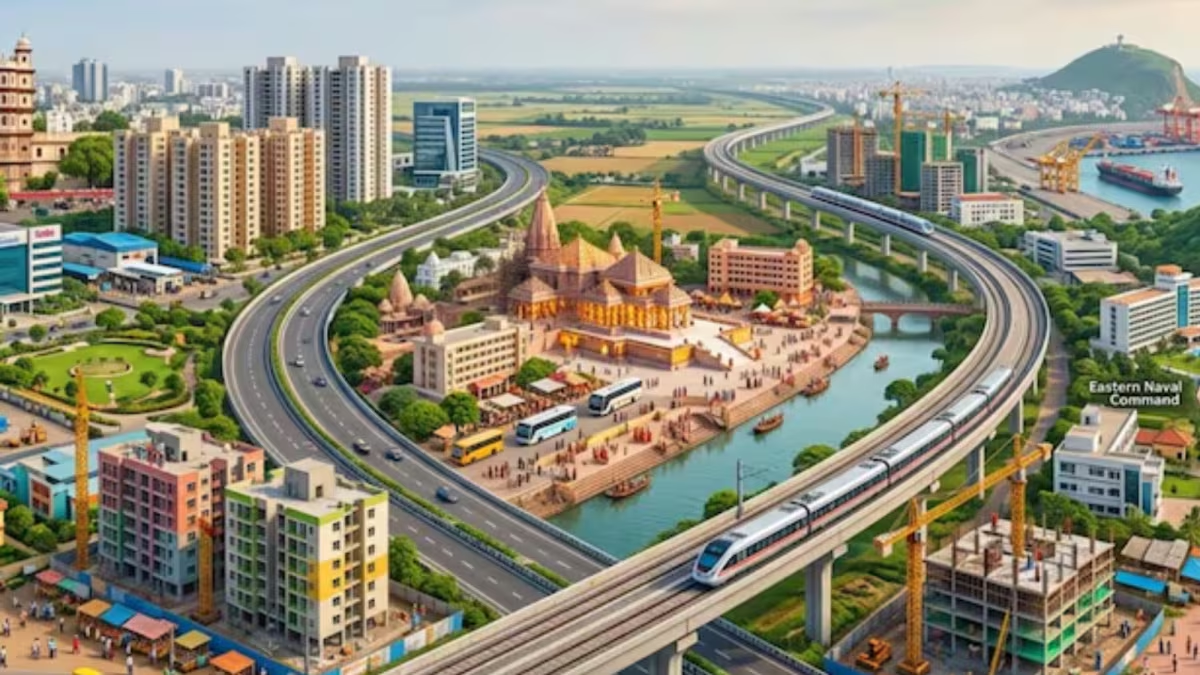
Increasingly, people are prioritising comfort, affordability, and quality of life over the fast-paced, high-cost lifestyle of metros. (AI Generated)
Buying a home in metro cities is increasingly slipping out of reach for many. In major urban centres like Delhi, Mumbai, and Bengaluru, soaring property prices have made real estate unaffordable for a large section of the middle class. As a result, both investors and retirees are shifting their focus towards smaller, fast-developing cities that promise better value and quality of life.
The charm of metro living is gradually fading, especially for retirees. Rising living costs, worsening traffic congestion, and increasing pollution levels have made daily life more stressful than comfortable.
Earlier, big cities were seen as ideal destinations for career growth and financial stability. Today, however, many are choosing to leave these urban hubs after retirement in search of calmer, more affordable surroundings.
Smaller Cities Emerge As Dual Opportunity Zones
Cities like Indore, Chandigarh, Dehradun, Mysore, Bhubaneswar and Varanasi are witnessing a surge in interest, not just from homebuyers, but also from retirees. These cities offer a slower pace of life, cleaner environments, and significantly lower living costs.
At the same time, they are becoming attractive real estate investment destinations due to rapid growth and rising demand.
Why Investors Are Moving Beyond Metros
The shift towards Tier 2 cities is driven by multiple factors beyond affordability.
RankCityStateWhy Will There Be Development?Investment PotentialWhat Is Special1IndoreMadhya PradeshClean city, manufacturing and IT growthReal estate, logisticsAffordable and fast-growing2SuratGujaratDiamond and textile hubReal estate, industryStrong job market3LucknowUttar PradeshCapital city, infrastructure growthResidential, commercialFast-growing market4JaipurRajasthanTourism and IT sectorReal estate, retailRising NRI investment5CoimbatoreTamil NaduIndustry and education hubIndustrial, residentialStartup growth6NagpurMaharashtraLogistics hubWarehousing, aviationStrategic location7BhubaneswarOdishaSmart city, IT hubResidential, IT parksRapid development8KochiKeralaPort city, tourismReal estate, commercialHigh quality of life
Rapid infrastructure expansion, better connectivity, and increasing job opportunities are transforming these cities into economic hubs.
Key Tier 2 cities gaining attention include:
Indore: Known for cleanliness, growing IT sector, and affordabilitySurat: A major hub for diamonds and textiles with strong employment prospectsLucknow: Fast infrastructure growth and expanding real estate marketJaipur: Tourism-driven economy with rising NRI investmentsCoimbatore: Industrial and educational hub with startup growthNagpur: Emerging logistics centre with strategic locationBhubaneswar: Smart city with growing IT ecosystemKochi: Port city offering high quality of life and tourism appeal
Property prices in these cities remain relatively moderate, while demand continues to rise—creating strong potential for future returns.
Tier 3 Cities: The Next Growth Frontier
Even smaller Tier 3 cities are beginning to attract attention due to low entry costs and high growth potential.
CityStateWhy Will There Be Development?Investment PotentialFuture Growth OutlookPanchkula / MohaliHaryana / PunjabNear Chandigarh, IT and pharmaPremium housingVery fast growthRaipur / BilaspurChhattisgarhIndustry and mineralsResidential, industryStrong growthVisakhapatnamAndhra PradeshPort, defence, tourismIndustry, real estateStrong long-term prospectsAyodhya / VrindavanUttar PradeshReligious tourismHotel, residentialPotential for sharp riseUdaipurRajasthanTourism and lifestyleLuxury propertySteady, inelastic demand
Let’s take a look at a few prominent Tier-3 cities included in the list:
Panchkula / Mohali: Benefiting from proximity to Chandigarh and growth in IT and pharmaRaipur / Bilaspur: Industrial expansion and mineral-based economyVisakhapatnam: Port city with defence and tourism potentialAyodhya / Vrindavan: Rising religious tourism boosting housing demandUdaipur: Tourism and luxury living driving steady demand
These cities offer relatively low property prices but are expected to witness rapid appreciation due to infrastructure upgrades and tourism growth.
Affordability And Infrastructure Drive Demand
One of the biggest advantages of smaller cities is affordability. While a 3BHK flat in metro cities often costs over Rs 1 crore, similar properties in Tier 2 and Tier 3 cities are available between Rs 30 lakh and Rs 1.5 crore.
Improved infrastructure, such as new expressways, airports, and smart city initiatives, has significantly enhanced connectivity. For instance, travel between Delhi and cities like Dehradun or Chandigarh has become faster and more convenient.
Real estate data suggests that housing demand in these cities has increased by nearly 20-25% in recent years, with prices expected to rise by 25-100% in the coming years.
Why Smaller Cities Appeal To Retirees
For retirees, the benefits go beyond affordability. Lower pollution levels contribute to better health, while quieter surroundings and open spaces encourage a more relaxed lifestyle.
Daily expenses, including housing, utilities, and essentials, are considerably lower, allowing retirees to manage their savings more effectively.
Additionally, stronger community networks in smaller cities help reduce isolation and improve overall well-being.
Despite the advantages, some concerns persist. Access to advanced healthcare facilities and specialised medical services can be limited in certain areas. However, ongoing improvements in infrastructure and better connectivity to larger cities are gradually bridging this gap.
A Shift Towards Balanced Living
The idea of an ‘ideal city’ is changing. Increasingly, people are prioritising comfort, affordability, and quality of life over the fast-paced, high-cost lifestyle of metros.
Whether for investment or retirement, smaller cities are emerging as strong alternatives, offering not just financial value, but also a more balanced and fulfilling way of life.
First Published:
April 06, 2026, 15:05 IST
Disclaimer: Comments reflect users’ views, not News18’s. Please keep discussions respectful and constructive. Abusive, defamatory, or illegal comments will be removed. News18 may disable any comment at its discretion. By posting, you agree to our Terms of Use and Privacy Policy.
Read More