
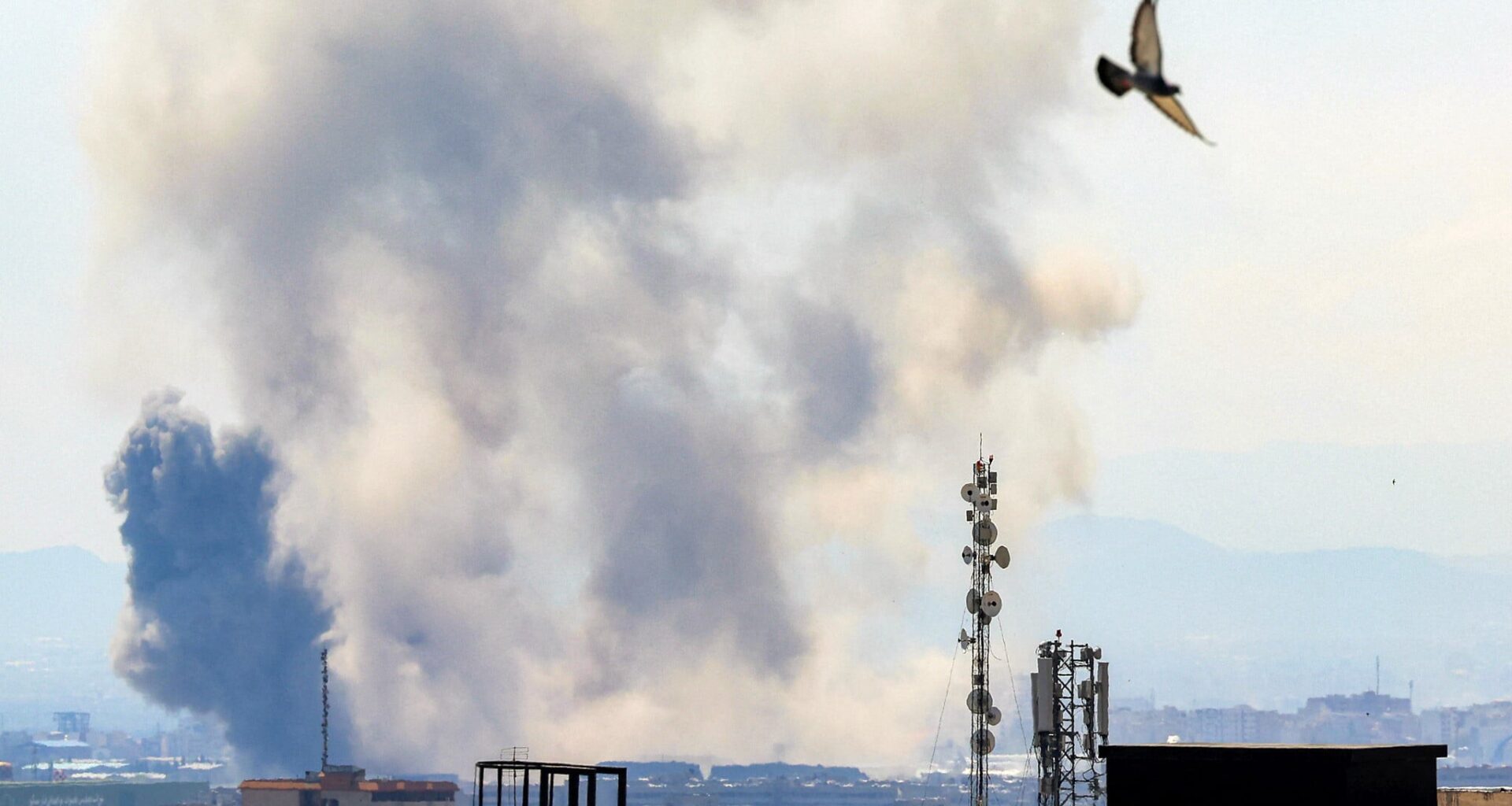
The Israeli Air Force bombed eight rail sections and bridges in Iran on Tuesday, as part of efforts to prevent the Islamic Revolutionary Guard Corps from moving weapon systems, the military said.
Ahead of the strikes, the Israel Defense Forces warned Iranians to stay away from trains until the evening.
In a statement, the IDF said it had struck eight rail bridges and sections of roads “used by the Iranian terror regime to transport weapons and military equipment.”
A security official told The Times of Israel that the IRGC had used the “key” rail sections and bridges to transport weapons. Israel had also warned it would strike Iranian “national infrastructure” to cause economic damage to the regime.
The strikes were carried out in several areas of Iran, including Tehran, Karaj, Tabriz, Kashan, and Qom, according to the military.
Get The Times of Israel’s Daily Edition
by email and never miss our top stories
By signing up, you agree to the terms
“The crossings were struck to prevent regime forces from using them to transfer equipment and weapons,” the IDF said in a statement.
In the central city of Kashan, two people were killed in an attack on a rail bridge, a regional official told state media. In Iran’s second-largest city of Mashhad, all train services were canceled until further notice after the Israeli warning, local media reported, citing the governor.
«زنجان سه شنبه ۱۸ فروردین؛ ساعت حدود ۱۳:۱۰ یک پل راه آهن نزدیک روستای امین آباد رو زدن. این پله رو زدن که فاصله اش با عکس دوم ۳-۴ کیلومتره که معلومه انبار مهمات و موشکه که تو محوطه اش ایستگاه راه آهن داره» pic.twitter.com/J8iAYFSng1
— مملکته (@mamlekate) April 7, 2026
Meanwhile, the US military conducted strikes on military targets on Iran’s Kharg Island, the Axios news outlet reported on Tuesday, citing an unidentified senior US official. The island, located off Iran’s western coast, is a vital oil export terminal for the country.
The attacks occurred hours before US President Donald Trump’s ultimatum to Iran to reopen the Strait of Hormuz was due to expire, after which he has threatened a major escalation in strikes, including on Iran’s power plants and bridges.
Iran and Hezbollah continued their missile and rocket attacks on Israeli cities Tuesday, repeatedly launching salvos that caused blasts and damage throughout the country.
In Nahariya in the north, a woman in her 20s was lightly hurt following a Hezbollah rocket strike, medics said. Two other people were treated for acute anxiety. Some 10 rockets were fired from Lebanon in the attack, with at least one striking a road, causing injuries along with damage to nearby cars and homes.
Another rocket strike in Meron wounded a 36-year-old man. The Magen David Adom ambulance service said he was injured by shrapnel. A home in the border city of Kiryat Shmona was also damaged by another rocket fired from Lebanon, rescue services said.
Hezbollah has been barraging the north regularly with rocket attacks, sometimes in tandem with ballistic missile attacks by Iran, which continued on Tuesday to target Israel with cluster munitions that spread bomblets indiscriminately across large areas.
Iranian missile attacks with cluster munitions targeted central Israel twice on Tuesday — once in the morning, and once in the early afternoon — causing damage, though there were no reports of direct injuries as a result of either attack.
מספר זירות פגיעה במרכז, באחת מהן התהפך רכב; טרם דווח על נפגעים@hadasgrinberg (צילום: תיעוד מבצעי מד”א) pic.twitter.com/pnxBJTBfYM
— כאן חדשות (@kann_news) April 7, 2026
In the morning, there were at least six impact sites, including in Tel Aviv, Rosh Haayin, and Ramat Hasharon.
Sirens also sounded in the Eilat area in southern Israel in the morning, but that missile was assessed by the IDF to have struck an open area.
Another missile fired from Iran at southern Israel in the afternoon was intercepted, according to the IDF. A 46-year-old man was lightly injured by falling fragments following the interception, MDA said.
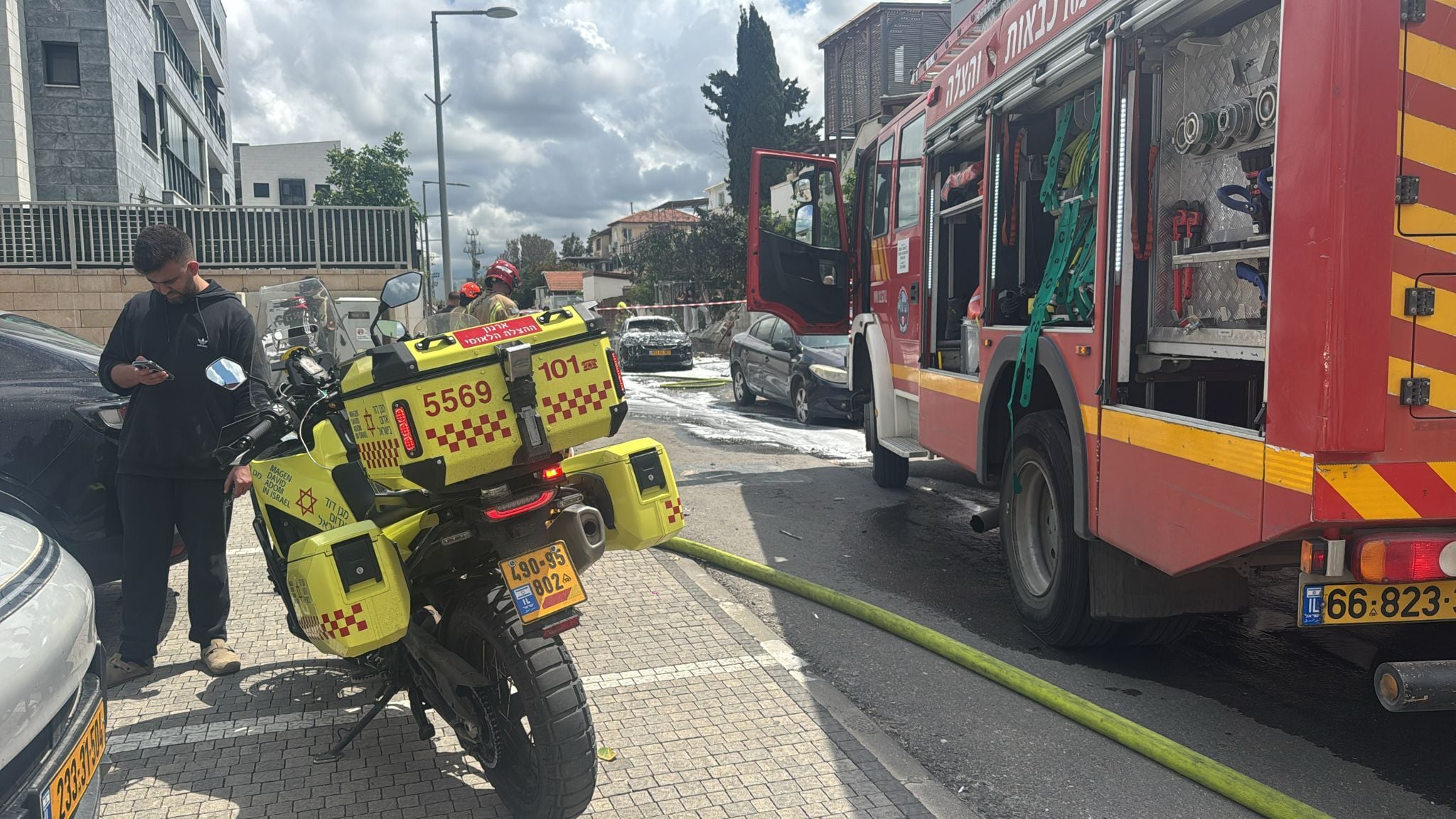
Rescue forces operate in Nahariya, following a Hezbollah rocket attack from Lebanon, April 7, 2026. (Magen David Adom)
Overnight, a ballistic missile attack targeted Beersheba and the surrounding area in Israel’s south, following a lull of about 12 hours since Iran’s last assault. No injuries or impacts were reported as a result of the overnight attack.
Iran also kept up its attacks on Gulf neighbors, reportedly killing two people in Iraqi Kurdistan, as well as targeting energy sites and prompting the temporary closure of the only bridge connecting Saudi Arabia and Bahrain.
IDF warns Iranians: Don’t take trains before 9 p.m.
The Israeli Air Force said Tuesday afternoon that it had completed an “extensive” wave of airstrikes in several areas of Iran, adding that the strikes had hit dozens of Iranian regime infrastructure sites.
An attack targeted a bridge near the city of Qom, south of Tehran, the deputy governor of the province said, according to state TV.
The IDF had issued an unusual “urgent warning” to Iranians earlier Tuesday not to travel by train across Iran until the evening.
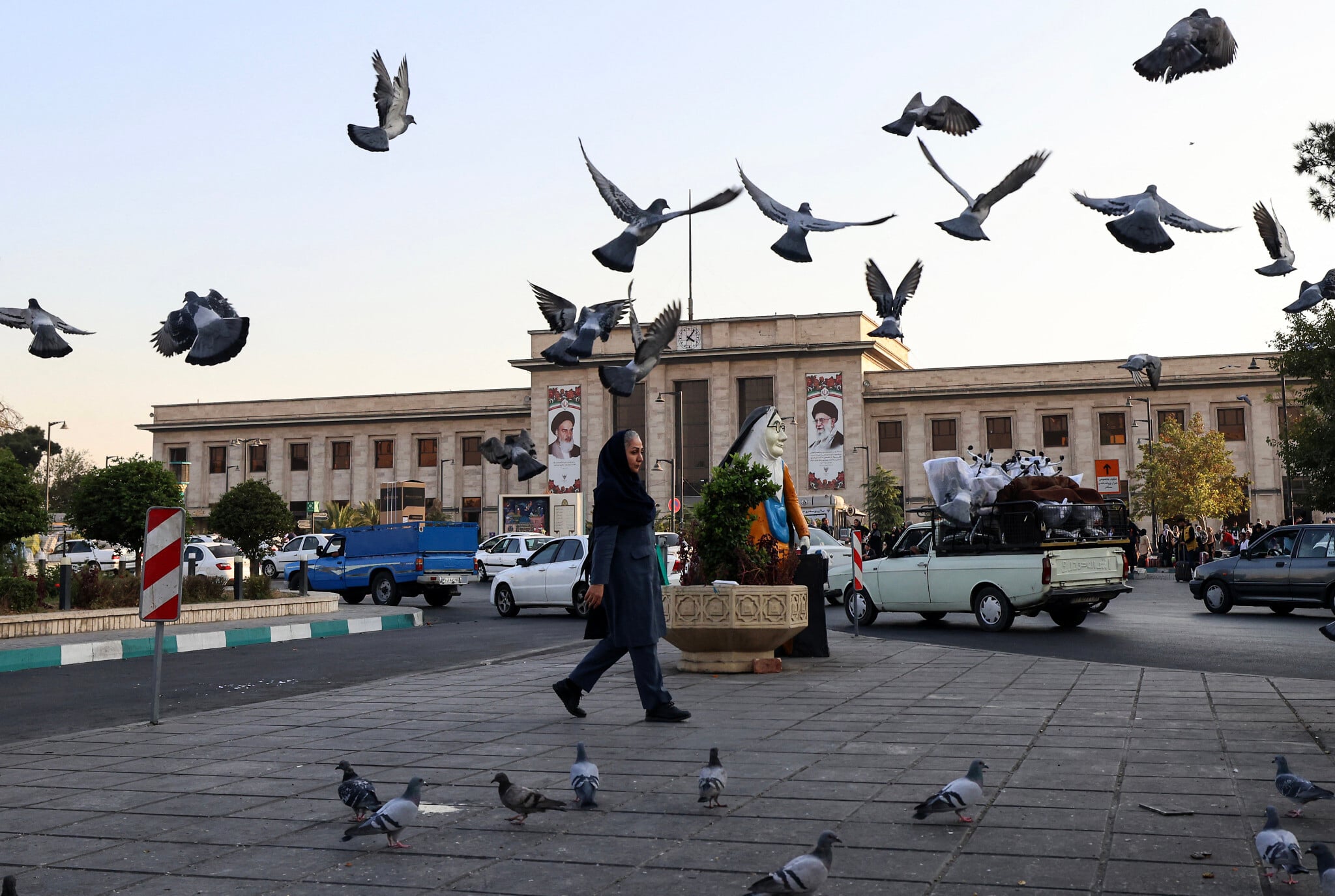
A woman walks past Tehran’s train station as a flock of pigeons takes off on November 2, 2025. (ATTA KENARE / AFP)
“Dear citizens, for your safety, we request that from this moment until 9 p.m. Iran time, you refrain from using and traveling by train across Iran,” the IDF’s Persian-language spokesman, Lt. Col. (res.) Kamal Penhasi, said in a statement.
“Your presence on trains and near railway lines puts your lives at risk,” he added.
On Monday, Defense Minister Israel Katz said the IDF had been instructed to “continue striking with full force the national infrastructure of the Iranian terror regime.”
Trump had threatened on Monday to strike all of Iran’s power plants and bridges, saying the Islamic Republic had until 8 p.m. ET on Tuesday (3 a.m. Wednesday Israel time, 3:30 a.m. Tehran time) to strike a deal.
On Tuesday, the IDF published new footage showing airstrikes on Iranian air defense systems, of which more than 130 have been destroyed during the war, according to the military.
תיעודים מיוחדים מעין הטיל: כך חיל האוויר תוקף מערכות הגנה אוויריות של משטר הטרור האיראני
צה”ל ממשיך במאמץ השיטתי להעמקת הפגיעה במערכי האש ומערכות ההגנה האוויריות של משטר הטרור האיראני ברחבי איראן.
בתקיפות מדויקות שבוצעו בהכוונת למד”ן, הושמדו יותר מ-130 מערכות הגנה אוויריות של… pic.twitter.com/4CqrTd4Teh
— צבא ההגנה לישראל (@idfonline) April 7, 2026
The IDF also confirmed having bombed another petrochemical facility in Iran a day earlier, saying it was “one of the few remaining facilities” used to manufacture materials for ballistic missiles.
Iranian media reported Monday that airstrikes hit the Marvdasht Petrochemical Complex, near Shiraz. Hours earlier, the Israeli Air Force bombed Iran’s largest petrochemical facility in Asaluyeh.
In a statement, the IDF said that the facility near Shiraz “was used by Iran’s armed forces to produce nitric acid, a substance necessary for manufacturing explosives and additional materials used in ballistic missile development processes.”
Iranian media reported that at least nine people had been killed in the city of Shahriar, west of the capital. In the city of Pardis, east of Tehran, at least six people were killed in a strike and recovered from buildings, according to Iranian reports.
Khorramabad International Airport also came under attack Tuesday, the judiciary’s Mizan news agency reported.
Iran says IDF strike hit Tehran synagogue
Iranian media reported Tuesday that the Rafi Niya synagogue in Tehran was damaged in an airstrike.
Video from the site appeared to show rescuers moving around, and what looked like a Hebrew prayer book in the rubble.
Iran has a small Jewish population still living in the country. Many fled during the 1979 Islamic Revolution.
An Israeli official told The Times of Israel that the Foreign Ministry was looking into the reports. The Diaspora Affairs Ministry, in an internal report, noted there were conflicting reports as to the circumstances of the incident and as to whether the synagogue was damaged or completely destroyed.
The IDF did not immediately comment on the matter, but an Israeli official told The Times of Israel off the record: “Israel doesn’t target synagogues. Anyone claiming otherwise thinks you’re gullible.”
Iranian outlet Mehr News Agency says a Jewish synagogue in central Tehran was badly damaged during US-Israeli airstrikes. pic.twitter.com/giRLdw0xsr
— Clash Report (@clashreport) April 7, 2026
IRGC urges parents to send kids to checkpoints amid strikes
A Revolutionary Guards general in Iran urged parents on Tuesday to “send your kids to man checkpoints.”
Gen. Hossein Yekta, previously identified as leading plainclothes units of the all-volunteer Basij force, made the comments on an Iranian state television channel.
“Moms, dads, take your kids’ hands and go out on the streets,” he said. “Do you want your kid to become a real man? Let him feel like a hero standing right at the heart of the battlefield. Moms, dads, at night send your kids to man checkpoints. They become men!”
Basij checkpoints have been repeatedly targeted in airstrikes. The IRGC has previously said that children as young as 12 are being recruited to man those stations and to perform other duties during the war.
Hossein Yekta of Khamenei’s Academic Think Tank Calls on Iranian Parents to Send Their Children to Man Roadblocks at Night: Your Sons Will Turn into Men; We Are at the Walls of Jerusalem, and We Will Carry Out Massacres There; The Infallible Imam Said: “Kill! Kill!”; This Is a… pic.twitter.com/pgrhxcqgOb
— MEMRI (@MEMRIReports) April 6, 2026
The Basij has been accepting children as young as 12 to man checkpoints. Amnesty International has warned that some even carry firearms, calling their recruitment a war crime.
During nationwide protests in January, Yekta warned parents to keep their children home or they would be shot.
Iran also called on “all young people, athletes, artists, students, university students and their professors” to form human chains around power plants ahead of threatened strikes.
“Power plants that are our national assets and capital, regardless of any taste or political viewpoint, belong to the future of Iran and to the Iranian youth,” Alireza Rahimi, identified by Iranian state television as the secretary of the Supreme Council of Youth and Adolescents, said as he issued the video call in a newscast.
Iran has formed human chains in the past around its nuclear sites at times of heightened tensions with the West.
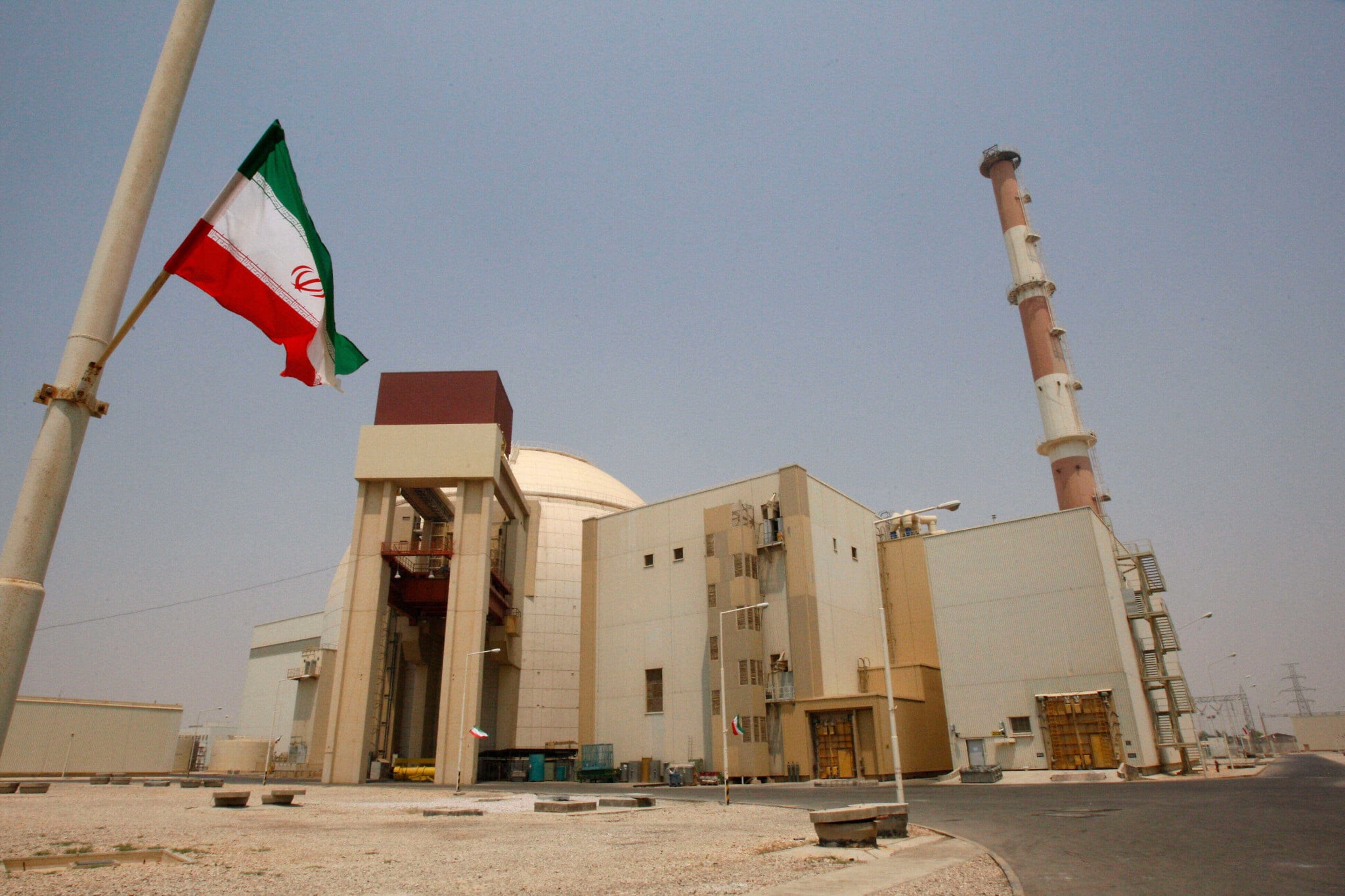
An Iranian flag flutters in front of the reactor building of the Bushehr nuclear power plant, just outside the southern city of Bushehr, Iran, Aug. 21, 2010. (AP/Vahid Salemi, File)
Iran’s President Masoud Pezeshkian, meanwhile, said he and 14 million Iranians have declared they will “sacrifice their lives” to defend Iran.
“More than 14 million brave Iranians have so far declared their readiness to sacrifice their lives to defend Iran. I have also sacrificed my life for Iran, I am and I will continue to do so,” he wrote on X.
Iran has a population of around 90 million.