
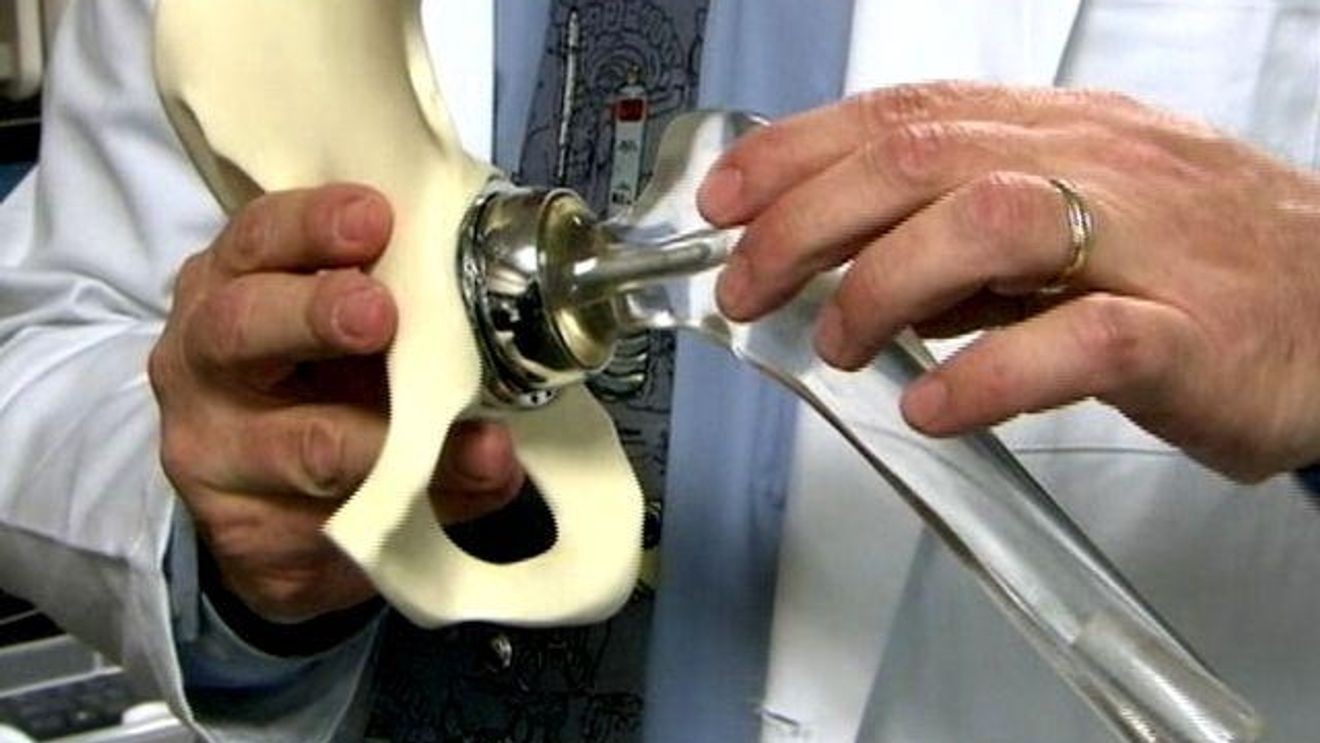
PULLMAN, Wash. — A blend of two familiar kitchen spices may hold promise for improving the safety and effectiveness of bone implants, according to new research from Washington State University.
The study found that a turmeric-ginger extract helped bone implants bond more strongly while also killing bacteria and reducing cancer-causing cells, potentially benefiting patients with joint replacements and bone cancer. The findings were published in the Journal of the American Ceramic Society in February.
RELATED: The hype about Turmeric
In early tests, researchers reported that the extract roughly doubled bone bonding within six weeks around an implant site, killed more than 90% of bacteria on implant surfaces and sharply reduced cancer-causing cells. The work draws on traditional uses of turmeric and ginger — both long used in China and India for food and medicinal purposes — while applying them to modern biomedical devices.
“Basically, I say it’s combining the best with the latest,” said Susmita Bose, the Westinghouse Distinguished Chair Professor in WSU’s School of Mechanical and Materials Engineering and corresponding author of the study. “The best part is from the food and the latest aspect comes from the biomedical device.”
The research is the latest work from Bose and Amit Bandyopadhyay, Boeing Distinguished Professor in the School of Mechanical and Materials Engineering. Their study builds on earlier research into using 3D printing to produce bone implants, an approach that was once considered far-fetched but is now commonly used in implant manufacturing.
The researchers focused on problems associated with bone implants at a time when roughly 7 million Americans are living with metal hip and knee replacements. A significant portion of those implants must be repaired after they fail to bond with existing bone or weaken over time, the study noted. Infections on metal implant surfaces also pose serious risks and occur in nearly a third of failed implants, and they can be difficult to treat.
“Often, an infection will require the removal of the implant,” Bose said. “There is no other way of fixing bone in [a] patient’s body. So, infection-related problems can cause really huge health issues and financial burden.”
The extract was also tested for its effects on osteosarcoma cells. Osteosarcoma is a type of bone cancer and is described in the study as the most prevalent malignancy among pediatric patients and young people. Even after treatment regimens that can include surgery, chemotherapy and bone implants, some cancer-causing cells can remain, the study said.
The team tested whether an extract of ginger and curcumin — the active agent in turmeric — could be applied with a titanium coating designed to release slowly over time. The extract was tested in vitro and in an in vivo experiment using a femur implant in rats.
According to the study, the extract helped foster a strong bond between the titanium implant and bone, roughly doubling bone-bonding effects six weeks after surgery. It also killed 92% of bacteria on the implant surface and reduced cancer-causing cells around the site by 11-fold compared with untreated controls.
“There are many, many facets of this challenge,” Bandyopadhyay said. “We are making an implant that will offer some infection resistance. We are making an implant that can help with bone bonding. This paper is focused on very big problems, and we’re telling the world a lot of little things you can do that may add significant benefit to the patient’s life, whether it’s a hip implant, knee implant, spinal implant, or shoulder implant. That’s really the holy grail of it.”
Bose said the infection-fighting and anti-cancer effects observed in the study are among several potential benefits associated with the compounds. The study also cited research showing that turmeric and ginger, when added to the diet, have anti-inflammatory and antioxidant properties.
“I’m very passionate about these natural medicinal compounds, because I feel that they can be used so easily as preventative care in our everyday life,” Bose said. “Curcumin, from turmeric, has [a] very good anti-inflammatory effect, and inflammatory bone loss is a big challenge. And ginger may have an anti-cancer effect. We can use these compounds as preventative care.”
MORE ON HEALTH: Survey: More than half of Washington clinicians cite mental-health risks from cannabis use
Other contributors to the study included first author Arjak Bhattacharjee, a PhD graduate from WSU who is now an assistant professor at New Mexico Tech; Ujjayan Majumdar, also a WSU PhD graduate; and William Dernell, an emeritus professor of veterinary medicine at WSU.