
Science fiction has always been a genre that thrives on ambition. Movies in this genre ask big questions, build entire worlds from scratch, and often reflect the anxieties and hopes of their time more directly than any other genre. But for all its potential, true masterpieces in sci-fi are rare, especially in this decade, which is ironic, considering how many technological advancements we have today.
Here, we take a look at sci-fi films from this decade that we can consider masterpieces. It’s not just about the scale or originality, but also the movie’s sense of purpose. Is it a necessary film for the current audience? Does it have something to say about our world today? These movies are backed by visionary directors, standout performances, and, of course, great production quality, representing the best of modern sci-fi and also showing what the genre can achieve.
Collider Exclusive · Sci-Fi Survival Quiz
Which Sci-Fi World Would You Survive?
The Matrix · Mad Max · Blade Runner · Dune · Star Wars
Five universes. Five completely different ways the future went wrong — or sideways, or up in flames. Only one of them is the world your instincts were built for. Eight questions will figure out which dystopia, galaxy, or desert wasteland you’d actually make it out of alive.
💊The Matrix
🔥Mad Max
🌧️Blade Runner
🏜️Dune
🚀Star Wars
TEST YOUR SURVIVAL →
01
You sense something is deeply wrong with the world around you. What do you do?
The first instinct is often the truest one.
APull on every thread until I understand the system — then figure out how to break it.
BStop asking questions and start stockpiling — food, fuel, weapons. Questions don’t keep you alive.
CKeep my head down, observe carefully, and trust no one until I know who’s pulling the strings.
DStudy the patterns. Every system has a rhythm — learn it, and you learn how to survive it.
EFind the people fighting back and join them. You can’t fix a broken galaxy alone.
NEXT QUESTION →
02
In a world of scarcity, what resource do you guard most fiercely?
What we protect reveals what we believe survival actually requires.
AKnowledge. If you understand the system, you don’t need resources — you can generate them.
BFuel. Everything else — movement, power, escape — runs on it.
CTrust. In a world of fakes and informants, a truly reliable ally is rarer than any commodity.
DWater. And after water, information — the two things empires are truly built on.
EShips and credits. The galaxy is big — you survive it by being able to move through it freely.
NEXT QUESTION →
03
What kind of threat keeps you up at night?
Fear is useful data — if you’re honest about what you’re actually afraid of.
AThat reality itself is a lie — that everything I experience has been constructed to keep me compliant.
BA raid. No warning, no mercy — just the roar of engines and then nothing left.
CBeing identified. Once someone with power decides you’re a problem, you’re already out of time.
DBeing outmanoeuvred — losing a political game I didn’t even know I was playing.
EThe Empire tightening its grip until there’s nowhere left to run.
NEXT QUESTION →
04
How do you deal with authority you don’t trust?
Every dystopia has a power structure. Your approach to it determines everything.
ASubvert it from the inside — learn its rules well enough to weaponise them against it.
BIgnore it and stay out of its reach. The further from any power structure, the better.
CAppear to comply while doing exactly what I need to do. Visibility is the enemy.
DManoeuvre within it carefully. You can’t beat a system you refuse to understand.
EResist openly when I have to. Some things are worth the risk of being seen.
NEXT QUESTION →
05
Which environment could you actually endure long-term?
Survival isn’t just tactical — it’s physical, psychological, and very much about where you are.
AUnderground bunkers and server rooms — cramped, artificial, but with access to everything that matters.
BOpen wasteland — brutal sun, no shelter, constant movement. At least the threat is honest.
CA dense, rain-soaked city where you can disappear into the crowd and nobody asks questions.
DMerciless desert — extreme heat, no water, and something enormous living beneath the sand.
EThe fringe — backwater planets and busy spaceports where the Empire’s attention rarely reaches.
NEXT QUESTION →
06
Who do you want in your corner when things fall apart?
The company you keep is the clearest signal of who you actually are.
AA tight crew of believers who’ve seen behind the curtain and have nothing left to lose.
BOne or two people I’d trust with my life. Any more than that and someone talks.
CNobody, ideally. Alliances are liabilities. I work alone unless I have no choice.
DA community bound by shared hardship and mutual survival — people who need each other to last.
EA ragtag team with wildly different skills and total commitment when it counts.
NEXT QUESTION →
07
Where do you draw the line — if you draw one at all?
Every survivor eventually faces a moment that tests what they’re actually made of.
AI won’t harm the innocent — even the ones who’d report me without hesitation.
BI do what I have to to protect the people I’ve chosen. Everything else is negotiable.
CThe line shifts depending on who’s asking and what’s at stake.
DI draw a long-term line — nothing that compromises my people’s future, even if it’d help now.
ESome lines, once crossed, can’t be uncrossed. I know which ones they are.
NEXT QUESTION →
08
What would actually make survival worth it?
Staying alive is one thing. Having a reason to is another.
AWaking others up — dismantling the illusion so no one else has to live inside it.
BFinding somewhere — or someone — worth protecting. A reason to keep moving.
CAnswers. Understanding what I am, what any of this means, before time runs out.
DLegacy — shaping the future in a way that outlasts me by generations.
EFreedom — for myself, for others, for every world still living under someone else’s boot.
REVEAL MY WORLD →
Your Fate Has Been Calculated
You’d Survive In…
Your answers point to the world your instincts were built for. This is the universe your temperament, your survival instincts, and your particular brand of stubbornness were made for.
The Resistance, Zion
The Matrix
You took the red pill a long time ago — probably before anyone offered it to you. You’re a systems thinker who can’t help but notice the seams in things.
You’re drawn to understanding how the system works before figuring out how to break it.
You’d find the Resistance, or it would find you — your instinct for spotting constructed realities is the machines’ worst nightmare.
You function best when you have access to information and the freedom to act on it.
The Matrix built an airtight prison. You’d be the one probing the walls for the door.
The Wasteland
Mad Max
The wasteland doesn’t reward the clever or the well-connected — it rewards those who are hard to kill and harder to break. That’s you.
You don’t need comfort, community, or a cause larger than the next horizon.
You need a vehicle, a clear threat, and enough fuel to outrun it — and you’re good at all three.
You are unsentimental enough to survive that world, and decent enough — just barely — to be something more than another raider.
In the wasteland, that distinction is everything.
Los Angeles, 2049
Blade Runner
You’d survive here because you know how to exist in moral grey areas without losing yourself completely.
You read people accurately, keep your circle small, and ask the questions others prefer not to answer.
In a city where humanity is a legal designation rather than a feeling, you hold onto something that keeps you functional.
You’re not a hero. But you’re not lost, either.
In Blade Runner’s world, that distinction is everything.
Arrakis
Dune
Arrakis is the most hostile environment in the known universe — and you are precisely the kind of person it rewards.
Patience, discipline, and political awareness are your core strengths — and on Arrakis, they’re survival tools.
You understand that the long game matters more than any single victory.
Others come to Dune and are consumed by it. You’d learn its logic and earn its respect.
In time, you wouldn’t just survive Arrakis — you’d begin to reshape it.
A Galaxy Far, Far Away
Star Wars
The galaxy far, far away is vast, loud, and in a constant state of violent political upheaval — and you wouldn’t have it any other way.
You find meaning in being part of something larger than yourself — a cause, a crew, a rebellion.
You’d gravitate toward the Rebellion, or the fringes, or whatever pocket of the galaxy still believes the Empire’s grip can be broken.
You fight — not because you have to, but because standing aside isn’t something you’re capable of.
In Star Wars, that willingness is what makes all the difference.
↻ RETAKE THE QUIZ
‘Mickey 17’ (2025)
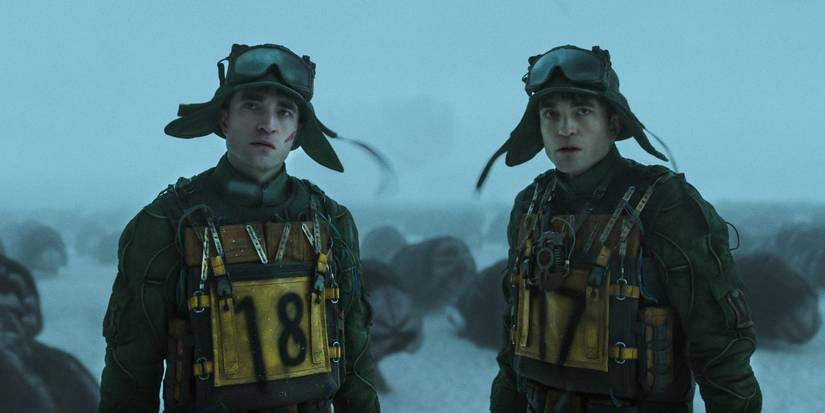
Robert Pattinson as two Mickeys standing in the snow surrounded by aliens in Mickey 17.Image via Warner Bros.
Mickey 17 follows Mickey Barnes (Robert Pattinson), who signs up as an expendable worker on a colonization mission to a distant ice planet to run away from a crime he committed on Earth. His job is to perform dangerous tasks, and if he dies, he is regenerated with his memories intact in a new cloned body. When one of his iterations survives a mission that he was presumed dead from, Mickey discovers that a new version of himself has already been printed.
In the hands of Academy Award-winning director Bong Joon-ho, Mickey 17 is elevated from just a sci-fi film. It blends high-concept sci-fi with signature social commentary, while also delivering a distinct quirkiness usually not seen in major Hollywood films. Robert Pattinson delivers a layered performance that showcases his remarkable versatility as an actor, playing multiple versions of the same character with subtle differences in personality. Critics and audiences generally loved it — those who actually saw it, anyway — but the film barely made a dent at the box office. As one of the more daring sci-fi films in recent memory, Mickey 17 needs to be seen by more people.
‘Nope’ (2022)
Nope follows siblings OJ (Daniel Kaluuya) and Emerald Haywood (Keke Palmer), horse trainers working in Hollywood who begin to suspect something unnatural lurking in the skies above their ranch. Enlisting the help of a technician and a veteran cinematographer, they begin to investigate and document the phenomenon.
Nope was initially seen by many as more of a horror film, mostly because it followed Jordan Peele’s Get Out and Us. But Nope distinguishes itself by merging genre elements, and at the end, it feels more like an edgy, modern Close Encounters of the Third Kind. Peele uses the alien concept in a refreshingly original way, turning it into a commentary on spectacle and exploitation. Critics praised its ambition and subversion of expectations, though audiences were more divided due to its unconventional pacing and ideas. That very divisiveness, however, is part of what makes the film interesting.
‘Project Hail Mary’ (2026)
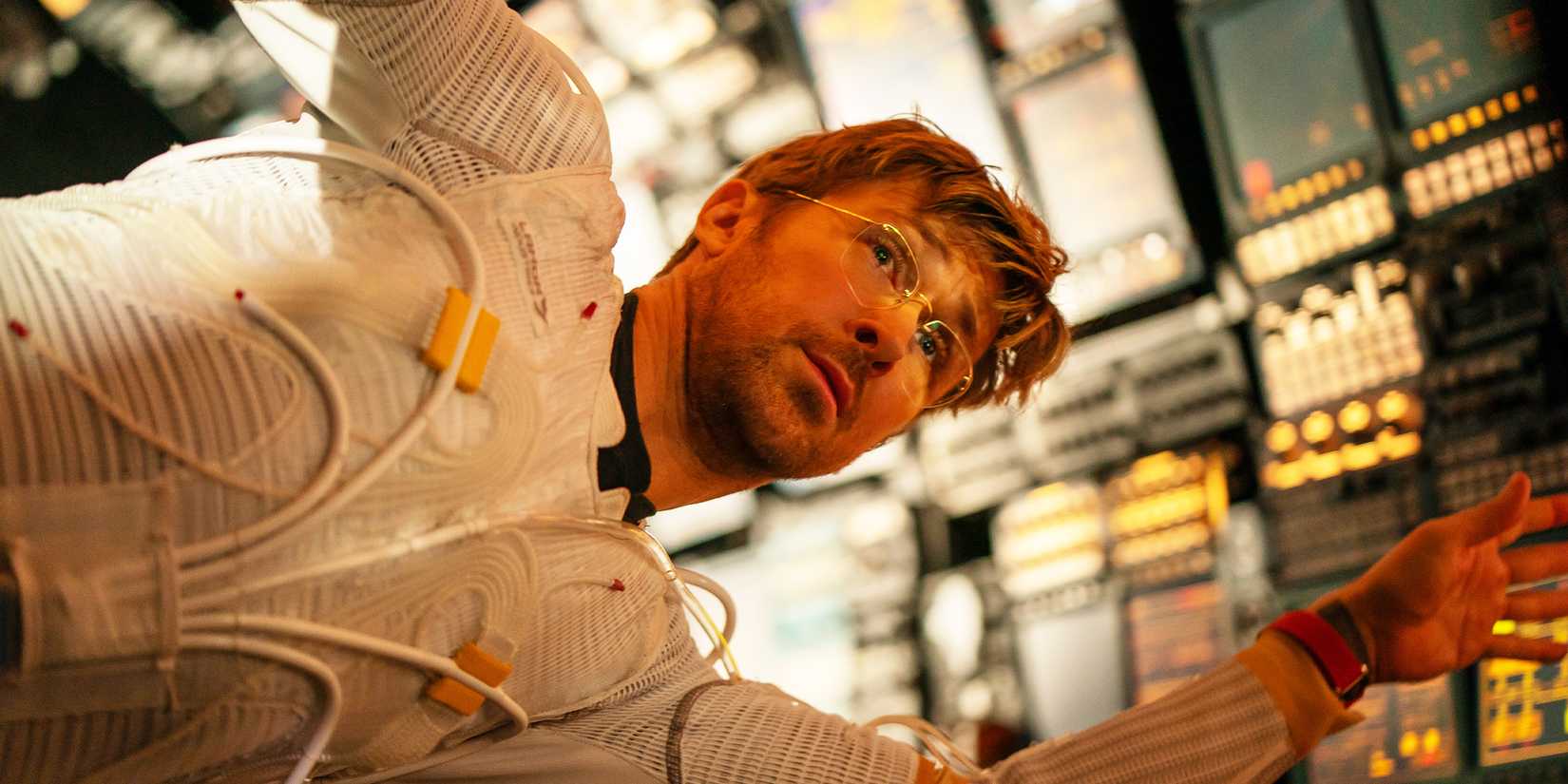
Ryland Grace floating through zero gravity in a space suit.Image via Amazon MGM Studios
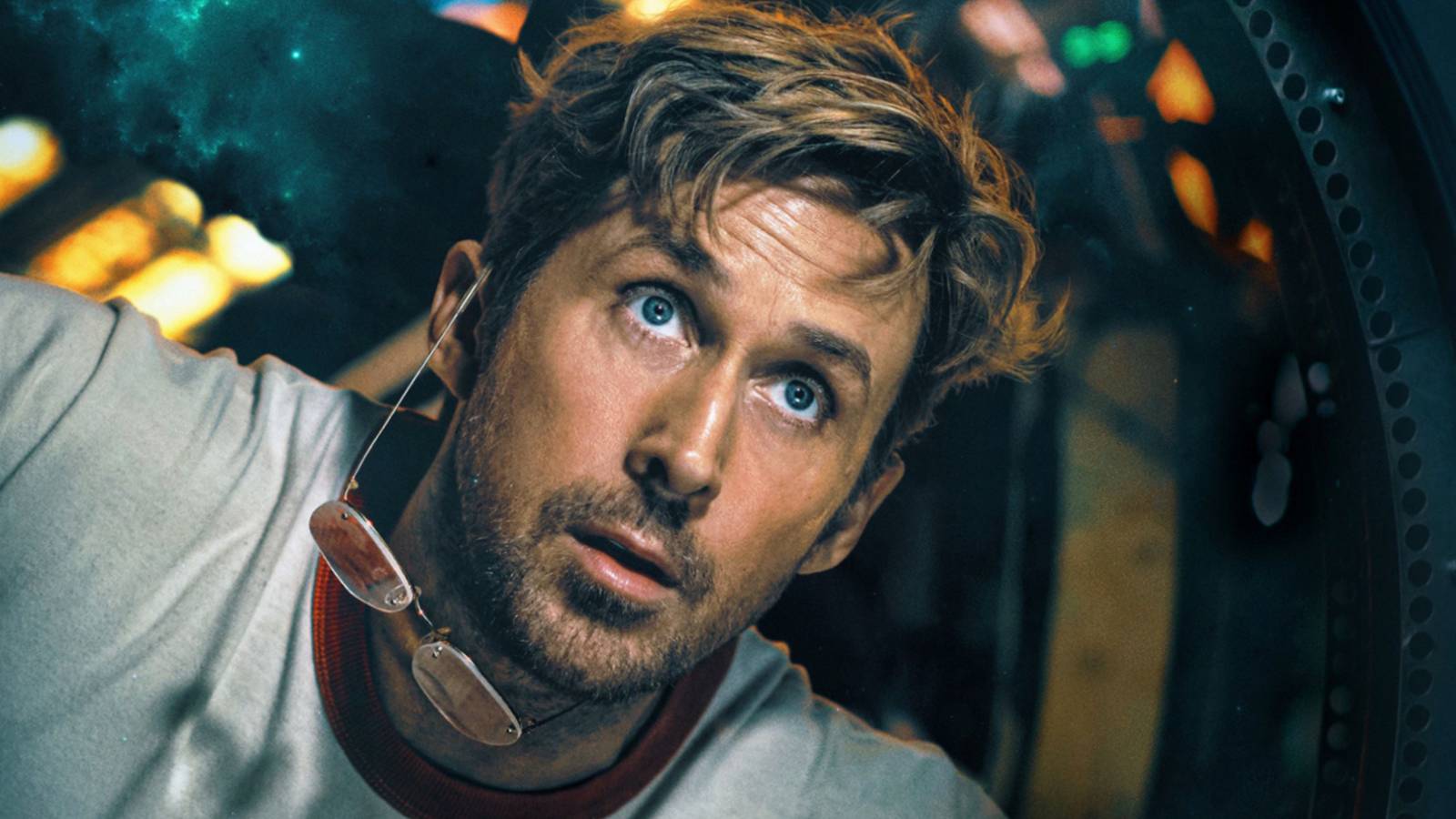
Based on a book by Andy Weir, Project Hail Mary follows Ryland Grace (Ryan Gosling), who wakes up alone with no memory in a spaceship light-years away from Earth. As he pieces together the information, he finds himself on a mission to rescue Earth from a parasitic microorganism that is eating the sun. His journey gets more complicated when he encounters an alien ship, whose crew might have the same objective as him.
Project Hail Mary is simply a triumph in the sci-fi genre. Many may argue that it is basically a greatest hits compilation of other landmark sci-fi movies, but it hits all the right notes. Ryan Gosling leads the film with charm, establishing great chemistry with his human co-stars and even a delightful puppet. The cinematography by Greig Fraser is beautiful, utilizing practical effects to create an otherworldly atmosphere. Moreover, the film is jam-packed with gorgeous visuals and jaw-dropping moments. With superb box office taking in its first few weeks of release, this film by Phil Lord and Christopher Miller is the first hit of the year. Calling it a masterpiece so soon might reek of recency bias, but the truth is that Project Hail Mary has all the landmarks of an all-time great sci-fi.
‘Everything Everywhere All at Once’ (2022)

Image via A24
Everything Everywhere All at Once is about Evelyn Wang (Michelle Yeoh), a struggling laundromat owner who discovers she can access alternate versions of herself across the multiverse after she meets a cooler version of her husband (Ke Huy Quan). Her interdimensional journey begins as she confronts fractured relationships with her family, especially her daughter, across different universes.
Arriving in the middle of the multiverse cinematic boom, the sci-fi perfection that is Everything Everywhere All at Once demolishes the competition by being the most audacious and also the most emotional of them all, despite being produced with a lower budget. It uses its wild sci-fi premise not just for spectacle, but as a way for the characters to grow throughout the story. An Oscar-winning Michelle Yeoh anchors the film with a performance that shifts effortlessly between drama, comedy, action, and heartbreak, while an equally Oscar-winning Ke Huy Quan and Stephanie Hsu also bring multiple iterations of their characters. The film won seven Oscars, including Best Picture and Best Director for Daniel Kwan and Daniel Scheinert.
‘Dune’ (2021)

Timothée Chalamet as Paul Atreides looking pensive outside in Dune: Part Two (2024).Image via Warner Bros. Pictures
Dune follows Paul Atreides (Timothée Chalamet) as his family takes control of the valuable desert planet of Arrakis, the only source of spice, which is the most essential resource for space travel. However, the move is orchestrated by the Emperor and House Harkonnen, who launch an attack against the Atreides. Paul and his mother are forced to escape to the harsh desert, where they make an alliance with the local Fremen, as Paul begins to embrace his destiny.
Denis Villeneuve crafted a sci-fi masterpiece with his Dune adaptation. The book is famously dense material, but the Canadian director successfully translates it into an immersive and accessible spectacle. Timothée Chalamet delivers a restrained and compelling performance as Paul, supported by a stellar ensemble that includes Rebecca Ferguson and Oscar Isaac, all bringing emotional weight to the grand narrative. The cinematography, the production design and the score further elevate the film even higher. A third film is slated to be released later this year, ending this franchise as one of the all-time best in American cinema.