
This Editor’s Note was sent out earlier Tuesday in ToI’s weekly update email to members of the Times of Israel Community. To receive these Editor’s Notes as they’re released, join the ToI Community here.
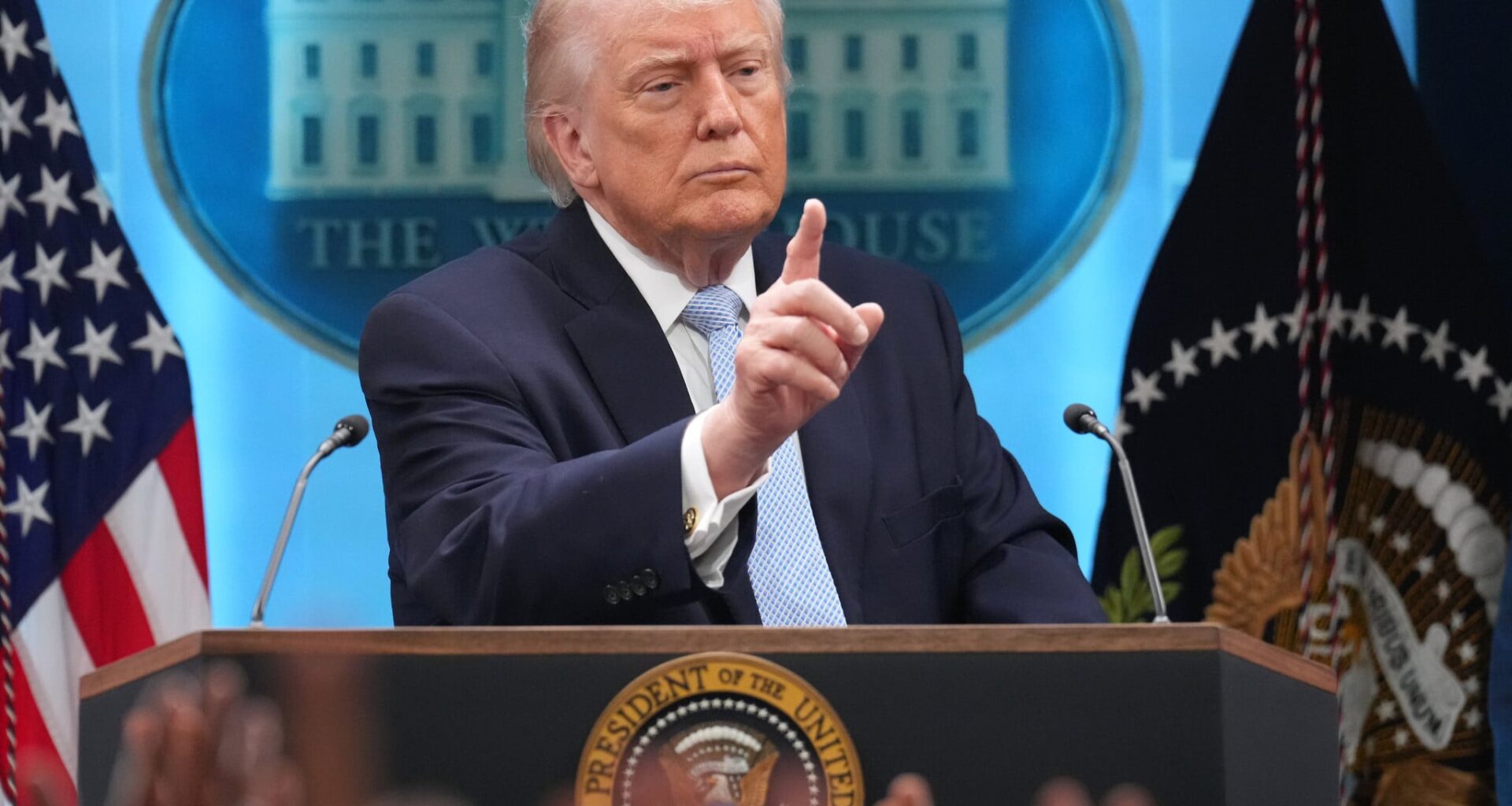
There is a blatant contradiction between US President Donald Trump’s repeated insistence, on the one hand, that the war against Iran has achieved “regime change” and he is now negotiating with new, “much more reasonable leaders,” and his simultaneous acknowledgement, on the other, that any Iranian who dares to take to the streets faces an immediate death sentence.
“Well, they should do it,” he said at his White House press conference on Monday, when asked whether the Iranian public should try anew to rise up against its oppressors. “But, again, the consequences are great… I mean, they were told, ‘If you protest, you will be shot immediately.’”
The same goes for his simultaneous contention, also expounded at Monday’s press conference, that the purportedly new regime is “not as radicalized” as its predecessor, but that, nonetheless, “Israel will be gone, the Middle East will be gone,” if Iran gets the bomb.
The fact is that the “new” faces of Iran are just like the “old” faces — except newly aware of their immense potential to extort the world via control over the Strait of Hormuz, and more aware, too, that nuclear weapons would make them broadly invincible.
Get The Times of Israel’s Daily Edition
by email and never miss our top stories
By signing up, you agree to the terms
What that underlines, in turn, is the imperative to close down the Islamic Republic’s pathways to the bomb as hermetically as possible.
Along with the tactical successes of a war now in its sixth week — the targeting of key leaders, commanders and nuclear scientists, of military facilities, of military-related industries — have come a series of disappointments and surprises: Iran has fired potent missiles, with longer ranges and a mix of devastating warheads, at far more diverse targets than expected; it has managed to keep on firing despite the relentless strikes on its launchers and stocks; a hoped-for Kurdish invasion failed to materialize; and US allies, in the region and beyond, did not join the fight, even after some of them were heavily targeted.
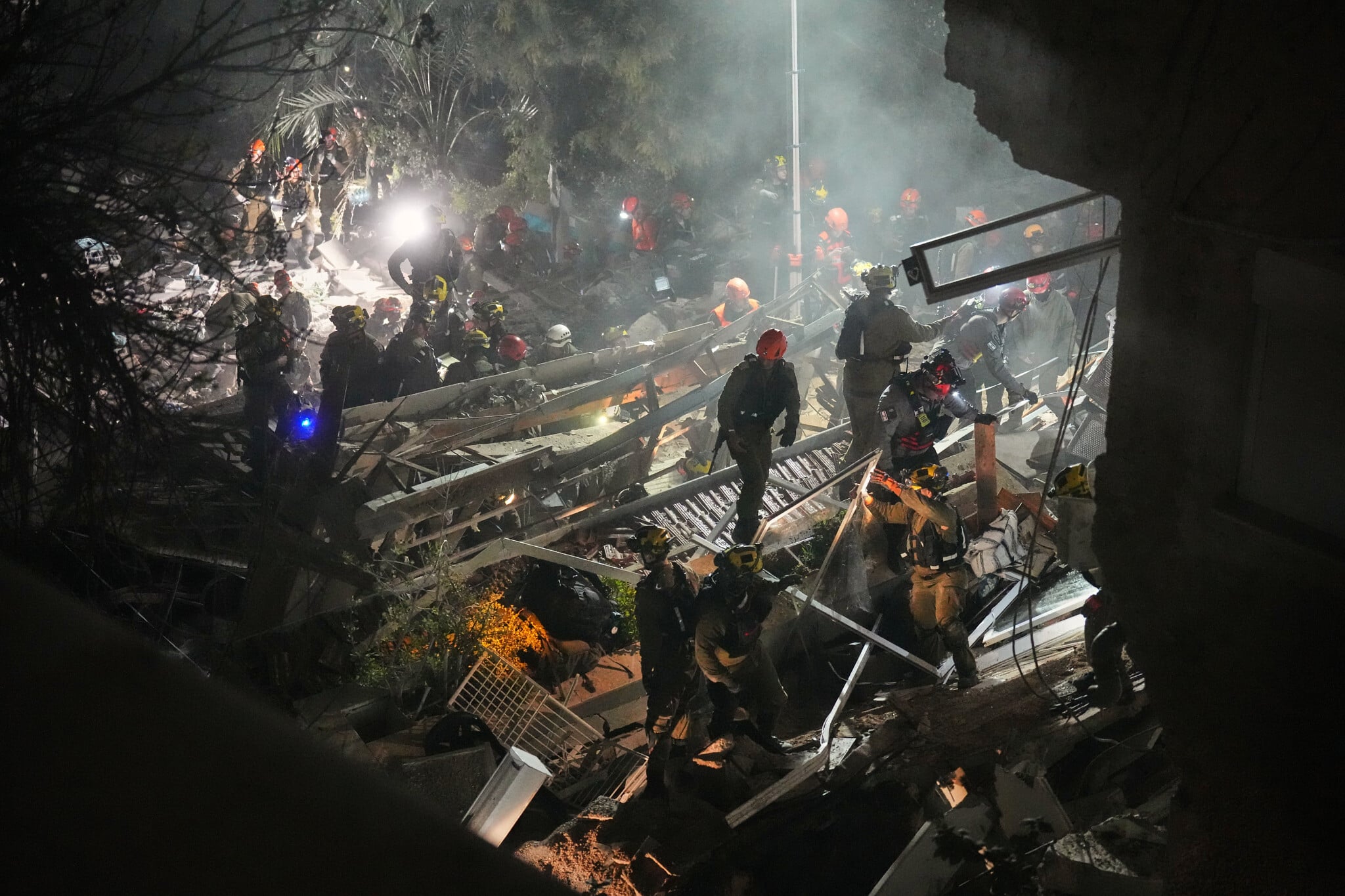
Israeli security forces and rescue teams work amid the rubble of a residential building struck by an Iranian missile in Haifa, April 5, 2026. (AP Photo/Ariel Schalit)
In terms of strategic goals and expectations, the campaign to date has not created a sufficiently secure reality on the streets to enable the Iranian masses to “take control of your government,” as Trump had promised on February 28, when assuring Iranians that “the hour of your freedom is at hand.”
And crucially, Iran, for now, retains that 450-kilogram stockpile of uranium enriched to 60 percent — just a short step away from weapons grade — albeit buried underground, with the US constantly “watching” by satellite, the president said last week.
“If we see them make a move, even a move for it, we will hit them with missiles very hard again,” Trump vowed.
But what about the not-so-distant future, when he is no longer president? And what if it turns out that other, untenable, surprises lie in wait, in terms of hitherto unknown progress toward the bomb, including in weaponization?
Were the current Israeli government more diplomatically capable, it would be coordinating with the many nations in this region who fear for their futures if the Islamic Republic is allowed to stand, and galvanizing a chorus of public and private advocacy to further impress upon the wider American public that today’s buried or obliterated Iranian nuclear program can become tomorrow’s Iranian nuclear arsenal, and that the danger is not regional, but global.
“We won, okay,” the US president claimed on Monday night. But for all his contradictions, as Trump knows full well, the Iranian regime against which he went to war remains in power, and its nuclear ambitions are anything but dimmed.
The prime minister’s priorities
This has been a particularly ignominious few days in terms of Prime Minister Benjamin Netanyahu’s skewed priorities and familiar incapacity for empathy.
Last week, in a late-night maneuver, he furtively redirected hundreds of more millions of dollars from the public purse to the coalition’s ultra-Orthodox partners — funding those who oppose performing military service to protect the country, at the expense of those who are fighting on the front lines.
Then, on Sunday, even as search and rescue teams were working to recover what tragically proved to be the four bodies of a beloved Israeli family from the rubble of a Haifa building hit by an Iranian ballistic missile, the prime minister was busy denouncing the Supreme Court for approving “a left-wing demonstration in Tel Aviv” while ostensibly restricting Jews “from praying at the Western Wall” during Passover.
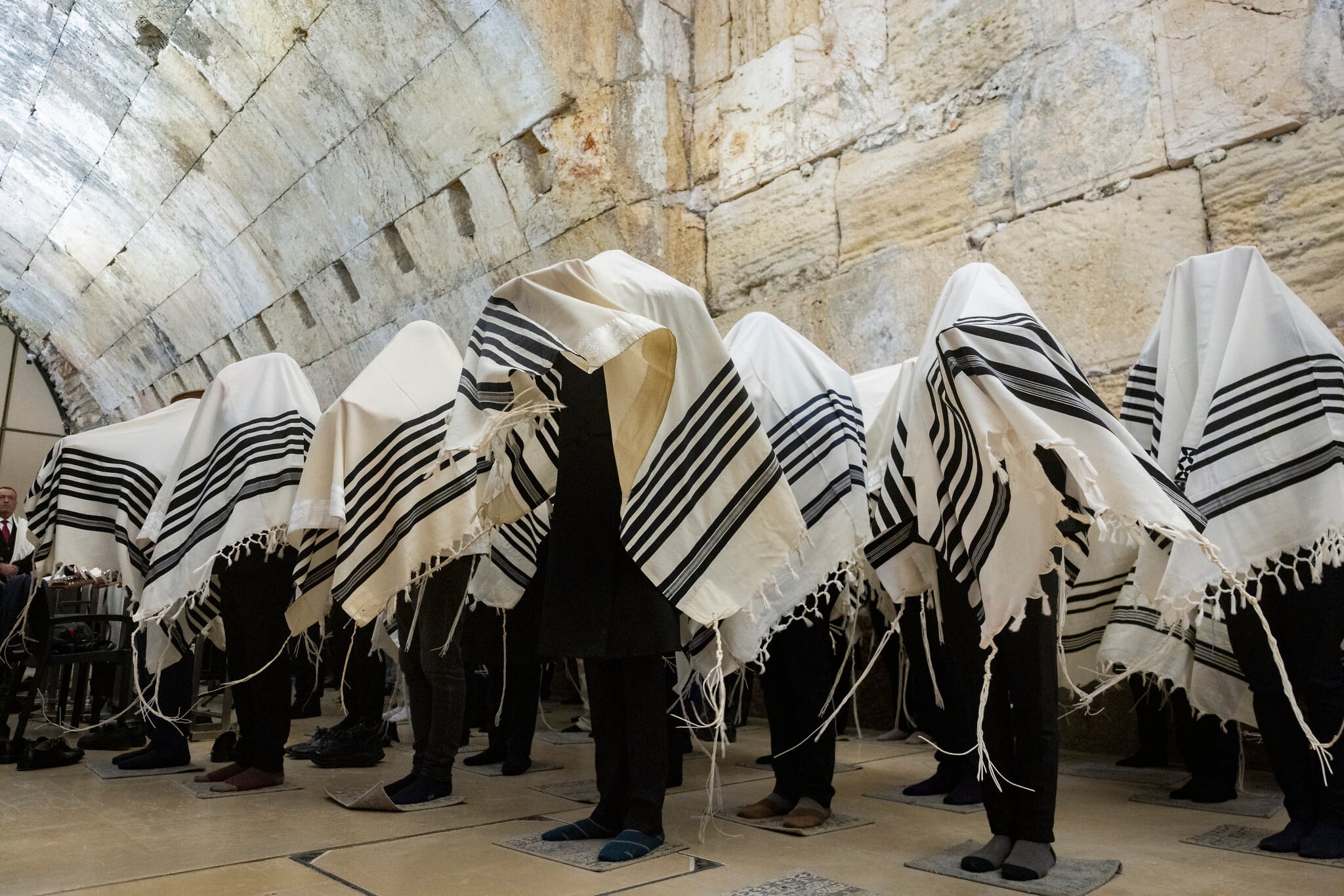
Jewish worshipers take part in the traditional Priestly Blessing during the Passover holiday in an indoor section along the Western Wall in Jerusalem, after prayers were limited to 50 participants due to the ongoing war, April 5, 2026. (Chaim Goldberg/Flash90)
In fact, the court ruled to raise the numbers allowed to gather at the Western Wall and the Temple Mount amid the ongoing war from the Home Front Command’s recommended 50 to 100. And the court’s president Isaac Amit, a prime focus of the coalition’s efforts to demonize and subjugate the judiciary, lamented while hearing petitions on the matter that the Western Wall, the “innermost soul of the Jewish world,” was empty. “Freedom to demonstrate and freedom of worship and religion carry the same constitutional weight,” Amit specified.
That same evening, in a quite astonishing act of political self-harm, the prime minister also announced he had refused to accept the resignation of his spokesman and chief of staff, who was found to have made a series of highly derogatory racist remarks about Sephardi Jews in general and several of Netanyahu’s Likud Party lawmakers of Middle Eastern origin in particular. Only when his own supporters, including the insulted MKs, rose up in protest did the prime minister reverse course.
And finally, most egregiously, Netanyahu filmed an Instagram video that day in which he castigated those who are warning that Israel “has lost the north” amid the battering of northern Israel by Hezbollah rocket and missile fire. Local leaders have been among those issuing that anguished criticism, but the prime minister declared to the camera that Israel is in the ascendant, Hezbollah is being ground down, and that naysayers are amplifying Iranian and Hezbollah propaganda when they ought to be joining “the national struggle” on the road to victory.
Can he not manage even a modicum of empathy for hundreds of thousands of Israelis under nonstop enemy attack, with little or no time to seek shelter — not to mention the rest of the country, responsibly and resiliently either serving in the IDF or doing its best to stay safe and function in a war whose necessity it fully recognizes?