
In the 2025 film Anaconda …
Wait. Come back.
Malcolm in the Middle: Life’s Still Unfair
The Bottom Line
More like ‘Malcolm: Portrait of a Serial Killer’ than you expect.
Airdate: Friday, April 10 (Hulu)
Cast: Bryan Cranston, Frankie Muniz, Jane Kaczmarek, Christopher Kennedy Masterson, Justin Berfield, Emy Coligado, Keeley Karsten, Vaughan Murrae, Kiana Madeira and Caleb Ellsworth-Clark
Creator: Linwood Boomer
This is eventually going to be a review of Hulu‘s four-episode revival Malcolm in the Middle: Life’s Still Unfair. Promise.
So anyway, in the 2025 film Anaconda, the characters played by Jack Black and Paul Rudd are brainstorming for their $43,000 reboot of 1997’s Anaconda when they realize it isn’t enough to just make a low-budget movie about a giant, Jon Voight-devouring snake. It needs to have a theme. They ponder “revenge” and “grief” before Black’s Doug has a brainwave: “intergenerational trauma.”
“I love intergenerational trauma,” replies Rudd’s Griff.
“Who doesn’t love intergenerational trauma?” Doug affirms.
I imagine a very similar conversation taking place as Linwood Boomer pondered whether he actually had anything he wanted to say or do with his new reboot of his beloved Fox comedy, Malcolm in the Middle.
Grief and revenge probably wouldn’t have made any sense as part of the Malcolm in the Middle brand, though the death of Cloris Leachman’s Ida is featured in the reboot’s first episode.
But intergenerational trauma? It’s a surprisingly plausible thematic underpinning for a show about the often nightmarish upbringing of the genius middle child growing up in a family that was simultaneously wholly dysfunctional and allegedly loving. The torment that Frankie Muniz‘s Malcolm experienced growing up was the fodder for over 150 chapters of wacky hijinks, and it’s reasonable to assume that it would have some long-term effects on Malcolm’s life.
Enter Malcolm in the Middle: Life’s Still Unfair, which picks up with the family 20 years after Fox and viewers parted ways with them.
I watched nearly all of Malcolm in the Middle, a tonally and aesthetically adventurous comedy by broadcast standards, but unlike some recent sitcom reboots, which have been able to coast on a wave of nostalgia, Life’s Still Unfair is far from comfort food. It’s bizarrely discomfiting. It’s almost audaciously unpleasant.
If fact, I’d argue that Life’s Still Unfair exposes the misery beneath the regular jokes about sibling misbehavior, body hair shaving, rollerskating and other domestic misadventures, as well as the hollow banalities of sitcom sentiment. I found it to be interestingly sad, vaguely haunting and not the least bit funny, almost a punishment for wanting a reunion with these characters in the first place.
So if that was the intent…Kudos! Full marks.
My suspicion, though, is that it was only partially the goal. My extreme visceral reaction stems from how effective these new episodes are at one thing — underlining intergenerational trauma — but how ineffective they are at finding the reservoir of affection that made the original show simultaneously so exhausting and so likable.
Life’s Still Unfair brings us up to speed on Malcolm, who has created a piece of technology that allows grocery stores to easily transfer unsold inventory to charities. The job itself is nearly irrelevant, fulfilling a basic purpose of being both admirable and somehow disappointing, since it exists primarily as a way for Malcolm to avoid his family. He has decided that he doesn’t like the man he is when he’s around his parents (Jane Kaczmarek‘s Lois and Bryan Cranston‘s Hal) or his siblings, so he bails on family events feigning charity-based emergencies.
Malcolm insists that he’s now happy and healthy, utilizing therapy-speak to raise his teenage daughter, Leah (Keeley Karsten). She is the product of a brief liaison at Malcolm’s first college kegger, and Malcolm says that Leah’s mother ran off three days after Leah’s birth. But based on Malcolm’s terrifying intensity when discussing his current happiness, his approach to parenting and, well, everything else, I think it’s fully a part of the subtext of Life’s Still Unfair that Malcolm killed his baby mama. I’d posit that it’s fully a part of the subtext that Malcolm has killed several people.
Again, if the intent of Malcolm in the Middle: Life’s Still Unfair was to show how an upbringing like the one experienced by Malcolm could turn a brilliant but sensitive child into a serial killer … Kudos! Full marks. (Incidentally, I would have liked the recent Scrubs revival 15 percent more if they’d had a similar realization about Zach Braff’s JD.)
Leah is, herself, a brilliant but sensitive child, which you know because she’s able to address the camera in the same way her dad used to. Malcolm explains that he’s a great single father because he has consistently done the opposite of whatever his parents did. But the way we see it, his parenting style includes passive aggression, gaslighting and lots of guilt, and as a result, Leah seems to have even fewer friends than Malcolm did when we first met him.
Yes, if the intent of Malcolm in the Middle: Life’s Still Unfair was to examine how damaged children become damaging parents themselves … Kudos! Full marks. Leaving aside the question of whether or not Malcolm killed Leah’s mother and disposed of her body in some ghastly way — he totally did — there are legal and logical issues the show can’t be bothered to delve into.
Malcolm has a fairly new girlfriend, Kiana Madeira’s Tristan. They have no chemistry, but the show likes assuring us that they have sex. Until the third episode reveals literally the only detail about Tristan that we ever learn, nothing about them as a couple makes sense. Then it makes sense, but not in the way the show intends for it to. Unless it does.
And the rest of the family? Christopher Masterson’s Francis and Amy Coligado’s Piama are married and he has a reasonably good job, which makes them very boring. Justin Berfield’s Reese has struggled with failed marriages and failed jobs. But he has a standing date to learn basic skills with Hal, which they both seem to enjoy, and he’s too dumb to be a serial killer. So far.
Caleb Ellsworth-Clark has replaced Erik Per Sullivan as Dewey, but he appears exclusively via Zoom, a bizarre and annoying choice. Remember Jamie? Me neither. He was a baby on the show and now he’s played by Anthony Timpano and he’s barely around. It’s safer that way.
Finally, Lois discovered she was pregnant in the series closer and so there’s now a sixth child, Vaughan Murrae’s Kelly, who is non-binary and smart, but not on a Malcolm level.
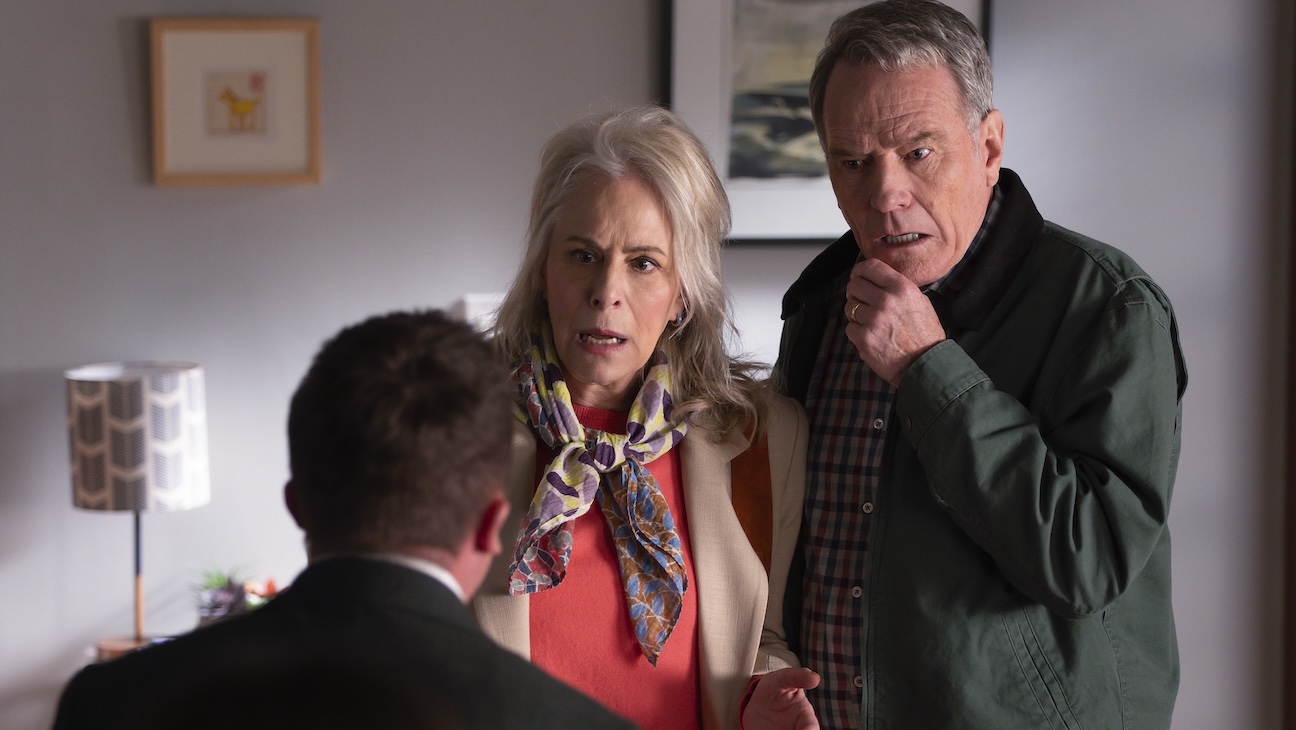
Anyway, Lois wants to make sure that Malcolm comes to the anniversary party she’s throwing, but there are complications — ones that leave Hal wondering if he and Lois were bad parents, which they definitely were, even if you know this show is going to only temporarily indict them as such before backtracking into unearned sentiment. If you think that said sentiment is supposed to seem unearned, Life’s Still Unfair succeeds fully. But this is where I’m no longer convinced that my reaction aligns with what Boomer and director Ken Kwapis intended.
Kaczmarek and particularly Cranston’s performances remain impeccably balanced between manic and affectionate. Cranston was nominated for three Emmys for Malcolm in the Middle but never won, a grave injustice given Hal’s ego-free, unrestrained physicality. Somehow, Hal remains as prone to pratfalls, nakedness and ostensibly dangerous, agile actorly business as ever, leading to the indisputable conclusion that no matter how great he is as a dramatic actor, Cranston’s status as a peer to the likes of Buster Keaton, Peter Sellers, Jerry Lewis and Jim Carrey may be even more significant. That Kaczmarek is still able to counter and ground Cranston is remarkable in its own right.
Muniz and Berfield, both former actors who’ve found success in non-acting fields, try to recapture the youthful charm of their juvenile turns. But as delivered by actors currently in their 40s, their performances come across as strained to the point of breaking. This is perfect for my darker interpretation of the series, but less ideal if you think that Life’s Still Unfair is attempting to evoke emotions other than sadness and discomfort.
The two best additions are Karsten, doing a reasonable approximation of the awkward precocity that Muniz delivered expertly when the series started, and Murrae, who has a monologue in the finale that almost singlehandedly salvages the show’s emotionally clumsy climax.
The reboot finds little for Masterson to do, but at least he’s generally present and welcomely low-key. Despite the opportunities presented by casting/recasting the roles of Dewey and Jamie, neither Ellsworth-Clark nor Timpano has been given anything to do. But hey, at least David Anthony Higgins gets to simulate five minutes of explosive diarrhea, reprising his role as Craig in one of several return appearances that left me saying, “Really? You brought them back for THAT?”
Just I’m not sure if I was supposed to find Life’s Still Unfair as depressing as I did but can’t rule it out, I’m not sure if other viewers will be able to ignore the depressing aspects and find the joy that I was missing in this cast reunion.
In the event of success, there are aspects from these four episodes that could be spun off into a regular series, with or without Cranston and Kaczmarek. Personally, at this point I only want to know where Malcolm buried Leah’s mother’s body and how he outsmarted the local police.