
Researchers have measured the mass of the W boson, a fundamental particle that carries the weak force responsible for radioactive decay, with unprecedented precision, confirming long-standing theoretical predictions.
The result restores confidence in a key part of modern physics and reduces the likelihood that unknown particles are distorting this fundamental measurement.
Inside the count

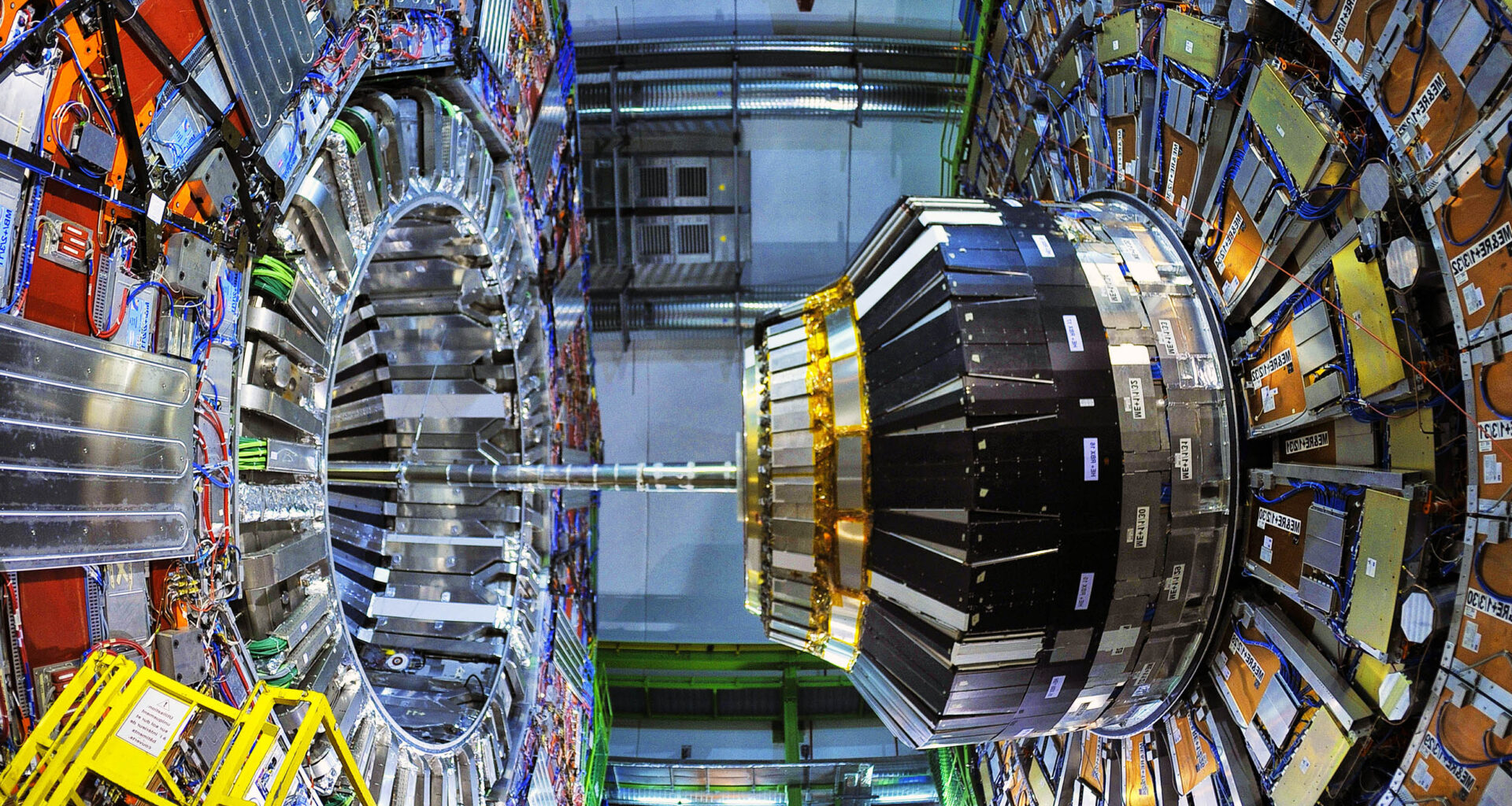
At the Compact Muon Solenoid (CMS) near Geneva, Switzerland, researchers pulled about 100 million W decays from more than a billion collisions.
Working at the Massachusetts Institute of Technology (MIT) Kenneth Long helped turn those tracks into a mass.
That ten-year push by the MIT team targeted the heavy result, which made unseen particles look newly plausible.
Now the story turns from crisis to the deeper question of why this mass matters.
Why W boson mass matters
Inside the Standard Model, physicists’ framework for known particles and forces, the W mass is tied to several other masses.
Mass matters because the W boson, found in 1983, carries the weak force – the interaction behind radioactive decay and stellar fusion.
If some unknown particle nudges this balance through quantum loops, fleeting effects from virtual particles, the W mass should move.
So this measurement was less about one number than about checking whether the theory still holds under pressure.
The outlier problem
Back in 2022, the Collider Detector at Fermilab (CDF) reported 80,433.5 MeV with a 9.4 MeV uncertainty.
Elsewhere, other collider results had clustered lower, so the mismatch looked less like noise and more like a real problem.
According to the global electroweak fit, a combined check of precision data, the expected value sat near 80,353 MeV.
With that number in hand, CMS did not erase the puzzle overnight, but it narrowed the room where any new effect could hide.
Chasing a ghost
Almost as soon as it appears, the W boson breaks apart, leaving researchers to reconstruct a particle that does not stay put.
One product is a neutrino, a hard-to-catch particle that slips through the detector without leaving a direct signal.
Meanwhile, the other product is a muon, a heavier cousin of the electron, whose curved path can actually be measured.
So the team had to infer one missing piece from the visible one, which set up the harder work.
Reading the curves
Inside CMS, a powerful magnetic field bent each muon’s path, and more bend meant less momentum.
Because the parent W boson was also moving, the researchers had to separate motion from mass before trusting any answer.
To do that, they built about 4 billion simulated events and compared those patterns with data from the 2016 collider run.
Only when the simulated and real muon shapes lined up could the particle’s mass be read with confidence.
Making precision stick
Precision lived or died on muon calibration, so the team tuned the detector against well-known particle decays before reading the result.
Those landmarks let tiny drifts in alignment, material, and field strength stand out before they could distort the answer.
Even then, the largest remaining errors came from muon momentum and from the proton’s internal makeup, not from simple counting.
Reaching a total uncertainty of 9.9 MeV put CMS in the same precision class as the widely discussed CDF result.
Where the number lands
When the fit settled, the mass came out to 80,360.2 MeV, just seven MeV above the theory-based global expectation.
Closer agreement with theory left it far from the CDF number that had stirred so much speculation.
Other collider results had mostly landed in the same neighborhood, making the old discrepancy look more isolated once the CMS number arrived.
What it cannot solve
Yet the result does not turn the Standard Model into a finished description of nature.
Dark matter still lacks a known particle inside the theory, and the early universe still produced more matter than antimatter.
Closing the W gap therefore removed one possible crack, but it left the bigger missing pieces exactly where they were.
For that reason, precision work matters because every stubborn agreement narrows where a truly new idea can still fit.
The next measurement
Next, the collaboration plans to add more data and tighten the analysis rather than declaring the case closed.
Future runs can cut statistical noise, while better control of detector alignment and the proton’s internal structure could squeeze the remaining uncertainty.
Still, the group stopped well short of declaring victory because a cleaner measurement could reveal a smaller mismatch later.
“This new measurement is a strong confirmation that we can trust the Standard Model,” Long said.
Order without closure
The new W boson mass did not rewrite physics, but it restored agreement among measurements that must fit together.
By closing in on one disputed number, researchers strengthened the guide they use to hunt whatever still lies beyond it.
The study is published in Nature.
—–
Like what you read? Subscribe to our newsletter for engaging articles, exclusive content, and the latest updates.
Check us out on EarthSnap, a free app brought to you by Eric Ralls and Earth.com.
—–