
The aftershocks of the financial crash are still being felt almost two decades on with the number of owner-occupier loans more than a year behind in repayments standing at 16,115 – or 2.2 per cent of all home loans in the market – according to Central Bank figures released last month.
It’s the lowest level of arrears since the financial regulator started publishing quarterly arrears data in 2009, but it still represents a significant number of households living with enormous debt and often forced to pay the highest rates of interest on loans. Some remain unable to escape the clutches of what are commonly referred to as vulture funds – mortgage services providers used by investment funds for Irish loans acquired after the crash.
For those deep in debt, shame, fear, overwhelm and even the concept of “keeping up appearances” can mean reaching out for help and support can feel impossible.
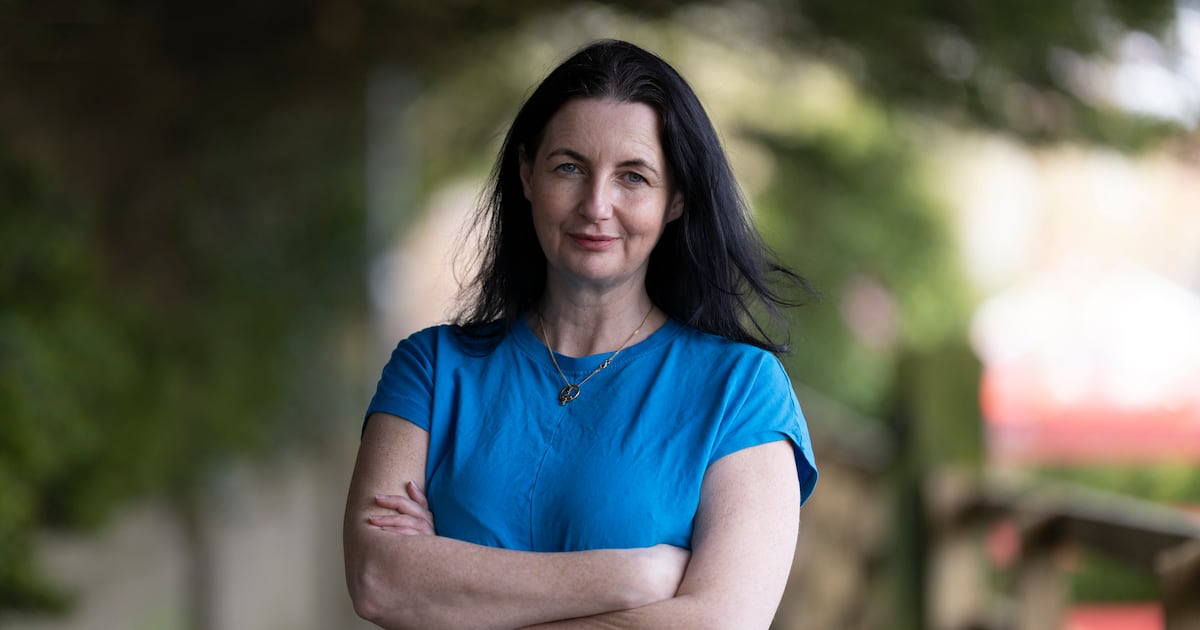
Clinical nurse manager Ann-Marie Gaynor, from Longford, knows what it’s like to be in debt. She was still a college student and was not in employment when she got her first credit card. It was during the Celtic Tiger years, she says. “When I reached the limit, it was €500 at the time, they [the bank] sent me out a letter to say they’d increased my limit to €700, €900. And it kept going like this until eventually I was €10,000 in debt to credit cards.”
As time passed, Gaynor says: “I was earning €20,000 a year, because I worked part-time at the time. My children were small. The recession hit. I lost my job and I became separated, I had three children under the age of seven and I had debt I just couldn’t pay.”
The impact on her health was significant: “It was one of the darkest times emotionally I ever had.” A woman of average height, she says: “I was just under seven stone. I lost so much weight with the huge amount of stress involved.”
The debt inevitably affected her family’s quality of life. Her children could not do afterschool activities; “We had no holidays.” She takes some comfort in the fact that they were very young then and she was able to distract them with “games nights” or “movie nights”. It would have been avery different situation had they been teenagers then, she ventures.
“It was very hard to talk to friends about it because they all appeared to be doing fine. I didn’t feel I had anyone I could realistically sit down and talk to about it.”
[ Irish public ‘emotionally checking out’ after succession of crisesOpens in new window ]
There was shame about her situation, she says, and also a feeling that nobody else could understand. Her parents knew and tried to help with childcare, but she didn’t even tell her siblings.
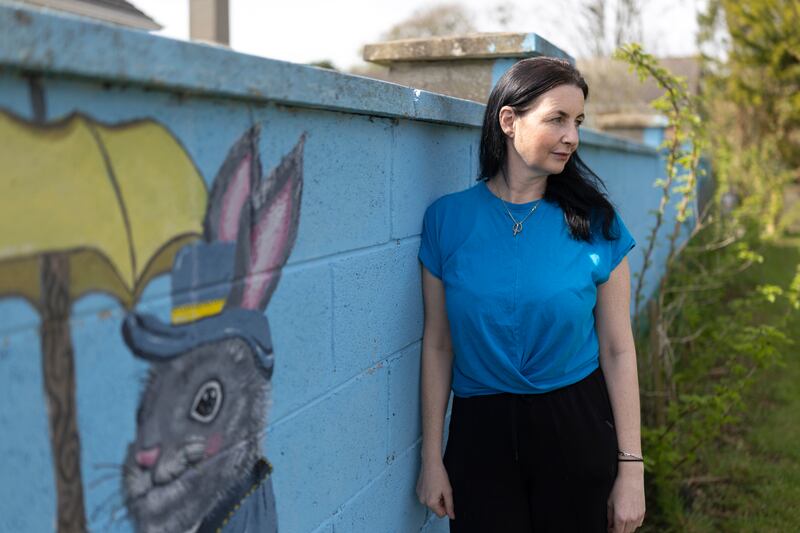 ‘It was very hard to talk to friends about it because they all appeared to be doing fine,’ Gaynor says. Photograph: Chris Maddaloni
Gaynor restricted essentials for herself as she tried to find her way out of debt. “I would have cut back on a lot of food for myself. My children where in childcare so I knew they were getting their breakfast, lunch and tea. Or my parents used to collect them from childcare and they’d give them their evening tea. But I wouldn’t eat. I wouldn’t buy much shopping because I was trying to save money.”
“Things like dentist’s appointments didn’t happen,” she adds.
She contacted the Money Advice and Budgeting Service (MABS) after her mother heard a radio advertisement about the organisation offering free support to those in problem debt. MABS took over all communications with the financial institutions. “It took a huge amount of financial stress off me,” Gaynor says.
“It was the first time I could breathe. I was going to lose my home. My home was in positive equity because I had paid extra on my mortgage … which meant the banks didn’t want to help me because my house was worth something to them”. I remember crying on the phone and going: ‘But I’ve been such a good customer. I’ve always paid on time. I’ve always paid extra’, and the woman on the phone goes ‘actually that’s why we can’t help you’.
“While everyone else was getting interest only or breaks in their mortgage, they refused to give me anything.” Her credit cards were with another bank, which she says worked with MABS to break down her payments to €10 per month until she completed college following a return to education.
Clear of debt now, the experience inspired her to set up her Instagram account Irish Budgeting Mammy to speak openly about money matters. She says she occasionally asks herself “Why am I putting this out there?” but says messages she receives from others have convinced her open discussions are important. Now she encourages people to “get used to looking at your figures. So many people are afraid of looking at their bank accounts. They’re afraid to see what the balance is … and reach out for help if you need it. Go to MABS.”
‘I was admitted to a psychiatric hospital. It nearly cost me my life’
— Michael Cronin
Michael Cronin’s debt problems began during the last recession when he started to fall behind with his mortgage payments. He admits to burying his head “a little bit”. He was, however, “pursued very aggressively by the banks,” he claims.
“Somebody came to our house one morning before I was dropping my girls to school. Somebody knocked on our door looking to speak to me.”
Trying to cope with his debt was frightening, he says. “I can still vividly remember sitting in my car … I pulled in at the side of the road and took one of the calls. And I remember the lady on the line saying to me ‘do you know if you don’t pay your mortgage we can take your house from you’.”
“Something like that really hits you hard,” he says. Cronin, who is a sales representative from Cork, had become self-employed after his previous employer had run into difficulties. “I just didn’t have enough money to start off a new business and then I was on the back foot all the time.” Cronin says the situation had a “devastating effect” on him. “I wanted to protect my wife. I wanted to protect my children. And I didn’t speak to anybody about this because I was embarrassed. And with my own background and the childhood I had, I didn’t want the same for my children.”
“I thought I could deal with it. We were about two weeks away from a repossessing court date and my wife knew nothing about this.”
Cronin describes having to complete a “statement of means” because he was in arrears with a bank. “You literally have to account for every penny that comes into the house. You have to account for it going out. I remember sitting in the car park … in Mahon Point shopping centre. And I was supposed to fill out another one of those. I took out the envelope and I just said ‘no I can’t do this any more’. I would have had a lot of suicidal thoughts prior to that day. I just sat there and I thought ‘no, today’s the day. Everything just has to end’.”
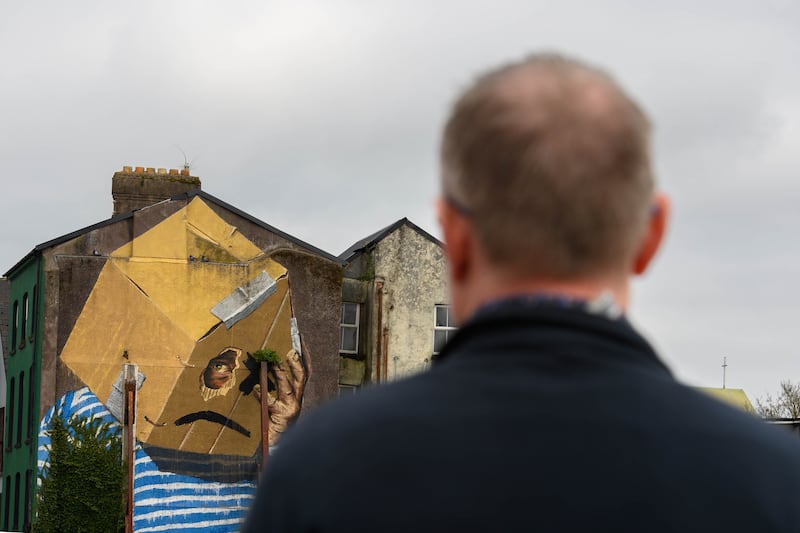 ‘We were about two weeks away from a repossessing court date and my wife knew nothing about this,’ says Michael Cronin, pictured in Cork city centre. Photograph: Daragh Mc Sweeney/Provision
“Thankfully”, Cronin didn’t act on this thought, and instead called his doctor: “I was admitted to a psychiatric hospital. But it nearly cost me my life.”
He estimates his debt was between €50,000-€60,000 and says he asked the bank to extend the term of mortgage, adding in the arrears, which would make repayments more manageable. “They kept refusing that and wouldn’t do it. Everything changed as soon as I went into hospital. They completely backed off.”
“It took my wife ringing them to say, you’ve nearly killed my husband,” he says.
Cronin’s wife dealt with the situation as he recovered, “which was very tough as well, and I don’t know if that’s because I’m a man”, he says. There is shame about being in debt, he feels. “We don’t talk about money.” “If you can’t afford to pay your €1,000 mortgage, my perception was people were going to think I’m a failure. I married my wife and her parents would have had the assumption I would look after her … and in my head I had failed because now [there was a] threat our family home is being taken from us.”
He continues to repay the money he owes through an extended-term mortgage.
Ireland is a nation of savers with €170 billion on deposit in banks, credit unions and fintech start-ups, but that’s only half the story and it could easily be used to paint a misleading picture of the State’s personal finances.
The Central Bank’s recent report, Frontier Statistics: Household Debt, is an “exploration of household loans” and suggests most of the money people owe is tied up in their homes, with owner-occupier mortgages of just more than €107 billion outstanding. A further €8 billion has been loaned out to buy-to-let investors with €35 billion made up of other loans.
The Central Bank’s figures, while undoubtedly authoritative, do not include debts accrued by hundreds of thousands of people struggling to pay their gas and electricity bills, and there are also growing numbers spending money they don’t have through so-called ‘buy now, pay later’ schemes.
Behind the numbers are real people struggling to make ends meet and forced into debt to pay bills, put food on the table or send children to school. Many are frightened that the conflict in the Middle East and its impact on the price of everything is only going to make life harder.
It’s worth noting, however, that we are still a long way away from the precarious situation after the crash, when the reckless lending practices of banks imperilled the financial wellbeing of hundreds of thousands of people and saw many more mired in negative equity on homes they could barely afford to live in.
Then there’s energy debt.
Around 320,000 domestic customers couldn’t afford to pay their electricity bills in the run up to last Christmas, according to figures from the Commission for the Regulation of Utilities (CRU).
The number rose to 319,459 compared with 264,458 in December 2024 – an annual increase of nearly 20 per cent with the percentage of domestic electricity customers in arrears for more than 90 days in December standing at 8 per cent.
[ The Irish banking system is not working – and that rarely ends wellOpens in new window ]
The average amount owed was put at €466, and while that might not sound like a lot for many, for someone who can’t make ends meet at the best of times it can seem like an almost insurmountable mountain to climb.
Ursula Collins is the MABS regional manager in Cork with first-hand experience of dealing with people in debt for many years and she is fearful things are getting worse.
“It’s just a really challenging time globally and people hear everything is going to be more expensive and they’re going to have even more problems so we just want to support people and acknowledge that.”
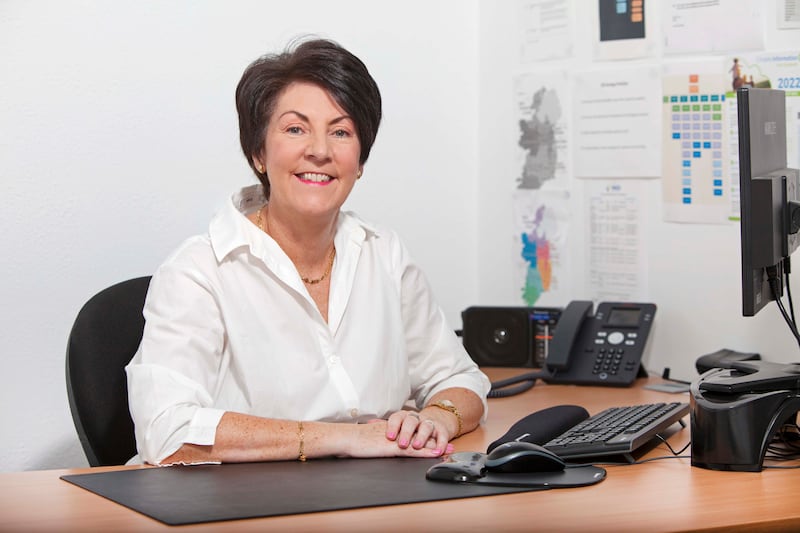 ‘Buy now pay later’ schemes are ‘bringing a whole new generation of younger people into the debt trap,’ says Ursula Collins, regional manager of south Munster’s MABS branch. Photograph: Diane Cusack
She says a key area in the medium term will be the split mortgages commonly deployed at the height of the housing crisis which saw repayments on a part of the loan put on ice.
“There are several thousands of them coming down the line in the next few years and it is a significant issue. There are a lot of people who took them on during the crash without a plan for when that debt came to maturity.”
Away from mortgages, Collins says arrears on gas and electricity bills weigh heavily on around 50 per cent of those MABS deals with.
“We’ve seen some staggering bills in excess of €10,000 due. Sometimes it can be just too much for people. They will come in to us with disconnection notices or huge bills and say they have been prioritising putting food on the table.”
She says in the wake of the Covid pandemic the profile of MABS clients shifted with around half of those it helps currently working. “I’d say we’re probably even tipping into the majority of our clients are working people.”
‘Buy now, pay later’ schemes are also proving to be increasingly problematic. “Too many people don’t realise that it can be a really high-cost form of credit if you don’t make the payments. And they click on it when shopping online and think they can almost forget about it and it is bringing a whole new generation of younger people into the debt trap.”
She also expresses concern about the personal finance messaging that can be found on some social media platforms and warns that leaning heavily on so called ‘finfluencers’ who may have no professional training, no regulation and no responsibility can lead people down the wrong paths when it comes to managing their money. “The problem is many influencers are not regulated and while some might provide sound information there’s lots of people out there doing it for the clicks.”
Collins notes that some people have always found it hard to deal with debt and it affects their self-esteem, feeling of worth, and ability to cope. “We have seen a rise in the levels of mental ill health that people are reporting when they come to us and they are saying they can’t cope, can’t sleep, can’t do their jobs properly and are snapping at everyone.”
Leinster-based Hayley’s* debt is cumulative, she explains, but says her head is firmly “in the sand”. “The credit card was first. It was joint debt [with her husband] but the credit card is in my name. First a holiday got put on it, and then a big car service and then all of a sudden the limit’s reached. You try your best to meet the repayments and then one or two slip and then it’s a bigger mountain again.”
Her work circumstances changed and her personal loan was next to run into difficulty. She contacted the bank about falling into arrears with this loan. “They did give me a reprieve where it was interest-free for a while … it was just getting back to repayments after that reprieve proved impossible,” she says.
“I’ve been very close to ringing MABS on a few occasions. I think it’s just a pride thing on top of everything else. We know we don’t have great saving practices. We know what we need to do. It’s just doing it.”
Hayley says she has just learned that her loan account has been sold. “I don’t know what’s waiting for me. They must have sold it to a debt collector.”
 Crash, part one: Brian Cowen and the unravelling of Ireland
It’s a joint decision with her husband to keep the debt in her name only, she explains, so that one of them has a “squeaky clean” credit record. “We need that for the mortgage. We need that for car loans … We’re trying to meet those repayments together as best we can. But all of that is in his name.”
She has two children, who are too young to be aware of their parents’ financial situation. “They’re just worried about where their next holiday is coming from and whether they get to do their camps. All of that is maintained. The lifestyle is maintained at the expense of the debt,” she admits.
She estimates her debt is about €18,000. “I would worry about it. Especially now with this next step – what is waiting. They did notify me at the end of March they’d be closing the [loan] account.”
She doesn’t share her money difficulties with friends or family. Why? “The pride of keeping up appearances. We have a group of friends that has a particular lifestyle, particular clubs, particular memberships … we’re at a level of income where this shouldn’t really be an issue perception-wise.”
‘There is shame. I feel cheated. I will never be in a position now to buy a home for my children’
— Sorcha*
When Sorcha* was 25 she bought a property during Ireland’s property boom of the 2000s. She had just returned from travelling and approached a bank which approved her for a €180,000 mortgage. “At the time they were giving out 100 per cent mortgages. I found an apartment that was on sale for €174,000,” she says.
The apartment was a new-build and while Sorcha was waiting for its completion, she met someone and moved in with him. “We talked and we said ‘sure there’s no point in having two houses. Why don’t we sell my one?’ I’d say we had that conversation on a Wednesday, and then on a Friday the bottom fell out of the market. There wasn’t a thing selling.”
The apartment had structural issues and sewerage, she says. “The builder had gone bust and left the country,”, leaving her with a property that was unfit to rent. “I had a baby which meant money was tight, so we decided to keep one roof over our heads and just let my house fall into arrears.”
The debt hung over Sorcha “like a black cloud”. When an assets management agency took over she began to really feel the pressure. “Phone calls would come. And then letter and letter and letter … eventually they turned into court documents.”
During one court date Sorcha pleaded with the judge to take the apartment. “I was pregnant with my third child, and I had actually left my partner at this point, so I was now homeless.” She moved back in with her mother.
Surrendering the apartment did not remove the debt. “All they did was sell the apartment and then the difference is what I owed.” The apartment was sold for €35,000 leaving her with a debt of between €130-€140,000.
[ We are told Ireland is getting wealthier – so why are households not feeling it?Opens in new window ]
“Nobody wants to hear your sob story,” she says, explaining her relationship with her former partner had involved financial coercion.
She sought advice from MABS who she said advised that bailiffs could come and remove her belongings. Living in social housing with three children she had little of value for them to take. “The only thing I owned was a car, and the guy in MABS said they could potentially take my car … He said things to me like ‘don’t leave your car parked outside your house because vans could come and take your car. There was often times if I saw a white van I’d [wonder] ‘God is that them?’”
Others suggested she made small payments against her debt. “People would say ‘throw them 10, throw them 20[euro]’. I didn’t have it. I would literally be waiting until my children’s allowance came in to buy shopping,” she says.
When Sorcha’s situation began to improve, and having received a letter to say she’d be taken to the High Court, she sought to actively manage the debt through a payment plan. She was shocked by the response. She says she was told: “We would like to offer if you pay €15,000 full and final, we’ll close this case”. “I could cry now thinking about it”, she says. “I didn’t have it but I knew that my family would get together and help me.” She settled last year.
“There is shame. I feel cheated. I will never be in a position now to buy a home for my children. We’re in social housing and I’m so lucky … but I never lived a day in that apartment. I never slept a night in it.”
Last year the Economic and Social Research Institute found many low-income households had been forced to engage in “high-risk” measures to make ends meet, including cutting day-to-day spending on household essentials such as food, clothing, electricity and heat, taking on more debt and building arrears on utility bills, rent or mortgage repayments.
The report noted that these actions “will have a lasting detrimental legacy”, particularly among households with children.
*names have been changed
 How to finally get on top of debt: Ann-Marie Gaynor’s story
MABS can be contacted through its national helpline 0818 07 2000, by e-mailing helpline@mabs.ie or at local offices.
Samaritans can be contacted on freephone 116 123 or by texting HELLO to 50808. Pieta Freephone: 1800 247 247 or text HELP to 51444. Visit www.yourmentalhealth.ie