
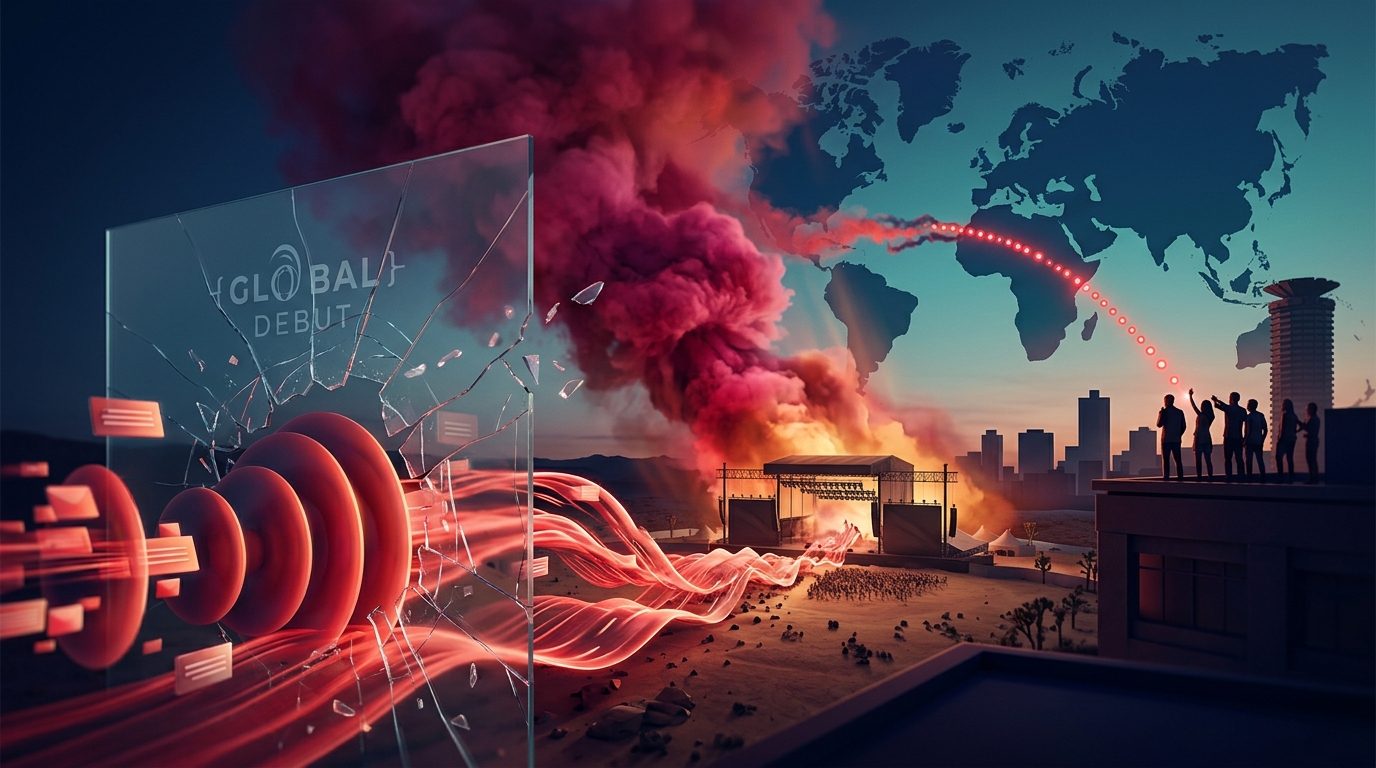
Minutes before the global girl group KATSEYE was set to take the main stage at Coachella, a high-fidelity video teaser intended for the post-performance reveal surfaced across anonymous social media channels. The leak, which appeared to be an unmastered cut of their upcoming project, sent shockwaves through the festival grounds in Indio, California, and digital fan communities across the globe, forcing the group’s management at HYBE and Geffen Records to initiate an emergency contingency plan.
For the six members—Sophia, Manon, Daniela, Lara, Megan, and Yoonchae—the incident represents more than just a security breach it is a direct challenge to the meticulous, high-budget, K-pop-inspired marketing strategy that has defined their rise since 2024. The incident has effectively dismantled the carefully curated rollout schedule that was designed to capitalize on the Coachella moment, shifting the conversation from a celebratory debut to a frantic investigation into internal security protocols. For an artist collective built on the promise of a global, diverse pop identity, the leak highlights the vulnerability of the modern, hyper-connected entertainment machine.
The Anatomy of a Digital Breach
The leak originated via a seemingly dormant fan account on X, quickly migrating to Telegram and TikTok, where it garnered over four million views within the first hour. Digital forensic analysts monitoring social media traffic suggest the video was likely exfiltrated from a private server rather than hacked via public channels, pointing to a potential insider threat. The teaser, which featured snippets of an unreleased, high-production music video and brand partnerships, was intended to anchor the group’s post-Coachella momentum.
In the music industry, such leaks are catastrophic. They devalue months of strategic expenditure and disrupt the synergy between on-ground festival performances and online audience engagement. Industry experts estimate that the premature release of such assets can reduce initial streaming performance by up to 20 percent, as the algorithmic momentum is fragmented rather than concentrated into a singular, synchronized moment. For HYBE, a label renowned for its tight control over content, the breach is a significant reputational blow.
From Indio to Nairobi: The Ripple Effect
While the Coachella stage remains the physical epicenter of this crisis, the shockwaves are being felt thousands of miles away in Nairobi. Kenya has emerged as one of the fastest-growing markets for K-pop and K-pop-adjacent music in Africa, with streaming services reporting a 140 percent surge in consumption among local Gen Z demographics over the past three years. For young Kenyans, the digital nature of K-pop engagement means that a leak in California is, for all intents and purposes, a leak in Westlands or Kilimani.
Local fan clubs and cover dance crews in Nairobi, who often organize synchronized viewing parties for such performances, found themselves at the center of the controversy. The leak disrupted the localized viewing strategies of these groups, who had planned social media campaigns to coincide with the official reveal. The event underscores the reality of the modern pop music economy: distance is no longer a barrier to the impact of viral content. Kenyan fans, who have proven their digital organizing power through events like the K-pop Sessions at the Nairobi Comic Con, are now grappling with the same frustration as fans in Los Angeles, proving that the digital pop landscape is truly borderless.
The Strategic Pivot: Leak Jujitsu
In response to the chaos, management teams are often forced to engage in what industry insiders call “leak jujitsu”—a reactive strategy that involves pivoting from an original launch plan to an immediate, damage-control release. Rather than attempting to scrub the internet, which usually triggers the Streisand effect and amplifies the leak, teams often opt to drop the official content early, effectively rendering the pirated version obsolete by outperforming it with higher-quality, legitimate assets.
The following table illustrates the typical strategic shifts required during such a high-profile media crisis:
Phase 1: Stabilization. Immediate cease-and-desist orders issued to platforms hosting the high-definition versions of the leaked file.Phase 2: Narrative Control. Using the artists’ social media platforms to acknowledge the leak with humor or a “call to action” to shift focus back to the official performance.Phase 3: Accelerated Deployment. Bringing forward the global release window of the actual content to match the leaked material’s reach.Phase 4: Forensics. Investigating the breach source to prevent future compromises, often involving third-party cybersecurity firms.The Human Cost of the Global Stage
Beyond the spreadsheets and marketing budgets, the leak imposes a tangible burden on the performers. KATSEYE, a group established as a bridge between the intense training regimens of South Korean idol culture and the creative freedom of the American pop market, is particularly vulnerable. The members have spent the last two years navigating a high-pressure environment, as documented in various industry features. For these young artists, their work is not just a commercial product it is the culmination of years of labor, identity formation, and cross-cultural navigation.
The leak serves as a reminder that in the rush to globalize pop music, the industry often overlooks the human element of security. As HYBE and Geffen attempt to navigate this disruption, the focus must inevitably shift toward protecting the integrity of the creative process. Whether this incident results in stricter digital silos or a change in how global groups are marketed, one thing is certain: the era of the tightly controlled rollout is becoming increasingly difficult to maintain in a world where every fan is a potential distributor. As the music community waits to see how the group responds on stage, the incident remains a stark lesson in the fragility of modern digital fame.