
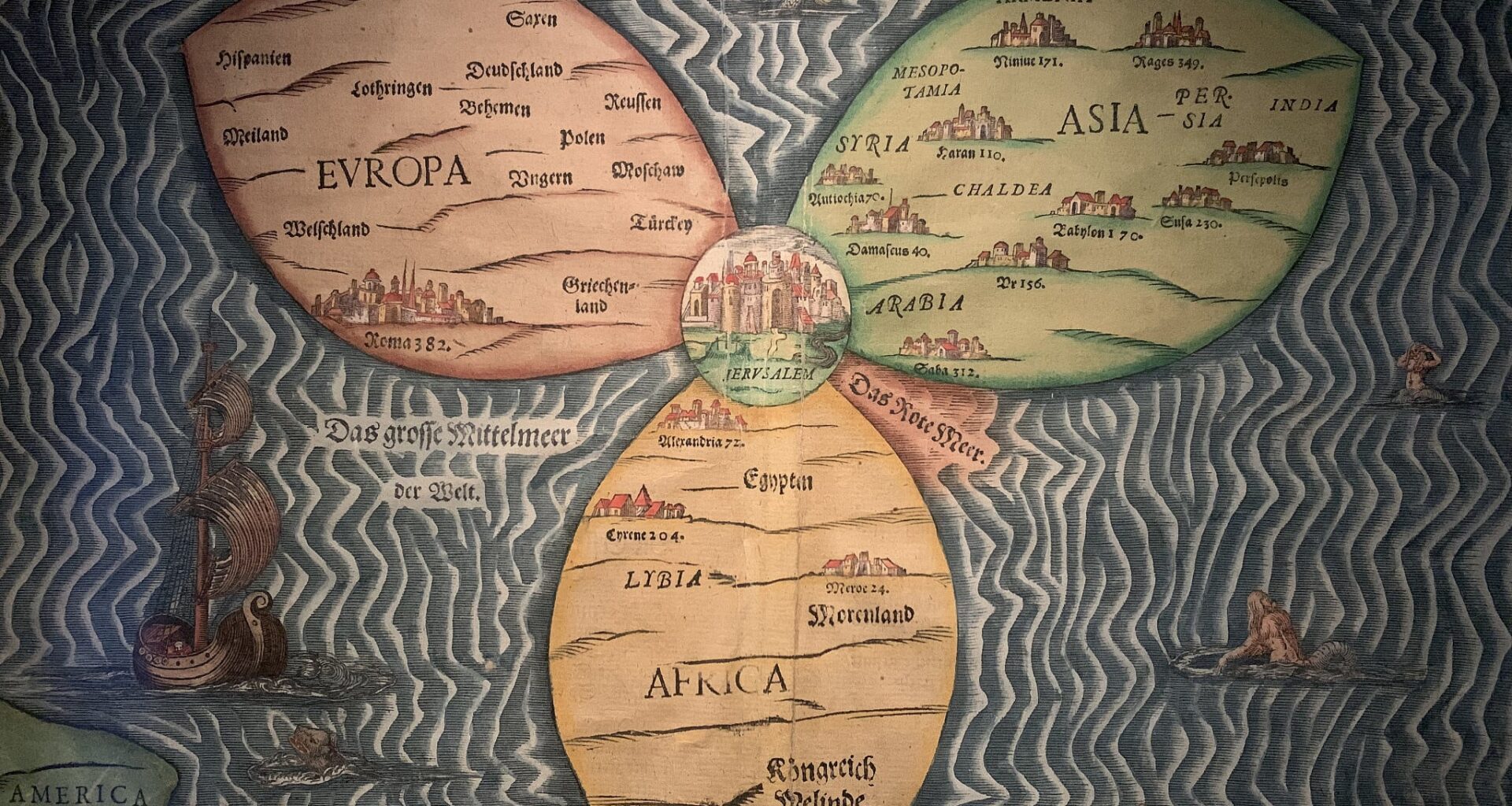
Israel occupies a disproportionate amount of the world’s attention. It is debated relentlessly on university campuses, dissected in international courts, and fought over in the comment sections of every major social media platform. Yet the subject of this intense, unyielding scrutiny is rarely the actual nation located on the eastern shore of the Mediterranean. The Israel the world talks about is an imagined place.
The gap between the Israel of global discourse and the physical reality of the country has never been wider. Most people around the world formulate their understanding of this land through an incredibly narrow keyhole. Traditional news coverage inherently strips away nuance, reducing a complex, multi-layered society to a continuous loop of crisis alerts, political gridlock, and violence. Social media algorithms compound this distortion. They reward outrage and polarization, serving users a flattened, binary version of reality designed to trigger engagement rather than impart understanding. To truly grasp what is happening in Israel, especially right now, requires breaking out of that digital ecosystem and setting foot on the ground.
This phenomenon of imagining Israel is not a modern invention. For two millennia, Israel and the broader Holy Land have played a central, anchoring role in the imagination of Western civilization. It has been the geographic canvas for eschatology, a sacred focal point for religious beliefs, and the ultimate symbol of spiritual redemption. Crusaders, pilgrims, and Christian and Muslim colonial empires did not merely want to visit or conquer a strip of land; they wanted to possess a concept. The physical reality of the region, including the actual people living there, was often entirely secondary to what the land represented in foreign theological frameworks. There was always a “Heavenly Jerusalem” that obscured the dusty, complicated earthly one.
Today, that theology has largely been replaced by political ideology, but the psychological mechanism remains identical. It is remarkably easy for the world to misunderstand Israel because the world has been conditioned for 2,000 years to project its own internal realities onto it. Western observers frequently map their local cultural struggles onto the Middle East. They project their specific histories of colonialism, their domestic racial dynamics, their hopes for utopian justice, and their deepest historical fears onto the Israeli-Palestinian conflict.
Israel functions as a geopolitical green screen. Half the world’s population projects its own narrative onto this tiny territory. When you view a country merely as a symbol, you strip its actual inhabitants of their agency, complexity, and humanity. You stop seeing Israelis and Palestinians as real people navigating a profoundly difficult, often tragic reality, and instead treat them as avatars in a global morality play. This projection is precisely why the international discourse surrounding Israel is often toxic, irrational, and detached from facts on the ground.
The urgency to bridge the gap between the imagined Israel and the real one is acute right now. The events of the past few years have hyper-accelerated global polarization. The digital versions of Israel currently being consumed abroad are either idealized beyond recognition by its most ardent defenders or demonized beyond reason by its detractors. Neither extreme serves the truth. Neither helps to resolve the conflict or support the people actually living through it.
The only effective antidote to this collective global hallucination is physical presence. A personal visit offers something no article, podcast, or algorithmic feed can provide: friction with reality.
When you walk the streets of Tel Aviv, Jerusalem, or Haifa, the simplistic, imported narratives immediately begin to fracture. You encounter a society that is messier, more diverse, more traumatized, and more resilient than the two-dimensional villain or hero portrayed abroad. You cannot sustain a monolithic view of Israel when you are physically confronted by the demographic reality of secular Jews, Haredim, modern Orthodox, Arab Israelis, Druze, and Bedouin sharing the same pharmacies, hospitals, beaches, restaurants and highways.
This is not a tourism pitch designed to gloss over the nation’s severe challenges. Achieving a realistic understanding means seeing Israel for better or worse. It means witnessing the profound, sometimes bitter internal divisions within Israeli society. It requires confronting the physical and psychological toll of a prolonged, grueling conflict. A real visit means seeing the security infrastructure, understanding the omnipresent military footprint, and having uncomfortable conversations with people whose political views or life experiences you might find difficult to digest. You must be willing to let the reality disappoint your ideals.
But a physical visit also forces you to encounter the undeniable vitality of the place. You see the deep solidarity of a society that routinely mobilizes to support its own in times of unprecedented crisis. You witness the paradox of a cutting-edge technological economy operating alongside ancient, unyielding religious traditions. You realize that the people here are not geopolitical abstractions; they are individuals trying to build lives, raise children, and find normalcy in an incredibly unforgiving neighborhood.
Relying on external interpretations of Israel is an intellectual abdication. To hold a fervent opinion on this country without having felt the heat of its sun, heard the frantic cadence of its languages, or looked its citizens in the eye is to settle for a fiction. The world will likely continue to project its anxieties and hopes onto this narrow strip of land. But you do not have to participate in that illusion.
Book a flight. Step off the timeline and onto the tarmac. Come with your critiques, your hard questions, and your deep skepticism. But come. The real Israel is waiting to be understood, and it looks nothing like the one on your screen.
A veteran of the Israeli Defense Force (IDF) reserves and former paratrooper, Uri Goldflam is Scholar-in-Residence at Travel Trailer Israel and an expert on the geography, history, and the ancient religions that transect the Holy Land in the nation of Israel. Born in Jerusalem, Goldflam was raised in the United States and Israel. He earned his undergraduate degree in International Relations and Judaic Studies, as well as a master’s degree in Foreign Policy and Diplomacy, from the Hebrew University in Jerusalem. Equally engaging and informative, Goldflam brings a professor’s knowledge to his presentations as he addresses and explains the armed conflicts that currently dominate the Holy Land, international news, and the religions of Judaism, Christianity, and Islam.
Uri serves as a licensed guide to a variety of groups and delegations including, Churches, families, prime ministers, members of congress and senior executives. Serving as a combat platoon sergeant in a paratrooper unit, Goldflam remained in the IDF’s Paratrooper Reserves for over 20 years, and also served as an elected member of the Tzur Hadassah town council where he resides with this family in the mountains outside of Jerusalem.