
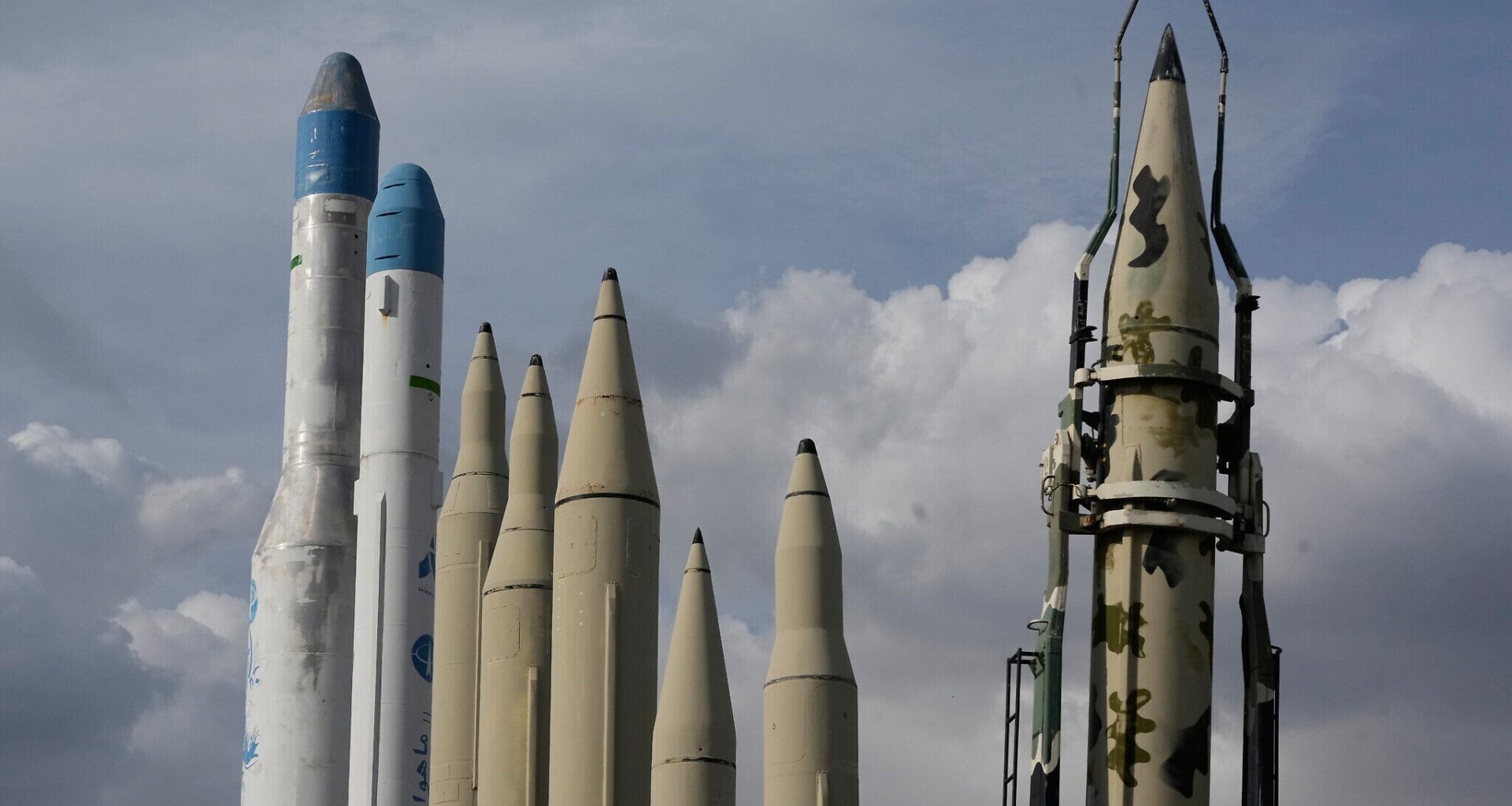
US officials assess that Iran retains thousands of missiles it can fire by recovering launchers buried underground, and they are concerned Iran will work to rebuild its ballistic capabilities during the break in the fighting with the US and Israel, the Wall Street Journal reported Friday.
An Israeli official cited by the Kan public broadcaster also said Iran was deploying bulldozers to repair entrances to underground missile storage facilities that had been struck by the Israel Defense Forces.
The damage that the US and Israel have inflicted on Iran “is not irreparable, and in the absence of a significant agreement, the IDF will have to go back to [fight] Iran,” the unnamed Israeli official was quoted as saying.
The US and Israel launched a bombing campaign on Iran on February 28 in a bid to destabilize its regime and destroy its ballistic missile and nuclear programs. Iran responded with missile and drone strikes across the region.
US Defense Secretary Pete Hegseth told reporters this week that the bombing campaign had “functionally destroyed” Iran’s missile program and rendered its military “combat ineffective for years to come.”
Get The Times of Israel’s Daily Edition
by email and never miss our top stories
By signing up, you agree to the terms
However, US officials cited by the Wall Street Journal said Iran could dig out or fix many of the launchers that were damaged or buried underground in the US-Israeli bombing campaign.
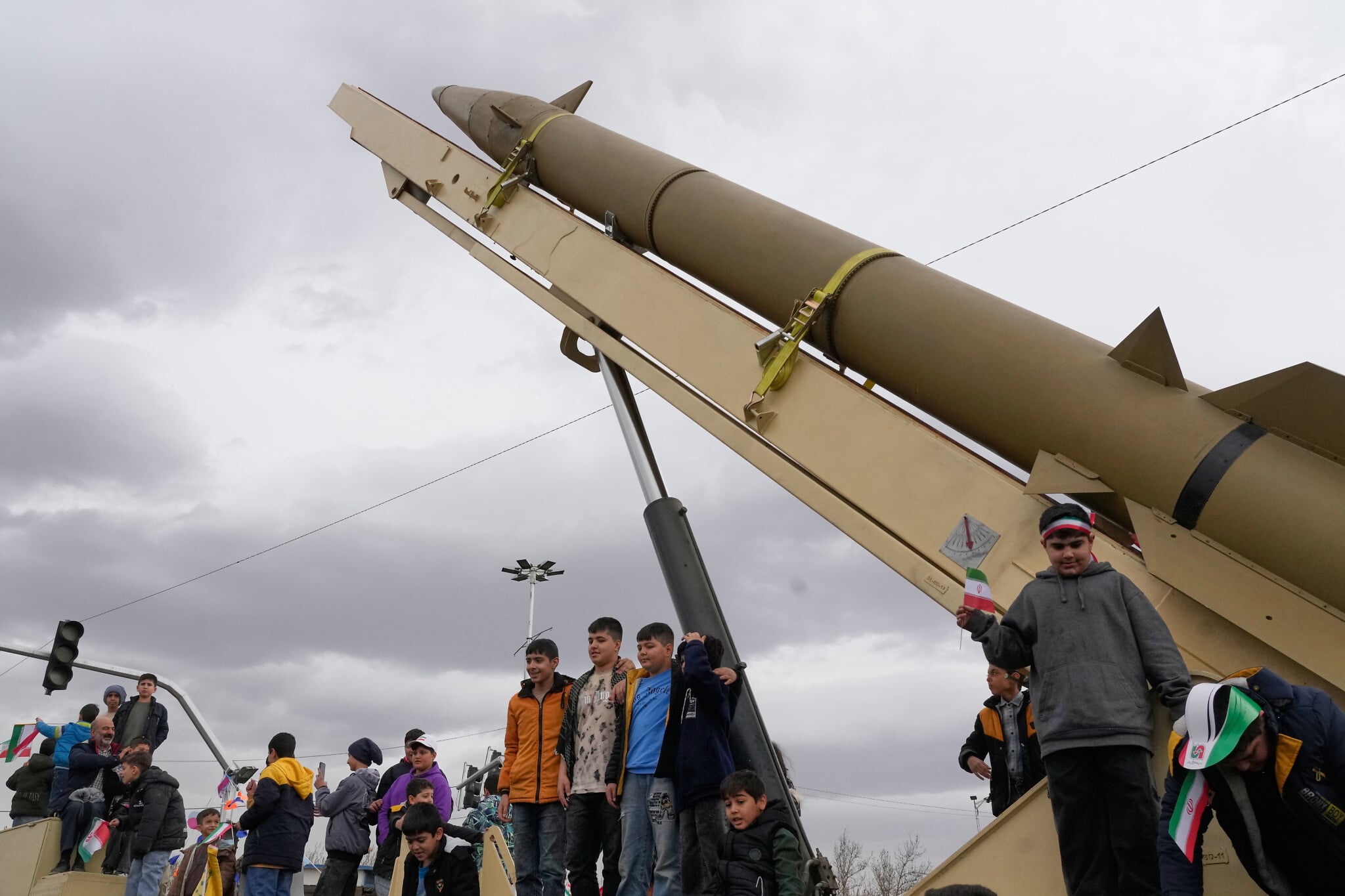
Boys stand on a launcher of an Iranian domestically built missile during an annual rally marking the 1979 Islamic Revolution at the Azadi (Freedom) Square in Tehran, Iran, on February 11, 2026. (AP Photo/Vahid Salemi)
Iran also has thousands of medium- and short-range ballistic missiles that it can retrieve from storage spaces above and below ground, despite about half of its existing stockpile being used up or destroyed in strikes, according to US and Israeli officials cited by the Journal.
Additionally, Iran still has a small stockpile of cruise missiles that it could fire at ships in the Persian Gulf or US troops who try to seize the Strait of Hormuz, said US officials cited by the Journal.
Furthermore, US officials told the Journal, while over half of Iran’s drone stockpile has been used up or destroyed in strikes, it could buy more from Russia.
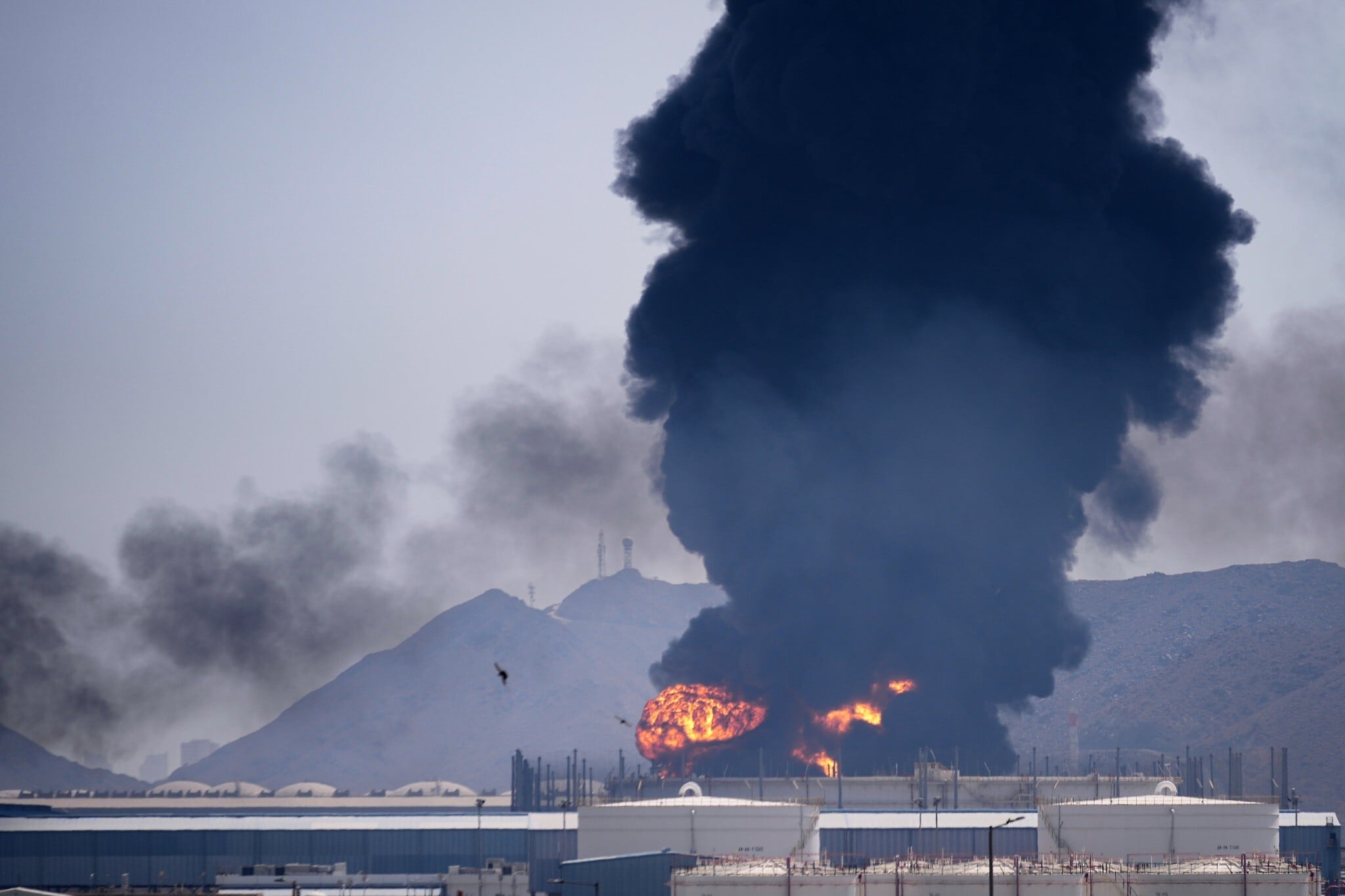
A fire and plume of smoke rise after, according to authorities, debris from an intercepted Iranian drone struck an oil facility in Fujairah, United Arab Emirates, March 14, 2026. (AP Photo/Altaf Qadri)
According to the IDF, Israel destroyed about 200 of Iran’s estimated 470 ballistic missile launchers, and another 80 were deemed inoperable after the entrances to their underground storage facilities were struck.
The IDF has said the most significant blow of the bombing campaign was to Iran’s weapons production industry, and that Iran cannot currently produce any more missiles.
The Wall Street Journal said Iran will have to rely on Russia and China to rebuild its missile program.
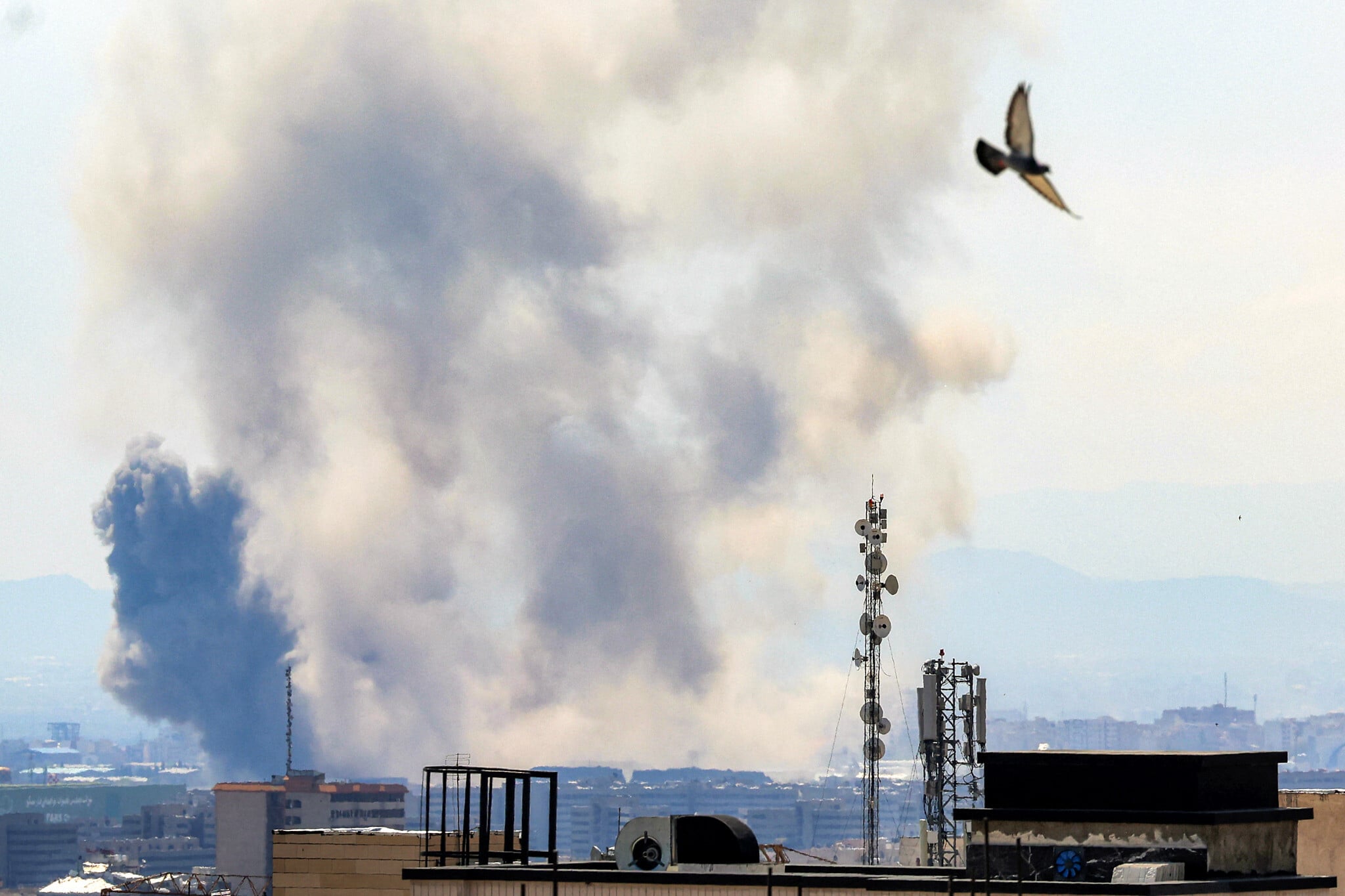
Smoke rises following strikes on Tehran on April 7, 2026. (ATTA KENARE / AFP)
That assessment dovetailed with a CNN report that indicated China was working to ship air defense systems to Iran amid the two-week ceasefire with Israel and the US.
Citing three people familiar with recent intelligence assessments, CNN reported Saturday that US intelligence indicates China is preparing to deliver to Iran shoulder-fired anti-air missile systems known as MANPADs.
Two of the unnamed sources were cited saying China was working to route the shipments through third countries to mask their origin.
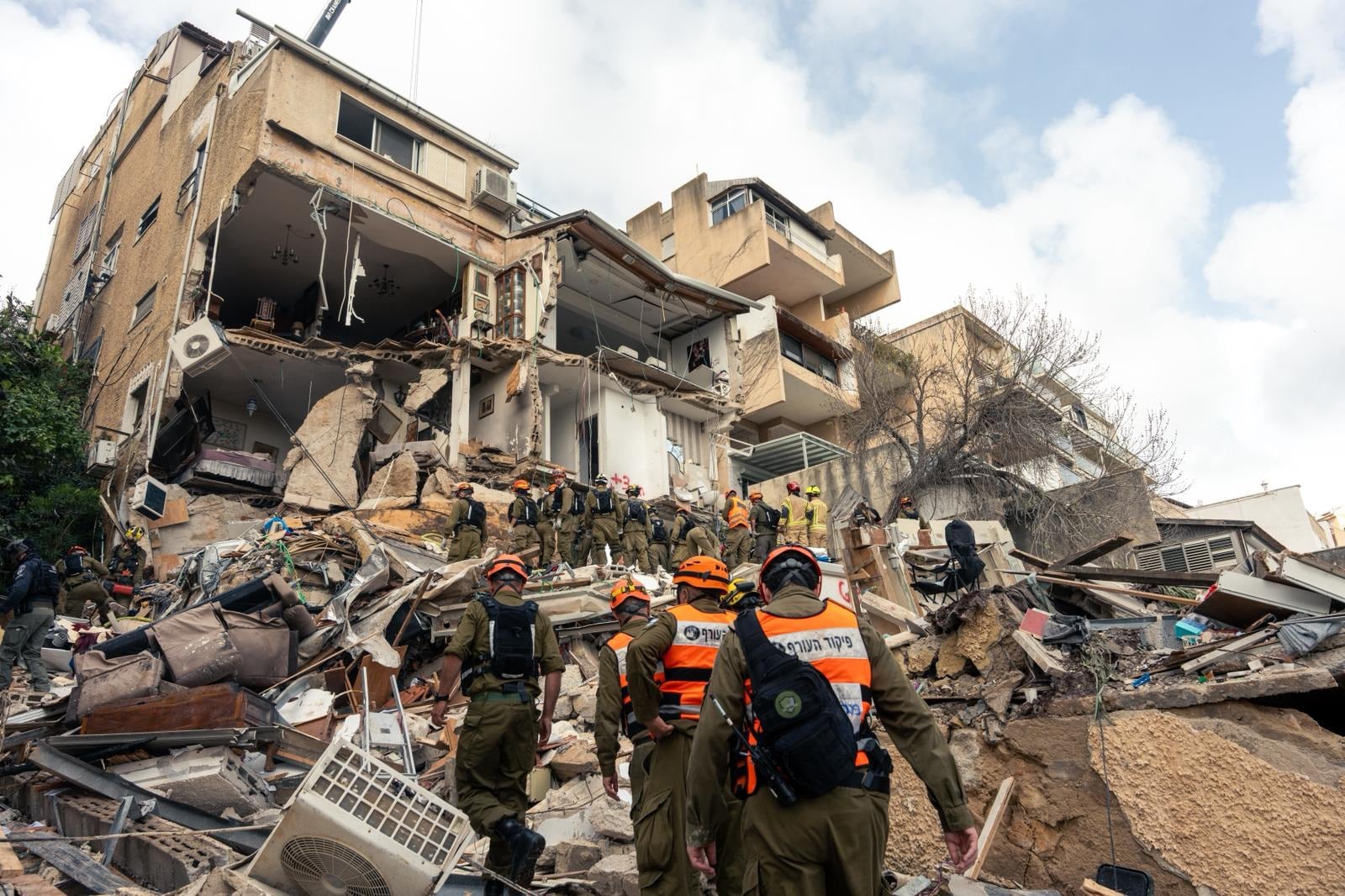
Home Front Command search and rescue forces work amid the rubble of a residential building struck by an Iranian missile in Haifa, April 6, 2026. (Israel Defense Forces)
In a statement to CNN, a spokesperson for the Chinese embassy in Washington denied the claims and said, “China has never provided weapons to any party to the conflict.”
“We urge the US side to refrain from making baseless allegations,” said the spokesperson. “We hope that relevant parties will do more to help de-escalate tensions.”
China is a major importer of Iranian oil and reportedly applied last-minute pressure to secure the two-week ceasefire in Iran.
NYT: Iran can’t find and remove its mines in Hormuz
Iran cannot reopen the Strait of Hormuz for shipping because it’s unable to find and remove all the mines it placed in the waterway throughout the war, according to US officials cited by The New York Times on Saturday.
Announcing the truce on Wednesday, US President Donald Trump had said it was conditioned on Iran reopening the strait, whose closure has choked off close to a fifth of the world’s oil shipments. Indirect US-Iran peace talks were set to begin in Islamabad on Saturday.
US officials told the Times that apparent safe routes through the mines provided by Iran’s Islamic Revolutionary Guard Corps were limited due to Tehran’s careless mining of the strait.
The report noted that both the US and Iran lack the capabilities to remove nautical mines. Some mines, according to the report, are also able to drift, while it is unclear whether Iran documented each mine it placed in the waterway.
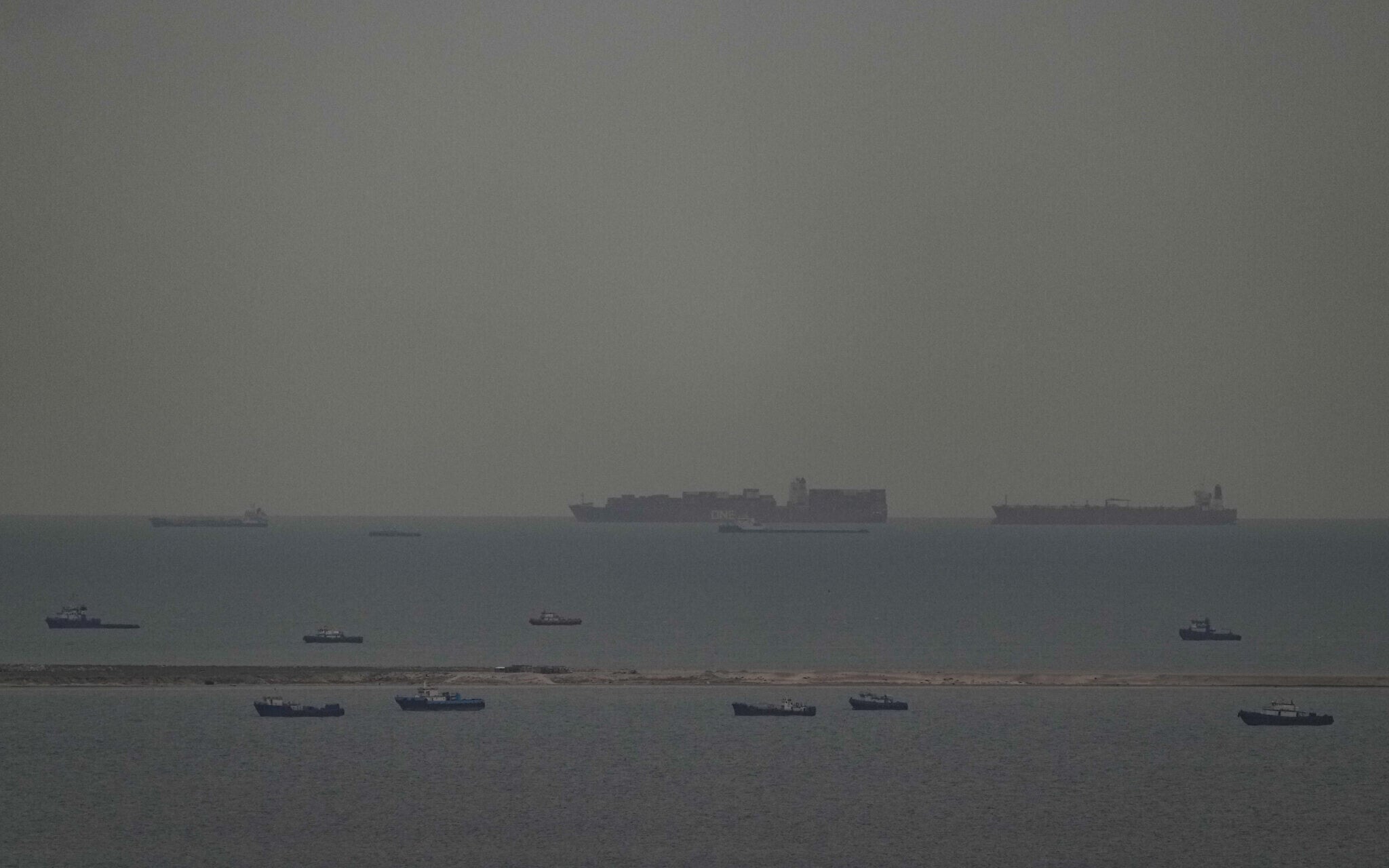
Fishing boats dot the sea as cargo ships, in the background, sail through the Persian Gulf toward the Strait of Hormuz off the United Arab Emirates, March 27, 2026. (AP)
The US has claimed that the strait was opened up already on Wednesday, denying reports that Iran was holding up much of the traffic and charging a toll.
Over the past few days, Trump appeared to acknowledge that Iran was in fact blocking ships from using the channel, with the president issuing a series of Truth Social posts threatening Iran.
Tehran has pledged to continue blocking traffic until Israel stops striking its Lebanese terror proxy Hezbollah, which Iran and Pakistani mediators say was supposed to be part of the ceasefire. The US has said there was a “legitimate misunderstanding” on that issue, while insisting that it never agreed to include Lebanon in the truce.
Jacob Magid, Emanuel Fabian and Reuters contributed to this report.
You appreciate our wartime journalism

You clearly find our careful reporting of the Iran war valuable, at a time when facts are often distorted and news coverage often lacks context.
Your support is essential to continue our work. We want to continue delivering the professional journalism you value, even as the demands on our newsroom have grown dramatically during this ongoing conflict.
So today, please consider joining our reader support group, The Times of Israel Community. For as little as $6 a month you’ll become our partners while enjoying The Times of Israel AD-FREE, as well as accessing exclusive content available only to Times of Israel Community members.
Thank you,
David Horovitz, Founding Editor of The Times of Israel