
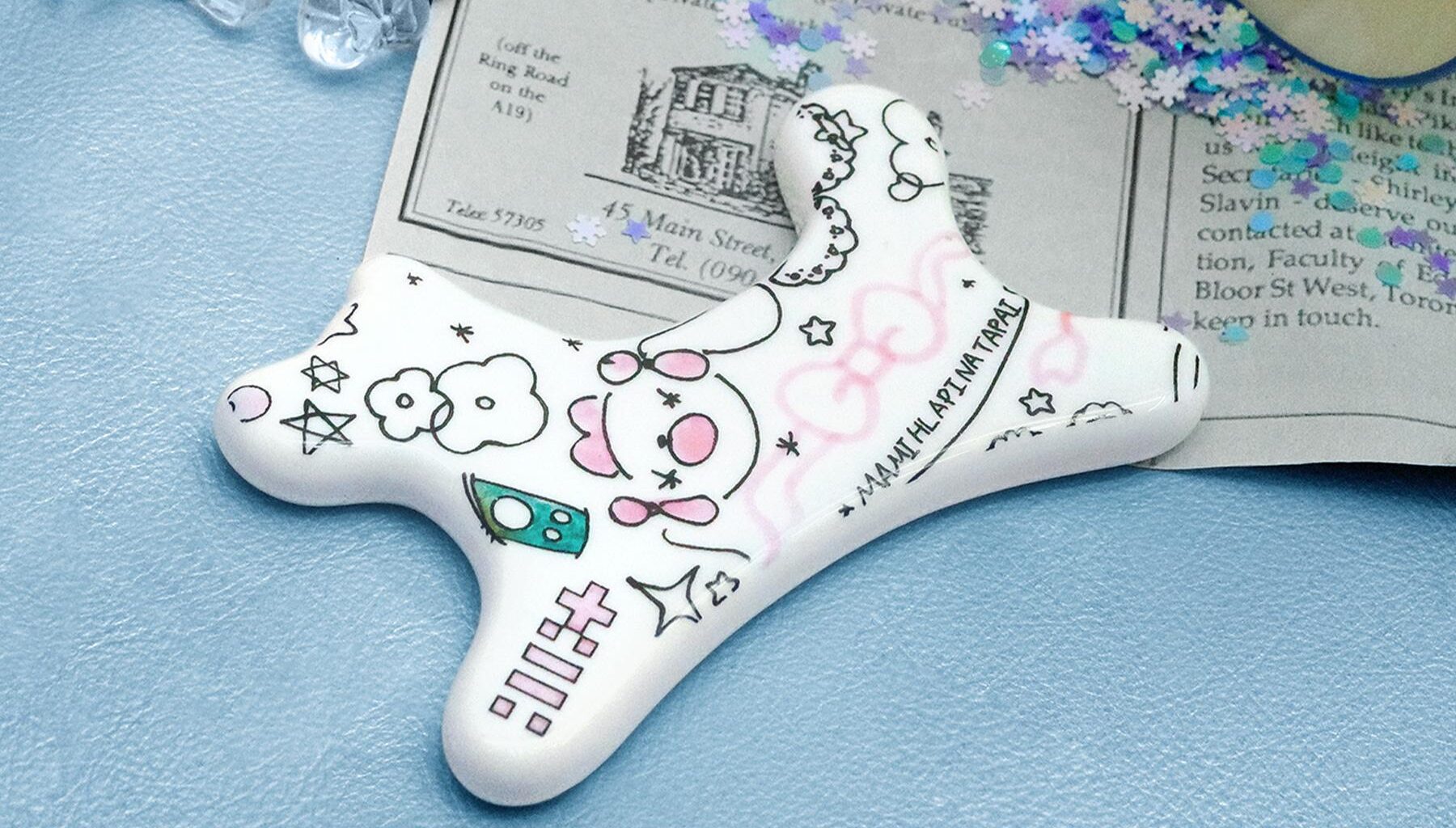
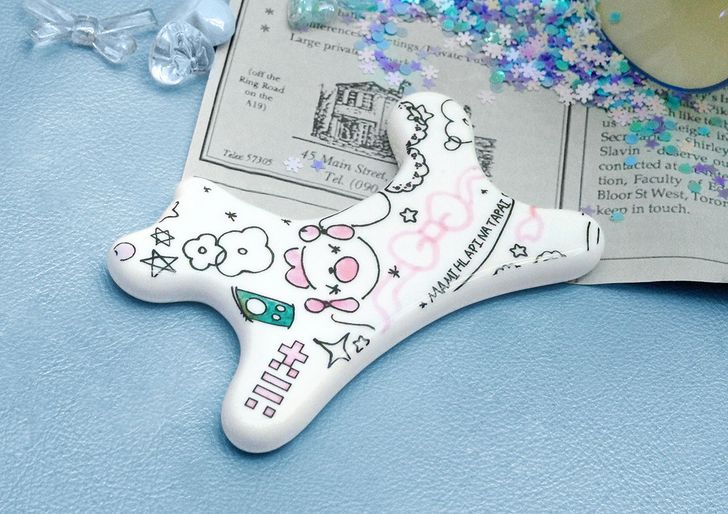
ILLIT’s upcoming EP “MAMIHLAPINATAPAI” (Gua Sha Ceramic Objet version) / Courtesy of Belift Lab
In K-pop, the album is no longer just something fans collect. It has evolved into something they use, incorporating music into their daily lives through practical items.
Long a cornerstone of the industry’s revenue model, physical albums have survived the streaming era not by combining with digital platforms, but by changing form. What began as CDs bundled with photobooks, posters and randomized inclusions evolved into merchandise such as keychain albums.
Now, a new phase is taking shape, one that pushes albums beyond mere display value and into everyday utility.
Belift Lab’s girl group ILLIT offers a clear example of that shift. Ahead of its April 30 return with the EP “MAMIHLAPINATAPAI,” the group unveiled a dog-shaped gua sha version of the album, including a functional self-care tool with the upcoming release.
The object retains its real-world use while carrying the group’s visual identity. According to the agency, the idea was designed to reflect the B-side track “GRWM (Get Ready With Me),” with the gua sha evoking a beauty routine. The dog-shaped design also nods to another track, “paw, paw!,” allowing multiple elements of the project’s narrative to converge in a single object.
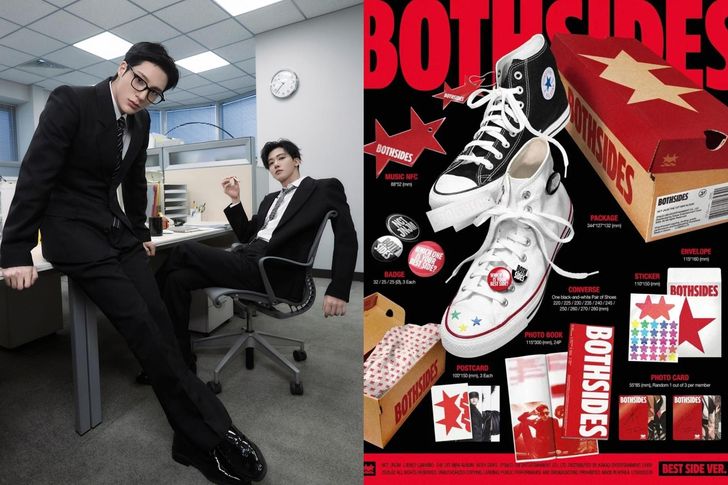
Members of boy band NCT’s JNJM subunit, left, and Converse sneakers in its debut album “BOTH SIDES”/ Courtesy of SM Entertainment
Other artists have also begun adopting similar approaches.
SM Entertainment’s newest NCT subunit, NCT JNJM, released its debut album “BOTH SIDES” in collaboration with global shoewear brand Converse, packaging its famous sneakers as part of the product. TXT’s Yeonjun, meanwhile, introduced a “trunk shorts” version of his solo release “NO LABELS: PART 01,” emphasizing wearability as part of the album’s appeal.
Rookie acts have pushed the concept further. Girl band KiiiKiii bundled slime with its EP “Delulu Pack,” while RESCENE paired its release “lip bomb” with a berry-scented lip balm. Boy group KickFlip’s inclusion of a mini digital camera similarly merged aesthetic value with function, positioning the album as both a collectible and a tool.
Such attempts build on an established foundation in K-pop, where albums have long doubled as merchandise. NCT WISH’s “WICHU” version of the group’s single album “WISH,” released as a star-shaped plush keyring with NFC-enabled playback, demonstrated the strength of character-driven design.
The current shift, however, places less emphasis on novelty and more on usability, aiming to integrate albums into fans’ daily routines.
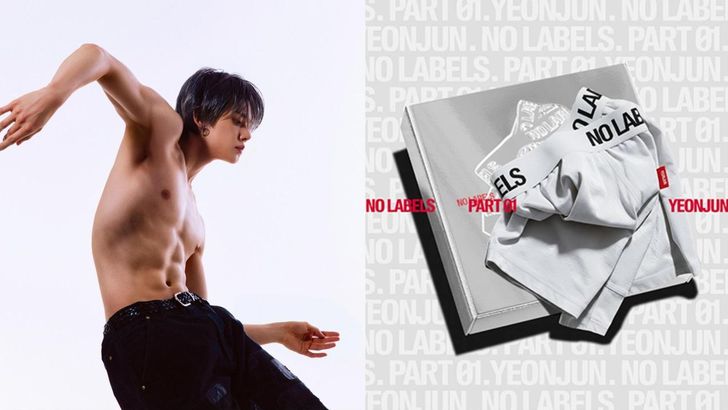
TXT’s Yeonjun, left, and the trunk shorts included in his solo album “NO LABELS: PART 01” / Courtesy of BigHit Music
The financial data reflects that transition. At HYBE Labels, merchandising and licensing revenue rose from 420.2 billion won ($285 million) in 2024 to 570.6 billion won last year, increasing its share of total revenue from 18.63 percent to 21.53 percent. Over the same period, album sales declined from 38.17 percent to 29.17 percent.
SM Entertainment reported a similar pattern, with merchandising and licensing revenue climbing 50.6 percent year-on-year to 78.1 billion won.
With streaming redefining how audiences consume music, the role of the physical album has shifted accordingly. Rather than functioning as a listening device, it now operates as a point of contact between artist and fan, shaped by design, branding and use.
In that sense, the K-pop album is no longer a static product but a flexible platform. Its value lies not in how it stores music, but in how effectively it extends an artist’s world into everyday life.