
April 09, 2026
4 min read
Add topic to email alerts
Receive an email when new articles are posted on
Please provide your email address to receive an email when new articles are posted on .
“
data-action=”subscribe”>
Subscribe
We were unable to process your request. Please try again later. If you continue to have this issue please contact customerservice@slackinc.com.
Back to Healio
Key takeaways:
The guidelines strongly recommend several new medications approved for children with eczema.
There are no data to support special diets, early food introduction or bathing frequency as preventive strategies.
The American Academy of Dermatology issued its first-ever guidance for the medical management of pediatric eczema, a skin condition that affects up to 25% of children worldwide.
The guidelines of care, published in the Journal of the American Academy of Dermatology, include 27 evidence-based recommendations for medical management and 14 evidence-based recommendations for the primary prevention of AD, as well as 29 statements on the association between pediatric AD and comorbid conditions. Separate guidance for management of adult AD was updated most recently in 2024, according to the authors.
“Pediatric eczema is not the same as adult eczema, as it manifests differently and carries a significant burden for both children and their caregivers,” Murad Alam, MD, MBA, MSCI, FAAD, president of the AAD, told Healio. “The unique care necessary to treat pediatric eczema requires dedicated, age-appropriate guidance. These new guidelines from the American Academy of Dermatology are an important step toward ensuring our youngest patients receive the evidence-based care they deserve.”
New treatment options for children
The AAD’s Atopic Dermatitis Guideline Workgroup, which included 11 dermatologists and one pediatric allergist, published the guidelines in two parts. The first gave recommendations for and against certain treatments; the second outlined the leading comorbidities among this patient population.
The workgroup gave strong recommendations for the following treatments:
moisturizers to soothe dry, itchy skin (although the authors could not recommend a particular product or active ingredient);
topical calcineurin inhibitors, pimecrolimus 1% cream and tacrolimus 0.03% or 0.1% ointment, to be used intermittently as maintenance therapy;
topical corticosteroids of low to medium potency as maintenance therapy up to three times per week;
phosphodiesterase-4 inhibitors crisaborole (Eucrisa, Pfizer), for patients aged 3 months or older, and roflumilast cream (Zoryve, Arcutis Biotherapeutics), for patients aged 2 years and older with mild to moderate disease;
topical JAK inhibitor ruxolitinib cream (Opzelura, Incyte) for patients aged 2 years and older with mild to moderate disease;
topical aryl hydrocarbon receptor agonist tapinarof cream (Vtama, Organon) for patients aged 2 years and older;
biologics dupilumab (Dupixent, Sanofi and Regeneron Pharmaceuticals), for patients aged 6 months and older, and tralokinumab (Adbry, Leo Pharma) and lebrikizumab (Ebglyss, Eli Lilly and Company) for patients aged 12 years and older with moderate to severe disease; and
JAK inhibitors upadacitinib (Rinvoq, AbbVie), abrocitinib (Cibinqo, Pfizer) and baricitinib (Olumiant, Eli Lilly and Company) for patients aged 12 years and older with moderate to severe disease.
The authors also found that a particular one-step daily skin care regimen is just as preferable as a two-step one, according to Dawn Marie R. Davis, MD, professor of dermatology and pediatrics at the Mayo Clinic, who co-chaired the workgroup alongside the late Robert Sidbury, MD, MPH, professor of the department of pediatrics at the University of Washington School of Medicine and division head of dermatology at Seattle Children’s Hospital.
Editor’s note: These guidelines were finalized before Sidbury’s passing. We extend our condolences to his family and colleagues.
“The use of topical steroids for eczema patches alone was found to be just as efficacious and no better than using topical steroids with a moisturizer,” Davis, also a member of Healio Dermatology’s Peer Perspective Board, said during an interview. “You do not necessarily have to use a topical steroid and a moisturizer together. The topical steroid can be used in isolation.”
The authors issued conditional recommendations for:
bathing, including diluted bleach baths, which should be done under the guidance of a health care professional, to treat flares and maintain clearance;
wet dressings with topical corticosteroids during AD flares; and
phototherapy.
The workgroup strongly recommended against treating AD with systemic corticosteroids up to age 18 years, with exceptions allowed for the short-term treatment of sudden, severe flares, according to Davis.
“Systemic corticosteroids suppress the immune system and oftentimes will clear dermatitis or greatly improve dermatitis,” Davis told Healio. “When they withdraw from the steroids, patients with AD tend to have rebound flares, such that they have worse dermatitis than when they started the treatment. Exposure to systemic corticosteroids can cause side effects that impact quality of life; therefore, the benefits do not outweigh the risks.”
The authors issued a conditional recommendation against psoralen ultraviolet-A phototherapy, also known as photochemotherapy, as it increases the long-term risk for developing skin cancer and photoaging damage. The workgroups also made a conditional recommendation against topical antimicrobials for children with AD when there is no sign of infection.
Lack of evidence for special diets, infrequent bathing
The guidelines note that there is no evidence to support several popular eczema prevention strategies employed by parents and caregivers, including the use of special diets or baby formulas, supplements or bathing frequency.
“Current research demonstrates that there are no special diets that help children with AD,” Davis told Healio. “There is no evidence for using water softeners, dust mite avoidance techniques, special types of formula, early food introduction, probiotic use or vitamin D supplementation to prevent the development of AD.”
Additionally, there are no data to support systemic antibiotics or oral antihistamines, both medication classes commonly used for children with eczema, David said.
What can assist in prevention and management is awareness of key comorbidities associated with pediatric eczema, according to Davis. The workgroup found that AD is highly associated with eosinophilic esophagitis and moderately associated with food allergies, asthma, hives, anxiety, obesity and metabolic syndrome.
“While the medical community was aware of the association between AD and eosinophilic esophagitis, food allergies, asthma and urticaria, I don’t think that we were very well aware of the association between AD and anxiety, obesity and metabolic syndrome,” Davis said. “Being aware of this empowers and educates patients so they can seek help and intervention from relevant specialists and be proactive rather than reactive, to have the best quality of life and health possible.”
Davis hopes to address several outstanding research gaps, including finding the most effective ingredients in moisturizers and emollients, as well as conducting head-to-head trials for recommended medications. Such advances can allow for practicing “individualized medicine” that prioritizes a patient’s particular skin make-up and history.
For now, Davis applauds the publication of these guidelines.
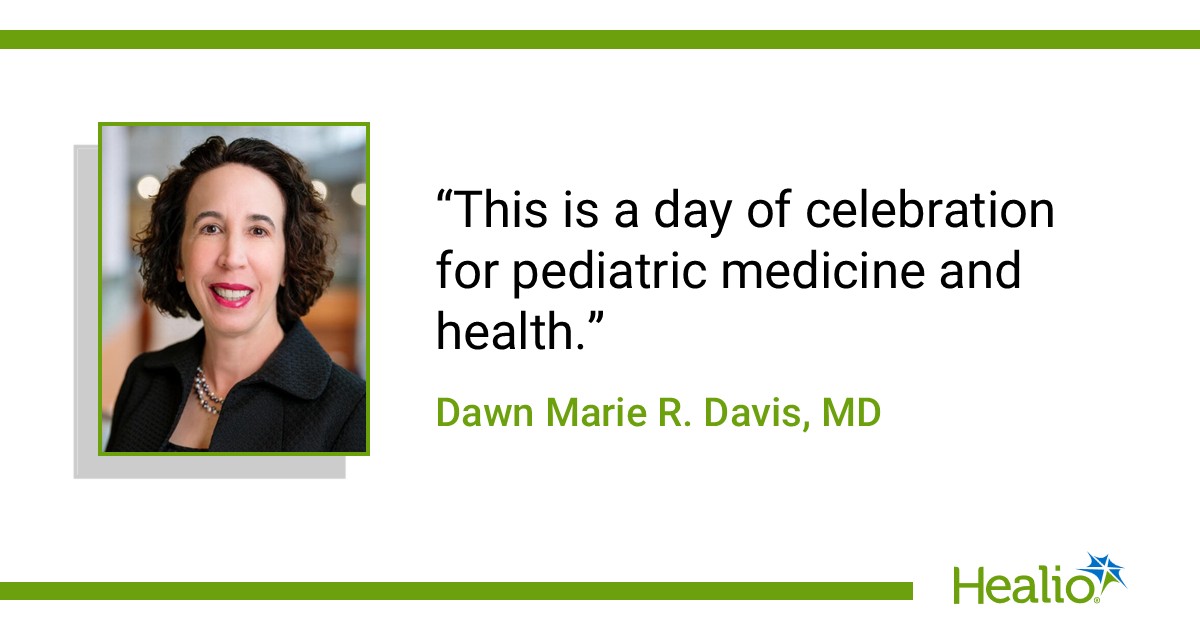
“I’m excited because this is a day of celebration for pediatric medicine and health,” Davis told Healio. “This is a step forward for children in the community. I’m looking forward to our colleagues, patients and their families referencing and learning from these guidelines.”
For more information:
Murad Alam, MD, MBA, MSCI, FAAD, can be reached at president@aad.org.
Dawn Marie R. Davis, MD, can be reached at davis.dawnmarie@mayo.edu.

Ask a clinical question and tap into Healio AI’s knowledge base.
PubMed, enrolling/recruiting trials, guidelines
Clinical Guidance, Healio CME, FDA news
Healio’s exclusive daily news coverage of clinical data
Learn more
Add topic to email alerts
Receive an email when new articles are posted on
Please provide your email address to receive an email when new articles are posted on .
“
data-action=”subscribe”>
Subscribe
We were unable to process your request. Please try again later. If you continue to have this issue please contact customerservice@slackinc.com.
Back to Healio