
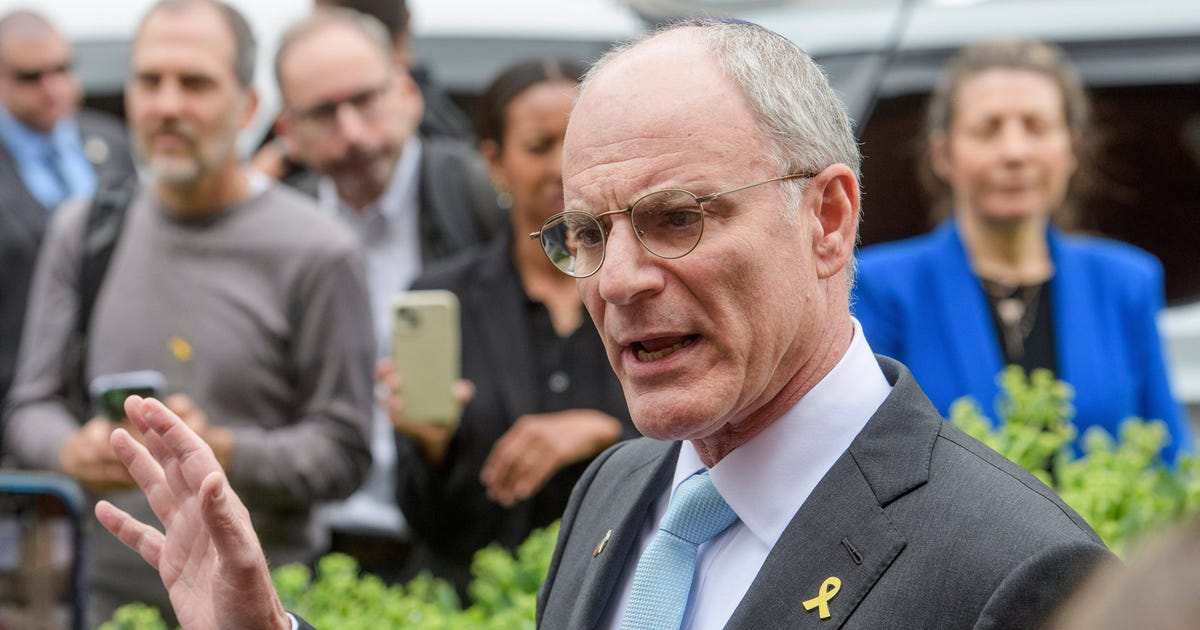
Israel’s Ambassador to the United States Yechiel Leiter said on Sunday that claims that Prime Minister Benjamin Netanyahu convinced U.S. President Donald Trump to launch a war against Iran were “inaccurate,” in response to a New York Times report last week.
Speaking with “Face the Nation’s” Margaret Brennan, the ambassador said, “There’s an awful lot in that article which simply isn’t true, which is a narrative that’s been a very interesting narrative, but not accurate.”
“This whole thing about the prime minister coming in and dragging the president into this, it’s for publicity purposes,” he argued. “I was in the room in that meeting. They were not.”
Leiter also responded to the report’s claim that Israeli officials assessed that the Iranian regime would be so weakened that it would be unable to block the Strait of Hormuz, and deemed the likelihood of Iran attacking U.S. targets in neighboring countries as minimal.
 Close
Close
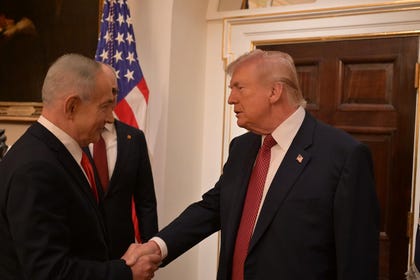
Trump and Netanyahu in the White House in February. Credit: Avi Ohayon/GPO
Trump and Netanyahu in the White House in February. Credit: Avi Ohayon/GPO
“We didn’t argue that,” he said. “We argued the potential that we’ve got to work towards, that nothing was presented as a fact that if we do this, this will be the outcome.”
The report was written by New York Times White House reporters Jonathan Swan and Maggie Haberman, whose upcoming book, “Regime Change: Inside the Imperial Presidency of Donald Trump,” details the process by which the president decided to go to war with Iran and Netanyahu’s role in it.
The book offers an extensive report, based on interviews, of how Netanyahu and his team presented assessments pointing to an almost certain victory in a war against Iran.
Haaretz PodcastIran cease-fire update with Amos Harel: ‘Trump wants out and Netanyahu is extremely disappointed’
play
Haaretz Podcast
Iran cease-fire update with Amos Harel: ‘Trump wants out and Netanyahu is extremely disappointed’
Volume: 0.5
X1
total– : –time0:00
fast forward15
play
rewind15
In his interview with Brennan, the ambassador also commented on the cease-fire negotiations in Islamabad: “We’ve been in lockstep from the beginning in the planning and the implementation, and we’re going to end this thing together as well. We’re completely supportive of the president’s efforts, both diplomatically and militarily.”
He said that the current negotiation stalemate may not be permanent, noting that there is still another week left in the cease-fire “for the potential for continued talks.”
“We know the Iranians. We know this regime. We don’t think they’re going anywhere, but it’s important to give it a chance,” he says.
Related Articles
Leiter addressed the strategy that intensive bombings in the country could create the conditions for internal Iranian opposition to overthrow the Ayatollahs’ regime, according to Mossad intelligence referenced in the report.
“The Mossad thought that, as we saw in January, hundreds of thousands and millions of people would rise up,” Leiter remarked. “The potential for that happening again is even greater now, and we still think it’s very great. We still think we could that could materialize over the next couple of months.”
 Close
Close
Protests in Iran in January. Credit: MAHSA / Middle East Images via A
Protests in Iran in January. Credit: MAHSA / Middle East Images via A
Asked about the upcoming negotiations between Israel and Lebanon, and whether Israel is going to reduce or pause the strikes on Lebanon, Brennan explained that Hezbollah is a political party as well as “Iran’s strongest militia and proxy force.” Leiter pushed back.
“Hezbollah is a terrorist organization which is also a political party. It’s not a political party which also has a terrorist wing. [Their] agenda is destroying the State of Israel. And they fire missiles into our towns and villages, yes. And we have to respond now.”
 Close
Close
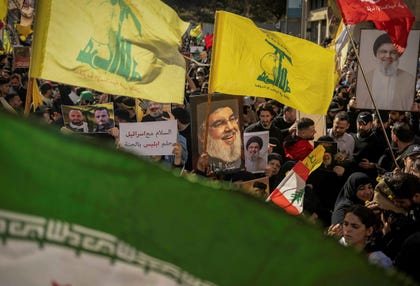
Demonstrators carry portraits of late Hezbollah leader Hassan Nasrallah during a protest against direct negotiations between Israel and Lebanon, in Beirut on Sunday. Credit: Adnan Abidi/ REUTERS
Demonstrators carry portraits of late Hezbollah leader Hassan Nasrallah during a protest against direct negotiations between Israel and Lebanon, in Beirut on Sunday. Credit: Adnan Abidi/ REUTERS
“We want to negotiate with Lebanon. Lebanon and Israel can live in peace tomorrow. We had this initial phone call on Friday. It was a conference call, me, the Lebanese ambassador, the U.S. Ambassador to Beirut, all moderated by State Department official Mike Needham. It was a great conversation. And the thing we all agreed upon was that if we just put Hezbollah to the side and just had Israel and Lebanon negotiate peace, two months, three months, we’d have a complete peace agreement.”
When asked whether the U.S. and Israel agreed to scale back airstrikes in Lebanon ahead of diplomatic talks this week, Israeli Ambassador to the U.S. Dr. Michael Leiter says “operational issues aren’t discussed on Sunday morning, on television.”
He adds, “What we discussed is
Brennan asked about the scale of the response, referencing Israel’s “Operation Eternal Darkness,” the deadliest Israeli strikes on Lebanon since the IDF’s invasion in 1982. She pointed out the difference between “responding to a strike from Hezbollah versus the kind of bombing that we saw this past week, particularly on Wednesday. The airstrikes killed more than 350 people that day, a third of them women and children and the elderly.”
“The President said he spoke with Bibi, your prime minister, and said he’s going to low-key it. Can you explain what ‘low-key bombing’ means? Is this a reduced cadence and volume of strikes from Wednesday?” she asked Leiter.
Leiter said that “operational issues aren’t discussed on Sunday morning television. What we discussed is that we’re going to be in tandem with the president’s efforts in the Gulf, and we support the president’s efforts. Right now, we are pursuing those who are shooting missiles against our civilians, and the operation on Wednesday was targeted against Hezbollah’s operation centers.”