
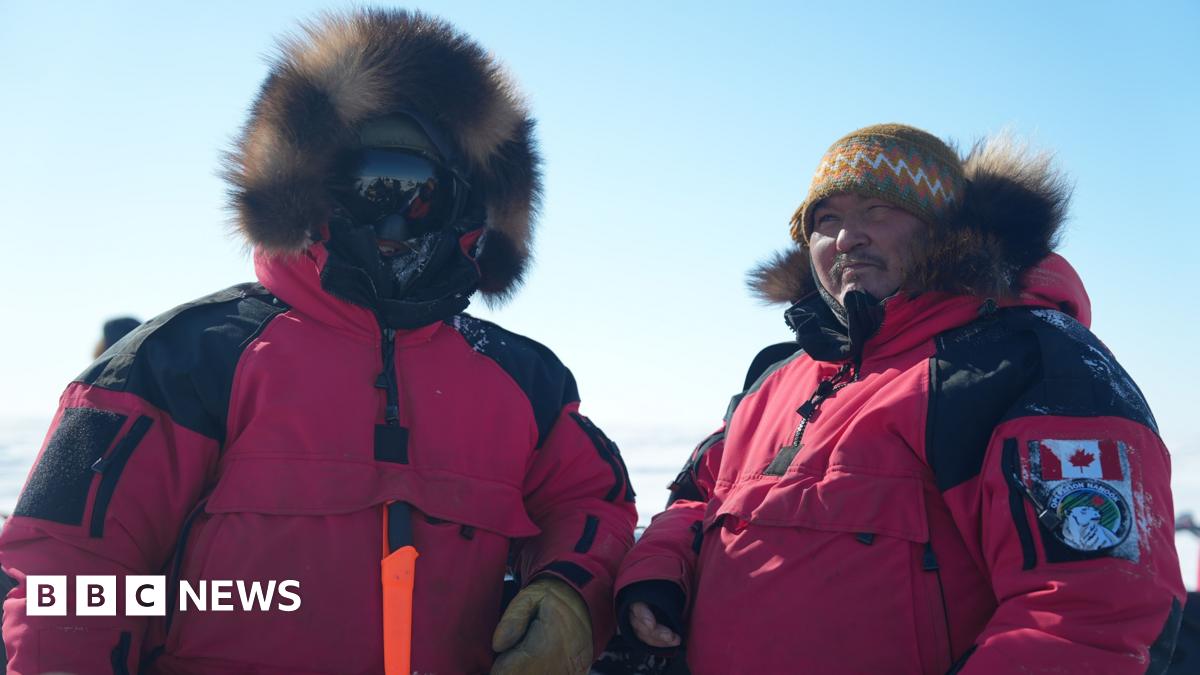
Lt Col Travis Hanes, one of the Rangers on the 52-day patrol, has witnessed the unpredictable weather first hand.
“Rivers that are normally completely frozen have overflowed where they hadn’t historically,” he told the BBC, causing layered, unstable ice sheets that are hazardous to travel over in winter months.
On the other extreme, this winter was also unusually cold, Hanes noted, opening new passages over Arctic waters that had not previously frozen over in recent memory.
A key component of the Canadian Rangers is its indigenous Inuit members, whose deep knowledge of Canada’s northern territories has been essential to finding safe paths and keeping army members alive – both on this most recent patrol and other operations across the Arctic.
“We would’ve failed without them,” Hanes said.
They are often described as the “irreplaceable boots on the ground” in Canada’s north, with expertise in manoeuvering snowmobiles between the remote Arctic communities they call home, the know-how to survive in the cold and the ability to notice when something is amiss in the water or on the land.
During the patrol, they shared dried Arctic char and caribou – what the Inuit commonly refer to as “country food” – with those who needed more sustenance than protein bars and beef jerky, and lent gloves and boots made from coyote and caribou fur for anyone who got dangerously cold despite layers of modern winter gear.