
Get your daily dose of health and medicine every weekday with STAT’s free newsletter Morning Rounds. Sign up here.
Good morning and happy Monday. Thanks for being here.
Hospitals are getting into the chatbot business
More and more these days, people are turning to chatbots like ChatGPT or Claude with questions about diet, exercise, health insurance — and in some cases, serious symptoms that would typically get discussed on a 911 call or at a doctor’s office visit. As STAT’s Katie Palmer reports, some hospitals are now trying to redirect those questions by building their own patient-facing chatbots that draw directly from existing medical records and can funnel patients toward care at their facilities. It’s about patient safety, they say — and finding new business.
But hospitals aren’t tech companies, and could face major liability if a chatbot fails and a patient is harmed. Read more from STAT’s Katie Palmer on how medical institutions are trying to catch up with commercial large language models.
‘I am indebted to the federal workers who were brave enough to share their concerns and experiences, despite their legitimate fears of reprisal.’
That was STAT’s own Lizzy Lawrence, speaking at the George Polk Awards on Friday, where she and many of my brilliant colleagues won in the health care reporting category. Read all of Lizzy’s important, groundbreaking FDA reporting, along with our series American Science, Shattered and MAHA Diagnosis.
It’s a hard time for journalists around the world. As Lizzy also said: “I am privileged to work in such a collaborative, ambitious newsroom, where editors encourage reporters to chase essential health stories and not leave any stone unturned.” Here, here.
On positioning nurses as health experts
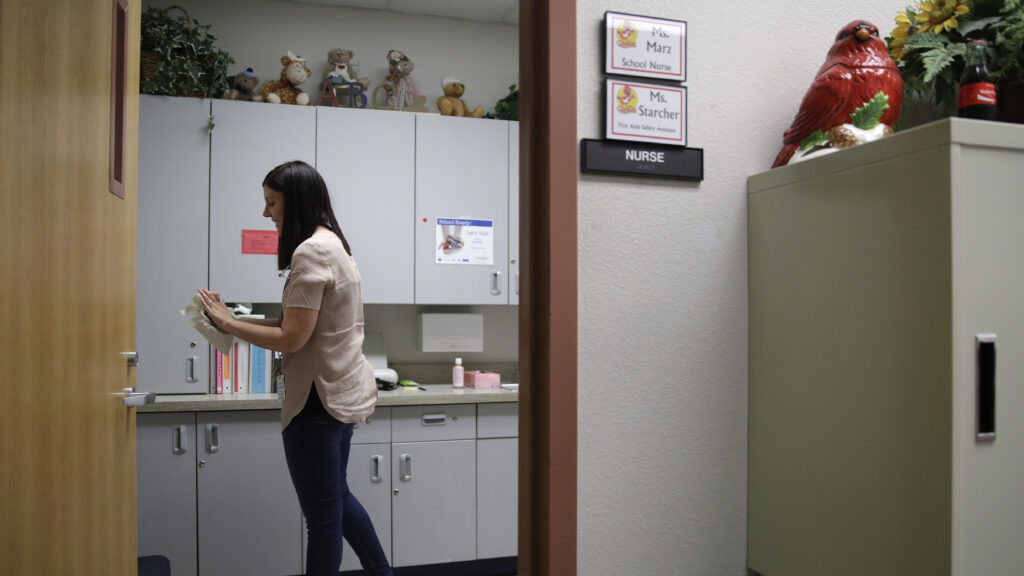
Among the American public, trust in medical doctors is at its lowest point since the ’90s, according to recent Gallup polling. Nurses, on the other hand, have long been the most trusted profession on a list of nearly two dozen, including police officers, teachers, clergy, judges, and more. A perspective published Saturday in the New England Journal of Medicine argues that this trust — which exists across political lines — should be harnessed for more effective public health messaging.
“Nurse scientists represent a largely untapped resource in national health communication,” the authors write. But despite the increased political clout gained by nurses at the height of the pandemic, they’re still too often absent from public health discussions. The authors suggest that media training should be available to nurses, and that institutions should create more opportunities for nurses to be contacted as experts by journalists. That includes asking more doctors, when approached by the media, to recommend nurse scientists.
Erectile dysfunction: more than a sexual issue
It seems intuitive: If you ask people whether erectile dysfunction or heart disease is a more important medical issue, just about everyone will say heart disease. But as urologist Denise Asafu-Adjei explains in a new First Opinion essay, the truth is a bit more complicated. ED is an early marker and predictor of heart problems. On average, cardiovascular disease develops about two to five years after the onset of ED, creating what Asafu-Adjei sees as a critical window for intervention.
“It’s past time to view this disease from a different lens,” Asafu-Adjei writes. “Mocking or ignoring ED presents a major missed opportunity for men and for stewards of public health.” Read more on what the evidence says and what changes could be on the horizon.
Landmines ahead for Vinay Prasad’s successor
A couple weeks ago, STAT’s Helen Branswell wrote about the challenges that lie ahead for whoever is nominated to lead the CDC, which has been without a Senate-confirmed director since August. We’re still waiting to hear what may happen there, but in the meantime, STAT columnist Paul Knoepfler wrote about the chaos that awaits whoever fills another soon-to-be-vacant HHS leadership position: director of the FDA’s Center for Biologics Evaluation and Research. (Current director Vinay Prasad is leaving the agency at the end of the month.)
“The leader of CBER should not be a rubber stamp, but it may be a challenge just to survive six months in the position unless they are a yes-person,” Knoepfler writes. Read more of his analysis.
What we’re reading
Second Venezuelan doctor detained in south Texas by immigration agents, New York Times
Flight path data shows how mosquitos target humans, Wired
What STAT readers think about nutrition education in med school, STAT
For many patients leaving the ICU, the struggle has only just begun, KFF Health News
GAO report shows gap between scale of illegal vapes and enforcement, STAT