
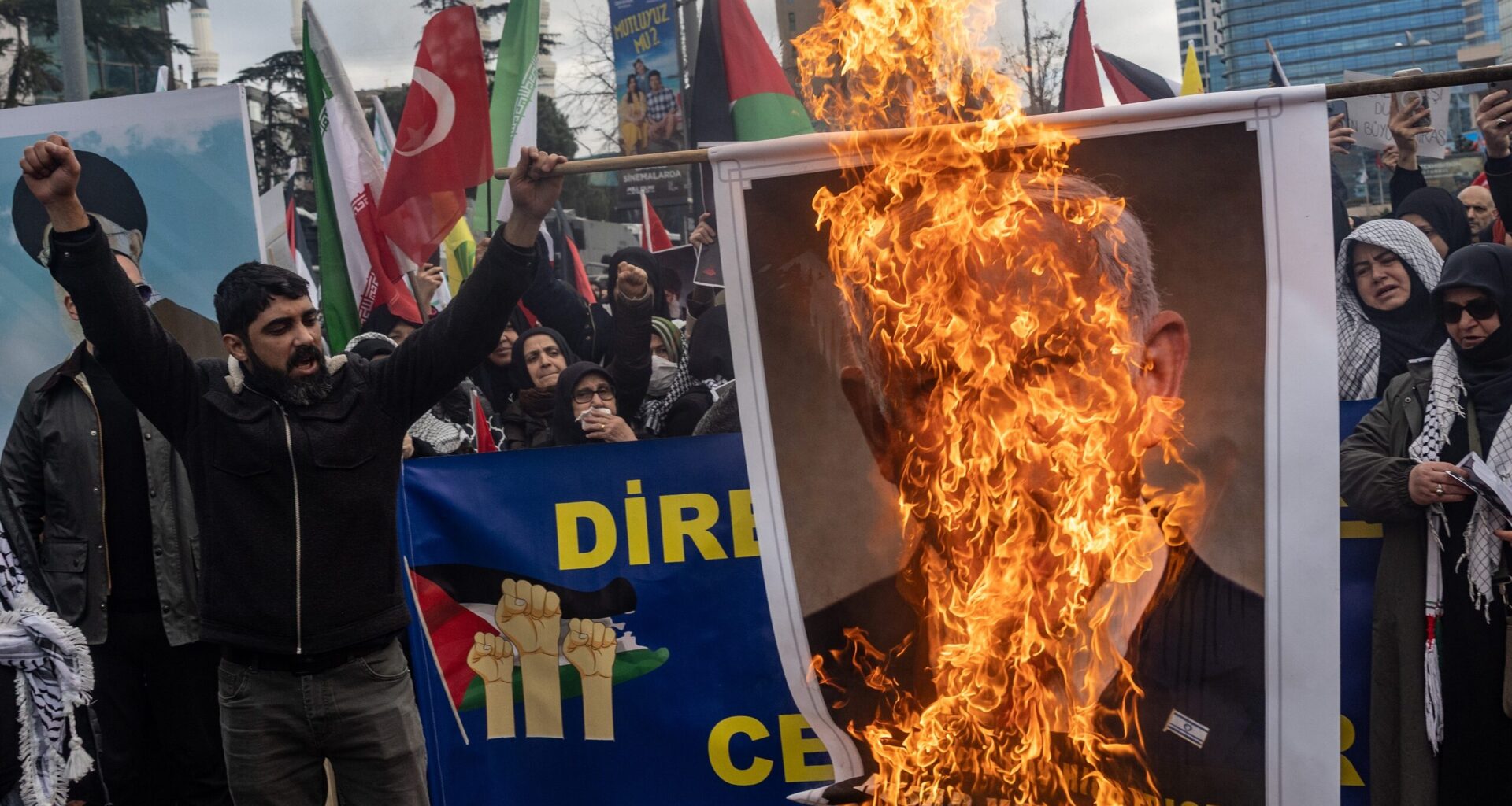
In this sharp, high-stakes report, Giorgia Valente traces how the Iran war has turned the already battered Israel-Turkey relationship into something more dangerous: not just another diplomatic quarrel, but a widening strategic clash over deterrence, legitimacy, and who gets to define escalation in the region. The immediate trigger was plain enough. Turkey condemned the US-Israeli strikes on Iran from the start, even after Iranian missiles entered Turkish airspace, while Israeli officials accused Ankara of saving its harshest language for Jerusalem rather than Tehran.
Valente shows that this rupture did not spring up overnight. Israel and Turkey had rebuilt formal ties in 2022 after years of strain, only for the Gaza war to wreck that thaw. By April 2026, the damage was visible not only in policy but in mood: Israeli diplomats were gone from the Istanbul consulate, and a gun attack on the building drove home how far the relationship had fallen. The Iran war then opened a new front in the dispute. Erdoğan cast the strikes on Iran as unlawful and destabilizing, while Turkish officials insisted Ankara’s restraint after missile incursions into its airspace showed an effort to prevent a wider war, not a softness toward Tehran.
The piece gets its real force from the two competing interpretations Valente puts side by side. Kobi Michael argues that President Recep Tayyip Erdoğan sees opportunity in Iranian weakness, regional disorder, and Israel’s diplomatic troubles. In his reading, Turkey is acting from ambition as much as caution, with US leverage the main reason the crisis is not sliding toward direct military confrontation. Barın Kayaoğlu, by contrast, says Israel is misreading Ankara entirely. He presents Turkey as an autonomous regional actor that has challenged Iranian influence in Syria and Iraq while resisting Israel’s attempt to frame every restraint as indulgence toward Tehran.
What makes the article worth reading in full is that it does not flatten this into a cartoon. Valente lets the reader see how the same facts—missiles in Turkish airspace, public condemnation, NATO arguments, social-media warfare—can produce two starkly different strategic narratives. The result is a story not just about two angry governments, but about how every new regional crisis now gives both sides another reason to cast the other as part of the threat. Read the full article.