

Listen to this article
Estimated 4 minutes
The audio version of this article is generated by AI-based technology. Mispronunciations can occur. We are working with our partners to continually review and improve the results.
Even as he and his colleagues work “at full speed,” the head of obstetrics and gynecology for the province’s central zone and IWK Health Centre says there are not enough resources to meet demand.
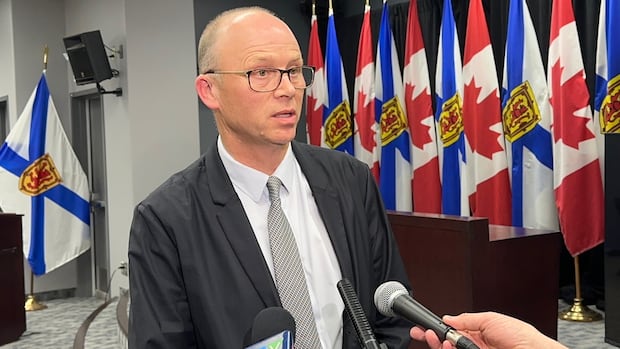
“We need to actually have increased resources or we need a way to work through all of those incredibly long wait lists that we all have around the province,” Dr. James Bentley told reporters Tuesday.
Bentley was among a group of health-care officials who appeared before the legislature’s health committee on Tuesday to discuss care for women and gender-diverse people. He told MLAs that as the province’s demographics expanded since the COVID-19 pandemic, so too has demand for specialized services.
The team at the IWK sees about 500 referrals a month, and even as more staff has been added in recent years there is an ongoing challenge to see those patients in a timely fashion, said Bentley.
“And that’s with everybody working at full speed.”
There have been ongoing calls for a dedicated health strategy for women and gender-diverse people. Officials from the IWK Foundation who attended Tuesday’s meeting renewed their call for a federal strategy, as well as at the provincial level.
Jennifer Gillivan, the foundation’s CEO, pointed to a recent survey of 27,000 people across the three Maritime provinces that showed an overwhelming feeling of bias within the system and dismissal for the health-care needs of women
“I think women are done,” Gillivan told MLAs.
“They’re tired of being dismissed, they’re tired of not being listened to and they know that the system needs to change and they want that to change.”
Having national and provincial strategies would mean a more focused and coordinated approach to providing care that could also unlock major economic development potential for research development aimed at women and gender-diverse people, said Gillivan.
“I think you would see a reduction in spending in health care, I think women would suffer less and would go [for care] earlier and be diagnosed earlier and preventative health. All of that would really help.”
‘We don’t have any political clout’
Bentley said a strategy could help, as could more doctors and other staff dedicated to women’s care. Too often he said specialists are treating people with conditions further along than they should be because of the “horrendous” wait times that exist.
A provincial gynecology council has been established to try to brainstorm ideas to help improve the system, “but we have no teeth in that,” said Bentley.
“We don’t have any political clout to actually put things in place.”
He and his colleagues could also use the support of family doctors.
Bentley said having more primary care practitioners willing to offer care for less specialized cases, including providing access to inner uterine devices and basic treatments of abnormal uterine bleeding and pain, would be another way to help combat wait times.
“That all can be done in primary care and then at the point for people who don’t have success in controlling those things, they go on to see a gynecologist.”
NDP Leader Claudia Chender, whose party has called for a dedicated health strategy for women and gender-diverse people, said it would ensure that the considerable resources the provincial government is putting into the system are going where they are needed most, in the most effective way.
“This is a no-brainer,” she told reporters.
Health Minister Michelle Thompson has said that while she is not ruling out the creation of a strategy, it’s not a priority for her government at this time.
MORE TOP STORIES