

Listen to this article
Estimated 5 minutes
The audio version of this article is generated by AI-based technology. Mispronunciations can occur. We are working with our partners to continually review and improve the results.
The University of Manitoba and the Arctic Research Foundation say they are entering a crucial phase of a study to establish the feasibility of turning Churchill into a year-round maritime hub.
This phase of the study, which began in March, will examine the potential for using icebreakers to extend the operational season at the port, a news release from the U of M said.
Currently, the port is operational about four months a year.
“The last ship usually leaves the Port of Churchill by the end of October, so if you want to ship continuously over winter … then you will have to involve ice-breaking support to keep the route open. So that is exactly what this feasibility study is about,” said Feiyue Wang, Canada Research Chair in Arctic Environmental Chemistry and director of the Churchill Marine Observatory.
The aim is to determine the navigational window and optimal route for shipping to the Atlantic Ocean and ultimately to northern Europe. The project includes mapping over 2,000 kilometres.
“The government and the community want to see the [shipping] season extended. Our goal is to ensure that any future growth is guided by rigorous science and long-term environmental sustainability,” Wang said.
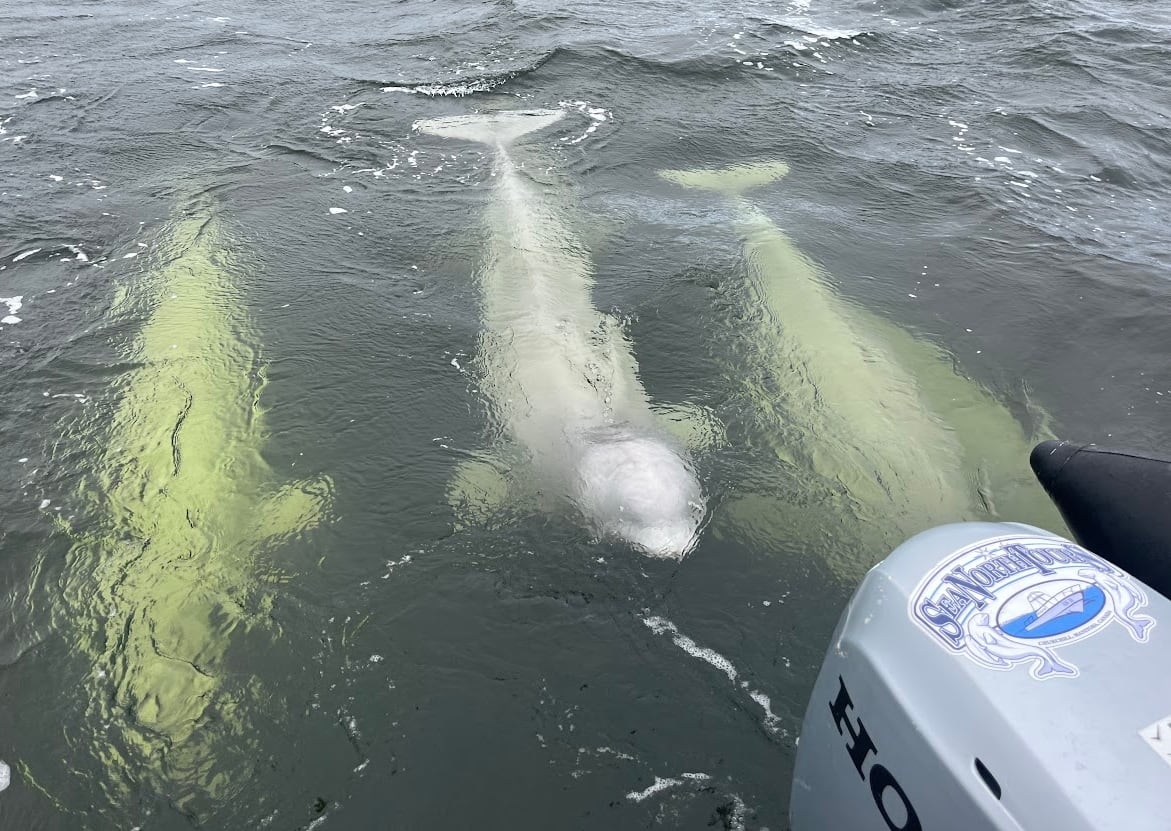 The study will also look at ecologically sensitive periods of the year. Roughly 55,000-60,000 beluga whales converge in western Hudson Bay and the Churchill River estuary each summer. (Darren Bernhardt/CBC)
Earlier this week, Prime Minister Mark Carney said plans to expand the Port of Churchill as part of a trade corridor through northern Manitoba are a top priority.
He made the comment before meeting with Manitoba Premier Wab Kinew, who is pushing to have Churchill, on the west coast of Hudson Bay, serve as a major port to ship goods to Europe and beyond.
Wang is leading the study along with researchers from the U of M’s Centre for Earth Observation Science.
The $188,000 in funding for the study comes from the $750,000 in federal and provincial money that has been committed to assessing sea ice, weather and climate conditions in the Hudson Bay area.
Hudson Bay has warmed approximately 1 C over the past four decades, Wang said, with the most pronounced changes occurring in the northwestern part of the bay, where shipping routes to Nunavut and the Labrador Sea pass.
Researchers will analyze historical and projected sea ice conditions, including satellite records of ice concentration and thickness. The data will be used to anticipate ice changes over the next 40 years and future icebreaking requirements.
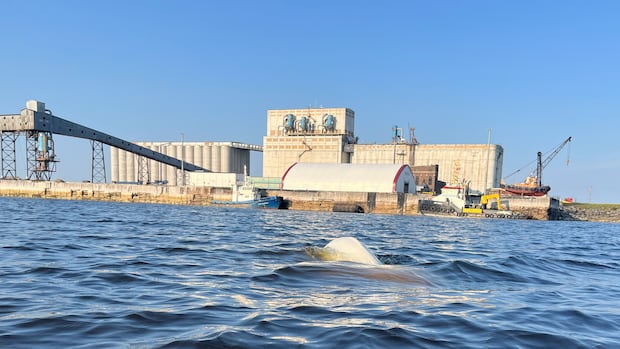
 More trade through the Port of Churchill will diversify Canada’s national supply chains and get more western Canadian resources to the world, Arctic Gateway Group CEO Chris Avery says. (Darren Bernhardt/CBC)
POLARIS (Polar Operational Limit Assessment Risk Indexing System) is used to translate ice conditions into risk values for different ship classes, and creates climate model projections under moderate and high greenhouse gas emission scenarios.
The U of M team will also study existing environmental data to identify ecologically sensitive periods of the year and implications for routing, timing and vessel operations, the news release said.
Every year, from mid-June to mid-September, roughly 55,000-60,000 beluga whales converge in western Hudson Bay and the Churchill River estuary.
They’re part of a tourism industry in Churchill that contributes an estimated $99 million to Manitoba’s GDP, Travel Manitoba says.
“Mitigation strategies include careful route selection, the use of technologies to reduce ship noise and, most importantly, consulting with communities to understand and address their concerns so that the benefits outweigh any potential negative consequences,” said Tom Henheffer, Arctic Research Foundation CEO.
Extending the operating season could be a game-changer for the Canadian economy by facilitating access to Arctic natural resources, such as gold, rare earth elements and natural gas, while encouraging their domestic refining rather than simply exporting them raw, he said.
“This project must be an economic driver for Arctic communities, and it must be done on their own terms,” said Henheffer, whose organization has committed to training young people in the region in technical and maritime trades.
Chris Avery, CEO of the the Arctic Gateway Group, a local and Indigenous-owned company that owns the port, says the expansion will strengthen Canada in many ways.
“More trade through the Port of Churchill will diversify our national supply chains and get more western Canadian resources to the world, while also advancing Indigenous reconciliation and increasing Canada’s security in the North,” he said.
A final report with the findings of the study will be submitted by February 2027.
If the findings are validated, the project will move to a field testing phase with research vessels before the potential deployment of large icebreakers.