
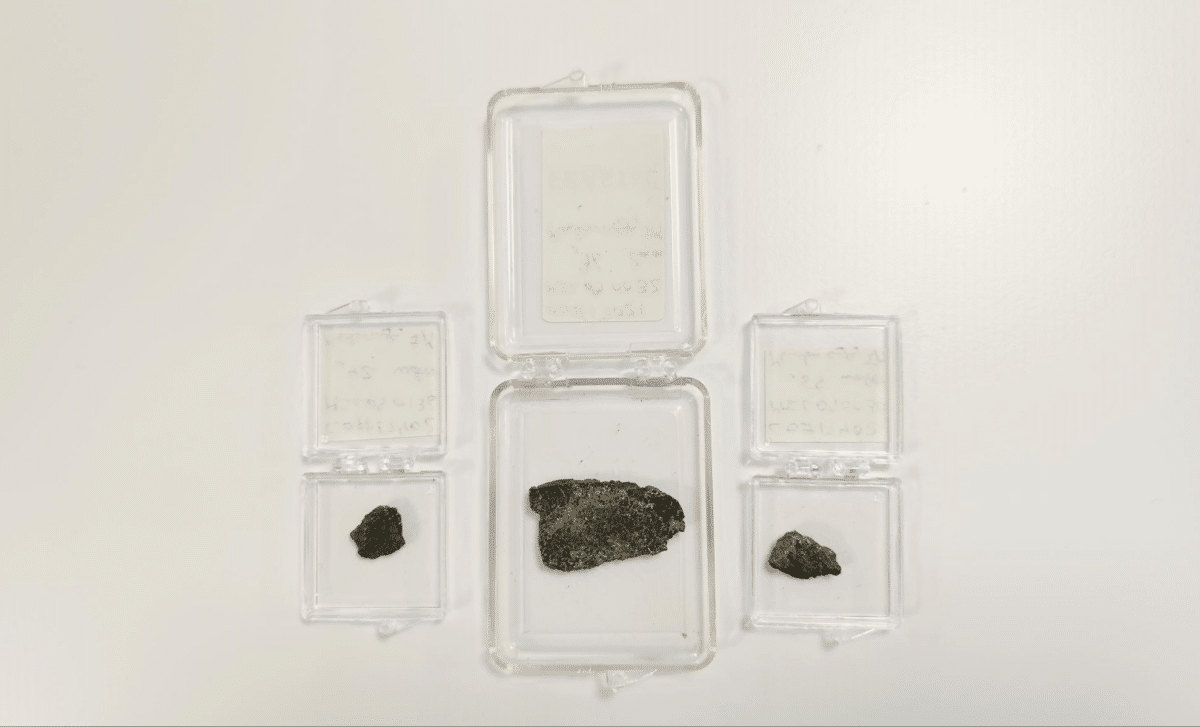
Scientists found traces of ink from ballpoint pens in Martian meteorites, an unexpected contamination that raises significant questions about sample preparation in planetary research. Published in Applied Geochemistry, the study by the University of the Basque Country highlights the unanticipated consequences of handling and processing extraterrestrial materials, a challenge that has profound implications for the integrity of future space missions. This revelation points to the need for a more refined approach to planetary sample handling, as contamination could obscure the very answers researchers seek from these precious samples from Mars.
The Mystery of Mars: Ballpoint Pen Ink Found in Meteorites
Meteorites from Mars are incredibly rare, offering scientists a once-in-a-lifetime opportunity to study the red planet’s makeup. However, the pristine nature of these extraterrestrial materials is often compromised during their preparation for analysis on Earth. In the most recent study, scientists made an alarming discovery: traces of ink from ballpoint pens were found in the samples they were studying. This contamination came not from Mars, but from the very process used to handle and prepare these meteorites for research.
Researchers from the University of the Basque Country analyzed six slices of post-processed Martian meteorites collected between 2001 and 2014. These samples had gone through various preparation techniques, including ultrasonic cleaning and cutting with diamond saws, designed to remove the outer crust and expose the interior for analysis. Despite these precautions, the study found that contaminants, including ink, were still present. “As planetary sample return missions continue to advance, the challenge of designing contamination-aware preparation protocols becomes increasingly important,” the team noted in the paper. This discovery underscores the complexities of handling such rare materials and calls for a more standardized and contamination-aware approach to their preparation.
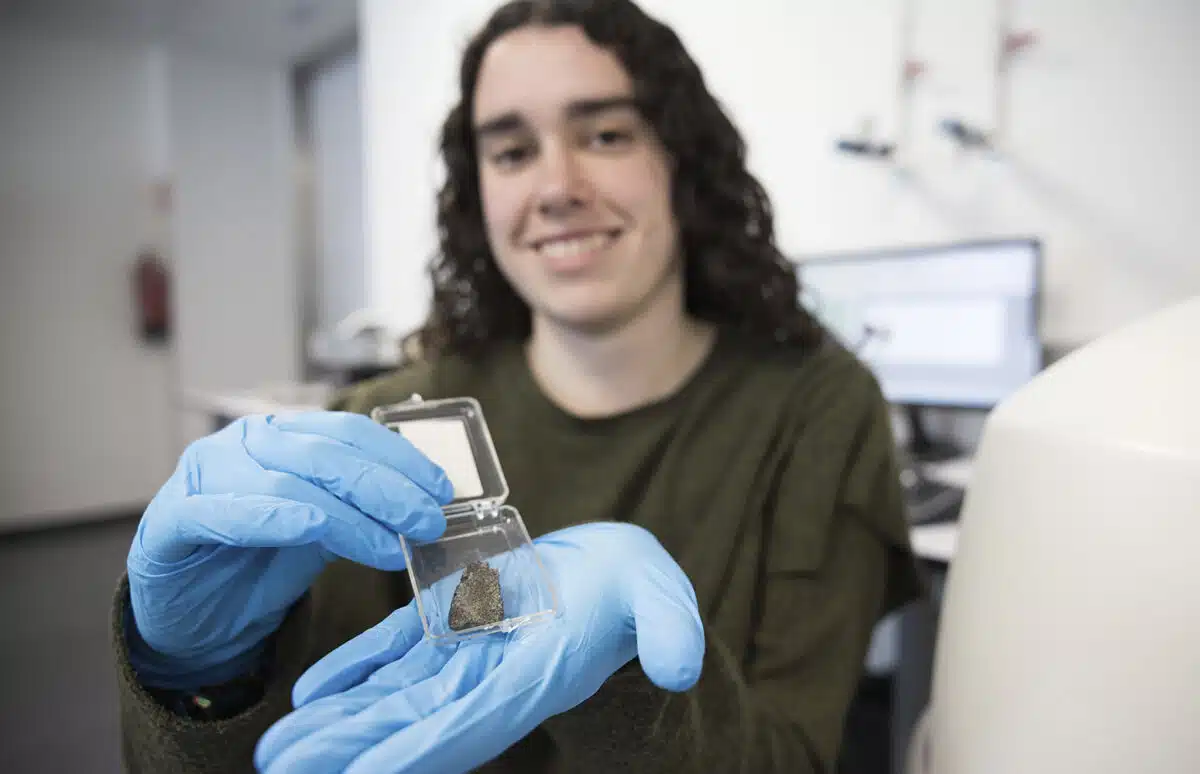 Leire Coloma, PhD Student at the EHU-University of the Basque Country showing extraterrestrial or meteorite samples
Credit: Egoi Markaida
The Process of Sample Preparation: A Delicate Balance
One of the most challenging aspects of planetary sample analysis is the preparation of extraterrestrial materials once they arrive on Earth. The act of bringing space rocks back to Earth already changes their composition.
“When [rock samples] pass through the Earth’s atmosphere… They undergo changes—usually caused by high temperatures and pressures—which generally result in a sort of crust forming on them,” explained Leire Coloma, one of the study’s co-authors and an analytical chemist.
This alteration creates a crust that complicates the determination of the original mineralogical composition of the meteorite. Removing this outer layer is essential, but as this study highlights, it is not always a straightforward process.
The team used Raman spectroscopy, a technique commonly employed to study the chemical composition of objects, to identify various contaminants. Among these were copper compounds, synthetic organic molecules used in inks for ballpoint pens and gel pens, and blue polyester, likely from textiles. These contaminants raise a crucial question: how much of the Martian rock’s natural composition is truly represented in these samples? The presence of such human-made materials suggests that, despite rigorous efforts to prevent contamination, these meteorites are far from untouched by Earthly influence.
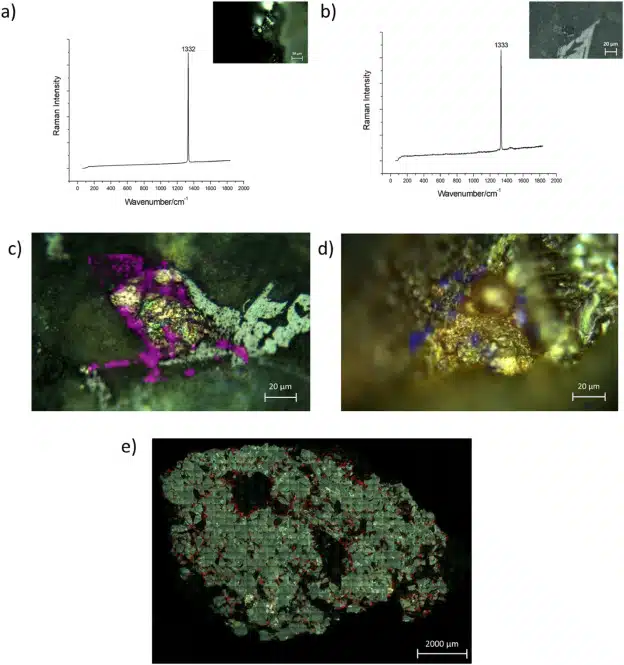 Raman spectrum of diamond in a) MIL 090030 Martian meteorite and b) MIL 090136 Martian meteorite. Spatial distribution of diamond in c) MIL 090030 Martian meteorite (in magenta), d) MIL 090136 Martian meteorite (in blue), and e) the full face of MIL 090030 Martian meteorite (in red).
Credit: Applied Geochemistry
The Importance of Contamination Control in Space Research
The findings also emphasize the importance of refining contamination control measures for future space missions, especially as NASA’s Perseverance rover continues to collect and send back Martian samples. The study’s authors suggest that contamination-aware protocols should be established and standardized across all laboratories analyzing extraterrestrial samples. “The lack of standardized, contamination-aware preparation protocols underscores the difficulties faced by researchers,” the study elaborates. The researchers are not only focused on identifying these contaminants but also on improving techniques to prevent them in the future.
NASA, along with other space agencies, has worked tirelessly to minimize contamination during planetary sample collection and preparation. However, this study shows that even the most meticulous efforts may not be enough. The risk of contamination is always present, whether from handling or from the preparation tools themselves. The ink found in these meteorites might seem trivial, but it highlights the inherent challenges in working with materials that come from another planet. Ensuring that future analyses are as uncontaminated as possible is vital for the accuracy of the findings.