
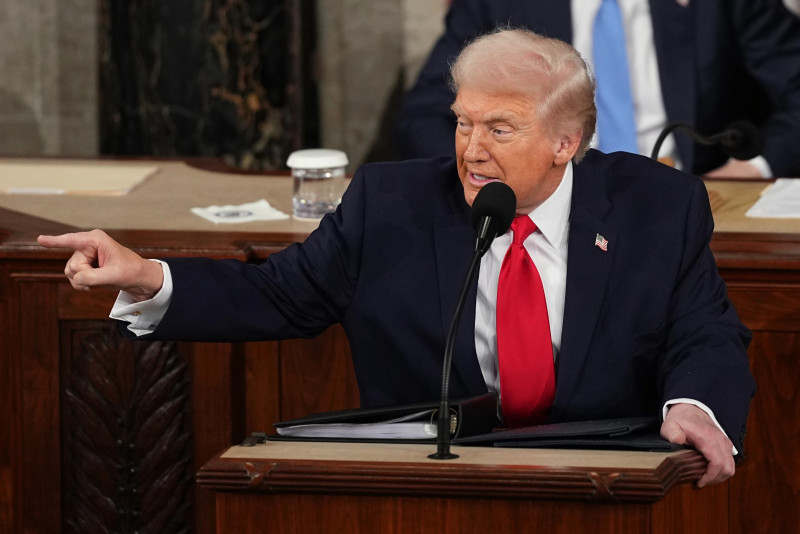
US President Donald Trump has described the ongoing war with Iran as a “little diversion” and expressed confidence that the conflict will conclude soon, despite mounting criticism at home over its human and economic toll.
Speaking at an event in Las Vegas, the president said the military campaign, which began with US and Israeli strikes in late February, was proceeding successfully.
“The war in Iran is going along swimmingly,” he said. “It should be ending pretty soon.”
He also praised US military strength, saying: “It was perfect. It’s perfect. It was the power we have. We had the most powerful military anywhere in the world.”
CNBC reported that, in remarks to supporters, Trump characterised the conflict as a temporary disruption during his second term.
“We had the best economy in the history of our country in my first term. And we’re blowing it out now… And despite our little diversion to the lovely country of Iran, lovely place,” he said.
“But we had to do that, because otherwise, bad things could happen, the really bad thing,” he added, referring to concerns over Iran’s nuclear capabilities.
His comments came as diplomatic efforts continue alongside military developments.
Earlier in the day, Trump said a 10-day ceasefire had been agreed between Israel and Lebanon, while indicating that a second round of direct talks between US and Iranian officials could take place “probably, maybe, next weekend.”
However, public sentiment in the United States appears increasingly sceptical. An Ipsos poll conducted last weekend found that 51 per cent of respondents believed the war was not worth its costs, compared with 24 per cent who said it was justified.
A separate survey by Quinnipiac University indicated that 65 per cent of voters blamed Trump for rising petrol prices linked to disruptions in the Strait of Hormuz since the conflict began.
The same poll showed that 36 per cent of voters approved of his handling of the Iran situation, while 58 per cent expressed disapproval.
The war, which has reportedly claimed more than 2,000 lives, continues to weigh on global energy markets and domestic political sentiment, even as the administration signals optimism about a near-term resolution. – April 17, 2026