
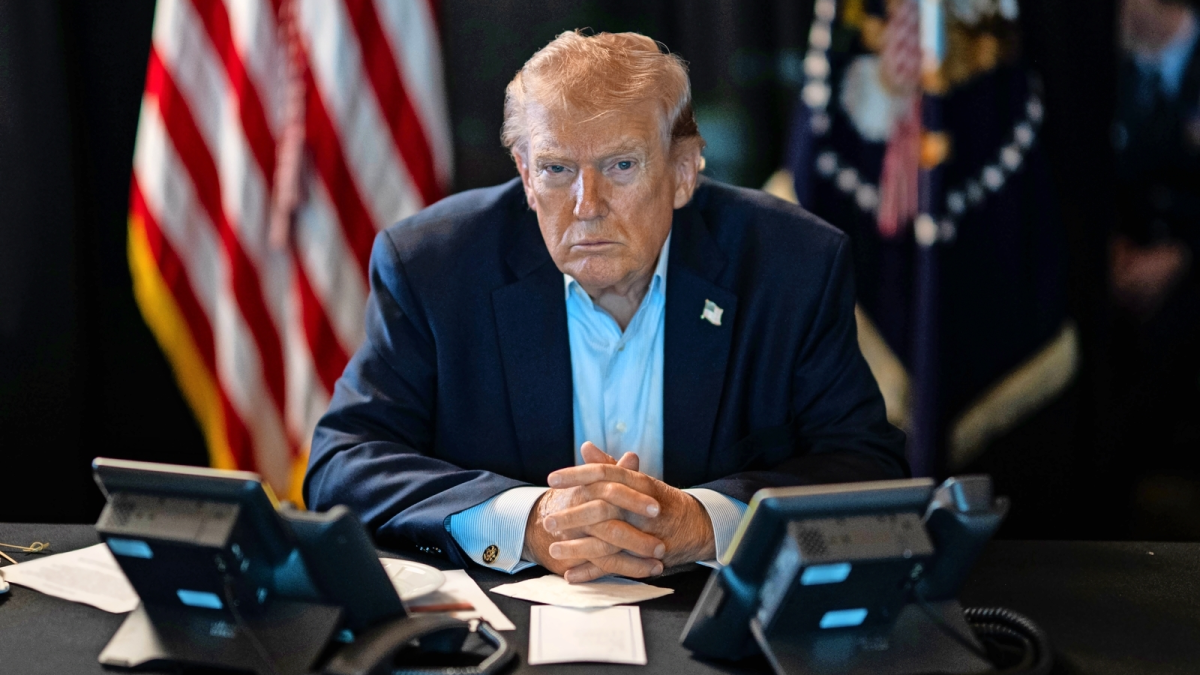
Odd Arne Westad, a professor of history at Yale, is a great China scholar and uncontested authority on the Cold War. Alas, that has not stopped him writing a substandard book that reads like an essay in Foreign Affairs magazine overinflated by a pushy literary agent. A slender volume with little to actually say, The Coming Storm packages some unremarkable summaries of the wants and fears of the great powers of our day, with which any Times reader will be familiar. It then compares the situation now with 1914 to warn vaguely and unconvincingly about the risk of a new global conflagration.
The book is revealing, though — just in the wrong way. It is not an accident that we are confidently informed on page 60 “that the US global interventionism of the Cold War and the post-Cold War era has come to an end in the 2020s, especially with the election of President Trump”, or on page 60 that “neither the Right nor the Left of American politics has any appetite for further interventions overseas”. This is demonstrative of the poverty of a kind of political science prophecy that always minimises the roles of politicians. It’s a familiar mistake made by academics, who tend to see politics as what they trade in: ideas, sociological trends, neatly identified national interests — and not a blood sport pursued by actual people.
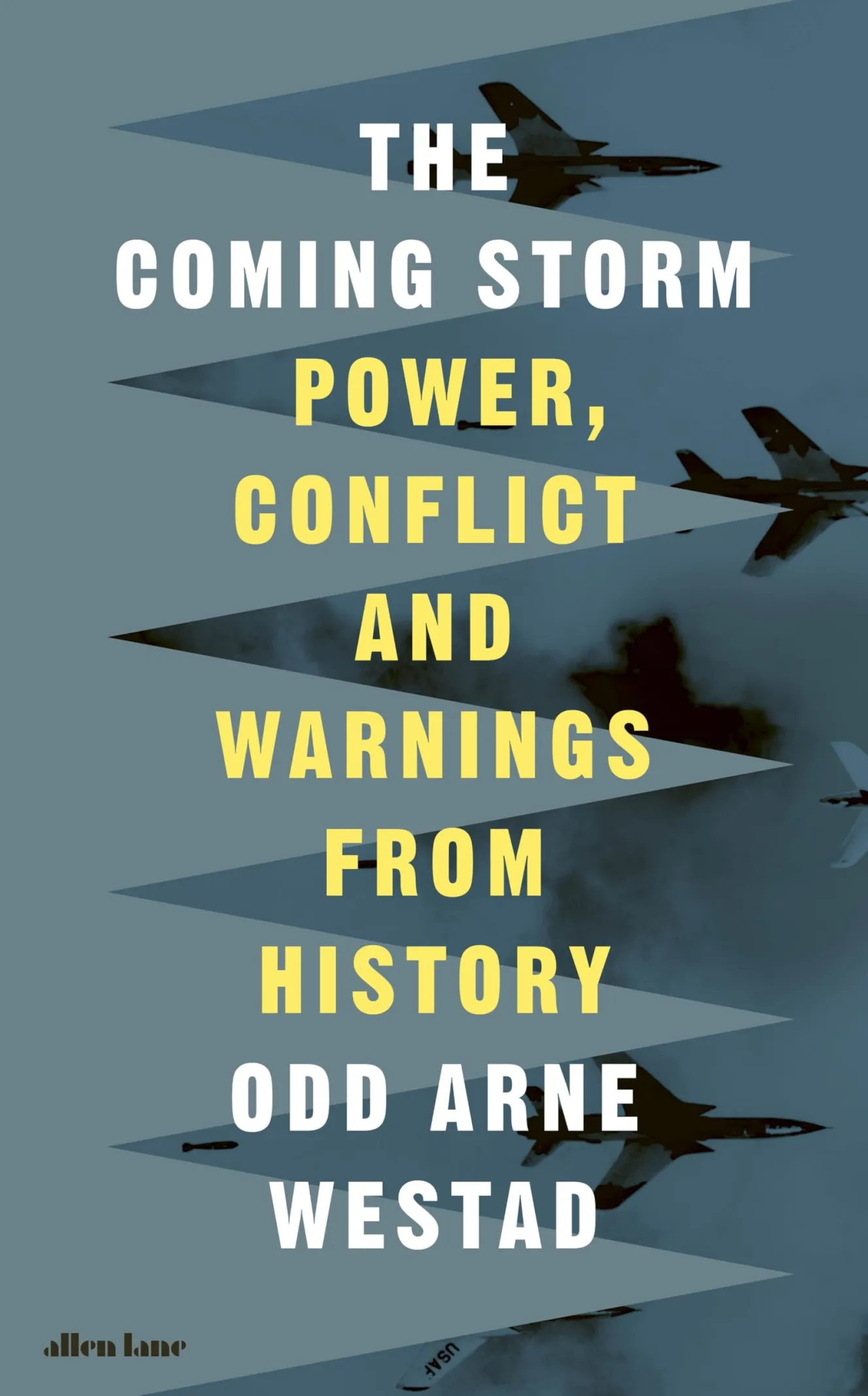
I am beating up on Westad because, before I spent a year in the Foreign Office as the special adviser to David Lammy, his were the kind of sweeping statements I would have made. When working with the White House I did not see a great power rationally identifying and pursuing its big-picture national interest. We were dealing with a court, not an administration — where a confused, frightened group of courtiers had been sucked into the vortex of one man’s unshackled id. It is unnerving to realise that there is no geopolitical logic to the Iran war more important than Trump’s own manic enthusiasm: his excitement and interest in the war Binyamin Netanyahu was offering after the addling rush of abducting Nicolás Maduro, the president of Venezuela.
That a US president who won the 2024 election promising to bring “world peace” might unleash his F-35s over Tehran is not a shock if you ground your geopolitics in people. If you remember that history is not just made of hegemons, balancers and Thucydides traps but men like Caligula, Bolívar or Lenin who make it up as they go along. Trump is a bit like Napoleon, who came to power on the 18th Brumaire promising to “save the revolution”, only to crown himself emperor. He’s not someone whose actions can be explained by “great power dynamics”.
Books newsletter
News, reviews, author interviews and suggested reads from our literary editors.
Sign up with one click
This failure of understanding has turned The Coming Storm into an artefact of a kind of think tank discourse that two years ago was projecting that a new Trump administration would be pursuing an anti-China policy on its return to power. We learn that “the United States seems determined to prioritise southeast Asia in terms of strategic planning” — which, now threatening Cuba, the US certainly isn’t — but nothing of Trump’s invitation to President Xi to his inauguration, or his export approval of Nvidia’s advanced AI chips. But Westad is not alone in hallucinating systematic geopolitics on to this administration.
Even the US National Security Strategy asserted on the subject of conflict in the Middle East last December that “there is today less to this problem than headlines might lead one to believe”. As marines and Thaad systems were raced from Asia to the Strait of Hormuz, the entire document now reads like an ideological reverie.
But there is a deeper poverty to The Coming Storm than misunderstanding Trump. And that is missing the role that small nations play in history. There is a crude interpretation of the outbreak of the First World War, which Westad seems to share, that the great power explosion in the summer of 1914 was driven by the decisions in Vienna, Berlin, Moscow, Paris and London. But that ignores the Balkan Wars, which ended in the summer of 1913, when decisions taken in Belgrade, Athens and Sofia drove the Ottoman Empire out of Europe almost entirely — terrifying the Austro-Hungarian Empire into its cataclysmic overreaction after Gavrilo Princip’s shot rang out in Sarajevo.
What I saw in the Foreign Office was not a world of Westad’s five powers — the US, China, India, Russia and the EU — with others dancing around them. We were not operating on a board as simple as the game Diplomacy, but one crowded with middle powers and small nations. Europeans and Americans have been reacting to the history being made by Volodymyr Zelensky and Netanyahu. Ukraine’s survival and Israel’s pursuit of the Iranian regime show that determined small powers can command events just as much as great powers.
The greatest weakness of The Coming Storm, despite its determination to make us imagine America as Britain in 1914, China as Germany and Russia as Austria-Hungary, is its failure to convince on its central premise: Westad argues that we risk a chain reaction of alliances that will drag all the great powers into a world war. “For the first time since World War II, there is a real risk of the United States and Europe drifting apart,” Westad writes. “There is nothing that could increase the chances of war in Europe more than such a development.” Well, quite.
The prospect of the European Nato or, even worse, only a few European states fighting Russia alone in the Baltics as an isolationist White House keeps America out is a genuine worry in the chancelleries of Europe. But that would be a very different kind of war from the one that erupted in 1914, when allies felt compelled to support each other militarily. The fact that Westad knows this leaves his central metaphor fake. Compelling at 20 pages, unconvincing at 200, this essay should never have been a book.
The Coming Storm: Power, Conflict and Warnings from History by Odd Arne Westad (Allen Lane £22 pp256). To order a copy go to timesbookshop.co.uk. Free UK standard P&P on orders over £25. Special discount available for Times+ members