
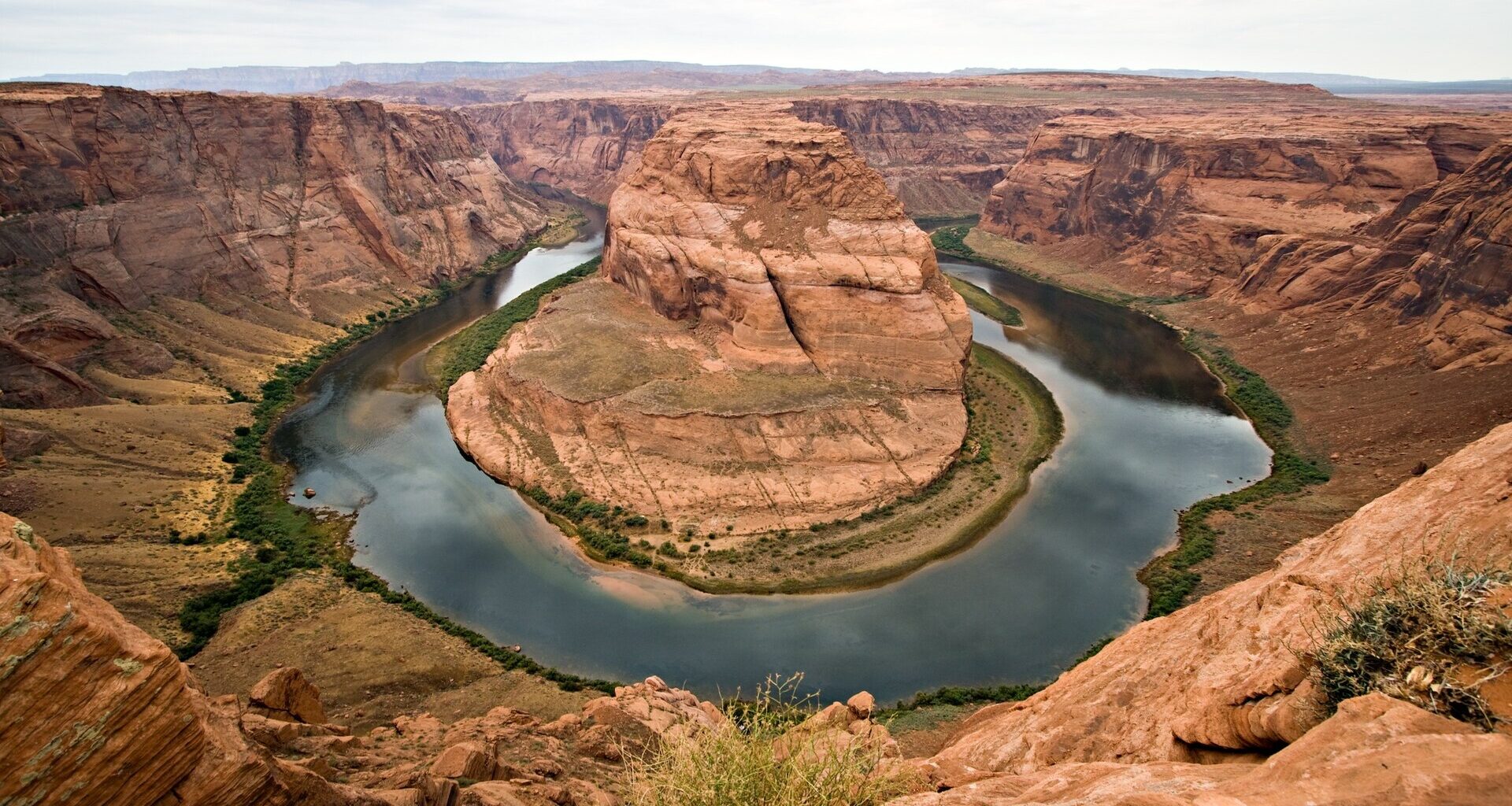
Scientists have known that the Colorado River has existed in western Colorado for 11 million years. However, the 5 million years it spent carving a path through the Grand Canyon remained a mystery until now.
A study published in Science has revealed that the Colorado River did not always flow through the Grand Canyon area; the timing and mechanism of this relationship have been subjects of ongoing debate.
“The timing and mechanism,” the study authors explained, “of the integration of the Colorado River and the incision of the Grand Canyon remain among geology’s enduring controversies.”
Geologists recognized that the Grand Canyon was carved out in multiple phases over a long period. However, they’ve debated the details of how and when this occurred, juggling over a dozen hypotheses, according to co-author John Douglass from Paradise Valley Community College.
The study presents the Colorado River as a resourceful character, overcoming natural obstacles in the terrain to succeed in its endeavors. It filled a lake that eventually allowed it to break new ground and continue carving through the Grand Canyon for approximately 5 million years.
The mystery may have been resolved thanks to a crucial period in the river’s development: the Bidahochi Basin, an ancient lake on Navajo land. By analyzing the zircons found in the basin, described by the study authors as “time vaults,” geologists were able to determine the origin of certain sediments.
How the Grand Canyon was formed
Ryan Crow from the U.S. Geological Survey, along with John Douglass and Emma Heitmann from the University of Washington, first met while studying the deposits of Bidahochi Lake.
Zircons, described as “some of the oldest fragments on Earth,” are microscopic crystals formed from cooling magma. The geologists employed a technique that enabled them to study this mysterious lake, which might hold the answer to this geological puzzle.
“Detrital zircon geochronology” employs lasers or ion beams to measure the ratios of uranium and lead isotopes in numerous zircons from a sample. This method allows geologists to analyze each zircon to determine when it was formed and deposited.
By comparing thousands of zircons from the dried-up lake with other deposits along the Colorado River, the researchers discovered that these sediments were deposited by a flowing Colorado River approximately 6.6 million years ago. The study identified fossils of large fish as evidence of the strong river current that once existed in the area.
Grand Canyon’s fingerprint found
The findings provide a potential solution to the longstanding mystery of the Colorado River’s activity 5 million years ago. It filled the Bidahochi Basin and subsequently overflowed to carve the Grand Canyon.
“Age patterns revealed a ‘fingerprint’ of Colorado River sediment, suggesting its arrival into an upstream lake by 6.6 million years ago and its subsequent integration with the Grand Canyon and downstream catchment,” as per the study.
The direct connection likely occurred through a combination of processes, but the zircon data lend support to the long-debated “lake spillover” hypothesis.
As he concluded in Phys, “There’s something unique and disquieting when the planet’s history is laid out before our eyes, but we cannot fully read it.”