
This article contains affiliate links; if you click such a link and make a purchase, we may earn a commission.
Why Your Phone Doesn’t Need a Screen ProtectorTrevor Raab
“Hearst Magazines and AOL may earn commission or revenue on some items through these links.”
Smartphone screen protectors are a wildly popular way to make absolutely sure you don’t scratch or crack your phone’s display. While not quite as popular as smartphone cases, they are on the list of upsells that retailers will try to convince you to buy whenever you get a new handset. And we’re buying them, too: According to multiple forecasts from tech industry analysts, the screen protector market eclipsed $50 billion in 2025, and will come close to doubling that number by 2032.
Here’s the thing. You don’t need to put a screen protector on your phone. That isn’t to say that they don’t do anything. That extra layer of material will create a buffer and keep your phone safe. But using one is kind of like putting water wings on an Olympic swimmer: It’s just kind of silly. Modern phone displays are made with extremely durable materials that can keep up with the rigors of daily life. While there may be extreme circumstances that might lend themselves to extra protection. But most people who buy them are wasting their money.
Modern Phones Have Gotten Seriously Tough
The sheer durability of smartphones has come a very long way from the original iPhone from 2007 and its Android counterpart, the HTC-made T-Mobile G1. Nearly 20 years later, even folding phones with bendable displays, which we often criticize for fragility, are far more rugged than their ancestors.
The difference comes down to one brand, and not the one you think. It’s Corning, the company that has created the proprietary glass coverings for every iPhone and upscale Android display since the birth of the smartphone. Corning has been the biggest game in protective screen glass for a long time, and it stays that way because its product keeps evolving. The brand’s latest materials, which you may know as ”Ceramic Shield” on the iPhone or ”Gorilla Glass” and “Gorilla Armor” on various Android phones, are mind-bogglingly resilient to damage from scratches and accidental drops.
For example, the Corning Gorilla Armor 2 glass used in Samsung’s Galaxy S25 phones and this year’s Galaxy S26 lineup has been tested and shown to withstand scratches and damage after a one-meter drop. That theoretically means you aren’t going to bust up your phone because it slips out of your pocket. And that’s without a case, which will absorb most of the shock from a drop, and often features a small lip around the edge that keeps the screen from a full faceplant onto a hard surface.
Is there an extreme circumstance that might lead you to want extra screen protection? Maybe, but they aren’t the everyday spills and fumbles you’re likely to go through in your day-to-day.
What About Screen Protectors for Privacy?
There is an exception, of course. (Every rule has one.) There are high-end screen protectors that add screen privacy, preventing strangers from looking over your shoulder and checking out what you’re doing. As a subway commuter in New York who deals with sensitive materials for work from time to time, I think there’s a lot of value there.
At the same time, though, I wouldn’t recommend using one unless you have information on your phone that people shouldn’t be able to see for even one second. These screen protectors almost universally impact your screen’s brightness and color accuracy, making your phone less effective for general use. It’s a big tradeoff and, again, one that you probably shouldn’t need to make. (Plus, if you are serious about screen security, the Samsung Galaxy S26 Ultra integrates this kind of protection directly into the display without an extra accessory. It works way better than a screen protector. Trust me.)
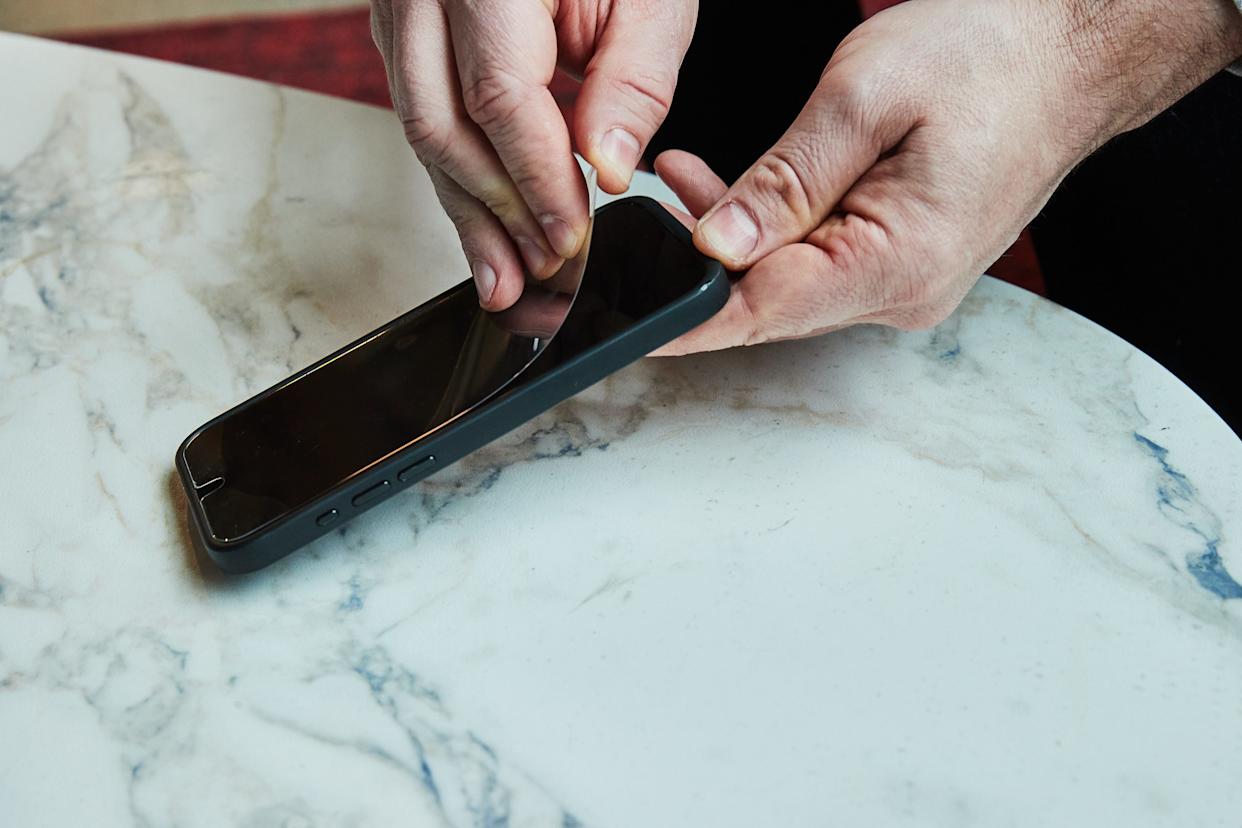
Putting on a screen protector is easy… unless you get a bubble between the glass and the display.Trevor Raab
Personally, I haven’t used a screen protector on my phone since the late 2010s. The last time I had a faint, barely visible hairline mark on the screen of my go-to device after a significant tumble was in 2018, on an iPhone X. Since then, I have gone through dozens of phones and accidentally dropped many of them without consequence.
After all these years, I look at a screen protector and all I see is the extra cost and the problems they cause—smoothing out bubbles between a screen and a screen protector is a serious chore. If you’re worried about protecting your phone, I totally understand. But you’re much better off putting the money you’d spend on a screen protector to buy a better case, and investing in an extended protection plan from Apple, Google, Samsung, or your wireless carrier.
You Might Also Like