
Readers of RECORD have always been intrigued by houses that architects design for themselves. One reason is that, without client-driven compromises, the completed project is more likely to embody its author’s original intentions. Another is that architects rarely have much money, so they must substitute a high level of discipline and ingenuity.
After a visit to Japan, Rogelio Bores of HW Studio (a 2024 Design Vanguard) was eager to explore the concept of kehai or “subtle presence.” But he feared the modest spaces likely to result from such an investigation would be of little interest to his clients. So he designed a place for himself.
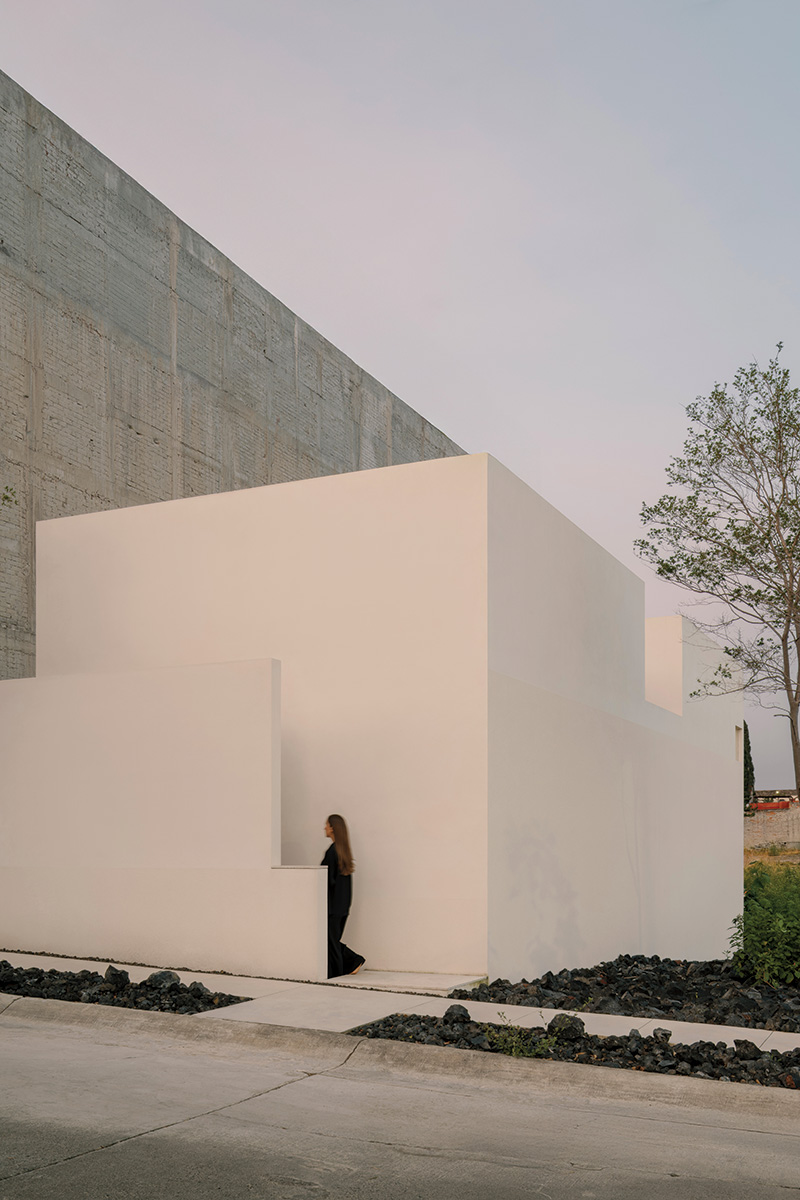
Bores built his home, which he shares with his girlfriend, psychologist Vera Sánchez Macouzet, in Vista Bella, a quiet enclave popular with artists and academics in Morelia, in the Mexican state of Michoacán. On a narrow lot that slopes down to a river and adjoins an ecological reserve, he set an opaque rectangular volume of brick, finished in white stucco, contiguous to the reserve and close to the sidewalk. “From the outside, the house seems like nothing more than a box, like the ones I’ve been making throughout my career,” he says. “Quiet and closed, like a stone in the urban landscape.”
The 1,025-square-foot project cost $75,000. “That’s all the bank would loan me,” recalls Bores, who spent the money wisely. For example, during excavation, he discovered bedrock 5½ feet below grade. Building at that level allowed him to reduce foundation costs. This frugal move led to an enhanced entry sequence: a stair, concealed from the sidewalk by a wall, descends to the front door. “One enters by going down,” says the architect, “like bowing before something sacred.”
1
2
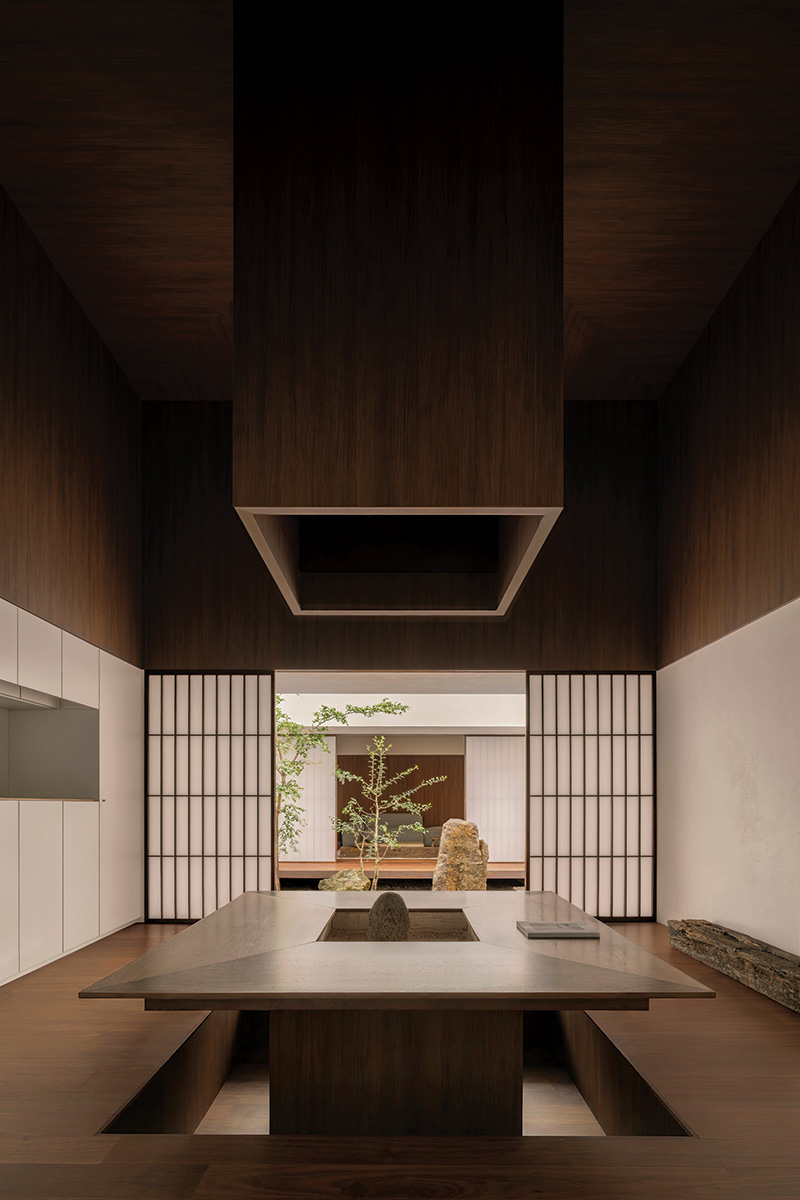
Visitors enter the house by descending a staircase (1), which leads to the dining area (2) and the courtyard (3). Photos © César Béjar (1 & 2), Gustavo Quiroz (3), click to enlarge.
3
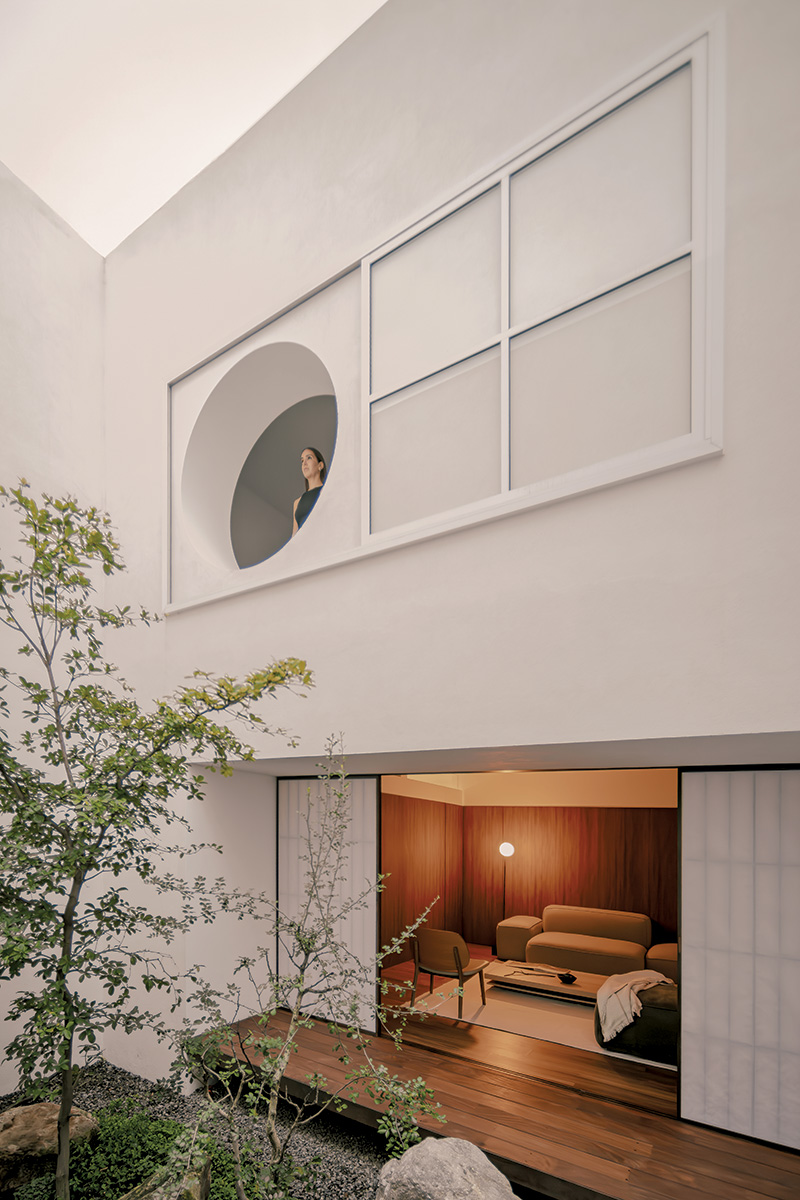
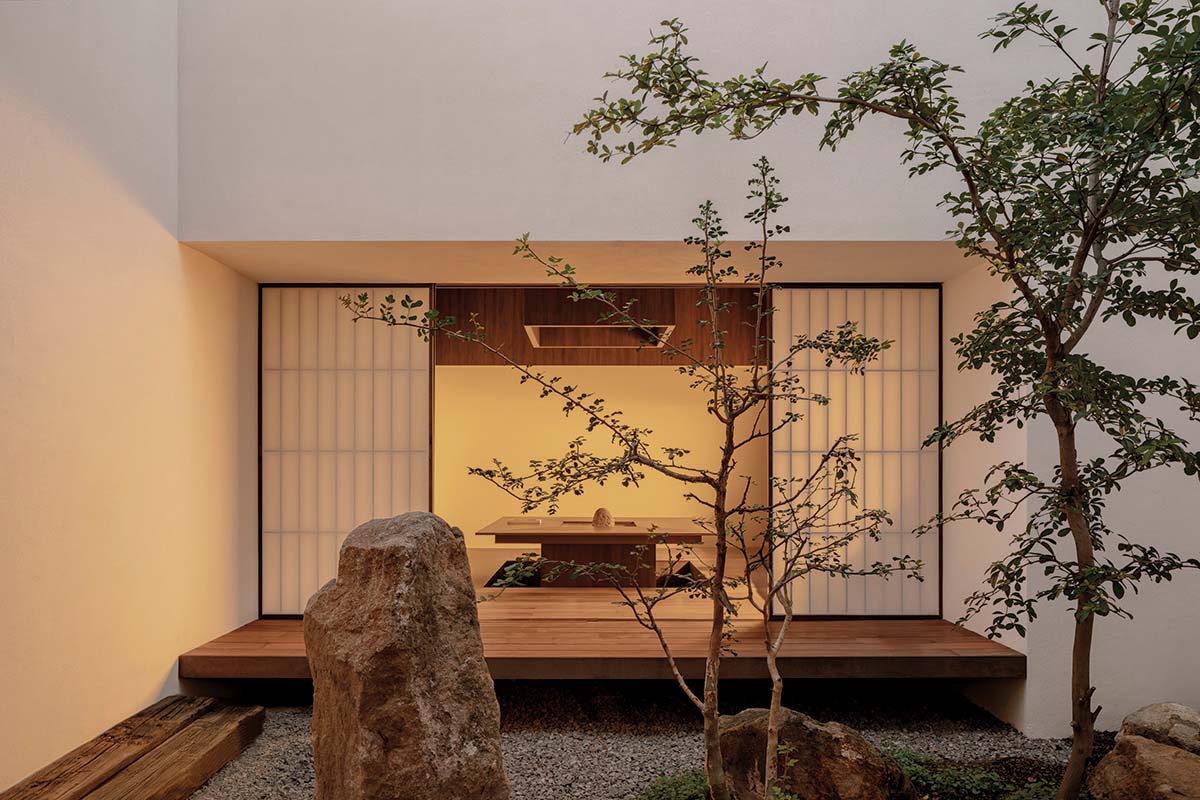
The program included only essential spaces. A small but serene central courtyard, with a Japanese-inspired stone garden, opens to two compact cubic volumes—one in front, with a double-height dining room and kitchen, and another in back, with a living room below and a bedroom above. “Everything is contained and inward-looking,” says Bores. Passage between the two volumes requires going outdoors, which is not unusual in central Mexico’s temperate climate. “If it’s raining,” he notes frankly, “you get wet or you wait for the rain to stop.”
4
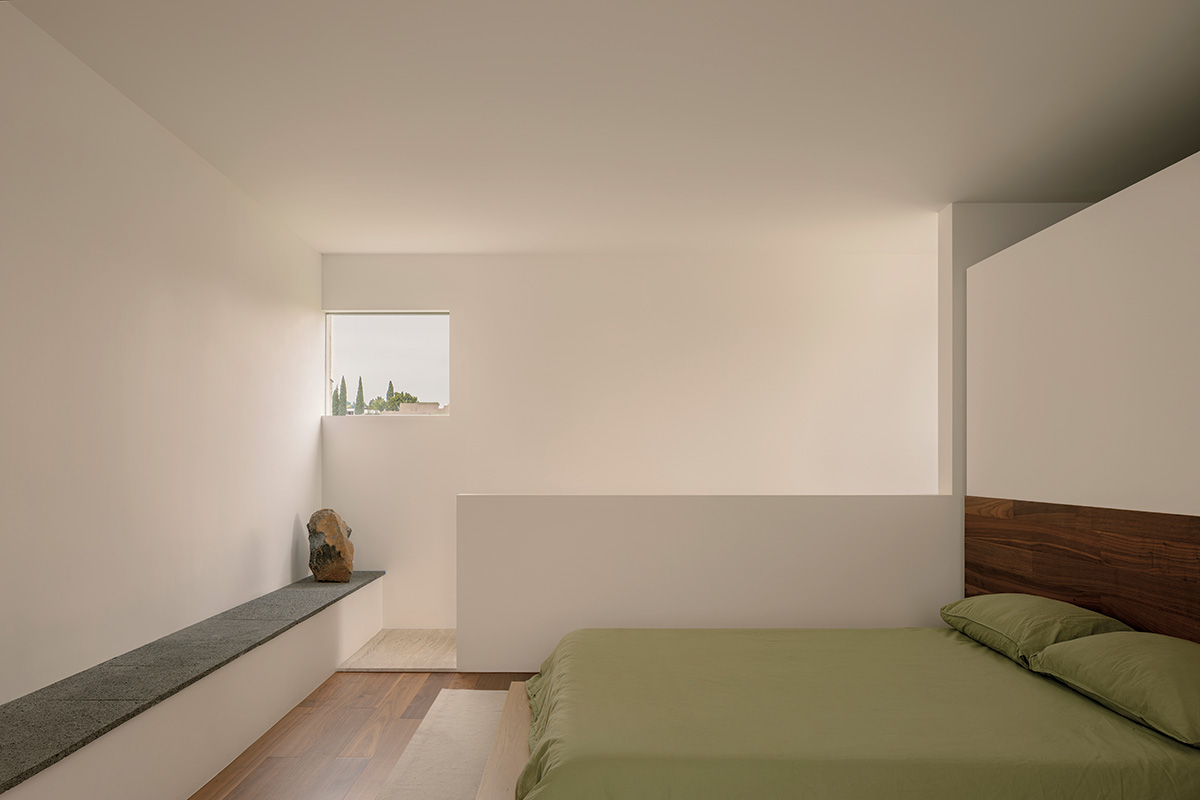
Minimal detailing in the bedroom (4) and courtyard (5) creates a serene atmosphere. Photos © César Béjar
5
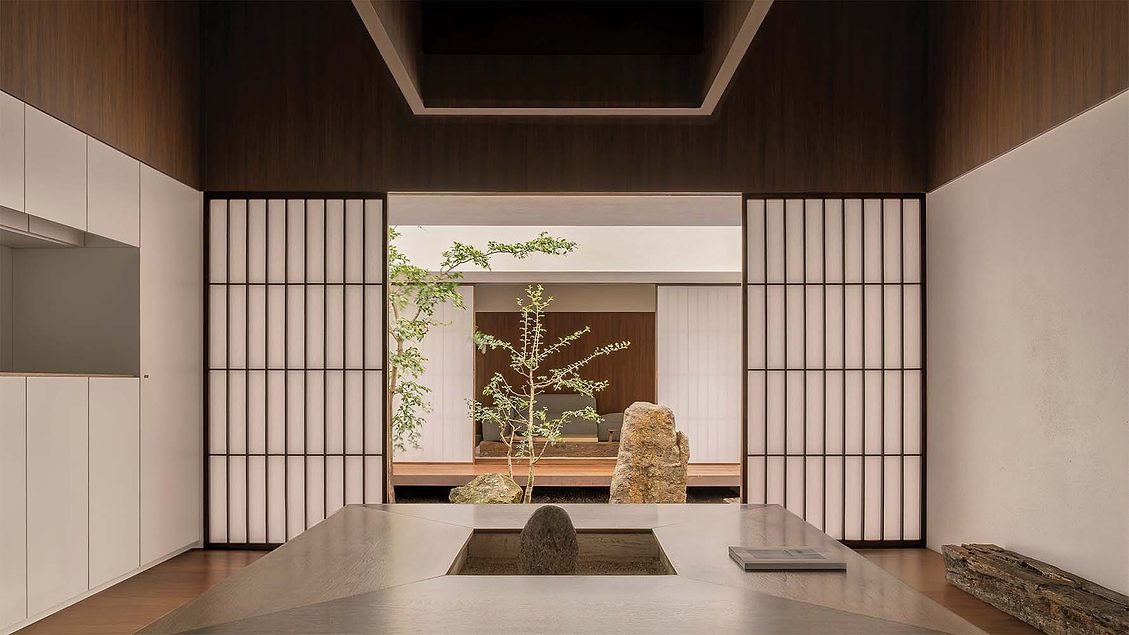
Floors are steel-framed decks anchored to the masonry walls and finished in engineered walnut. On the lower level, these float above the gravel-surfaced courtyard, which is separated from interior spaces by sliding shoji screens of wood-framed rice paper, each of which cost approximately $60. “They were an aesthetic choice but also a budget one,” says Bores. “They distribute light beautifully, they move with incredible gentleness, and, from the standpoint of thermal comfort, they work much better than glass—something that really surprised me.” They are set at the inside edge of a transitional indoor/outdoor zone known in traditional Japanese architecture as the engawa, which protects them from rainfall.
The dining room is an elegant exercise in restraint. The kitchen is integrated into a wall of flush, painted cabinetry—one of two parallel white planes that delineate the lower half of the tall space. The base of the square dining table is sunken to accommodate sitting on the floor. At the center of the tabletop is a sand-filled firepit, vented by a wood-clad hood above. It serves as a hearth and can also be used for cooking. “We wanted to reinterpret the act of gathering around fire as part of everyday life,” says Bores. “It’s a system found in old Japanese houses. I must confess: I haven’t tried it yet.”
The second-floor bedroom is an intimate retreat, where an unglazed oculus overlooking the foliage of a tree in the courtyard can be closed by an exterior sliding sash. Two small square windows, set high for privacy, frame views toward the reserve and the river. Finishes throughout are mostly white-painted plaster and walnut millwork. Detailing is flush, frameless, and fastidious.
Bores is deeply spiritual. He once confided he might be happier as a Zen Buddhist monk than as an architect. This inevitably informed the design of his home. “The Japanese say the soul of a house lies not in its walls, nor in its roof,” he muses enigmatically, “but in the void it contains.”
Economy was the path Bores followed to create that soulful void. “With a limited budget, the decisions were less aesthetic than vital. Every cent had to speak with clarity; every centimeter had to make sense,” he explains. “But, beyond economic constraints, it was my long and slow path toward Zen that truly shaped it.” His thoughts are lofty, but his home is as grounded as it is gracious. “This house was not made to impress,” he adds. And yet, with its subtle presence, it does.
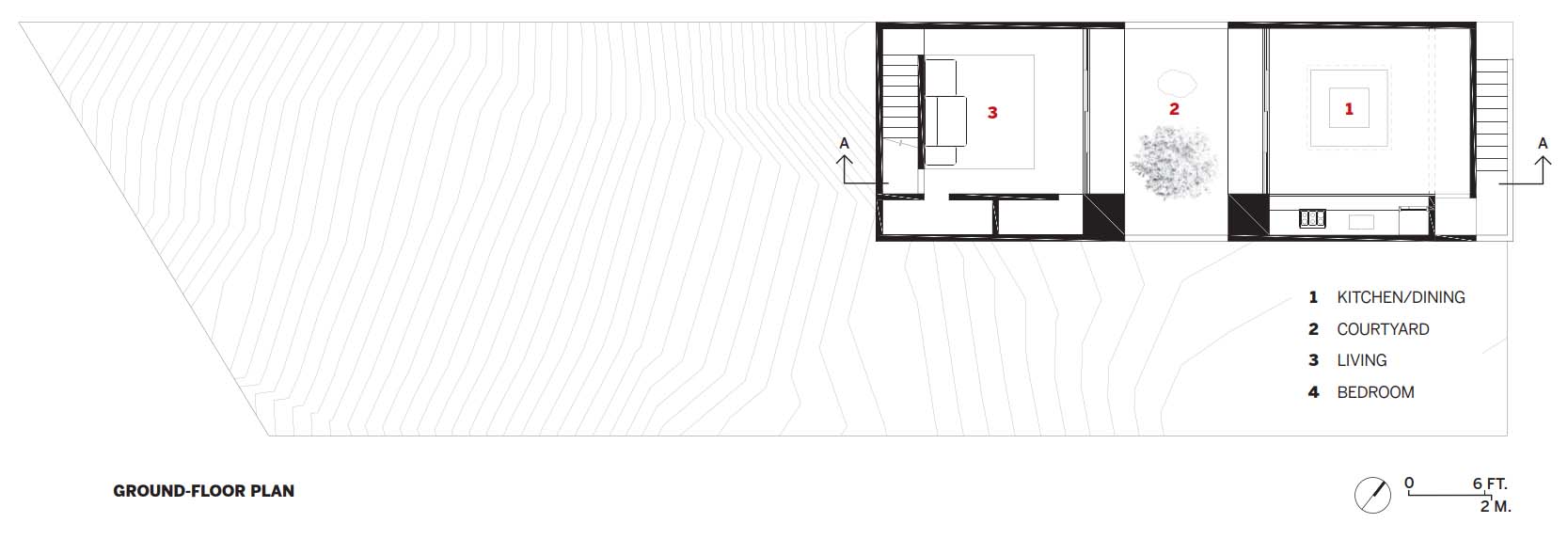
Image courtesy HW Studio
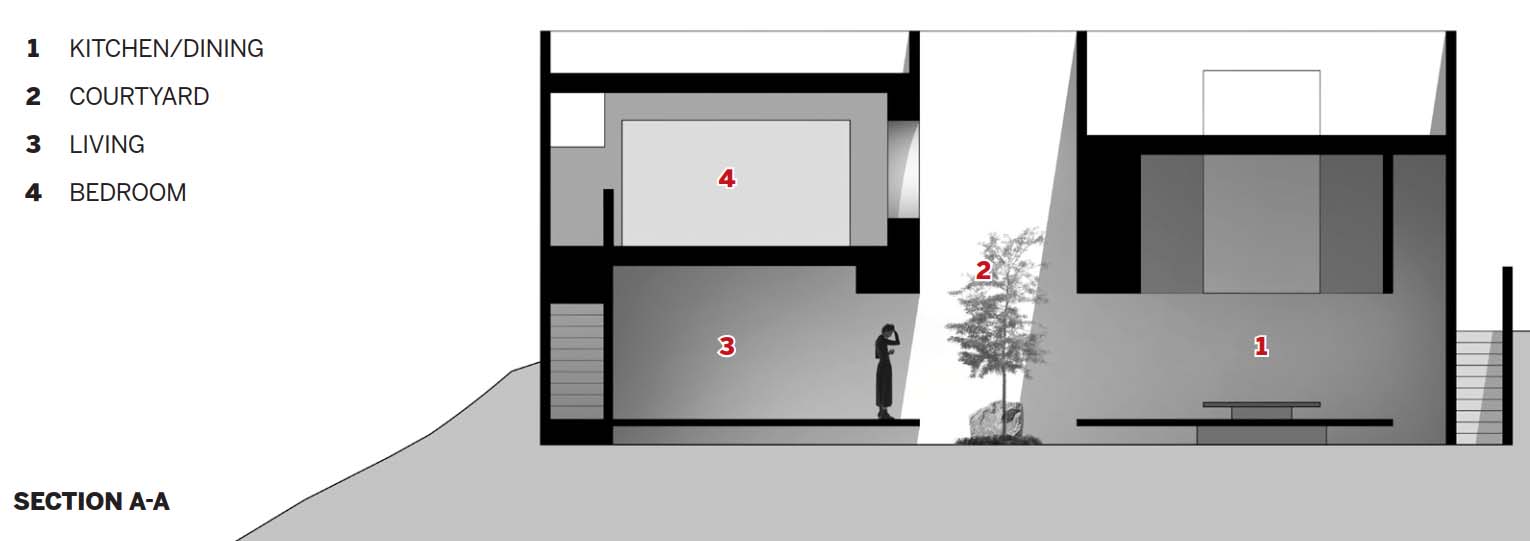
Image courtesy HW Studio
Credits
Architect:
HW Studio — Rogelio Vallejo Bores, Oscar Didier Ascencio Castro, Nik Zaret Cervantes Ordaz
Engineer:
Abdiel Nuñez Gaona (structural)
Consultant:
Ordine Furniture (kitchen)
General Contractor:
Alberto Gallegos Negrete/Group GAPSE
Size:
1,025 square feet
Cost:
$75,000 (construction)
Completion:
May 2025
Sources
Interior Finishes:
Ozu Washi (shoji paper); Bastet (flooring); Verolegno (wallcoverings)
Cladding:
Uniblock (stucco); Comex (elastomeric)