
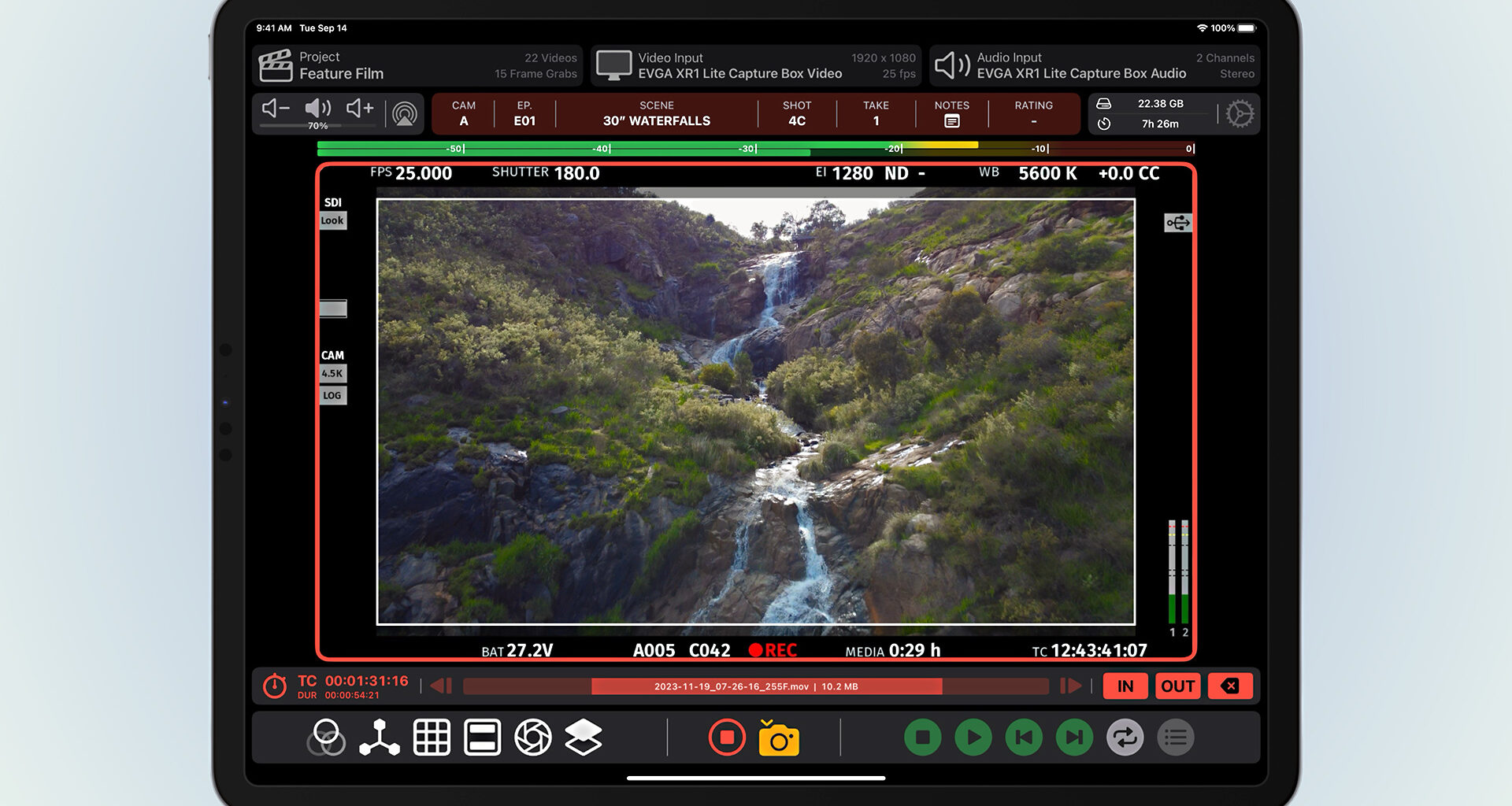
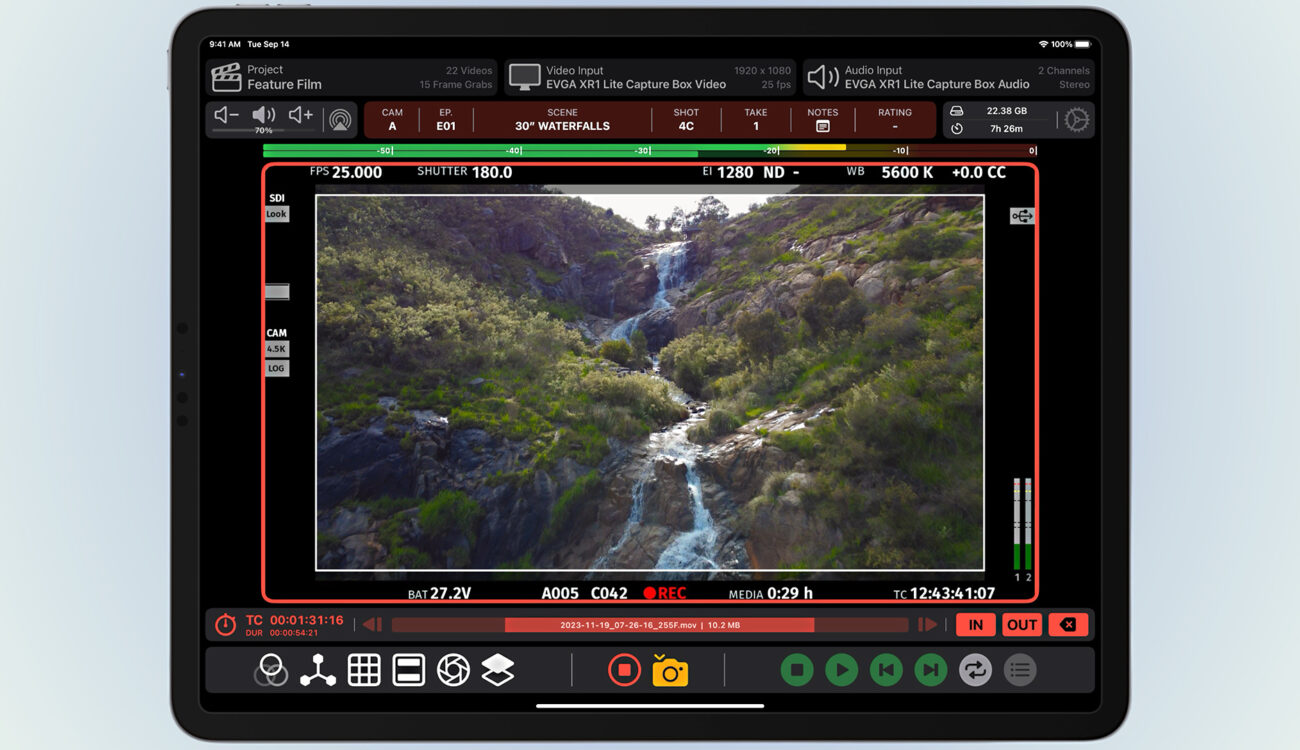
The Video Assist iPad app receives a significant update at NAB 2026, introducing Advanced Masks, Record Trigger support for Canon C50 and C400 cameras, expanded Metadata Extraction for all RED cameras and the Sony Venice, plus a new VTR Reports feature for generating end-of-day PDF reports directly on set.
The Video Assist app, built by solo developer and former VTR operator Bradley Andrew, has been earning its reputation as a serious contender since we first covered it back in 2023. The app connects to cameras or wireless video systems via any UVC capture card (HDMI cards typically run $20 to $100, SDI cards $200 to $650) and offers a comprehensive toolset including LUTs, Live Compositing, Focus Peaking, False Color, Zebras, Anamorphic Desqueeze, and Audio Meters. It also supports clean video output via USB-C to HDMI/DisplayPort adapter or AirPlay for driving a separate director or client monitor. This latest update, timed for NAB 2026, pushes the app deeper into professional production territory.
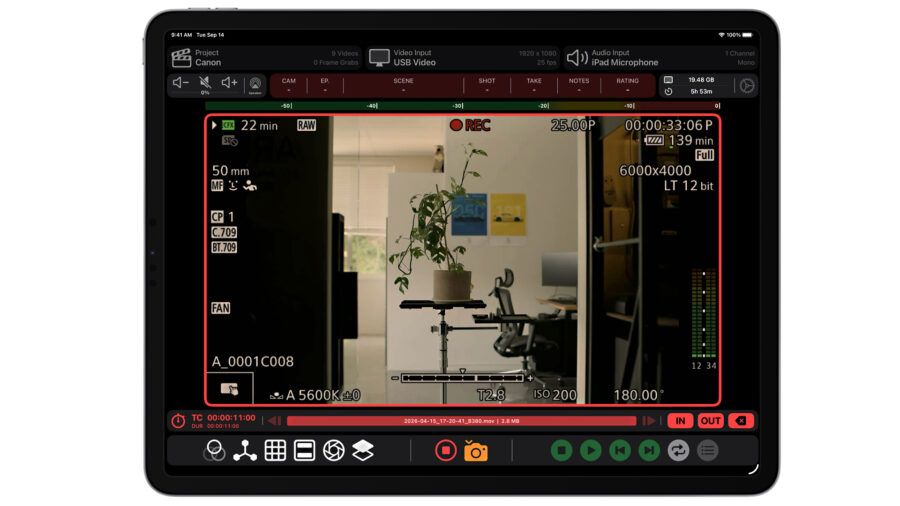 Image credit: CrashzoomMetadata Extraction expands to RED and Sony Venice
Video Assist’s Metadata Extraction system uses computer vision to read status information displayed on a camera’s video feed. Rather than relying on proprietary data protocols, the app “reads” the overlays that cameras output alongside their image. Previously limited to ARRI cameras, this feature now supports all RED cameras and the Sony Venice.
Extracted metadata fields include clip name, frame rate, lens, iris, ND filter, exposure index, shutter, white balance, color correction, and timecode start/end. The camera file name can also be detected and automatically applied to clips recorded within Video Assist, keeping naming consistent between original camera media and the app’s recordings. For VTR operators and DITs managing footage across multiple cameras, that kind of automatic metadata sync can save considerable time.
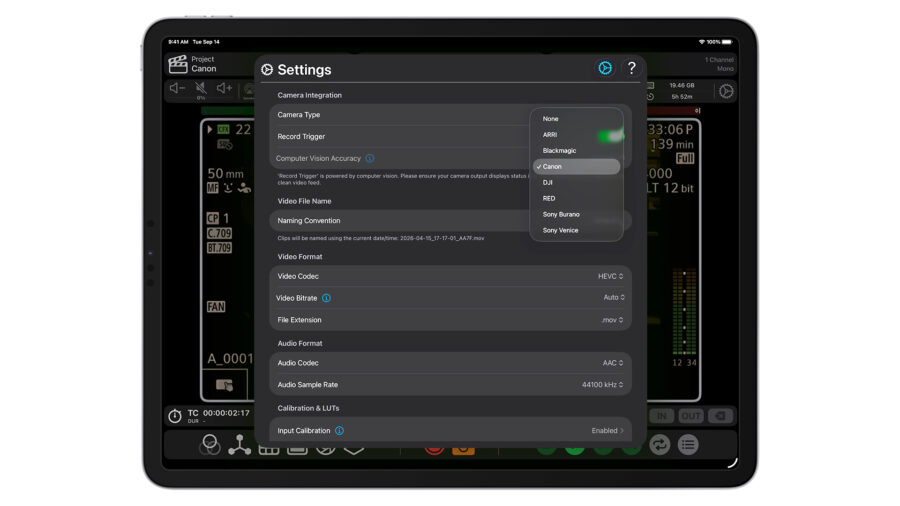 Record Tigger support for Canon C50 and C400. Image credit: CrashzoomCanon C50 and C400 get Record Trigger support
Record Trigger, another computer vision-powered feature, automatically starts and stops recording in the app when it detects that the connected camera is rolling. The system already supported ARRI, RED, Sony Venice, Sony Burano, Blackmagic, and DJI cameras. This update adds the Canon C50 and Canon C400, with all video output display modes supported. According to the developer, other Canon cameras using the same output system should also be compatible.
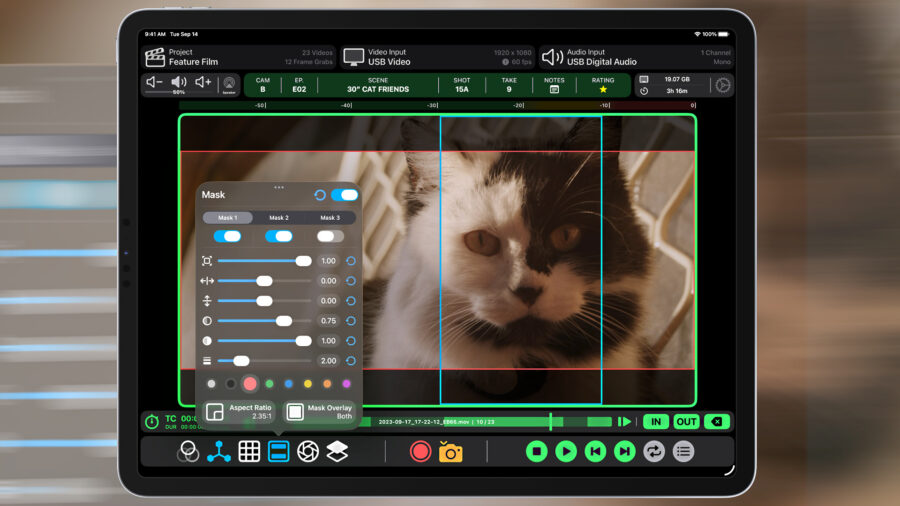 Multiple masks. Image credit: CrashzoomVTR Reports and multiple masks
A new VTR Reports feature lets users generate PDF documents containing clip thumbnails, metadata, clip info, camera info, and notes for each recorded clip. This is designed for sharing selected takes with post-production or creating technical reports at the end of a shoot day, without needing a dedicated DIT handling this separately.
The Mask Effect has also been expanded to support three separate masks simultaneously, each with independent controls for shading, color, and line thickness. On set, this means you can overlay multiple frame line guides at once, for instance showing both a 2.39:1 theatrical crop and a 16:9 delivery format on the same feed.
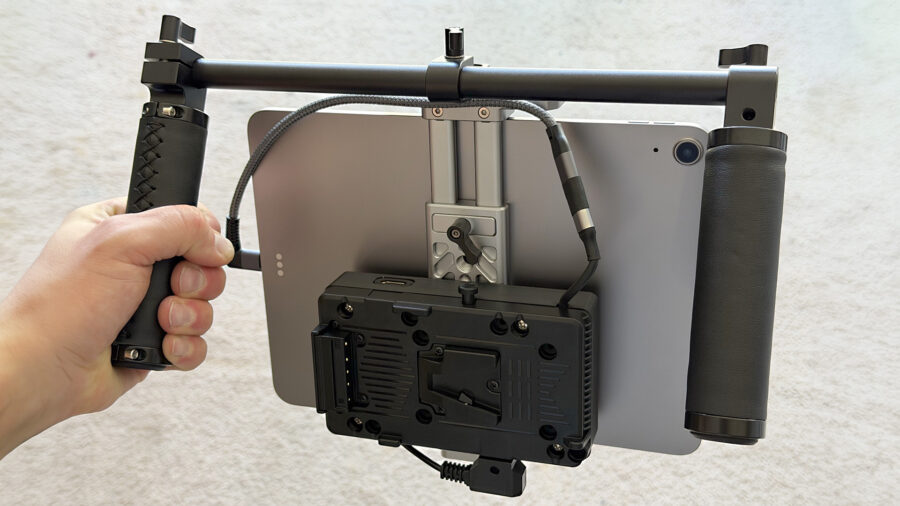 Video Assist on handheld rig. Image credit: CrashzoomPricing and availability
Video Assist is available as a free download on the App Store, with the free version running in Demo Mode (with watermark) for hardware compatibility testing. The Base Subscription is priced at $129.99/year, while the Pro Subscription at $199.99/year adds LUTs, Focus Peaking, False Color, Zebras, Compositing, ProRes Recording, and Metadata Extraction. If you are at NAB 2026, you can check out Video Assist at the Accsoon booth (#C7338).
Have you been using Video Assist on your productions, or are you considering it as a lightweight alternative to traditional video assist setups? Don’t hesitate to let us know in the comments below!