
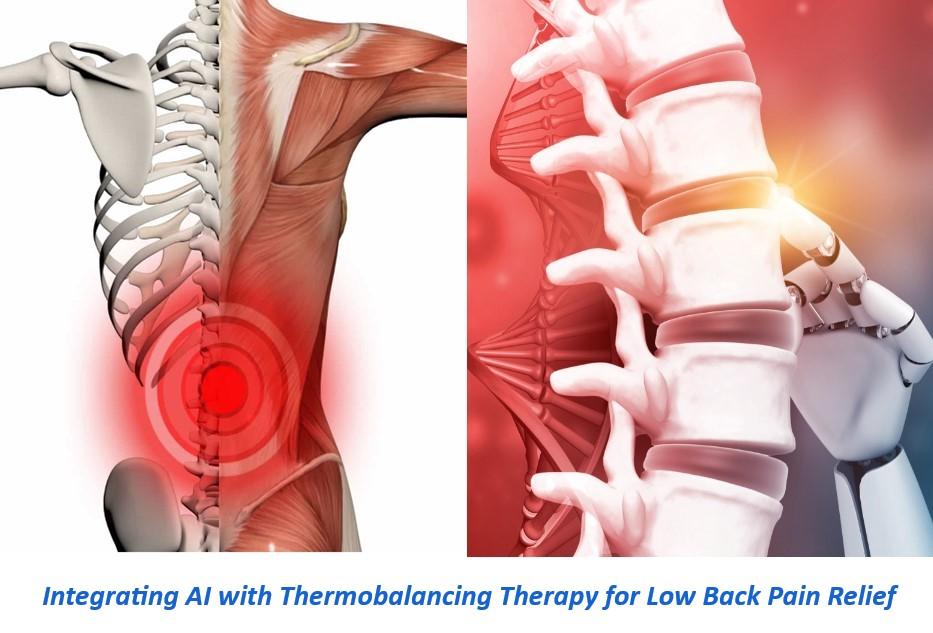
Low back pain remains one of the most common and challenging health conditions worldwide, affecting millions of individuals and significantly reducing quality of life. From limited mobility to constant discomfort, chronic low back pain often forces people to rely on painkillers or consider invasive procedures. As healthcare evolves, combining artificial intelligence (AI) with innovative non-invasive therapies like Thermobalancing therapy offers a safer, more personalized path to recovery.
The Role of AI in Modern Pain Management
Artificial intelligence is rapidly transforming healthcare by enabling predictive analysis, personalized treatment planning, and improved patient monitoring. In the context of low back pain, AI can:
Analyze patient data to predict treatment outcomes
Assist in early diagnosis and risk assessment
Optimize rehabilitation strategies
Enhance patient self-management through smart tools
By integrating AI into pain management, patients and healthcare providers can make more informed decisions, reducing reliance on generalized treatments and moving toward individualized care.
Thermobalancing Therapy: A Personalized Treatment Option
Thermobalancing therapy represents a breakthrough in physiotherapeutic treatment. Developed as part of a US-patented medtech invention, “Therapeutic device and method,” this approach focuses on restoring the body’s natural balance through controlled heat application.
Unlike conventional treatments, Thermobalancing therapy targets the root cause of low back pain rather than simply masking symptoms. Clinical observations have shown that this nonoperative intervention can significantly improve the condition of patients with chronic low back pain.
The therapy is delivered through a wearable device Dr Allen’s Device developed by Dr Simon Allen and Ariana Adjani, who have presented their research findings at international medical conferences and published multiple scientific papers on the subject.
Limitations of Traditional Treatments
Traditional approaches to low back pain often include medications, injections, and surgery. While these methods may provide temporary relief, they come with notable drawbacks:
Medications: Non-steroidal anti-inflammatory drugs (NSAIDs) can cause side effects with long-term use
Injections: Epidural steroid injections and nerve blocks offer short-term relief but do not address underlying causes
Surgery: Surgical interventions carry irreversible risks and potential complications
Although AI is being used to reduce surgical risks by predicting complications such as infections or hardware misplacement, some reports suggest that AI-assisted procedures may still be associated with adverse outcomes in certain cases.
Thermobalancing Therapy vs Traditional Treatments
Thermobalancing therapy offers a safer and more sustainable alternative for managing chronic low back pain. It is particularly effective for common conditions such as herniated discs and non-specific low back pain.
Key advantages include:
Non-invasive and drug-free approach
No need for injections or surgery
Focus on treating the root cause
Continuous and controlled heat application
Unlike traditional heat therapies that provide only temporary relief, Thermobalancing therapy delivers steady, long-term warmth to the affected area. This helps improve blood circulation, reduce inflammation, and support the body’s natural healing processes.
Dr Allen’s Device: A Non-Invasive Solution
 Ariana Adjani has presented Thermobalancing therapy at major conferences
Dr Allen’s Device is a wearable medical device designed to deliver consistent, gentle heat directly to the lower back. By improving microcirculation and reducing inflammation, it helps relieve pain and promotes recovery without the need for pharmaceuticals or surgical procedures.
Key features of the device include:
Easy-to-use wearable design
Continuous heat therapy for long-lasting relief
Safe, non-invasive treatment method
Suitable for long-term use
Manufactured by Fine Treatment, a UK-based company in Oxford, the device is shipped worldwide, typically within a week via tracked delivery services.
Safety and Regulatory Classification
Dr Allen’s Device is classified as a Class I medical device, which represents the lowest risk category under medical device regulations. This classification confirms that the device meets established safety and effectiveness standards, making it a reliable option for patients seeking alternative treatments.
The Future of AI-Integrated Therapies
The integration of AI with Thermobalancing therapy marks a significant step forward in the treatment of chronic low back pain. AI enhances the effectiveness of this therapy by enabling:
Personalized treatment recommendations
Real-time monitoring and adjustments
Improved patient engagement and self-care
As technology continues to advance, combining AI with non-invasive therapies like Thermobalancing therapy could redefine how chronic pain is managed, moving away from temporary fixes toward long-term, sustainable solutions.
Conclusion
Chronic low back pain requires a treatment approach that is both safe and effective. While traditional methods often focus on symptom management, Thermobalancing therapy addresses the root cause of pain through natural, continuous heat application.
When combined with the analytical power of AI, this innovative therapy offers a promising, patient-centered solution. By reducing reliance on drugs and surgery, Thermobalancing therapy with Dr Allen’s Device provides a new pathway toward lasting relief and improved quality of life.

I am Erika Balla, a technology journalist and content specialist with over 5 years of experience covering advancements in AI, software development, and digital innovation. With a foundation in graphic design and a strong focus on research-driven writing, I create accurate, accessible, and engaging articles that break down complex technical concepts and highlight their real-world impact.