
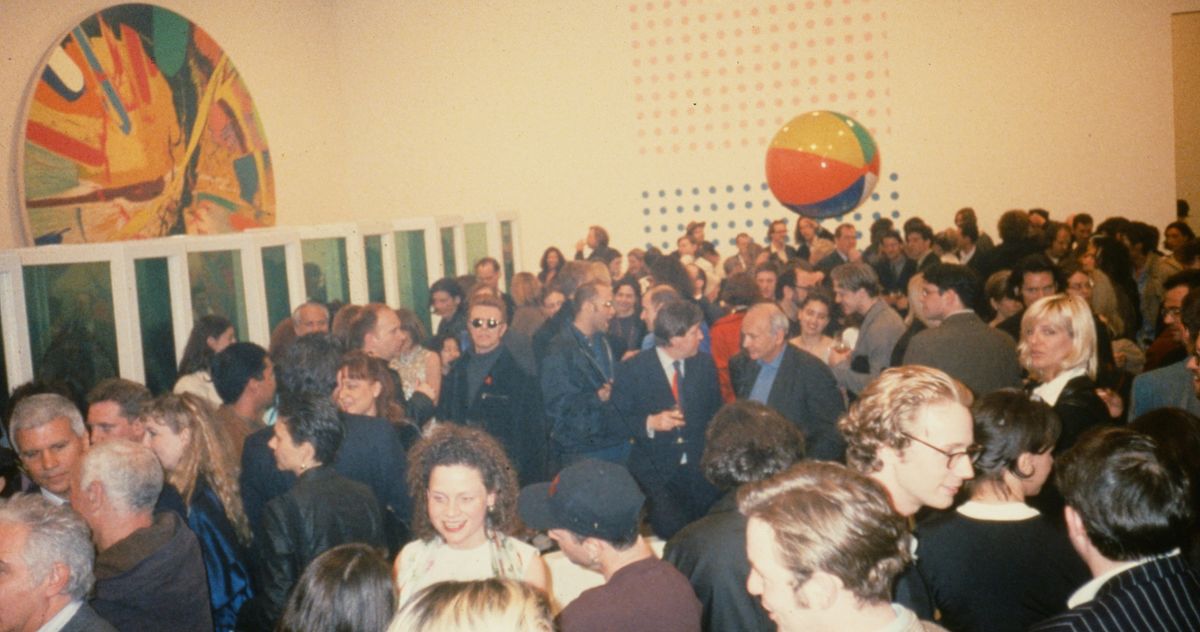
On May 1, 1993, the 1980s officially ended. One of the most famous artists in the world, Anselm Kiefer, installed a funeral pyre of nearly 300 of his works at Marian Goodman on West 57th Street, one of the more prestigious galleries at the time. Afterward, there was a grand dinner at Industria downtown for 150 of the movers and shakers of the period. The floor was covered with white sand, and two long dining tables were set. As I remember it, ominous, strangely clad performers moved about looking like they were about to devour our flesh. Then the petites entrées: pig heads on decadent platters. I knew instantly. This was Götterdämmerung, the Twilight of the Gods.
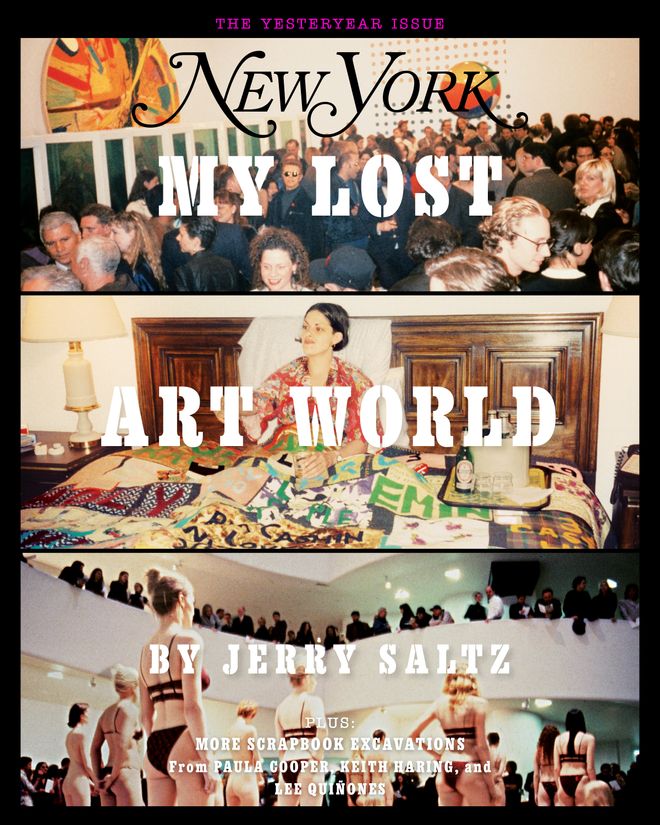
My Lost Art World
The previous decade had been enormously lucrative for a select few in the art world, mostly white male artists, but the air was coming out of their careers. Their work, once highly coveted, was failing to sell at auction. Major galleries closed, and the younger dealers were doing anything they could to just stay open. A market recession was setting in, leveling the playing field. Suddenly, there was a kind of freedom in New York. Everyone was doing whatever they wanted. If you had a dream, if you had an idea, you could find a place for yourself to fail here. Or, if you were lucky, succeed. This was good news for people like me who had until then been looking on with jealousy.
I had quit making art, but I was desperate to still be in the mix, so I started calling myself an art critic. I wrote catalogue essays, reviews, articles for anyone who would have me. For a while, I lived with my wife, Roberta Smith, also an art critic, in a tiny fifth-floor rear studio on Avenue B that I bought for $5,000 from a lawyer who didn’t actually own the building. We never paid rent there. I remember dogs patrolled the hallway, we were robbed constantly, drug dealers lived downstairs. I was in heaven. It was the greatest period of my life. My recollection of it all is hazy. I didn’t keep precise notes of dates or names or locations. To quote a popular band at the time, it was an era of “Where were you while we were gettin’ high?” if not in practice, then in spirit. But everywhere I went, I brought along my Olympus Stylus and I would go click, click, click. I knew nothing about photography, but I went through 15 rolls of film again and again, developed them, and then put them away in storage. When I recently unearthed them, I found that I had some 40,000 goddamned slides.
I remember having a conversation with him about which gallery he would join; various names were brought up, but he chose Gladstone, which struck me as strange. At the time, it was more of a 1970s, 1980s gallery with a revolving door, picking up and dropping artists. When I asked him why, Barney replied, “The ceiling.”
Matthew Barney, BLIND PERINEUM, 1991, color video, silent, 89 min. 20 sec. © Matthew Barney. Courtesy of the artist and Gladstone. Video: Peter Strietmann
Before the opening of his first show there, Barney performed in the space with a videographer recording his actions. He was naked except for a swim cap, sneakers, and a harness outfitted with ice screws, which he would remove one at a time and screw into the ceiling. Moving slowly, he circumnavigated the gallery until he arrived at a walk-in refrigerator. Inside was a weight bench, similar to the one I’d seen below his studio. There, he sat on top of the cameraman and took the final screw from his belt and inserted it into his own anus. He was in effect crawling into himself, turning himself inside out. Here was obsessiveness, endurance, madness. To me, the show inaugurated a period of twisted originality and complete freedom. I returned to it dozens of times, and every time the gallery was packed. The ’90s had found its Jasper Johns.
This was the Woodstock of art fairs, a place where we could all meet one another, see one another, touch one another’s antennae, smell one another’s pheromones. It was scrappy and thrilling because it made us see beyond the edges of our village of pirates and smelly shamans. We saw how big our nation was.
At one point, Jeff and Leo Castelli, the most important art dealer of the period, stood in front of an enormous, nearly ten-foot penetration silk-screen print. Castelli was hanging on to his genitals for dear life, as if protecting himself from this warped force of fun, sex, and taboo that had crashed the scene. The art world likes to think of itself as a place where artists can act freely, right? But when Jeff got naked in public, the New York Establishment utterly rejected him. They kicked him out over the sex work. And Jeff, believe it or not — I know you hate him now — became an exile. He would not show again in the city until the end of the decade.
Fame still felt underground. Celebrities had not yet become products — branded, packaged beings traveling in cocoons of bodyguards, creatures from another realm. You could see them among us all the time. Everyone was hanging out together. You felt like you were one of them and they were one of you, and that was a wonderful feeling.
This overinstalled spectacle was when openings started to get really crowded. For the first half of the ’90s, you could do a show and if 35 people came, you were a success. Then things changed. Gagosian always had a vision of the art world as being big, global, spectacular, like a Death Star, and for that to happen, every opening had to become an event. He was planting the seed for the megagalleries of today.
A shameless Goofy myself, I posed for one too.
This tells you about the weirdness of an artist — that they are control freaks of the highest order, that everything has to be the result of 150,000 individual decisions before it’s finished. It was an immediate blockbuster that thrilled Tishman Speyer, the real-estate developer that manages Rock Center. We had entered the era of corporate sponsorship for art. Soon enough, there was the Giorgio Armani retrospective at the Guggenheim, and JPMorgan Chase underwrote the opening day of the new MoMA, which had spent half a billion dollars to rebuild itself. The 1990s as I had known them were over. Gone. Up in smoke. The avant-garde lost by winning. The art world was successful.
Photographs by Jerry Saltz
Thank you for subscribing and supporting our journalism.
If you prefer to read in print, you can also find this article in the April 20, 2026, issue of
New York Magazine.
Want more stories like this one? Subscribe now
to support our journalism and get unlimited access to our coverage.
If you prefer to read in print, you can also find this article in the April 20, 2026, issue of
New York Magazine.