
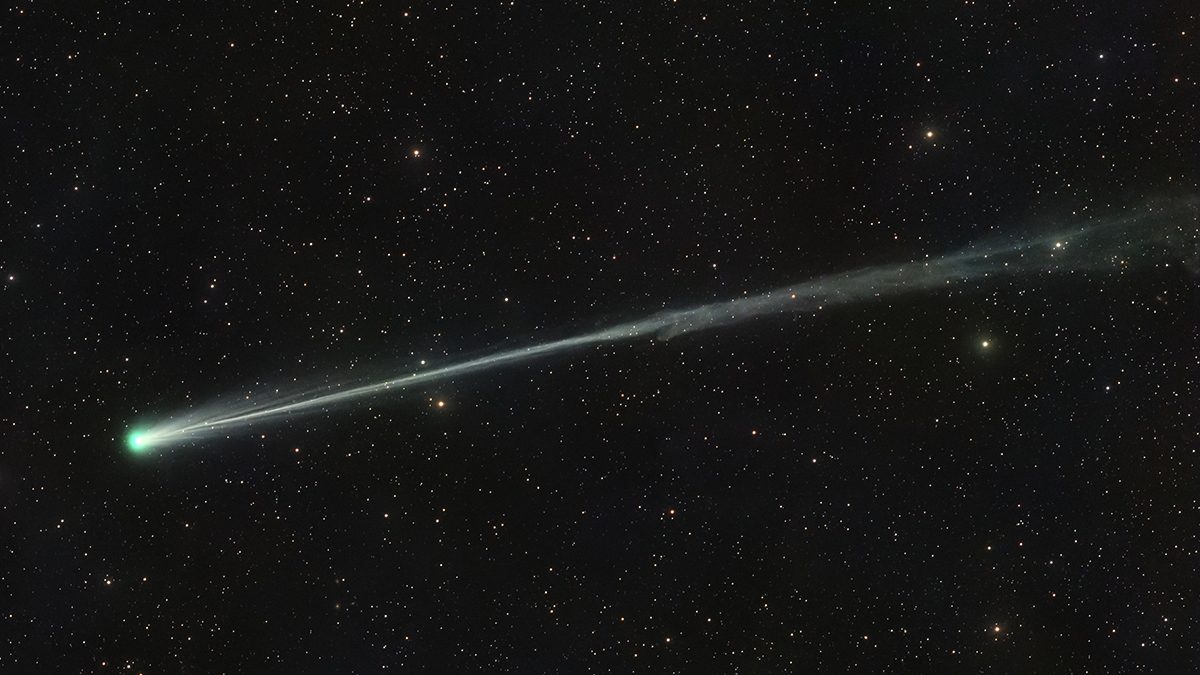
Comet C/2025 R3 (PANSTARRS) is currently a morning object in Pisces, and quite tricky to see because it’s low in the east and visible just before sunrise.
If you’ve been out over the past weekend and were able to see it, you’ll likely be feeling very pleased!
The comet is only visible through binoculars, but is not above the horizon for long before sunrise.
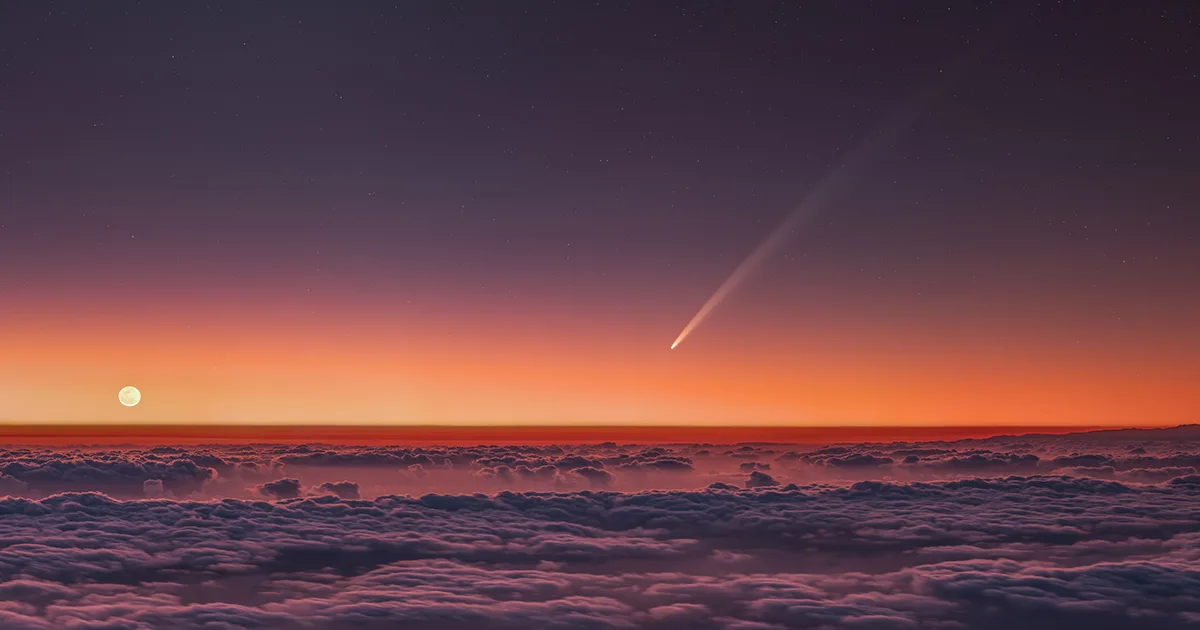 Comet C/2023 A3 Tsuchinshan-ATLAS, captured by Gergely Tóth
Comet C/2025 R3 (PANSTARRS) reached perihelion – its closest point to the Sun – on 19 April 2026.
The window for morning observation in the Northern Hemisphere is quickly coming to a close this week.
The comet will soon be lost in the Sun’s glare, but will emerge as an early evening object for observers in the Southern Hemisphere.
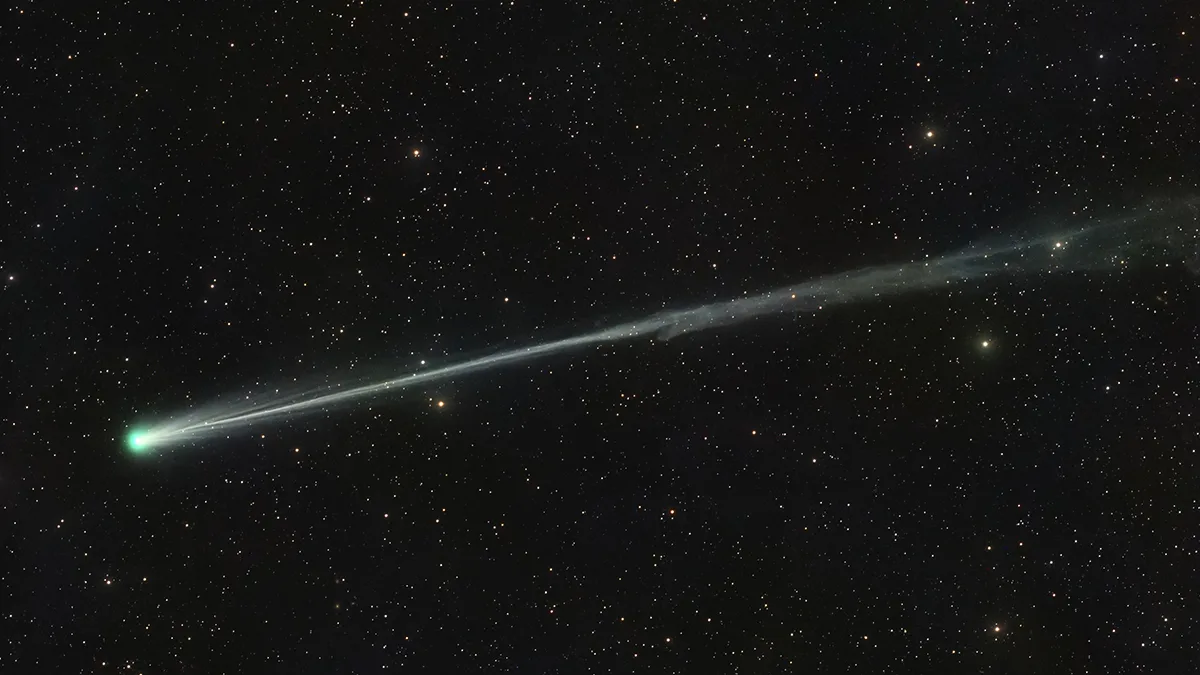 Comet C/2025 R3 (PANSTARRS) captured by José J. Chambó, 19 April 2206, Utah Desert Remote Observatories, Utah, USA. Equipment: SBIG STX 16803 camera, Takahashi FSQ106 ED f/5 refractor. Exposure: 5 minutes (L=1×120 bin1 + RGB=1×60 bin2)
José J. Chambó is a prolific comet hunter and photographer. He captured this image of Comet C/2025 R3 (PANSTARRS) on 12 April 2026, a week before perihelion.
“This image was acquired using a remote telescope under the skies of Utah,” José says. “Bright comets are usually found close to the Sun when they peak, which keeps them frustratingly low during observing windows.
“I had to wait until the comet reached about 15° altitude: already well into nautical twilight. With the sky significantly brightened, the session was reduced to the bare minimum: a single 120-second luminance frame to capture structure, along with three 60-second RGB frames for colour.
“The comet delivered a stunning appearance in the constellation Pegasus. A long, narrow ion tail extends well over 4°, running beyond the field of view.
“Along it, rich structural detail is visible throughout: a fan of jets close to the head, a dominant and nearly straight main streamer through the central region.
“Further out, what is likely the most striking feature: a clear tail disconnection event drifting behind the comet like a shed skin.
“Toward the far end, the structure becomes more diffuse, breaking into intricate, cloud-like filaments.
“Sometimes you don’t need a perfect night or hours of integration. It’s about just being there at the right moment, even on the edge of dawn and making every second count. The rest is up to the comet.”
See more of José’s work at cometografia.es.
Capture details
Camera: SBIG STX 16803
Telescope: Takahashi FSQ106 ED f/5 refractor
Exposure: 5 minutes (L=1×120 bin1 + RGB=1×60 bin2)
Location: Utah Desert Remote Observatories, Utah, USA
If you capture images of the night sky, we’d love to see them! Send us your best via contactus@skyatnightmagazine.com