
By Igor Bosilkovski, Brianne Garrett and Asia Alexander
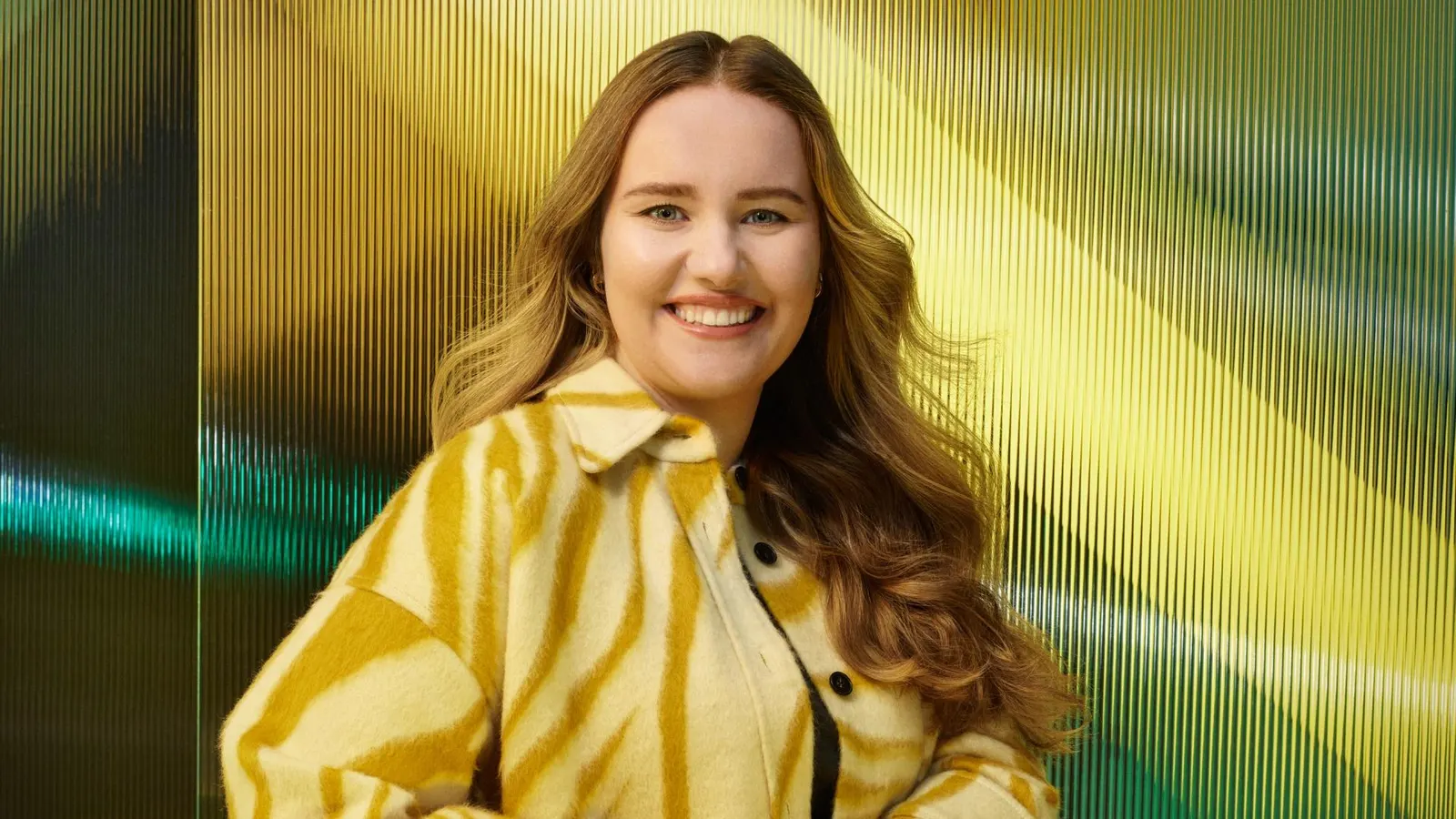
While studying for her master’s at Cambridge—and after nearly a decade as a vegan—Paris-born Clarisse Beurrier, 29, was researching lab grown meat when a VC reached out to ask if they could invest.
“I didn’t even have a company,” Beurrier says. “But they said since I was working on cultivated meat research, and there are so few researchers, they’d love to support. So we went through the accelerator and only then, in 2022, did we actually get a proper team and new, private labs… then we could start commercializing.”
Sebastian Nevols for Forbes
Beurrier is now the cofounder and CTO at Cellcraft, an AI and automation platform that scales and powers cellular manufacturing. The enterprise helps companies grow real meat without raising or slaughtering animals, but instead by growing animal cells in tanks.
The startup collects pieces of meat from the slaughter houses, then isolates the cells and uses non-GM ways to immortalize—and recreate—those same meat cells, allowing for production of food products like burgers and sausages.
Beurrier says that since the stem cells will grow forever, they don’t have to go back to the animal to continue producing more. “Once we have this cell line from a specific breed, wagyu beef or whatever best iberico jamon you want to choose, we then cultivate it and grow it in a bioreactor.”
Meat production is a key force behind climate change, contributing to emissions, deforestation, water consumption and pollution. According to research done by Stanford University’s Woods Institute for the Environment, livestock production accounts for 14 to 18 percent of global greenhouse gas emissions, including 32 percent of methane gas emissions worldwide. And when it comes to meat, moderation isn’t exactly humanity’s strong suit. Global consumption of pork, beef, poultry, and other livestock is set to top 500 million tonnes by 2050—double what it was in 2000.
“I know that my vegan activism maybe wasn’t having the impact it should have,” Beurrier says. “So we’re building this AI and automation platform to scale and power cellular manufacturing. We think cultivated meat could have the biggest impact.”
To date, the company has raised about $4 million from investors (VCs and strategic) and has won over $2 million in government grants. Cellcraft is currently raising a $10 million Series A, set to close over the next six to 12 months.
Cellcraft is just one of Europe’s most promising startups that made this year’s 2025 Under 30 Europe Manufacturing & Industry list. To determine the list, candidates were sourced by Forbes editors and evaluated by a panel of expert judges featuring Marie Ekeland, founder and CEO of VC fund 2050; Emma Jones, Small Business Commissioner at the U.K. Department for Business and Trade; Raphael Sofoluke, founder and CEO of U.K. Black Business Show; and Shiladitya Ghosh, a 2023 Under 30 alum and cofounder and COO of Mission Zero.
This year’s honorees include coral reef restorers, AI upskilling platforms, education activists and more. All candidates must have been 29 or younger as of April 14th, 2026, and never before named to a Europe, U.S. or Asia 30 Under 30 list.
Social media star Titouan Bernicot, 27, started reef restoration organisation Coral Gardeners. The platform combines science, technology and community engagement to accelerate ocean conservation. To date it has raised over $23 million and planted hundreds of thousands of corals across French Polynesia, Fiji, and Thailand. Along the way, they’ve partnered with Rolex, National Geographic, Prada and Apple to bring ocean conservation into mainstream culture.
Meanwhile, another prominent digital creator is Vee Kativhu, 27, a Zimbabwe-born education activist, charity founder and consultant working to expand access to education. She leads Empowered By Vee, a U.K.-based charity supporting more than 28,000 young people through academic workshops and scholarships for girls in Zimbabwe. With over 300,000 Instagram followers and nearly as many YouTube subscribers, she shares educational content on study strategies, personal development and overcoming barriers to education.
In the AI space, sisters Amelia Miller, 29, and Lydia Miller, 27, are building ivee, a platform to help non-technical workers adapt to technological change. Their work includes hands-on AI training through bootcamps, workshops and masterclasses for workers at risk of displacement. They also provide an AI talent marketplace, connecting skilled candidates with employers.
Beyond reshaping how individuals engage with AI, the same wave of intelligent tools is transforming how organisations measure performance and impact. Take Zevero, cofounded by Ben Richardson, 28, and George Wade, 29. The startup enables companies to quantify and act on their environmental footprint. They’ve raised over $12 million to provide global carbon accounting and climate reporting tools to support net-zero strategies.
Building on the need for greater transparency in environmental reporting: Foodsteps, founded by Cambridge grad Anya Doherty, 29, applies a similar data-driven approach to the food system. She helps manufacturers and retailers understand and reduce the footprint of what they produce and sell. The platform tracks 11.8 million tonnes of CO₂e across major clients including Sainsbury’s, Greencore, Compass Group UK&I, Accor Hotels and KFC. Having raised over $5 million and expanded to 45 countries, Foodsteps was acquired in 2024, with Doherty still leading it as a managing director.
AI is increasingly at the center of change across the industry. And it’s acting as a core engine for optimisation, not just a supporting tool. As Beurrier from Cellcraft explains, their “vertical AI strategy” can be applied to existing processes without needing large historical datasets or extensive testing.
“In just two runs, we improved consistency and efficiency, which can reduce batch failure rates by over half and achieve around 30% cost reduction depending on the client’s process,” Beurrier says. And she only has bigger plans from here.
This year’s list was edited by Igor Bosilkovski, Brianne Garrett and Asia Alexander. For a link to our complete 2026 30 Under 30 Europe Social Impact list, click here, and for full 2026 30 Under 30 Europe coverage, click here.
30 UNDER 30 RELATED ARTICLESForbesBy The Numbers: Meet The Forbes 30 Under 30 Europe Class Of 2026By Alexandra YorkForbesHow We Make The Forbes Under 30 Europe ListBy Alexandra YorkForbes30 Under 30 Europe AI 2026: The Young Entrepreneurs Harnessing The Power Of Artificial Intelligence To Solve ProblemsBy Kirk OgunrindeForbes30 Under 30 Europe Manufacturing & Industry 2026: The Builders Bringing AI, Robotics And Data To IndustryBy Alan OhnsmanForbes30 Under 30 Europe Media & Marketing 2026: How Gen AI And The Creator Economy Are Forging The Next Frontier Of MediaBy Alexandra York